About the Report
Base Year 2024KSA Botulinum Toxin Type A Market Overview
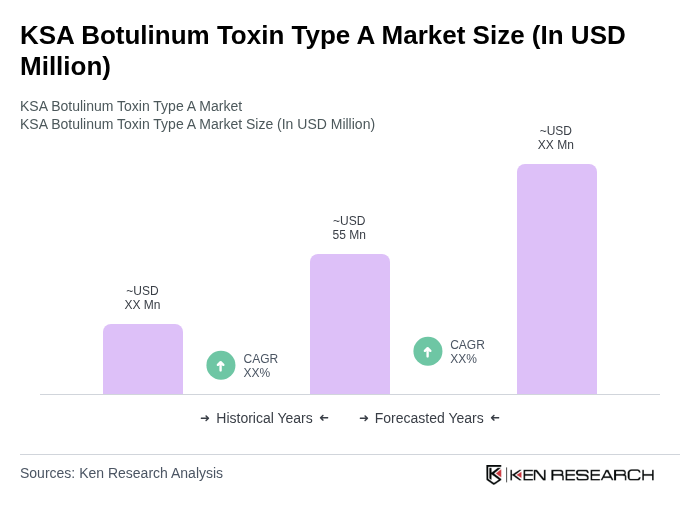
- The KSA Botulinum Toxin Type A Market is valued at USD 55 million, based on recent analysis. Growth is driven by rising aesthetic demand across urban centers like Riyadh and Jeddah, expanding applications in therapeutic neurology, and increasing disposable incomes fueling uptake in non-surgical treatments. Additionally, technological innovations such as AI-driven facial mapping tools and digital consultation platforms are enhancing accessibility and consumer engagement, reinforcing market growth.
- Key players in this market include major multinational companies offering Type A formulations, including Botox (Allergan/AbbVie), Xeomin (Merz), Nabota (Daewoong), Dysport (Ipsen), and emerging regional suppliers like Botulax (Hugel), supported by distribution partnerships across the Kingdom. The dominance of Type A is underpinned by clinical familiarity, safety profiles, and predictable outcomes, while regulatory clarity and SFDA track-and-trace requirements strengthen trust in established brands and regional expansions by companies such as Hugel via Medica Group further bolster market presence.
- A critical regulatory measure shaping this market is SFDA’s requirement for Class D registration for botulinum toxin importers, mandatory barcoding under the Track-and-Trace system, and licensing of only certified practitioners under SCFHS in dermatology, neurology, and plastic surgery, all of which aim to ensure safety, quality control, and traceability across distribution channels.
KSA Botulinum Toxin Type A Market Segmentation
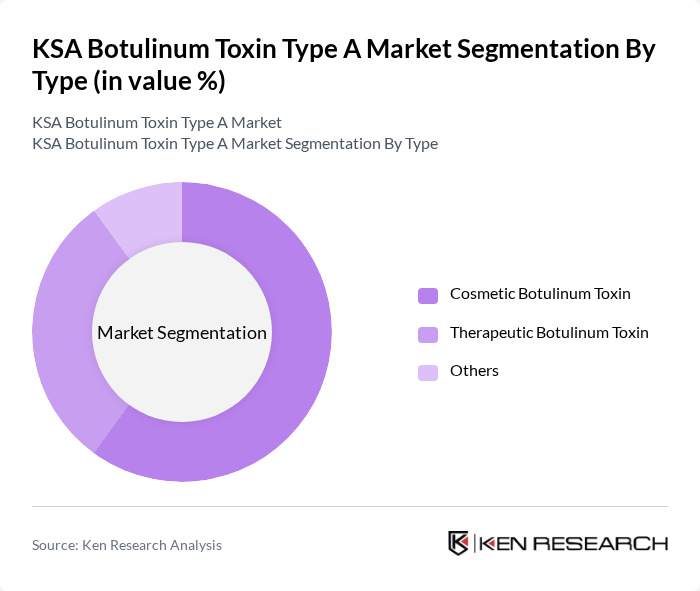
By Type:The market is segmented into Cosmetic Botulinum Toxin, Therapeutic Botulinum Toxin, and Others. The Cosmetic Botulinum Toxin sub-segment is the most dominant, driven by increasing consumer interest in aesthetic procedures, particularly among younger demographics seeking preventive treatments. The Therapeutic Botulinum Toxin segment is also growing, fueled by rising awareness of its medical applications, such as treating chronic migraines and excessive sweating.
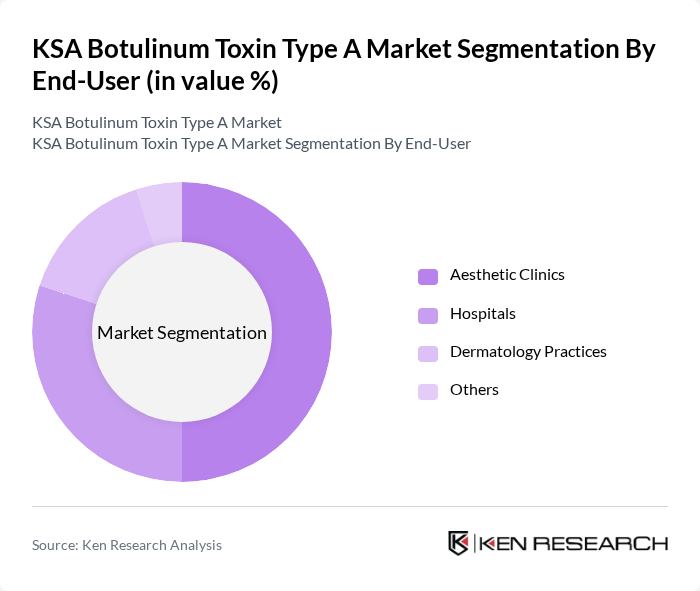
By End-User:The market is categorized into Aesthetic Clinics, Hospitals, Dermatology Practices, and Others. Aesthetic Clinics dominate the market due to the increasing number of non-surgical cosmetic procedures being performed in these settings. Hospitals also play a significant role, particularly in therapeutic applications, while Dermatology Practices are gaining traction as more patients seek specialized care for skin-related issues.
KSA Botulinum Toxin Type A Market Competitive Landscape
The KSA Botulinum Toxin Type A Market is characterized by a dynamic mix of regional and international players. Leading participants such as Allergan, Ipsen, Revance Therapeutics, Merz Pharmaceuticals, Galderma, Hugel, Sientra, Medytox, Daewoong Pharmaceutical contribute to innovation, geographic expansion, and service delivery in this space.
KSA Botulinum Toxin Type A Market Industry Analysis
Growth Drivers
- Recovery in Non?Oil Economic Activity:In future, Saudi Arabia's real GDP is projected at USD 1.10 trillion, with a non-oil sector growth rate of 4.3%. This recovery is driven by diversification efforts away from oil dependency, leading to increased consumer spending on health and aesthetic services. The non-oil sector's robust performance, particularly in urban areas, is expected to significantly boost the demand for Botulinum Toxin Type A treatments.
- Elevated Healthcare Spending:The Saudi government allocated USD 50.4 billion to healthcare and social development in future. This substantial investment enhances the affordability and accessibility of aesthetic treatments, including Botulinum Toxin Type A. As healthcare funding continues to rise, it is anticipated that more consumers will seek non-surgical aesthetic procedures, further driving market growth in the coming years.
- Increasing Disposable Income in Urban Centers:In future, the average monthly disposable income for a household in Riyadh was approximately 26,000 SAR (USD 6,933). This increase in disposable income among urban populations supports a growing demand for cosmetic procedures, including Botulinum Toxin Type A. As more individuals in metropolitan areas prioritize aesthetic enhancements, the market is likely to experience significant growth driven by consumer spending power.
Market Challenges
- Dependence on Oil Revenues and Financial Volatility:In future, Aramco's profits fell to USD 106.25 billion, down from USD 121 billion in future. This decline in oil revenues can strain public budgets, potentially limiting indirect support for elective healthcare sectors, including aesthetic treatments. The volatility in oil prices poses a significant challenge to sustaining growth in the Botulinum Toxin Type A market.
- Regional Disparities in Disposable Income:The average monthly household income in Riyadh is 26,000 SAR, while regions like Najran report incomes of less than half that amount. This disparity in disposable income creates a challenge for market expansion, as demand for Botulinum Toxin Type A treatments may be concentrated in affluent urban areas, limiting access for consumers in lower-income regions.
KSA Botulinum Toxin Type A Market Future Outlook
The KSA Botulinum Toxin Type A market is poised for growth, driven by technological innovations and a shift towards value-based care. The adoption of digital health solutions, including telemedicine and AI, is expected to enhance service delivery in aesthetic procedures. Additionally, the ongoing transformation of the healthcare system under Vision 2030 will likely streamline regulatory processes, making it easier for consumers to access these treatments while ensuring safety and efficacy.
Market Opportunities
- Tier?2/Tier?3 City Penetration:While specific figures are unavailable, regions like Najran, with significantly lower income levels, represent untapped markets for Botulinum Toxin Type A. Targeting emerging middle-income consumers in these areas could lead to substantial demand growth, expanding the market beyond affluent urban centers.
- Public?Private Healthcare Integration:The private sector currently accounts for 23% of health services, indicating room for growth in specialized aesthetic clinics. As the private healthcare infrastructure expands, it can accommodate increased demand for Botulinum Toxin Type A treatments, enhancing service availability and quality for consumers.
Scope of the Report
| Segment | Sub-Segments |
|---|---|
| By Type | Cosmetic Botulinum Toxin Therapeutic Botulinum Toxin Others |
| By End-User | Aesthetic Clinics Hospitals Dermatology Practices Others |
| By Application | Facial Aesthetics Medical Treatments (e.g., migraines, excessive sweating) Others |
| By Distribution Channel | Direct Sales Online Sales Distributors Others |
| By Region | Central Region Eastern Region Western Region Southern Region |
| By Consumer Demographics | Age Group (18-30, 31-45, 46+) Gender (Male, Female) Income Level (Low, Middle, High) Others |
| By Treatment Frequency | First-time Users Repeat Users Others |
Key Target Audience
Investors and Venture Capitalist Firms
Government and Regulatory Bodies (e.g., Saudi Food and Drug Authority)
Manufacturers and Producers
Distributors and Retailers
Healthcare Providers and Clinics
Pharmaceutical Companies
Industry Associations (e.g., Saudi Arabian Society of Dermatology and Aesthetic Surgery)
Financial Institutions
Players Mentioned in the Report:
Allergan
Ipsen
Revance Therapeutics
Merz Pharmaceuticals
Galderma
Hugel
Sientra
Medytox
Daewoong Pharmaceutical
Evolus
Table of Contents
Market Assessment Phase
1. Executive Summary and Approach
2. KSA Botulinum Toxin Type A Market Overview
2.1 Key Insights and Strategic Recommendations
2.2 KSA Botulinum Toxin Type A Market Overview
2.3 Definition and Scope
2.4 Evolution of Market Ecosystem
2.5 Timeline of Key Regulatory Milestones
2.6 Value Chain & Stakeholder Mapping
2.7 Business Cycle Analysis
2.8 Policy & Incentive Landscape
3. KSA Botulinum Toxin Type A Market Analysis
3.1 Growth Drivers
3.1.1 Increasing demand for aesthetic procedures
3.1.2 Rising awareness about non-surgical treatments
3.1.3 Expanding healthcare infrastructure
3.1.4 Technological advancements in botulinum toxin formulations
3.2 Market Challenges
3.2.1 Regulatory hurdles and approval processes
3.2.2 Competition from alternative treatments
3.2.3 High cost of advanced procedures
3.2.4 Limited availability of trained professionals
3.3 Market Opportunities
3.3.1 Expansion of medical tourism
3.3.2 Development of new applications for botulinum toxin
3.3.3 Increasing disposable income among consumers
3.3.4 Collaborations with aesthetic clinics and dermatologists
3.4 Market Trends
3.4.1 Growing popularity of minimally invasive procedures
3.4.2 Shift towards personalized treatment plans
3.4.3 Rise in social media influence on aesthetic choices
3.4.4 Increasing focus on safety and efficacy of products
3.5 Government Regulation
3.5.1 Stricter guidelines for product approval
3.5.2 Enhanced monitoring of treatment practices
3.5.3 Regulations on advertising and marketing of aesthetic procedures
3.5.4 Licensing requirements for practitioners
4. SWOT Analysis
5. Stakeholder Analysis
6. Porter's Five Forces Analysis
7. KSA Botulinum Toxin Type A Market Market Size, 2019-2024
7.1 By Value
7.2 By Volume
7.3 By Average Selling Price
8. KSA Botulinum Toxin Type A Market Segmentation
8.1 By Type
8.1.1 Cosmetic Botulinum Toxin
8.1.2 Therapeutic Botulinum Toxin
8.1.3 Others
8.2 By End-User
8.2.1 Aesthetic Clinics
8.2.2 Hospitals
8.2.3 Dermatology Practices
8.2.4 Others
8.3 By Application
8.3.1 Facial Aesthetics
8.3.2 Medical Treatments (e.g., migraines, excessive sweating)
8.3.3 Others
8.4 By Distribution Channel
8.4.1 Direct Sales
8.4.2 Online Sales
8.4.3 Distributors
8.4.4 Others
8.5 By Region
8.5.1 Central Region
8.5.2 Eastern Region
8.5.3 Western Region
8.5.4 Southern Region
8.6 By Consumer Demographics
8.6.1 Age Group (18-30, 31-45, 46+)
8.6.2 Gender (Male, Female)
8.6.3 Income Level (Low, Middle, High)
8.6.4 Others
8.7 By Treatment Frequency
8.7.1 First-time Users
8.7.2 Repeat Users
8.7.3 Others
9. KSA Botulinum Toxin Type A Market Competitive Analysis
9.1 Market Share of Key Players
9.2 Cross Comparison of Key Players
9.2.1 Company Name
9.2.2 Group Size (Large, Medium, or Small as per industry convention)
9.2.3 Revenue Growth Rate
9.2.4 Market Penetration Rate
9.2.5 Customer Retention Rate
9.2.6 Pricing Strategy
9.2.7 Product Innovation Rate
9.2.8 Distribution Efficiency
9.2.9 Brand Recognition Score
9.2.10 Customer Satisfaction Index
9.3 SWOT Analysis of Top Players
9.4 Pricing Analysis
9.5 Detailed Profile of Major Companies
9.5.1 Allergan
9.5.2 Ipsen
9.5.3 Revance Therapeutics
9.5.4 Merz Pharmaceuticals
9.5.5 Galderma
9.5.6 Hugel
9.5.7 Sientra
9.5.8 Medytox
9.5.9 Daewoong Pharmaceutical
9.5.10 Medytox
9.5.11 Evolus
9.5.12 Revance Therapeutics
9.5.13 Hugel
9.5.14 Sientra
9.5.15 Galderma
10. KSA Botulinum Toxin Type A Market End-User Analysis
10.1 Procurement Behavior of Key Ministries
10.1.1 Budget Allocation for Aesthetic Treatments
10.1.2 Approval Processes for New Treatments
10.1.3 Collaboration with Private Sector
10.1.4 Others
10.2 Corporate Spend on Infrastructure & Energy
10.2.1 Investment in Aesthetic Clinics
10.2.2 Funding for Training Programs
10.2.3 Marketing Budgets for New Treatments
10.2.4 Others
10.3 Pain Point Analysis by End-User Category
10.3.1 Access to Quality Treatments
10.3.2 Affordability of Procedures
10.3.3 Availability of Trained Professionals
10.3.4 Others
10.4 User Readiness for Adoption
10.4.1 Awareness of Botulinum Toxin Benefits
10.4.2 Acceptance of Non-Surgical Procedures
10.4.3 Trust in Providers
10.4.4 Others
10.5 Post-Deployment ROI and Use Case Expansion
10.5.1 Evaluation of Treatment Outcomes
10.5.2 Customer Feedback Mechanisms
10.5.3 Opportunities for Upselling
10.5.4 Others
11. KSA Botulinum Toxin Type A Market Future Size, 2025-2030
11.1 By Value
11.2 By Volume
11.3 By Average Selling Price
Go-To-Market Strategy Phase
1. Whitespace Analysis + Business Model Canvas
1.1 Market Gaps Identification
1.2 Business Model Development
2. Marketing and Positioning Recommendations
2.1 Branding Strategies
2.2 Product USPs
3. Distribution Plan
3.1 Urban Retail Strategies
3.2 Rural NGO Tie-ups
4. Channel & Pricing Gaps
4.1 Underserved Routes
4.2 Pricing Bands
5. Unmet Demand & Latent Needs
5.1 Category Gaps
5.2 Consumer Segments
6. Customer Relationship
6.1 Loyalty Programs
6.2 After-sales Service
7. Value Proposition
7.1 Sustainability Initiatives
7.2 Integrated Supply Chains
8. Key Activities
8.1 Regulatory Compliance
8.2 Branding Efforts
8.3 Distribution Setup
9. Entry Strategy Evaluation
9.1 Domestic Market Entry Strategy
9.1.1 Product Mix
9.1.2 Pricing Band
9.1.3 Packaging
9.2 Export Entry Strategy
9.2.1 Target Countries
9.2.2 Compliance Roadmap
10. Entry Mode Assessment
10.1 Joint Ventures
10.2 Greenfield Investments
10.3 Mergers & Acquisitions
10.4 Distributor Model
11. Capital and Timeline Estimation
11.1 Capital Requirements
11.2 Timelines
12. Control vs Risk Trade-Off
12.1 Ownership vs Partnerships
13. Profitability Outlook
13.1 Breakeven Analysis
13.2 Long-term Sustainability
14. Potential Partner List
14.1 Distributors
14.2 Joint Ventures
14.3 Acquisition Targets
15. Execution Roadmap
15.1 Phased Plan for Market Entry
15.1.1 Market Setup
15.1.2 Market Entry
15.1.3 Growth Acceleration
15.1.4 Scale & Stabilize
15.2 Key Activities and Milestones
15.2.1 Activity Planning
15.2.2 Milestone Tracking
Research Methodology
Phase 1: Approach1
Desk Research
- Analysis of market reports from health authorities and dermatological associations in KSA
- Review of published articles and journals on botulinum toxin applications and market trends
- Examination of regulatory frameworks and guidelines from the Saudi Food and Drug Authority (SFDA)
Primary Research
- Interviews with dermatologists and cosmetic surgeons specializing in botulinum toxin treatments
- Surveys with distributors and suppliers of botulinum toxin products in the KSA market
- Focus groups with patients who have undergone botulinum toxin procedures to gather insights on preferences and experiences
Validation & Triangulation
- Cross-validation of findings through multiple expert interviews and industry reports
- Triangulation of data from healthcare providers, regulatory bodies, and market analysts
- Sanity checks through feedback from a panel of industry experts and stakeholders
Phase 2: Market Size Estimation1
Top-down Assessment
- Estimation of market size based on national healthcare expenditure and cosmetic surgery trends
- Segmentation of the market by application areas such as aesthetic and therapeutic uses
- Incorporation of demographic data to assess potential market growth among different age groups
Bottom-up Modeling
- Collection of sales data from leading botulinum toxin manufacturers and distributors in KSA
- Estimation of treatment volumes based on average procedures per clinic and pricing models
- Analysis of patient demographics and treatment frequency to project future demand
Forecasting & Scenario Analysis
- Multi-factor regression analysis incorporating economic indicators and consumer behavior trends
- Scenario modeling based on potential regulatory changes and market entry of new products
- Development of baseline, optimistic, and pessimistic forecasts through 2030
Phase 3: CATI Sample Composition1
| Scope Item/Segment | Sample Size | Target Respondent Profiles |
|---|---|---|
| Aesthetic Clinics | 100 | Cosmetic Surgeons, Clinic Managers |
| Dermatology Practices | 80 | Dermatologists, Nurse Practitioners |
| Pharmaceutical Distributors | 60 | Sales Managers, Product Managers |
| Patient Focus Groups | 50 | Recent Patients, Prospective Patients |
| Regulatory Bodies | 30 | Regulatory Affairs Specialists, Compliance Officers |
Frequently Asked Questions
What is the current value of the KSA Botulinum Toxin Type A market?
The KSA Botulinum Toxin Type A market is valued at approximately USD 55 million, driven by increasing aesthetic demand, expanding therapeutic applications, and rising disposable incomes that support non-surgical treatments.
What factors are driving the growth of the KSA Botulinum Toxin Type A market?
Who are the major players in the KSA Botulinum Toxin Type A market?
What are the regulatory requirements for botulinum toxin importers in Saudi Arabia?
Other Regional/Country Reports
Indonesia Botulinum Toxin Type A Market
Malaysia Botulinum Toxin Type A Market
APAC Botulinum Toxin Type A Market
SEA Botulinum Toxin Type A Market
Other Adjacent Reports
Singapore Aesthetic Procedures Market
Bahrain Therapeutic Neurology Market
Mexico Non-Surgical Treatments Market
Indonesia Facial Mapping Tools Market
Indonesia Digital Consultation Platforms Market
Indonesia Dermatology Market
Germany Plastic Surgery Market
Malaysia Healthcare IT Solutions Market
Poland Medical Devices MarketSaudi Arabia Pharmaceutical Distribution Market Size, Share, Growth Drivers, Trends, Opportunities & Forecast 2025–2030Why Buy From Us?

What makes us stand out is that our consultants follow Robust, Refine and Result (RRR) methodology. Robust for clear definitions, approaches and sanity checking, Refine for differentiating respondents' facts and opinions, and Result for presenting data with story.

We have set a benchmark in the industry by offering our clients with syndicated and customized market research reports featuring coverage of entire market as well as meticulous research and analyst insights.

While we don't replace traditional research, we flip the method upside down. Our dual approach of Top Bottom & Bottom Top ensures quality deliverable by not just verifying company fundamentals but also looking at the sector and macroeconomic factors.

With one step in the future, our research team constantly tries to show you the bigger picture. We help with some of the tough questions you may encounter along the way: How is the industry positioned? Best marketing channel? KPI's of competitors? By aligning every element, we help maximize success.

Our report gives you instant access to the answers and sources that other companies might choose to hide. We elaborate each steps of research methodology we have used and showcase you the sample size to earn your trust.

If you need any support, we are here! We pride ourselves on universe strength, data quality, and quick, friendly, and professional service.