Region:Middle East
Author(s):Shubham
Product Code:KRAA8887
Pages:92
Published On:November 2025
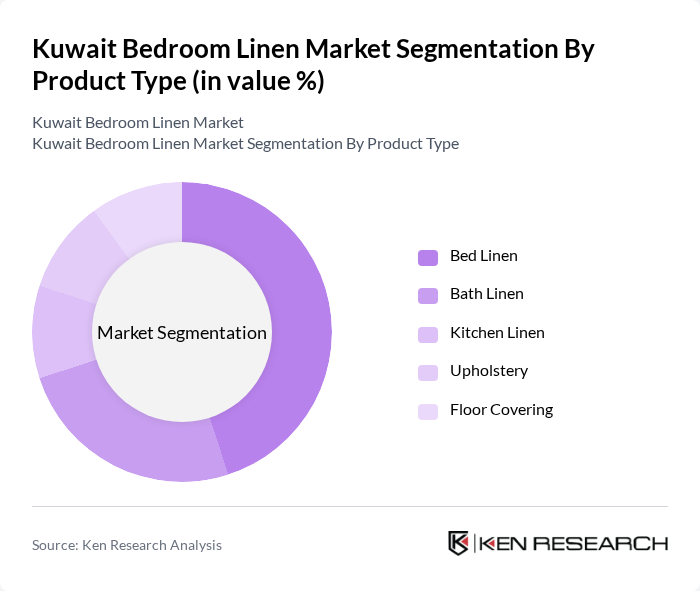
By Product Type:The product type segmentation includes various categories such as bed linen, bath linen, kitchen linen, upholstery, and floor covering. Among these, bed linen is the most dominant segment, driven by the increasing consumer focus on bedroom aesthetics and comfort. The demand for high-quality bed linens, including sheets, pillowcases, and duvet covers, has seen a significant rise as consumers prioritize their sleeping environment. Bath linen follows closely, with a growing trend towards luxury towels and bathrobes, particularly in hospitality settings.
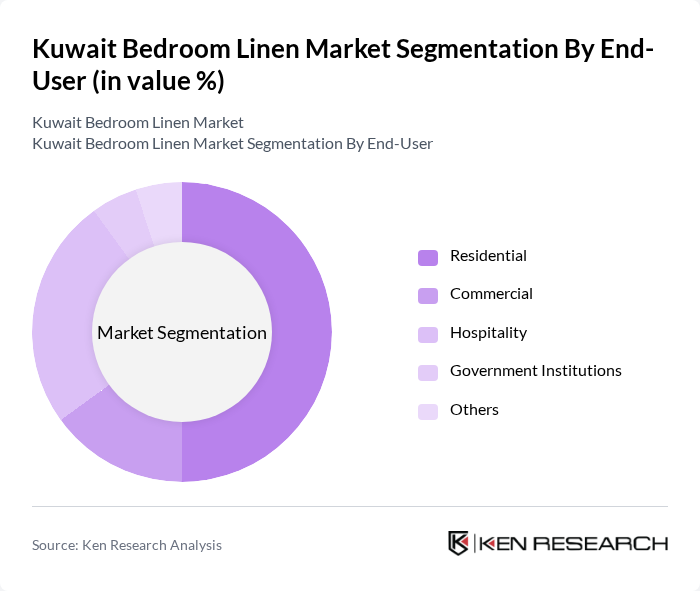
By End-User:The end-user segmentation encompasses residential, commercial, hospitality, government institutions, and others. The residential segment is the leading category, driven by the increasing number of households and the growing trend of home decoration. Consumers are investing more in quality linens to enhance their living spaces, which has led to a surge in demand. The hospitality sector also plays a significant role, as hotels and resorts seek high-quality linens to provide a luxurious experience for their guests.
The Kuwait Bedroom Linen Market is characterized by a dynamic mix of regional and international players. Leading participants such as Al Mufeed Textiles, Al-Homaizi Group, Al-Durra Textiles, Al-Manshar Group, Al-Sarraf Group, Al-Qabas Textiles, Al-Majed Group, Al-Fahad Textiles, Al-Saeed Group, Al-Mutawa Group, Al-Khaldi Group, Al-Mansour Group, Al-Jazeera Textiles, IKEA Kuwait (Al Homaizi Limited), Home Centre Kuwait, Pottery Barn Kuwait, The White Company (Kuwait), Zara Home (Kuwait), Abyat, Centrepoint Kuwait contribute to innovation, geographic expansion, and service delivery in this space.
The future of the Kuwait bedroom linen market appears promising, driven by evolving consumer preferences and technological advancements. The shift towards online shopping is expected to continue, with e-commerce sales projected to increase by 0% in future. Additionally, the growing interest in smart textiles, which offer enhanced comfort and health benefits, is likely to reshape product offerings. As consumers prioritize wellness and sustainability, brands that adapt to these trends will be well-positioned for success in the coming years.
| Segment | Sub-Segments |
|---|---|
| By Product Type | Bed Linen Bath Linen Kitchen Linen Upholstery Floor Covering |
| By End-User | Residential Commercial Hospitality Government Institutions Others |
| By Distribution Channel | Supermarkets & Hypermarkets Specialty Stores Online Other Distribution Channels |
| By Design | Modern Traditional Minimalist Themed Others |
| By Price Range | Budget Mid-Range Premium Luxury Others |
| By Fabric Care Type | Machine Washable Hand Wash Only Dry Clean Only Others |
| By Sustainability Level | Eco-Friendly Conventional Organic Others |
| Scope Item/Segment | Sample Size | Target Respondent Profiles |
|---|---|---|
| Retail Market Insights | 100 | Store Managers, Retail Buyers |
| Consumer Preferences | 120 | Homeowners, Renters |
| Manufacturing Insights | 60 | Production Managers, Quality Control Officers |
| Distribution Channel Analysis | 40 | Logistics Coordinators, Supply Chain Managers |
| Market Trend Evaluation | 80 | Interior Designers, Home Decor Influencers |
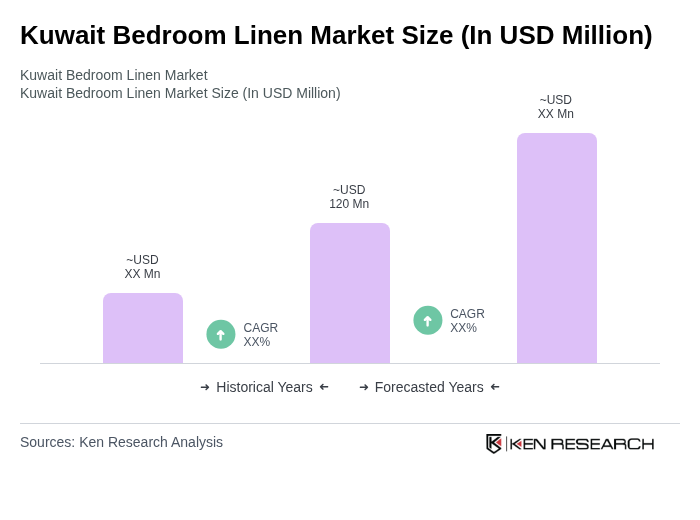
The Kuwait Bedroom Linen Market is valued at approximately USD 120 million, driven by factors such as rising disposable incomes, an increasing population, and a growing trend in home decor and interior design.

What makes us stand out is that our consultants follow Robust, Refine and Result (RRR) methodology. Robust for clear definitions, approaches and sanity checking, Refine for differentiating respondents' facts and opinions, and Result for presenting data with story.

We have set a benchmark in the industry by offering our clients with syndicated and customized market research reports featuring coverage of entire market as well as meticulous research and analyst insights.

While we don't replace traditional research, we flip the method upside down. Our dual approach of Top Bottom & Bottom Top ensures quality deliverable by not just verifying company fundamentals but also looking at the sector and macroeconomic factors.

With one step in the future, our research team constantly tries to show you the bigger picture. We help with some of the tough questions you may encounter along the way: How is the industry positioned? Best marketing channel? KPI's of competitors? By aligning every element, we help maximize success.

Our report gives you instant access to the answers and sources that other companies might choose to hide. We elaborate each steps of research methodology we have used and showcase you the sample size to earn your trust.

If you need any support, we are here! We pride ourselves on universe strength, data quality, and quick, friendly, and professional service.













