Middle East Aqua Gym Equipment Market Size, Share, Growth Drivers, Trends, Opportunities & Forecast 2025–2030

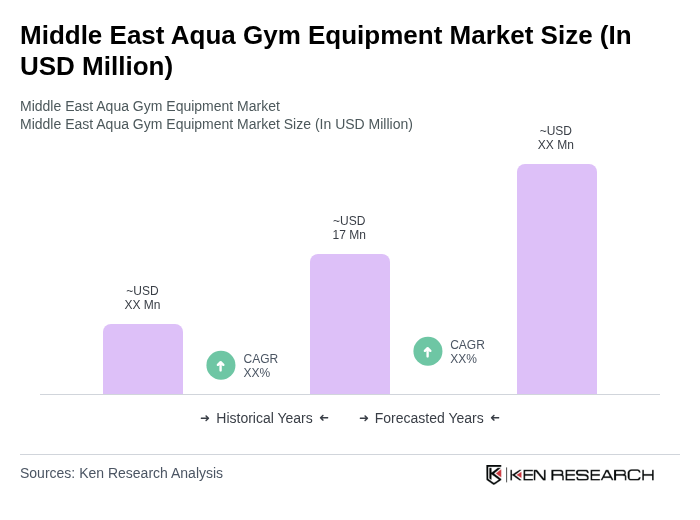
The Middle East aqua gym equipment market, valued at USD 17 million, is growing due to rising health consciousness and popularity of water-based fitness programs.

Region:Middle East

Author(s):Dev

Product Code:KRAD6361

Pages:92

Published On:December 2025
About the Report

Base Year 2024

Middle East Aqua Gym Equipment Market Overview

  • The Middle East Aqua Gym Equipment Market is valued at USD 17 million, based on a five-year historical analysis. This growth is primarily driven by the increasing awareness of health and fitness, coupled with the rising popularity of aquatic exercises among various demographics. The market has seen a surge in demand for innovative and specialized equipment that caters to both rehabilitation and fitness needs.
  • Key players in this market include the UAE, Saudi Arabia, and Qatar, which dominate due to their robust fitness culture, high disposable incomes, and significant investments in health and wellness infrastructure. The presence of luxury hotels and resorts in these regions further boosts the demand for aqua gym equipment, as they seek to offer premium wellness services to their clientele.
  • The UAE Cabinet Resolution No. 39 of 2021, issued by the UAE Cabinet, establishes technical regulations for sports equipment including fitness and aquatic gear in public and commercial facilities. This regulation requires compliance testing for safety standards, material durability, and performance thresholds, with mandatory certification for installation and periodic inspections to ensure user safety.
Middle East Aqua Gym Equipment Market Size

Middle East Aqua Gym Equipment Market Segmentation

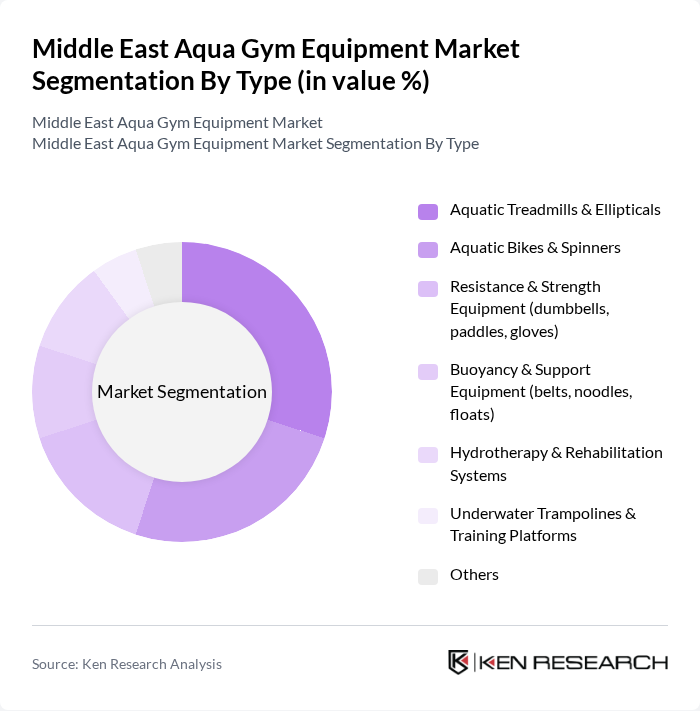
By Type:The market is segmented into various types of aqua gym equipment, including Aquatic Treadmills & Ellipticals, Aquatic Bikes & Spinners, Resistance & Strength Equipment, Buoyancy & Support Equipment, Hydrotherapy & Rehabilitation Systems, Underwater Trampolines & Training Platforms, and Others. Among these, Aquatic Treadmills & Ellipticals are gaining traction due to their versatility and effectiveness in low-impact workouts, appealing to a wide range of users from fitness enthusiasts to rehabilitation patients.
Middle East Aqua Gym Equipment Market segmentation by Type.

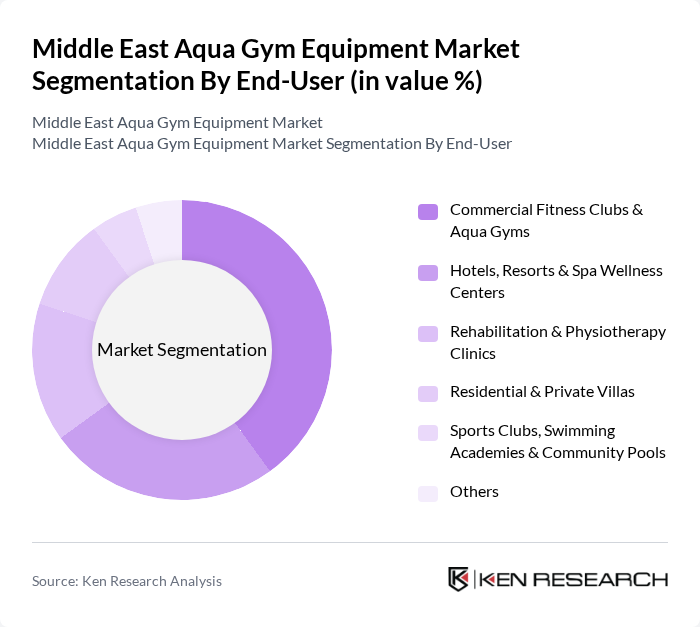
By End-User:The aqua gym equipment market is segmented by end-users, including Commercial Fitness Clubs & Aqua Gyms, Hotels, Resorts & Spa Wellness Centers, Rehabilitation & Physiotherapy Clinics, Residential & Private Villas, Sports Clubs, Swimming Academies & Community Pools, and Others. Commercial Fitness Clubs & Aqua Gyms are the leading segment, driven by the increasing number of fitness facilities and the growing trend of aqua fitness classes.
Middle East Aqua Gym Equipment Market segmentation by End-User.

Middle East Aqua Gym Equipment Market Competitive Landscape

The Middle East Aqua Gym Equipment Market is characterized by a dynamic mix of regional and international players. Leading participants such as Aquatic Fitness Concepts LLC (UAE), HydroWorx International Inc., Aqua Creek Products LLC, NIVA Sport (France – Middle East Distributor Network), Aquatic Eco?Fitness / AquafiT System, POOLBIKING Barcelona SL, Hydrorider Aquatic Fitness, BECO Beermann GmbH & Co. KG, Speedo International Limited, TYR Sport Inc., AquaJogger (Excel Sports Science Inc.), AquaLand Fitness Equipment Trading LLC (UAE), Technogym S.p.A. (Aquatic & Pool Fitness Solutions), Life Fitness (Middle East Distributor Network), Decathlon Group (Nabaiji & Water Fitness Range – Middle East Stores) contribute to innovation, geographic expansion, and service delivery in this space.

Aquatic Fitness Concepts LLC

2005

Dubai, UAE

HydroWorx International Inc.

1998

Middletown, Delaware, USA

Aqua Creek Products LLC

1989

Jefferson City, Missouri, USA

NIVA Sport

1975

Annecy, France

Aquatic Eco?Fitness

2010

Dubai, UAE

Company

Establishment Year

Headquarters

Group Size (Global, Regional, or Local Player)

Middle East Aqua Equipment Revenue (US$ Mn)

Revenue CAGR in Middle East (3–5 Year)

Share of Aqua Products in Total Fitness Portfolio (%)

Installed Base in Middle East (Number of Pools / Facilities Equipped)

Country Coverage in Middle East (Number of Countries Served)

Middle East Aqua Gym Equipment Market Industry Analysis

Growth Drivers

  • Increasing Health Consciousness Among Consumers:The Middle East has seen a significant rise in health consciousness, with 65% of the population actively seeking fitness solutions. According to the World Health Organization, obesity rates in the region have increased by 35% over the last decade, prompting consumers to adopt healthier lifestyles. This shift is driving demand for aqua gym equipment, as water-based workouts are perceived as effective and low-impact alternatives, appealing to a broader demographic, including older adults and those recovering from injuries.
  • Rising Popularity of Water-Based Fitness Programs:Water-based fitness programs have gained traction, with participation rates increasing by 30% annually. The International Aquatic Fitness Association reports that over 1.8 million individuals in the Middle East engage in aqua aerobics and similar activities. This growing interest is fueled by the unique benefits of water resistance training, which enhances muscle strength and cardiovascular health, thereby driving the demand for specialized aqua gym equipment tailored to these programs.
  • Government Initiatives Promoting Fitness and Wellness:Governments across the Middle East are investing heavily in public health initiatives, with budgets exceeding $600 million aimed at promoting fitness and wellness. Programs include subsidizing fitness facilities and organizing community fitness events. These initiatives are expected to increase the number of aqua gyms by 25% in the next two years, creating a favorable environment for the growth of aqua gym equipment sales and encouraging healthier lifestyles among citizens.

Market Challenges

  • High Initial Investment Costs:The initial investment required for setting up aqua gyms can be substantial, often exceeding $250,000 for equipment and facility modifications. This financial barrier limits entry for many potential operators, particularly in emerging markets within the region. As a result, the growth of the aqua gym sector is hindered, as many fitness entrepreneurs are deterred by the high upfront costs associated with establishing a competitive aqua gym facility.
  • Limited Awareness of Aqua Gym Benefits:Despite the advantages of aqua fitness, awareness remains low, with only 35% of the population familiar with its benefits. This lack of knowledge restricts market growth, as potential users may opt for traditional gym solutions. Educational campaigns and community outreach are essential to increase awareness and understanding of aqua gym benefits, which could significantly enhance participation rates and drive demand for related equipment in the region.

Middle East Aqua Gym Equipment Market Future Outlook

The future of the Middle East aqua gym equipment market appears promising, driven by increasing health awareness and government support for fitness initiatives. As more consumers seek low-impact workout options, the demand for innovative aqua gym technologies is expected to rise. Additionally, the integration of smart technology into fitness equipment will likely enhance user experience, making aqua fitness more appealing. This trend, combined with the expansion of fitness centers, positions the market for significant growth in the future.

Market Opportunities

  • Growing Trend of Personalized Fitness Solutions:The demand for personalized fitness solutions is on the rise, with 45% of consumers expressing interest in tailored workout programs. Aqua gyms can capitalize on this trend by offering customized training plans that cater to individual fitness levels and goals, thereby attracting a diverse clientele and enhancing customer satisfaction.
  • Partnerships with Wellness Resorts and Spas:Collaborations with wellness resorts and spas present a lucrative opportunity for aqua gym equipment providers. With the wellness tourism market projected to reach $1.2 trillion in future, integrating aqua fitness into spa offerings can enhance guest experiences and drive equipment sales, creating a win-win scenario for both parties involved.

Scope of the Report

SegmentSub-Segments
By Type

Aquatic Treadmills & Ellipticals

Aquatic Bikes & Spinners

Resistance & Strength Equipment (dumbbells, paddles, gloves)

Buoyancy & Support Equipment (belts, noodles, floats)

Hydrotherapy & Rehabilitation Systems

Underwater Trampolines & Training Platforms

Others

By End-User

Commercial Fitness Clubs & Aqua Gyms

Hotels, Resorts & Spa Wellness Centers

Rehabilitation & Physiotherapy Clinics

Residential & Private Villas

Sports Clubs, Swimming Academies & Community Pools

Others

By Application

General Fitness & Weight Management

Rehabilitation & Post?Injury Therapy

Senior & Low?Impact Training

Athletic & Competitive Sports Conditioning

Leisure, Recreation & Aqua Classes

Others

By Distribution Channel

Direct Sales to Facilities (B2B)

Specialty Fitness & Sports Retailers

Pool Contractors & Project Integrators

Online Retail & E?Commerce Platforms

Wholesale Distributors

Others

By Region

GCC Countries (UAE, Saudi Arabia, Qatar, Kuwait, Bahrain, Oman)

Levant (Jordan, Lebanon, others)

North Africa (Egypt and adjoining markets with strong Gulf tourism linkages)

Rest of Middle East

By Brand Positioning

Premium & Luxury Brands

Mid?Range Performance Brands

Budget & Value Brands

Private Label & In?House Brands

By Customer Segment

Individual Consumers

Commercial Facility Operators (clubs, spas, hotels)

Healthcare & Rehabilitation Providers

Government & Municipal Sports Authorities

Fitness Professionals & Coaches

Others

Key Target Audience

Investors and Venture Capitalist Firms

Government and Regulatory Bodies (e.g., Ministry of Health, Ministry of Sports)

Manufacturers and Producers

Distributors and Retailers

Fitness and Wellness Centers

Hospitality Industry Stakeholders (e.g., Hotels and Resorts)

Health Clubs and Gyms

Sports Equipment Wholesalers

Players Mentioned in the Report:

Aquatic Fitness Concepts LLC (UAE)

HydroWorx International Inc.

Aqua Creek Products LLC

NIVA Sport (France Middle East Distributor Network)

Aquatic EcoFitness / AquafiT System

POOLBIKING Barcelona SL

Hydrorider Aquatic Fitness

BECO Beermann GmbH & Co. KG

Speedo International Limited

TYR Sport Inc.

AquaJogger (Excel Sports Science Inc.)

AquaLand Fitness Equipment Trading LLC (UAE)

Technogym S.p.A. (Aquatic & Pool Fitness Solutions)

Life Fitness (Middle East Distributor Network)

Decathlon Group (Nabaiji & Water Fitness Range Middle East Stores)

Table of Contents

Market Assessment Phase

1. Executive Summary and Approach


2. Middle East Aqua Gym Equipment Market Overview

2.1 Key Insights and Strategic Recommendations

2.2 Middle East Aqua Gym Equipment Market Overview

2.3 Definition and Scope

2.4 Evolution of Market Ecosystem

2.5 Timeline of Key Regulatory Milestones

2.6 Value Chain & Stakeholder Mapping

2.7 Business Cycle Analysis

2.8 Policy & Incentive Landscape


3. Middle East Aqua Gym Equipment Market Analysis

3.1 Growth Drivers

3.1.1 Increasing health consciousness among consumers
3.1.2 Rising popularity of water-based fitness programs
3.1.3 Government initiatives promoting fitness and wellness
3.1.4 Expansion of fitness centers and aqua gyms

3.2 Market Challenges

3.2.1 High initial investment costs
3.2.2 Limited awareness of aqua gym benefits
3.2.3 Competition from traditional gym equipment
3.2.4 Regulatory hurdles in equipment certification

3.3 Market Opportunities

3.3.1 Growing trend of personalized fitness solutions
3.3.2 Development of innovative aqua gym technologies
3.3.3 Partnerships with wellness resorts and spas
3.3.4 Expansion into underserved markets

3.4 Market Trends

3.4.1 Increasing integration of technology in fitness equipment
3.4.2 Rise of eco-friendly and sustainable products
3.4.3 Popularity of group fitness classes in water
3.4.4 Enhanced focus on rehabilitation and therapy through aqua fitness

3.5 Government Regulation

3.5.1 Standards for safety and quality of gym equipment
3.5.2 Incentives for fitness-related businesses
3.5.3 Regulations on water usage and sustainability
3.5.4 Guidelines for health and safety in fitness facilities

4. SWOT Analysis


5. Stakeholder Analysis


6. Porter's Five Forces Analysis


7. Middle East Aqua Gym Equipment Market Market Size, 2019-2024

7.1 By Value

7.2 By Volume

7.3 By Average Selling Price


8. Middle East Aqua Gym Equipment Market Segmentation

8.1 By Type

8.1.1 Aquatic Treadmills & Ellipticals
8.1.2 Aquatic Bikes & Spinners
8.1.3 Resistance & Strength Equipment (dumbbells, paddles, gloves)
8.1.4 Buoyancy & Support Equipment (belts, noodles, floats)
8.1.5 Hydrotherapy & Rehabilitation Systems
8.1.6 Underwater Trampolines & Training Platforms
8.1.7 Others

8.2 By End-User

8.2.1 Commercial Fitness Clubs & Aqua Gyms
8.2.2 Hotels, Resorts & Spa Wellness Centers
8.2.3 Rehabilitation & Physiotherapy Clinics
8.2.4 Residential & Private Villas
8.2.5 Sports Clubs, Swimming Academies & Community Pools
8.2.6 Others

8.3 By Application

8.3.1 General Fitness & Weight Management
8.3.2 Rehabilitation & Post?Injury Therapy
8.3.3 Senior & Low?Impact Training
8.3.4 Athletic & Competitive Sports Conditioning
8.3.5 Leisure, Recreation & Aqua Classes
8.3.6 Others

8.4 By Distribution Channel

8.4.1 Direct Sales to Facilities (B2B)
8.4.2 Specialty Fitness & Sports Retailers
8.4.3 Pool Contractors & Project Integrators
8.4.4 Online Retail & E?Commerce Platforms
8.4.5 Wholesale Distributors
8.4.6 Others

8.5 By Region

8.5.1 GCC Countries (UAE, Saudi Arabia, Qatar, Kuwait, Bahrain, Oman)
8.5.2 Levant (Jordan, Lebanon, others)
8.5.3 North Africa (Egypt and adjoining markets with strong Gulf tourism linkages)
8.5.4 Rest of Middle East

8.6 By Brand Positioning

8.6.1 Premium & Luxury Brands
8.6.2 Mid?Range Performance Brands
8.6.3 Budget & Value Brands
8.6.4 Private Label & In?House Brands

8.7 By Customer Segment

8.7.1 Individual Consumers
8.7.2 Commercial Facility Operators (clubs, spas, hotels)
8.7.3 Healthcare & Rehabilitation Providers
8.7.4 Government & Municipal Sports Authorities
8.7.5 Fitness Professionals & Coaches
8.7.6 Others

9. Middle East Aqua Gym Equipment Market Competitive Analysis

9.1 Market Share of Key Players

9.2 Cross Comparison of Key Players

9.2.1 Company Name
9.2.2 Group Size (Global, Regional, or Local Player)
9.2.3 Middle East Aqua Equipment Revenue (US$ Mn)
9.2.4 Revenue CAGR in Middle East (3–5 Year)
9.2.5 Share of Aqua Products in Total Fitness Portfolio (%)
9.2.6 Installed Base in Middle East (Number of Pools / Facilities Equipped)
9.2.7 Country Coverage in Middle East (Number of Countries Served)
9.2.8 Key End?User Penetration (Clubs, Hotels, Healthcare – % revenue mix)
9.2.9 Average Selling Price Band (Premium / Mid / Value)
9.2.10 New Product Launches in Last 3 Years (Count)
9.2.11 R&D / Innovation Intensity (% of Revenue)
9.2.12 Distribution Network Strength (Number of Distributors / Dealers)
9.2.13 After?Sales Service Coverage (Service Centers in ME)
9.2.14 Brand Awareness / Preference Score (Survey?based Index)

9.3 SWOT Analysis of Top Players

9.4 Pricing Analysis

9.5 Detailed Profile of Major Companies

9.5.1 Aquatic Fitness Concepts LLC (UAE)
9.5.2 HydroWorx International Inc.
9.5.3 Aqua Creek Products LLC
9.5.4 NIVA Sport (France – Middle East Distributor Network)
9.5.5 Aquatic Eco?Fitness / AquafiT System
9.5.6 POOLBIKING Barcelona SL
9.5.7 Hydrorider Aquatic Fitness
9.5.8 BECO Beermann GmbH & Co. KG
9.5.9 Speedo International Limited
9.5.10 TYR Sport Inc.
9.5.11 AquaJogger (Excel Sports Science Inc.)
9.5.12 AquaLand Fitness Equipment Trading LLC (UAE)
9.5.13 Technogym S.p.A. (Aquatic & Pool Fitness Solutions)
9.5.14 Life Fitness (Middle East Distributor Network)
9.5.15 Decathlon Group (Nabaiji & Water Fitness Range – Middle East Stores)

10. Middle East Aqua Gym Equipment Market End-User Analysis

10.1 Procurement Behavior of Key Ministries

10.1.1 Budget Allocation for Fitness Programs
10.1.2 Evaluation Criteria for Equipment Procurement
10.1.3 Preferred Suppliers and Brands
10.1.4 Frequency of Equipment Upgrades

10.2 Corporate Spend on Infrastructure & Energy

10.2.1 Investment in Employee Wellness Programs
10.2.2 Budget for Fitness Equipment Acquisition
10.2.3 Trends in Corporate Fitness Spending

10.3 Pain Point Analysis by End-User Category

10.3.1 Equipment Maintenance Challenges
10.3.2 Space Constraints in Facilities
10.3.3 User Engagement and Retention Issues

10.4 User Readiness for Adoption

10.4.1 Awareness of Aqua Gym Benefits
10.4.2 Training and Support Needs
10.4.3 Barriers to Adoption

10.5 Post-Deployment ROI and Use Case Expansion

10.5.1 Measurement of Fitness Outcomes
10.5.2 Expansion into New User Segments
10.5.3 Long-term Equipment Utilization Rates

11. Middle East Aqua Gym Equipment Market Future Size, 2025-2030

11.1 By Value

11.2 By Volume

11.3 By Average Selling Price


Go-To-Market Strategy Phase

1. Whitespace Analysis + Business Model Canvas

1.1 Market Gaps Identification

1.2 Business Model Framework


2. Marketing and Positioning Recommendations

2.1 Branding Strategies

2.2 Product USPs


3. Distribution Plan

3.1 Urban Retail vs Rural NGO Tie-ups


4. Channel & Pricing Gaps

4.1 Underserved Routes

4.2 Pricing Bands


5. Unmet Demand & Latent Needs

5.1 Category Gaps

5.2 Consumer Segments


6. Customer Relationship

6.1 Loyalty Programs

6.2 After-sales Service


7. Value Proposition

7.1 Sustainability

7.2 Integrated Supply Chains


8. Key Activities

8.1 Regulatory Compliance

8.2 Branding

8.3 Distribution Setup


9. Entry Strategy Evaluation

9.1 Domestic Market Entry Strategy

9.1.1 Product Mix
9.1.2 Pricing Band
9.1.3 Packaging

9.2 Export Entry Strategy

9.2.1 Target Countries
9.2.2 Compliance Roadmap

10. Entry Mode Assessment

10.1 JV

10.2 Greenfield

10.3 M&A

10.4 Distributor Model


11. Capital and Timeline Estimation

11.1 Capital Requirements

11.2 Timelines


12. Control vs Risk Trade-Off

12.1 Ownership vs Partnerships


13. Profitability Outlook

13.1 Breakeven Analysis

13.2 Long-term Sustainability


14. Potential Partner List

14.1 Distributors

14.2 JVs

14.3 Acquisition Targets


15. Execution Roadmap

15.1 Phased Plan for Market Entry

15.1.1 Market Setup
15.1.2 Market Entry
15.1.3 Growth Acceleration
15.1.4 Scale & Stabilize

15.2 Key Activities and Milestones

15.2.1 Milestone Planning
15.2.2 Activity Tracking

Research Methodology

ApproachModellingSample

Phase 1: Approach1

Desk Research

  • Market reports from industry associations and trade bodies in the Middle East
  • Government publications on health and fitness trends and regulations
  • Academic journals and articles focusing on the impact of aqua fitness on health

Primary Research

  • Interviews with fitness center owners and aqua gym operators across the region
  • Surveys targeting fitness trainers and aqua fitness instructors
  • Focus groups with consumers participating in aqua fitness programs

Validation & Triangulation

  • Cross-validation of findings through multiple data sources including sales data and consumer feedback
  • Triangulation of insights from primary interviews with secondary research findings
  • Sanity checks conducted through expert panels comprising industry veterans

Phase 2: Market Size Estimation1

Top-down Assessment

  • Analysis of overall fitness market growth trends in the Middle East
  • Segmentation of aqua gym equipment market by product type and end-user demographics
  • Incorporation of regional health initiatives promoting water-based fitness activities

Bottom-up Modeling

  • Estimation of sales volume based on equipment distribution channels and retail data
  • Cost analysis of aqua gym equipment including manufacturing and import costs
  • Volume x price calculations to derive revenue estimates for different segments

Forecasting & Scenario Analysis

  • Multi-variable regression analysis incorporating factors like population growth and urbanization
  • Scenario planning based on potential shifts in consumer preferences towards health and wellness
  • Baseline, optimistic, and pessimistic forecasts through 2030 based on market dynamics

Phase 3: CATI Sample Composition1

Scope Item/SegmentSample SizeTarget Respondent Profiles
Aqua Gym Equipment Retailers80Store Managers, Sales Executives
Fitness Center Operators70Facility Managers, Operations Directors
Aqua Fitness Instructors50Certified Trainers, Program Coordinators
Health and Wellness Consumers100Regular Aqua Fitness Participants, Health Enthusiasts
Equipment Manufacturers60Product Development Managers, Marketing Executives

Frequently Asked Questions

What is the current value of the Middle East Aqua Gym Equipment Market?

The Middle East Aqua Gym Equipment Market is valued at approximately USD 17 million, reflecting a growing interest in health and fitness, particularly in aquatic exercises that cater to rehabilitation and fitness needs across various demographics.

Which countries dominate the Middle East Aqua Gym Equipment Market?

What types of aqua gym equipment are available in the market?

Who are the primary end-users of aqua gym equipment?

Other Regional/Country Reports

Indonesia Aqua Gym Equipment Market

Malaysia Aqua Gym Equipment Market

KSA Aqua Gym Equipment Market

APAC Aqua Gym Equipment Market

SEA Aqua Gym Equipment Market

Vietnam Aqua Gym Equipment Market

Why Buy From Us?

Refine Robust Result (RRR) Framework

What makes us stand out is that our consultants follow Robust, Refine and Result (RRR) methodology. Robust for clear definitions, approaches and sanity checking, Refine for differentiating respondents' facts and opinions, and Result for presenting data with story.

Our Reach Is Unmatched

We have set a benchmark in the industry by offering our clients with syndicated and customized market research reports featuring coverage of entire market as well as meticulous research and analyst insights.

Shifting the Research Paradigm

While we don't replace traditional research, we flip the method upside down. Our dual approach of Top Bottom & Bottom Top ensures quality deliverable by not just verifying company fundamentals but also looking at the sector and macroeconomic factors.

More Insights-Better Decisions

With one step in the future, our research team constantly tries to show you the bigger picture. We help with some of the tough questions you may encounter along the way: How is the industry positioned? Best marketing channel? KPI's of competitors? By aligning every element, we help maximize success.

Transparency and Trust

Our report gives you instant access to the answers and sources that other companies might choose to hide. We elaborate each steps of research methodology we have used and showcase you the sample size to earn your trust.

Round the Clock Support

If you need any support, we are here! We pride ourselves on universe strength, data quality, and quick, friendly, and professional service.

Why Clients Choose Us?

400000+
Reports in repository
150+
Consulting projects a year
100+
Analysts
8000+
Client Queries in 2022








