Region:Middle East
Author(s):Geetanshi
Product Code:KRAD1294
Pages:87
Published On:November 2025
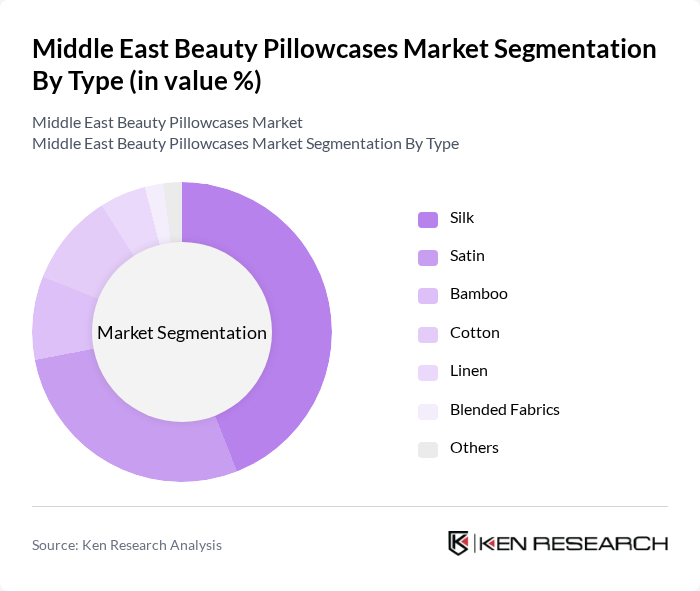
By Type:The market is segmented into various types of beauty pillowcases, including silk, satin, bamboo, cotton, linen, blended fabrics, and others. Among these, silk pillowcases are particularly popular due to their luxurious feel and skin benefits, such as reducing friction and preventing hair breakage. Satin pillowcases also hold a significant share, appealing to consumers seeking affordable alternatives with similar benefits. Demand for bamboo and cotton pillowcases is rising as consumers become more environmentally conscious and seek hypoallergenic options. The preference for sustainable and organic materials is increasingly shaping purchasing decisions in the region .
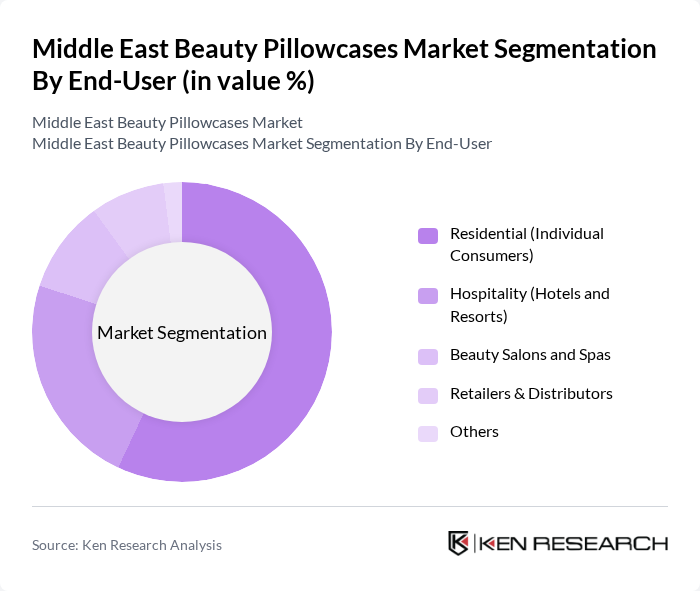
By End-User:The end-user segmentation includes residential consumers, hospitality (hotels and resorts), beauty salons and spas, retailers and distributors, and others. The residential segment dominates the market, as individual consumers increasingly invest in beauty products that enhance sleep quality and skincare routines. The hospitality sector is also significant, with luxury hotels and resorts seeking to provide premium amenities to guests, thereby driving demand for high-quality pillowcases. Beauty salons and spas are adopting premium pillowcases to enhance client experience, while retailers and distributors play a key role in expanding product accessibility .
The Middle East Beauty Pillowcases Market is characterized by a dynamic mix of regional and international players. Leading participants such as Slip, Blissy, Kitsch, The White Company, Brooklinen, Lunya, Sijo, Mulberry Park Silks, ZIMASILK, Mayfairsilk, John Lewis & Partners, Alibaba Group (Silk Pillowcase Brands), Zhejiang Jiaxin Silk Co., Ltd., LilySilk, and Cozy Earth contribute to innovation, geographic expansion, and service delivery in this space .
The future of the beauty pillowcase market in the Middle East appears promising, driven by increasing consumer interest in wellness and self-care. As more individuals prioritize sleep quality and skincare, the demand for innovative products that enhance these aspects is likely to rise. Additionally, the integration of technology in bedding products, such as temperature-regulating fabrics, may further attract consumers. Brands that effectively communicate the benefits of beauty pillowcases will likely capture a larger market share in the coming years.
| Segment | Sub-Segments |
|---|---|
| By Type | Silk Satin Bamboo Cotton Linen Blended Fabrics Others |
| By End-User | Residential (Individual Consumers) Hospitality (Hotels and Resorts) Beauty Salons and Spas Retailers & Distributors Others |
| By Distribution Channel | Online Retail (E-commerce Platforms, Brand Websites) Offline Retail (Department Stores, Specialty Stores) Direct Sales Wholesale/Distributors Others |
| By Price Range | Premium Mid-range Budget Others |
| By Material | Natural Fibers (Silk, Bamboo, Cotton, Linen) Synthetic Fibers (Polyester, Satin) Blended Materials Others |
| By Design | Printed Solid Colors Embroidered Others |
| By Brand Positioning | Luxury Brands Mid-tier Brands Mass Market Brands Others |
| Scope Item/Segment | Sample Size | Target Respondent Profiles |
|---|---|---|
| Retail Sales of Beauty Pillowcases | 100 | Retail Managers, Beauty Product Buyers |
| Consumer Preferences in Beauty Products | 120 | Beauty Enthusiasts, Regular Consumers |
| Market Trends in E-commerce for Beauty | 80 | E-commerce Managers, Digital Marketing Specialists |
| Insights from Beauty Industry Experts | 40 | Product Developers, Brand Managers |
| Distribution Channels for Beauty Pillowcases | 60 | Distributors, Supply Chain Managers |
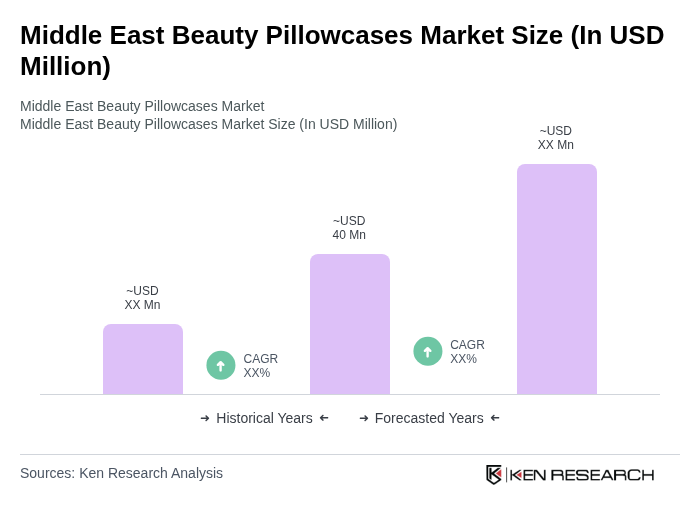
The Middle East Beauty Pillowcases Market is valued at approximately USD 40 million, reflecting a growing consumer interest in skincare and haircare benefits associated with high-quality pillowcases, particularly silk and satin options.

What makes us stand out is that our consultants follow Robust, Refine and Result (RRR) methodology. Robust for clear definitions, approaches and sanity checking, Refine for differentiating respondents' facts and opinions, and Result for presenting data with story.

We have set a benchmark in the industry by offering our clients with syndicated and customized market research reports featuring coverage of entire market as well as meticulous research and analyst insights.

While we don't replace traditional research, we flip the method upside down. Our dual approach of Top Bottom & Bottom Top ensures quality deliverable by not just verifying company fundamentals but also looking at the sector and macroeconomic factors.

With one step in the future, our research team constantly tries to show you the bigger picture. We help with some of the tough questions you may encounter along the way: How is the industry positioned? Best marketing channel? KPI's of competitors? By aligning every element, we help maximize success.

Our report gives you instant access to the answers and sources that other companies might choose to hide. We elaborate each steps of research methodology we have used and showcase you the sample size to earn your trust.

If you need any support, we are here! We pride ourselves on universe strength, data quality, and quick, friendly, and professional service.













