Middle East Freestanding Canopy Market Report Size Share Growth Drivers Trends Opportunities & Forecast 2025–2030

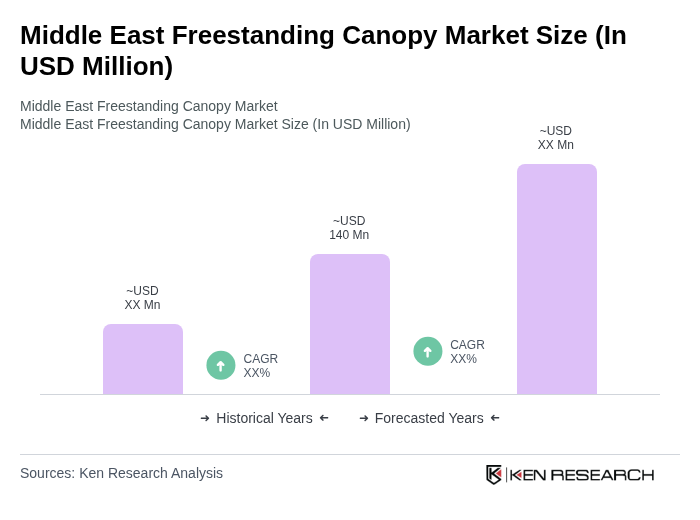
The Middle East Freestanding Canopy Market is worth USD 140 million, growing due to infrastructure investments, outdoor events, and sustainable construction trends.

Region:Middle East

Author(s):Geetanshi

Product Code:KRVN6090

Pages:92

Published On:December 2025
About the Report

Base Year 2024

Middle East Freestanding Canopy Market Overview

  • The Middle East Freestanding Canopy Market is valued at USD 140 million, based on a five-year historical analysis of the wider Middle East and Africa canopy market, which generated about USD 132.8 million in revenue in its latest reported base period. This growth is primarily driven by increasing urbanization, a rise in outdoor events, and a growing demand for shade solutions in residential, commercial, and institutional sectors. The market has seen stronger momentum from investments in infrastructure, hospitality, and tourism-led developments (such as mixed-use destinations, waterfront promenades, and outdoor F&B clusters), further propelling the need for versatile canopy solutions.
  • Key country-level demand centers in this market include Saudi Arabia, the United Arab Emirates, and Qatar, within the broader GCC canopy and shade structures space. These countries support a large share of regional installations due to rapid urban development, higher disposable incomes, mega infrastructure programs (such as Saudi Vision 2030 and UAE urban development initiatives), and a strong focus on tourism and hospitality assets including resorts, outdoor malls, stadiums, and public realm enhancements. Hot, high-solar-radiation climatic conditions across the Gulf also increase the demand for outdoor shading structures, car park canopies, and pedestrian shading, supporting the freestanding canopy segment.
  • In 2023, the UAE government strengthened regulations and standards to promote sustainable construction practices, including for outdoor structures, through instruments such as the Abu Dhabi International Building Code and related green building requirements, as well as the Dubai Green Building Regulations and Specifications issued by Dubai Municipality. These frameworks emphasize improved energy efficiency, heat-gain control, and material performance, encouraging the use of more durable, energy-efficient, and environmentally responsible materials in canopies and shading systems to enhance environmental performance of buildings and outdoor spaces.
Middle East Freestanding Canopy Market Report Size Share Growth Drivers Trends Opportunities & Forecast 2025–2030 Size

Middle East Freestanding Canopy Market Segmentation

By Product Type:The product type segmentation includes Shade Canopies, Event & Large Canopies, Carport & Parking Canopies, Garden & Patio Canopies, and Others, which is aligned with the way global canopy studies categorize shade canopy, event or large canopy, and other formats. Among these, Shade Canopies are leading the market due to their versatility and widespread use in residential, commercial, and community applications such as walkways, outdoor seating, playgrounds, and retail frontages. The growing trend of outdoor living spaces, alfresco dining, and open-air retail has significantly increased the demand for these canopies, making them a preferred choice for consumers and developers looking for both functionality and aesthetics in climate-challenging environments.
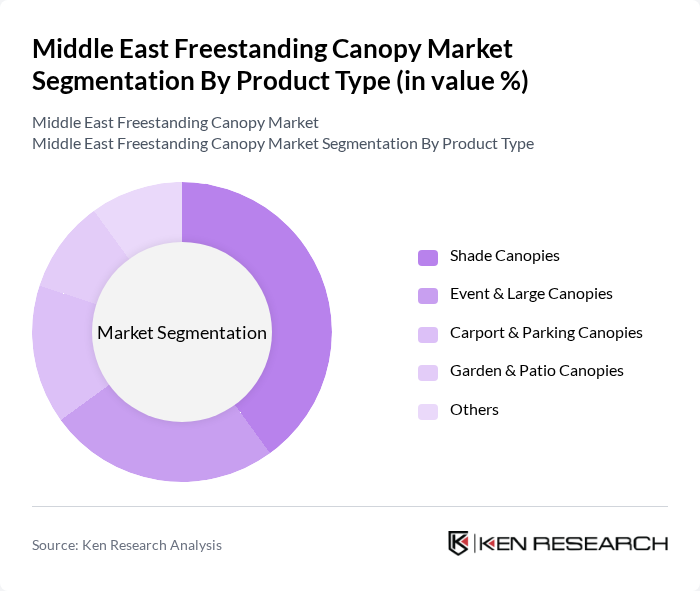
Middle East Freestanding Canopy Market segmentation by Product Type.

By Material:The material segmentation includes PTFE, ETFE, PVC & Other Plastics, Metals (Aluminum, Steel), and Wood & Hybrid Structures, consistent with global canopy material classifications where PTFE, ETFE, PVC, and metals are key categories. The leading subsegment is Metals (Aluminum, Steel), which is favored in the Middle East for its structural strength, corrosion resistance (especially powder-coated aluminum and galvanized or coated steel), and suitability for large-span car park and commercial shade structures. The increasing preference for long-lasting, wind-resistant, and low-maintenance framing systems in the construction of canopies has driven the demand for metal-based structures, particularly in commercial, institutional, and transport-related applications, while advanced membranes such as PTFE and ETFE are increasingly specified for premium architectural and tensile-canopy projects.
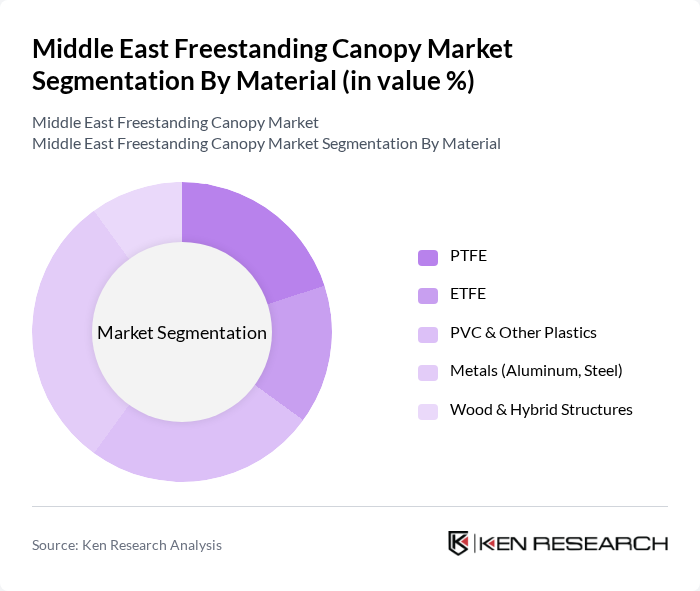
Middle East Freestanding Canopy Market segmentation by Material.

Middle East Freestanding Canopy Market Competitive Landscape

The Middle East Freestanding Canopy Market is characterized by a dynamic mix of regional and international players. Leading participants such as Sunshade Gulf LLC, Tensile Shade Structures LLC, Al-Futtaim Engineering & Technologies, Arabian Canopies & Shades, Shade Systems Arabia, Qatar Shade Engineering, Saudi Tensile Fabric Structures Co., Al Jazeera Steel Products Co. SAOG, Emirates Canopy & Tents, Gulf Outdoor Structures, Oman Canopy & Shade Solutions, Al Zamil Steel & Shade Division, Bahrain Sunshade Solutions, Kuwait Outdoor Canopies Co., Regional & International Niche Players contribute to innovation, geographic expansion, and service delivery in this space.

Sunshade Gulf LLC

2005

Dubai, UAE

Tensile Shade Structures LLC

2010

Abu Dhabi, UAE

Al-Futtaim Engineering & Technologies

1974

Dubai, UAE

Arabian Canopies & Shades

2000

Riyadh, Saudi Arabia

Shade Systems Arabia

2008

Jeddah, Saudi Arabia

Company

Establishment Year

Headquarters

Revenue (USD Million, Latest FY)

3-year Revenue CAGR (%)

EBITDA Margin (%)

Market Share in Middle East Freestanding Canopies (%)

Order Backlog / Book-to-Bill Ratio

Average Project Ticket Size (USD)

Middle East Freestanding Canopy Market Industry Analysis

Growth Drivers

  • Increasing Demand for Outdoor Spaces:The Middle East has witnessed a significant rise in outdoor space utilization, driven by a growing population and urbanization. In future, the region's urban population is projected to reach approximately 210 million, leading to a heightened demand for outdoor amenities. This trend is further supported by the World Bank's report indicating a 3% annual increase in urban development projects, which often incorporate freestanding canopies to enhance outdoor experiences in residential and commercial areas.
  • Rising Construction Activities in the Region:The construction sector in the Middle East is booming, with an estimated investment of $1.2 trillion in infrastructure projects by future. This surge is fueled by government initiatives aimed at diversifying economies and enhancing urban landscapes. According to the IMF, construction output is expected to grow by 4.5% in future, creating a robust market for freestanding canopies as integral components of new developments, including parks, hotels, and commercial spaces.
  • Expansion of Tourism and Hospitality Sectors:The Middle East's tourism sector is projected to grow significantly, with visitor numbers expected to reach 120 million by future. This growth is driven by major events, such as Expo 2025 in Osaka, which will increase regional tourism. The hospitality industry is responding by enhancing outdoor facilities, leading to a higher demand for freestanding canopies. The World Travel & Tourism Council estimates a 5% annual growth in tourism-related infrastructure investments, further supporting this trend.

Market Challenges

  • High Initial Investment Costs:The freestanding canopy market faces significant barriers due to high initial investment costs, which can range from $12,000 to $55,000 depending on size and materials. This financial burden can deter small businesses and individual investors from entering the market. According to the World Bank, the average cost of construction materials in the Middle East has increased by 15% in the past year, exacerbating the challenge of affordability for potential buyers.
  • Limited Availability of Skilled Labor:The construction and installation of freestanding canopies require specialized skills, which are currently in short supply in the Middle East. The region's labor market is facing a skills gap, with an estimated 32% of construction jobs unfilled due to a lack of qualified workers. The International Labour Organization reports that this shortage is expected to persist, hindering project timelines and increasing labor costs, which can impact overall market growth.

Middle East Freestanding Canopy Market Future Outlook

The future of the Middle East freestanding canopy market appears promising, driven by ongoing urbanization and a growing emphasis on outdoor living spaces. As governments continue to invest in infrastructure and tourism, the demand for innovative and aesthetically pleasing canopy solutions is expected to rise. Additionally, the integration of smart technologies and eco-friendly materials will likely shape product offerings, catering to environmentally conscious consumers. This evolving landscape presents opportunities for manufacturers to innovate and expand their market presence.

Market Opportunities

  • Technological Advancements in Materials:The development of lightweight, durable materials such as advanced composites and weather-resistant fabrics presents a significant opportunity for the freestanding canopy market. These innovations can enhance product longevity and reduce maintenance costs, appealing to both commercial and residential buyers looking for sustainable solutions.
  • Potential for Customization and Personalization:As consumer preferences shift towards personalized outdoor experiences, there is a growing opportunity for manufacturers to offer customizable freestanding canopies. Tailored designs that meet specific aesthetic and functional requirements can attract a broader customer base, particularly in the hospitality and event sectors, where unique outdoor settings are increasingly sought after.

Scope of the Report

SegmentSub-Segments
By Product Type

Shade Canopies

Event & Large Canopies

Carport & Parking Canopies

Garden & Patio Canopies

Others

By Material

PTFE

ETFE

PVC & Other Plastics

Metals (Aluminum, Steel)

Wood & Hybrid Structures

By End-Use Sector

Residential

Commercial

Industrial

Hospitality & Tourism

Public Infrastructure & Institutional

By Application

Outdoor Seating & Dining Areas

Parking & Car Shade Structures

Walkways, Entrances & Transit Areas

Sports, Recreation & Leisure Facilities

Events, Exhibitions & Temporary Installations

By Installation & Mobility

Permanent Freestanding Canopies

Semi-permanent Structures

Portable / Modular Canopies

Retractable Freestanding Canopies

Custom Architectural Canopies

By Sales Channel

Direct (Project & Contract Sales)

Specialized Distributors & Dealers

DIY Retail & Home Improvement Stores

Online / E-commerce Platforms

Others

By Country

Saudi Arabia

United Arab Emirates

Qatar

Kuwait

Oman

Bahrain

Rest of Middle East

Key Target Audience

Investors and Venture Capitalist Firms

Government and Regulatory Bodies (e.g., Ministry of Economy, Ministry of Municipal and Rural Affairs)

Manufacturers and Producers

Distributors and Retailers

Construction and Infrastructure Companies

Real Estate Developers

Architectural and Design Firms

Financial Institutions

Players Mentioned in the Report:

Sunshade Gulf LLC

Tensile Shade Structures LLC

Al-Futtaim Engineering & Technologies

Arabian Canopies & Shades

Shade Systems Arabia

Qatar Shade Engineering

Saudi Tensile Fabric Structures Co.

Al Jazeera Steel Products Co. SAOG

Emirates Canopy & Tents

Gulf Outdoor Structures

Oman Canopy & Shade Solutions

Al Zamil Steel & Shade Division

Bahrain Sunshade Solutions

Kuwait Outdoor Canopies Co.

Regional & International Niche Players

Table of Contents

Market Assessment Phase

1. Executive Summary and Approach


2. Middle East Freestanding Canopy Market Overview

2.1 Key Insights and Strategic Recommendations

2.2 Middle East Freestanding Canopy Market Overview

2.3 Definition and Scope

2.4 Evolution of Market Ecosystem

2.5 Timeline of Key Regulatory Milestones

2.6 Value Chain & Stakeholder Mapping

2.7 Business Cycle Analysis

2.8 Policy & Incentive Landscape


3. Middle East Freestanding Canopy Market Analysis

3.1 Growth Drivers

3.1.1 Increasing demand for outdoor spaces
3.1.2 Rising construction activities in the region
3.1.3 Growing awareness of environmental sustainability
3.1.4 Expansion of tourism and hospitality sectors

3.2 Market Challenges

3.2.1 High initial investment costs
3.2.2 Limited availability of skilled labor
3.2.3 Regulatory hurdles and compliance issues
3.2.4 Fluctuating raw material prices

3.3 Market Opportunities

3.3.1 Technological advancements in materials
3.3.2 Increasing government support for infrastructure
3.3.3 Growth in e-commerce and online retail
3.3.4 Potential for customization and personalization

3.4 Market Trends

3.4.1 Shift towards eco-friendly materials
3.4.2 Integration of smart technology in canopies
3.4.3 Rise in modular and portable canopy solutions
3.4.4 Increasing focus on aesthetic designs

3.5 Government Regulation

3.5.1 Building codes and safety standards
3.5.2 Environmental impact assessments
3.5.3 Zoning laws affecting outdoor structures
3.5.4 Incentives for sustainable construction practices

4. SWOT Analysis


5. Stakeholder Analysis


6. Porter's Five Forces Analysis


7. Middle East Freestanding Canopy Market Size, 2019-2024

7.1 By Value

7.2 By Volume

7.3 By Average Selling Price


8. Middle East Freestanding Canopy Market Segmentation

8.1 By Product Type

8.1.1 Shade Canopies
8.1.2 Event & Large Canopies
8.1.3 Carport & Parking Canopies
8.1.4 Garden & Patio Canopies
8.1.5 Others

8.2 By Material

8.2.1 PTFE
8.2.2 ETFE
8.2.3 PVC & Other Plastics
8.2.4 Metals (Aluminum, Steel)
8.2.5 Wood & Hybrid Structures

8.3 By End-Use Sector

8.3.1 Residential
8.3.2 Commercial
8.3.3 Industrial
8.3.4 Hospitality & Tourism
8.3.5 Public Infrastructure & Institutional

8.4 By Application

8.4.1 Outdoor Seating & Dining Areas
8.4.2 Parking & Car Shade Structures
8.4.3 Walkways, Entrances & Transit Areas
8.4.4 Sports, Recreation & Leisure Facilities
8.4.5 Events, Exhibitions & Temporary Installations

8.5 By Installation & Mobility

8.5.1 Permanent Freestanding Canopies
8.5.2 Semi-permanent Structures
8.5.3 Portable / Modular Canopies
8.5.4 Retractable Freestanding Canopies
8.5.5 Custom Architectural Canopies

8.6 By Sales Channel

8.6.1 Direct (Project & Contract Sales)
8.6.2 Specialized Distributors & Dealers
8.6.3 DIY Retail & Home Improvement Stores
8.6.4 Online / E-commerce Platforms
8.6.5 Others

8.7 By Country

8.7.1 Saudi Arabia
8.7.2 United Arab Emirates
8.7.3 Qatar
8.7.4 Kuwait
8.7.5 Oman
8.7.6 Bahrain
8.7.7 Rest of Middle East

9. Middle East Freestanding Canopy Market Competitive Analysis

9.1 Market Share of Key Players

9.2 Cross Comparison of Key Players

9.2.1 Company Name
9.2.2 Revenue (USD Million, Latest FY)
9.2.3 3-year Revenue CAGR (%)
9.2.4 EBITDA Margin (%)
9.2.5 Market Share in Middle East Freestanding Canopies (%)
9.2.6 Order Backlog / Book-to-Bill Ratio
9.2.7 Average Project Ticket Size (USD)
9.2.8 Installed Canopy Area in Region (m²)
9.2.9 Geographic Footprint (No. of Middle East Countries Served)
9.2.10 Project Win Rate in Competitive Bids (%)
9.2.11 Share of Revenue from Repeat Customers (%)
9.2.12 On-time Project Delivery Rate (%)
9.2.13 R&D / Innovation Spend (% of Revenue)
9.2.14 ESG / Green Project Share (% of Order Intake)

9.3 SWOT Analysis of Top Players

9.4 Pricing Analysis

9.5 Detailed Profile of Major Companies

9.5.1 Sunshade Gulf LLC
9.5.2 Tensile Shade Structures LLC
9.5.3 Al-Futtaim Engineering & Technologies
9.5.4 Arabian Canopies & Shades
9.5.5 Shade Systems Arabia
9.5.6 Qatar Shade Engineering
9.5.7 Saudi Tensile Fabric Structures Co.
9.5.8 Al Jazeera Steel Products Co. SAOG
9.5.9 Emirates Canopy & Tents
9.5.10 Gulf Outdoor Structures
9.5.11 Oman Canopy & Shade Solutions
9.5.12 Al Zamil Steel & Shade Division
9.5.13 Bahrain Sunshade Solutions
9.5.14 Kuwait Outdoor Canopies Co.
9.5.15 Regional & International Niche Players

10. Middle East Freestanding Canopy Market End-User Analysis

10.1 Procurement Behavior of Key Ministries

10.1.1 Budget Allocation Trends
10.1.2 Procurement Processes
10.1.3 Preferred Suppliers
10.1.4 Contracting Strategies

10.2 Corporate Spend on Infrastructure & Energy

10.2.1 Investment Trends
10.2.2 Budget Prioritization
10.2.3 Long-term Contracts
10.2.4 Sustainability Initiatives

10.3 Pain Point Analysis by End-User Category

10.3.1 Cost Management
10.3.2 Quality Assurance
10.3.3 Timeliness of Delivery
10.3.4 Compliance with Regulations

10.4 User Readiness for Adoption

10.4.1 Awareness Levels
10.4.2 Training Needs
10.4.3 Technology Acceptance
10.4.4 Financial Readiness

10.5 Post-Deployment ROI and Use Case Expansion

10.5.1 Performance Metrics
10.5.2 User Feedback
10.5.3 Expansion Opportunities
10.5.4 Long-term Benefits

11. Middle East Freestanding Canopy Market Future Size, 2025-2030

11.1 By Value

11.2 By Volume

11.3 By Average Selling Price


Go-To-Market Strategy Phase

1. Whitespace Analysis + Business Model Canvas

1.1 Market Gaps Identification

1.2 Value Proposition Development

1.3 Revenue Streams Analysis

1.4 Customer Segmentation

1.5 Key Partnerships

1.6 Cost Structure Analysis

1.7 Channels of Distribution


2. Marketing and Positioning Recommendations

2.1 Branding Strategies

2.2 Product USPs

2.3 Target Market Identification

2.4 Communication Strategies

2.5 Digital Marketing Approaches

2.6 Customer Engagement Tactics

2.7 Performance Metrics


3. Distribution Plan

3.1 Urban Retail Strategies

3.2 Rural NGO Tie-ups

3.3 E-commerce Integration

3.4 Direct Sales Approaches

3.5 Distribution Partnerships

3.6 Logistics Management

3.7 Inventory Control


4. Channel & Pricing Gaps

4.1 Underserved Routes

4.2 Pricing Bands

4.3 Competitive Pricing Analysis

4.4 Customer Perception of Value

4.5 Price Sensitivity Analysis

4.6 Discount Strategies

4.7 Bundling Opportunities


5. Unmet Demand & Latent Needs

5.1 Category Gaps

5.2 Consumer Segments

5.3 Emerging Trends

5.4 Product Development Opportunities

5.5 Market Entry Strategies

5.6 Customer Feedback Mechanisms

5.7 Innovation Opportunities


6. Customer Relationship

6.1 Loyalty Programs

6.2 After-sales Service

6.3 Customer Support Strategies

6.4 Feedback Collection Methods

6.5 Relationship Management Tools

6.6 Community Engagement

6.7 Customer Retention Strategies


7. Value Proposition

7.1 Sustainability Initiatives

7.2 Integrated Supply Chains

7.3 Unique Selling Points

7.4 Customer-Centric Approaches

7.5 Competitive Advantages

7.6 Value-Added Services

7.7 Market Differentiation Strategies


8. Key Activities

8.1 Regulatory Compliance

8.2 Branding Initiatives

8.3 Distribution Setup

8.4 Marketing Campaigns

8.5 Training and Development

8.6 Performance Monitoring

8.7 Stakeholder Engagement


9. Entry Strategy Evaluation

9.1 Domestic Market Entry Strategy

9.1.1 Product Mix
9.1.2 Pricing Band
9.1.3 Packaging Strategies
9.1.4 Marketing Approaches
9.1.5 Distribution Channels
9.1.6 Customer Engagement
9.1.7 Risk Management

9.2 Export Entry Strategy

9.2.1 Target Countries
9.2.2 Compliance Roadmap
9.2.3 Market Research
9.2.4 Distribution Partnerships
9.2.5 Pricing Strategies
9.2.6 Marketing Tactics
9.2.7 Risk Assessment

10. Entry Mode Assessment

10.1 Joint Ventures

10.2 Greenfield Investments

10.3 Mergers & Acquisitions

10.4 Distributor Model

10.5 Strategic Alliances

10.6 Licensing Agreements

10.7 Franchising Opportunities


11. Capital and Timeline Estimation

11.1 Capital Requirements

11.2 Timelines for Implementation

11.3 Funding Sources

11.4 Financial Projections

11.5 Risk Management Strategies

11.6 Milestone Tracking

11.7 Budget Allocation


12. Control vs Risk Trade-Off

12.1 Ownership Models

12.2 Partnership Structures

12.3 Risk Mitigation Strategies

12.4 Control Mechanisms

12.5 Performance Monitoring

12.6 Exit Strategies

12.7 Stakeholder Management


13. Profitability Outlook

13.1 Breakeven Analysis

13.2 Long-term Sustainability

13.3 Profit Margin Projections

13.4 Revenue Growth Strategies

13.5 Cost Management Techniques

13.6 Financial Health Indicators

13.7 Investment Returns


14. Potential Partner List

14.1 Distributors

14.2 Joint Ventures

14.3 Acquisition Targets

14.4 Strategic Alliances

14.5 Supplier Partnerships

14.6 Technology Collaborations

14.7 Market Entry Partners


15. Execution Roadmap

15.1 Phased Plan for Market Entry

15.1.1 Market Setup
15.1.2 Market Entry
15.1.3 Growth Acceleration
15.1.4 Scale & Stabilize

15.2 Key Activities and Milestones

15.2.1 Initial Setup
15.2.2 Launch Activities
15.2.3 Growth Strategies
15.2.4 Performance Reviews

Research Methodology

ApproachModellingSample

Phase 1: Approach1

Desk Research

  • Industry reports from regional trade associations and market research firms
  • Government publications on infrastructure development and urban planning
  • Academic journals and white papers on architectural trends and materials

Primary Research

  • Interviews with architects and urban planners specializing in outdoor structures
  • Surveys with manufacturers of freestanding canopies and related materials
  • Field visits to construction sites utilizing freestanding canopies

Validation & Triangulation

  • Cross-validation of data from multiple industry sources and expert opinions
  • Triangulation of market trends with economic indicators and construction activity
  • Sanity checks through feedback from industry panels and focus groups

Phase 2: Market Size Estimation1

Top-down Assessment

  • Analysis of total construction spending in the Middle East region
  • Segmentation of market size by application areas such as commercial, residential, and recreational
  • Incorporation of government initiatives promoting outdoor spaces and public infrastructure

Bottom-up Modeling

  • Volume estimates based on sales data from leading canopy manufacturers
  • Cost analysis derived from material pricing and installation services
  • Estimation of market share based on regional demand and supply dynamics

Forecasting & Scenario Analysis

  • Multi-variable forecasting using construction growth rates and urbanization trends
  • Scenario planning based on economic fluctuations and regulatory changes
  • Development of baseline, optimistic, and pessimistic market projections through 2030

Phase 3: CATI Sample Composition1

Scope Item/SegmentSample SizeTarget Respondent Profiles
Commercial Canopy Installations110Project Managers, Facility Managers
Residential Canopy Solutions85Homeowners, Landscape Architects
Public Space Canopy Projects75Urban Planners, City Officials
Event and Temporary Canopy Rentals65Event Coordinators, Rental Company Owners
Material Suppliers for Canopies95Procurement Managers, Product Development Specialists

Frequently Asked Questions

What is the current value of the Middle East Freestanding Canopy Market?

The Middle East Freestanding Canopy Market is valued at approximately USD 140 million, reflecting a significant growth trend driven by urbanization, outdoor events, and increased demand for shade solutions across various sectors.

Which countries are the key demand centers for freestanding canopies in the Middle East?

What are the main product types in the Middle East Freestanding Canopy Market?

What materials are commonly used in freestanding canopies?

Other Regional/Country Reports

Indonesia Freestanding Canopy Market

Malaysia Freestanding Canopy Market

KSA Freestanding Canopy Market

APAC Freestanding Canopy Market

SEA Freestanding Canopy Market

Vietnam Freestanding Canopy Market

Other Adjacent Reports

Belgium Awning Market

Vietnam Shade Sail Market

Thailand Pergola Market

Oman Gazebo Market

Egypt Tent Market

Global outdoor furniture market Size, Share, Growth Drivers, Trends, Opportunities & Forecast 2025–2030

Mexico Sunshade Market

Brazil Carport Market

Qatar Patio Cover Market

Vietnam Membrane Structure Market

Why Buy From Us?

Refine Robust Result (RRR) Framework

What makes us stand out is that our consultants follow Robust, Refine and Result (RRR) methodology. Robust for clear definitions, approaches and sanity checking, Refine for differentiating respondents' facts and opinions, and Result for presenting data with story.

Our Reach Is Unmatched

We have set a benchmark in the industry by offering our clients with syndicated and customized market research reports featuring coverage of entire market as well as meticulous research and analyst insights.

Shifting the Research Paradigm

While we don't replace traditional research, we flip the method upside down. Our dual approach of Top Bottom & Bottom Top ensures quality deliverable by not just verifying company fundamentals but also looking at the sector and macroeconomic factors.

More Insights-Better Decisions

With one step in the future, our research team constantly tries to show you the bigger picture. We help with some of the tough questions you may encounter along the way: How is the industry positioned? Best marketing channel? KPI's of competitors? By aligning every element, we help maximize success.

Transparency and Trust

Our report gives you instant access to the answers and sources that other companies might choose to hide. We elaborate each steps of research methodology we have used and showcase you the sample size to earn your trust.

Round the Clock Support

If you need any support, we are here! We pride ourselves on universe strength, data quality, and quick, friendly, and professional service.

Why Clients Choose Us?

400000+
Reports in repository
150+
Consulting projects a year
100+
Analysts
8000+
Client Queries in 2022








