Region:Middle East
Author(s):Dev
Product Code:KRAC8670
Pages:91
Published On:November 2025
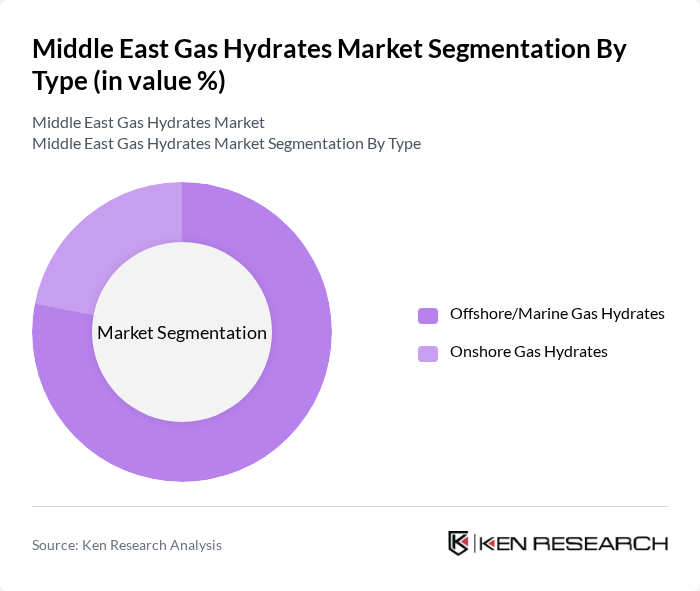
By Type:The market is segmented into Offshore/Marine Gas Hydrates and Onshore Gas Hydrates. Offshore/Marine Gas Hydrates are predominantly located in deep-sea environments, while Onshore Gas Hydrates are found in permafrost regions and sedimentary basins. The Offshore/Marine segment leads the market, supported by the vast reserves in marine sediments and rapid advancements in offshore exploration and extraction technologies.
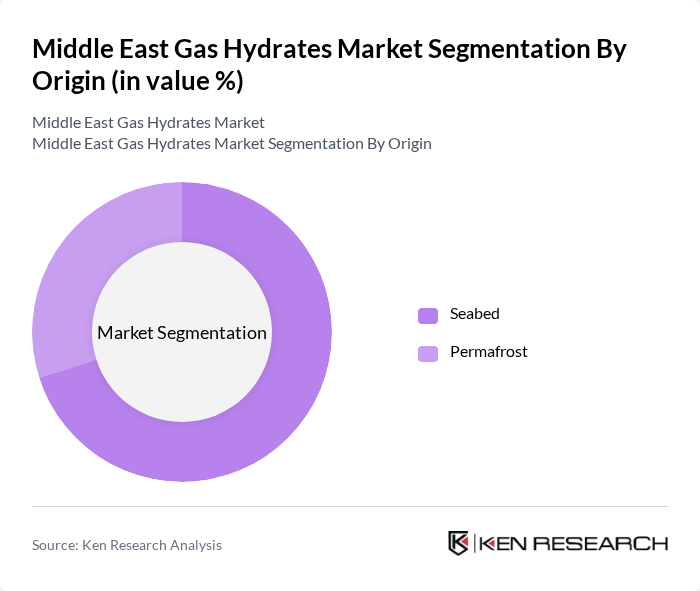
By Origin:The market is categorized into Seabed and Permafrost. Seabed gas hydrates are present in marine environments, while permafrost gas hydrates occur in cold terrestrial regions. The Seabed segment dominates the market, attributed to the higher concentration of gas hydrates in marine sediments and ongoing technological advancements in offshore drilling and production.
The Middle East Gas Hydrates Market is characterized by a dynamic mix of regional and international players. Leading participants such as QatarEnergy, Abu Dhabi National Oil Company (ADNOC), Saudi Aramco, Oman Energy Group (OQ), Kuwait Petroleum Corporation (KPC), National Iranian Oil Company (NIOC), Bahrain Petroleum Company (BAPCO), Emirates National Oil Company (ENOC), Iraq National Oil Company (INOC), TotalEnergies SE, Shell plc, BP plc, Chevron Corporation, Eni S.p.A., Schlumberger Limited, Halliburton Company, Woodside Energy Group Ltd, and Japan Oil, Gas and Metals National Corporation (JOGMEC) contribute to innovation, geographic expansion, and service delivery in this space.
The future of the Middle East gas hydrates market appears promising, driven by increasing energy demands and technological innovations. As countries prioritize energy diversification, gas hydrates are likely to play a pivotal role in meeting future energy needs. Furthermore, the ongoing development of sustainable extraction practices and enhanced regulatory frameworks will facilitate the responsible exploration of gas hydrates, ensuring that environmental concerns are addressed while capitalizing on this abundant resource.
| Segment | Sub-Segments |
|---|---|
| By Type | Offshore/Marine Gas Hydrates Onshore Gas Hydrates |
| By Origin | Seabed Permafrost |
| By End-User | Energy Sector Industrial Applications Research Institutions Power Generation Transportation Chemical Production |
| By Extraction Method | Depressurization Method Thermal Stimulation Method Inhibitor Injection Method CO? Sequestration Method |
| By Geography | Gulf Cooperation Council (GCC) Levant Region North Africa Rest of Middle East & Africa |
| Scope Item/Segment | Sample Size | Target Respondent Profiles |
|---|---|---|
| Gas Hydrate Exploration Projects | 45 | Geologists, Project Managers |
| Energy Policy Development | 38 | Government Officials, Energy Policy Analysts |
| Technological Innovations in Extraction | 42 | R&D Managers, Technology Officers |
| Market Demand for Natural Gas | 40 | Energy Traders, Market Analysts |
| Environmental Impact Assessments | 35 | Environmental Scientists, Compliance Officers |
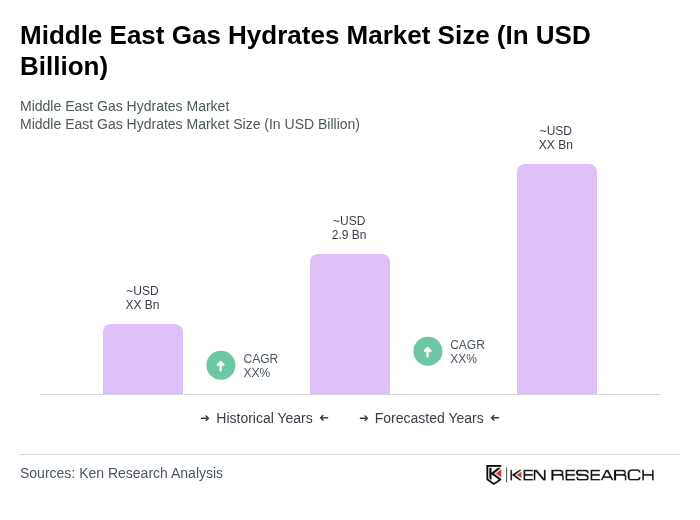
The Middle East Gas Hydrates Market is valued at approximately USD 2.9 billion, driven by increasing energy demand, energy diversification strategies, and advancements in extraction technologies. This market is positioned as a key component for energy security and sustainability in the region.

What makes us stand out is that our consultants follow Robust, Refine and Result (RRR) methodology. Robust for clear definitions, approaches and sanity checking, Refine for differentiating respondents' facts and opinions, and Result for presenting data with story.

We have set a benchmark in the industry by offering our clients with syndicated and customized market research reports featuring coverage of entire market as well as meticulous research and analyst insights.

While we don't replace traditional research, we flip the method upside down. Our dual approach of Top Bottom & Bottom Top ensures quality deliverable by not just verifying company fundamentals but also looking at the sector and macroeconomic factors.

With one step in the future, our research team constantly tries to show you the bigger picture. We help with some of the tough questions you may encounter along the way: How is the industry positioned? Best marketing channel? KPI's of competitors? By aligning every element, we help maximize success.

Our report gives you instant access to the answers and sources that other companies might choose to hide. We elaborate each steps of research methodology we have used and showcase you the sample size to earn your trust.

If you need any support, we are here! We pride ourselves on universe strength, data quality, and quick, friendly, and professional service.













