About the Report
Base Year 2024Middle East Hot Sauce Market Overview
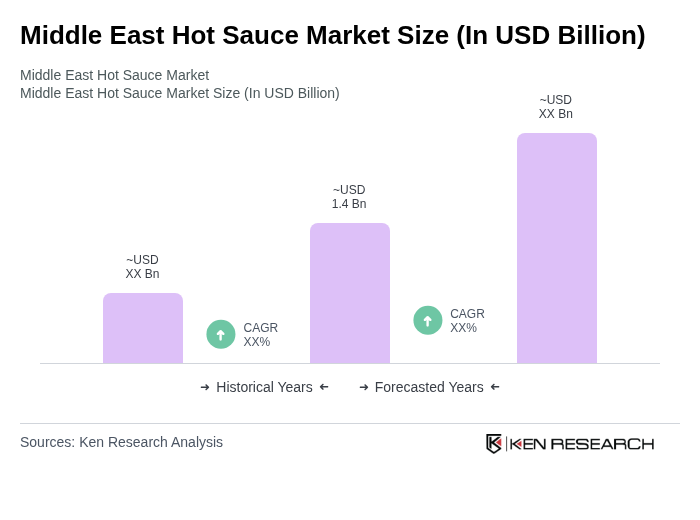
- The Middle East Hot Sauce Market is valued at USD 1.4 billion, based on a five-year historical analysis. This growth is primarily driven by the increasing popularity of spicy foods, the rise of culinary tourism, and the growing trend of food experimentation among consumers. The market has seen a surge in demand for diverse flavors and heat levels, catering to a wide range of consumer preferences.
- Key players in this market include countries like Saudi Arabia, the United Arab Emirates, and Egypt. These regions dominate the market due to their rich culinary traditions that incorporate spicy flavors, as well as a growing expatriate population that influences local tastes. The urbanization and increasing disposable income in these countries further contribute to the market's expansion. The Middle East & Africa region is experiencing particularly robust growth, expanding at a CAGR of 7.80% during the forecast period, driven by strong growth in the tourism and gastronomy industries across the region.
- The Saudi Food and Drug Authority (SFDA) Food Safety Standards, issued by the Ministry of Health in Saudi Arabia, establish comprehensive requirements for all hot sauce manufacturers regarding labeling standards, ingredient disclosure, and nutritional information. These regulations mandate clear ingredient lists, allergen declarations, and nutritional composition details on all product packaging. Compliance with these standards is essential for market players to ensure their products meet safety requirements and gain market acceptance across the competitive landscape.
Middle East Hot Sauce Market Segmentation
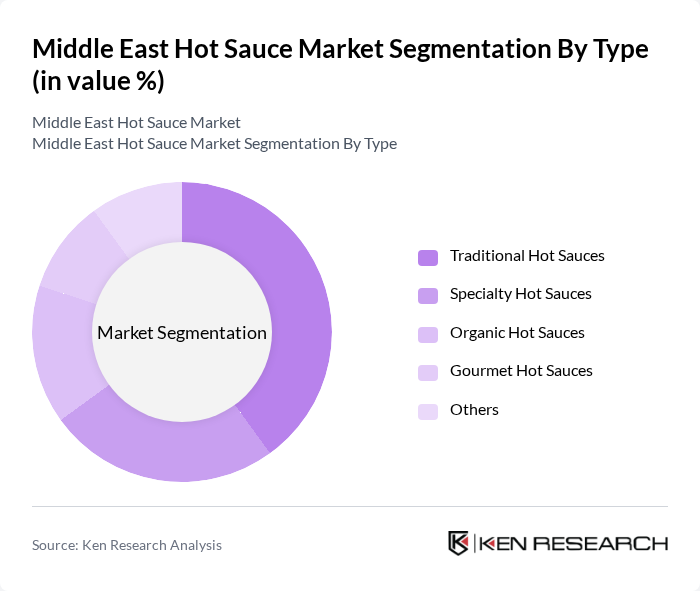
By Type:The hot sauce market can be segmented into various types, including Traditional Hot Sauces, Specialty Hot Sauces, Organic Hot Sauces, Gourmet Hot Sauces, and Others. Among these, Traditional Hot Sauces are particularly popular due to their cultural significance and established consumer base. Specialty Hot Sauces are gaining traction as consumers seek unique flavors and artisanal products. Organic Hot Sauces are also on the rise, driven by health-conscious consumers looking for natural ingredients. The market also includes mild hot sauces and very hot sauces, reflecting the diverse heat preferences across the region.
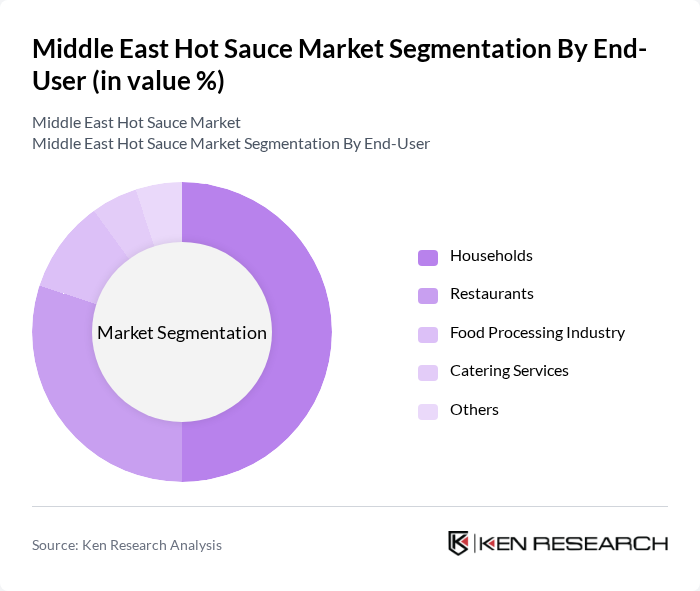
By End-User:The market can also be segmented based on end-users, including Households, Restaurants, Food Processing Industry, Catering Services, and Others. Households represent a significant portion of the market as consumers increasingly incorporate hot sauces into their daily cooking. Restaurants are also a major end-user, utilizing hot sauces to enhance their menu offerings and attract customers seeking bold flavors. Commercial establishments and foodservice operations, including quick-service restaurants (QSRs), are expanding their use of hot sauce condiments through menu innovations.
Middle East Hot Sauce Market Competitive Landscape
The Middle East Hot Sauce Market is characterized by a dynamic mix of regional and international players. Leading participants such as Tabasco, Sriracha, Frank's RedHot, Harissa, El Yucateco, Cholula, Crystal Hot Sauce, Louisiana Hot Sauce, Dave's Gourmet, Huy Fong Foods, Peri-Peri Sauce, Nando's, Tapatío, Piri Piri, Spicy World contribute to innovation, geographic expansion, and service delivery in this space. Regional players including Haute Sauces, Culex Food, Sauce King, The Kraft Heinz Company, and Oman Agro Industries LLC are also strengthening their market presence through product diversification and expanded distribution channels.
Middle East Hot Sauce Market Industry Analysis
Growth Drivers
- Increasing Consumer Interest in Spicy Foods:The Middle East has seen a significant rise in consumer interest in spicy foods, with the hot sauce segment experiencing a growth rate of 15% annually. According to the Food and Agriculture Organization, the per capita consumption of chili peppers in the region reached 2.6 kg in future, reflecting a growing preference for spicy flavors. This trend is driven by cultural influences and the increasing availability of diverse hot sauce brands, catering to local tastes and preferences.
- Rising Popularity of International Cuisines:The influx of international cuisines, particularly from Asia and Latin America, has contributed to the hot sauce market's expansion. In future, the import of Asian food products increased by 21%, with hot sauces being a significant component. This trend is supported by the growing number of restaurants and food outlets offering global dishes, which has led to a 32% increase in hot sauce sales in food service establishments across the region.
- Growth of the Food Service Industry:The food service industry in the Middle East is projected to reach $110 billion in future, driven by increased tourism and urbanization. This growth has led to a higher demand for hot sauces as restaurants seek to enhance their menu offerings. A report by the Middle East Food Service Association indicates that 62% of restaurants now include hot sauces as a staple condiment, further boosting market demand and consumer exposure to various flavors.
Market Challenges
- Intense Competition Among Local and International Brands:The hot sauce market in the Middle East is characterized by fierce competition, with over 210 brands vying for market share. This saturation has led to price wars, impacting profit margins. According to industry reports, the top five brands control only 41% of the market, indicating a fragmented landscape where new entrants struggle to establish a foothold amidst established players.
- Regulatory Hurdles and Compliance Issues:Navigating the regulatory landscape poses significant challenges for hot sauce manufacturers. In future, the introduction of stricter food safety regulations resulted in a 26% increase in compliance costs for producers. Additionally, varying import tariffs across countries complicate market entry for international brands, limiting their ability to compete effectively in the region and potentially stifling innovation.
Middle East Hot Sauce Market Future Outlook
The Middle East hot sauce market is poised for continued growth, driven by evolving consumer preferences and the increasing integration of spicy flavors into traditional dishes. As health-conscious consumers seek out natural and organic options, brands that innovate with clean-label products are likely to gain traction. Furthermore, the rise of e-commerce platforms is expected to enhance accessibility, allowing consumers to explore a wider variety of hot sauces, thus expanding market reach and engagement.
Market Opportunities
- Growing Demand for Organic and Natural Hot Sauces:The demand for organic hot sauces is on the rise, with sales increasing by 42% in future. Consumers are increasingly prioritizing health and sustainability, creating opportunities for brands to develop organic lines that cater to this trend, potentially capturing a larger market share.
- Potential for Product Innovation and Flavor Diversification:There is significant potential for product innovation, particularly in flavor diversification. The introduction of unique regional flavors could attract new consumers, with market research indicating that 72% of consumers are interested in trying new hot sauce flavors, presenting a lucrative opportunity for brands to expand their product lines.
Scope of the Report
| Segment | Sub-Segments |
|---|---|
| By Type | Traditional Hot Sauces Specialty Hot Sauces Organic Hot Sauces Gourmet Hot Sauces Others |
| By End-User | Households Restaurants Food Processing Industry Catering Services Others |
| By Distribution Channel | Supermarkets/Hypermarkets Online Retail Convenience Stores Specialty Stores Others |
| By Packaging Type | Bottles Pouches Jars Sachets Others |
| By Flavor Profile | Mild Medium Hot Extra Hot Others |
| By Region | GCC Countries Levant Region North Africa Others |
| By Price Range | Budget Mid-Range Premium Others |
Key Target Audience
Investors and Venture Capitalist Firms
Government and Regulatory Bodies (e.g., Ministry of Health, Food Safety Authority)
Manufacturers and Producers
Distributors and Retailers
Food Service Providers (e.g., Restaurants, Catering Services)
Importers and Exporters
Industry Associations (e.g., Middle East Food and Beverage Association)
Financial Institutions (e.g., Banks, Investment Firms)
Players Mentioned in the Report:
Tabasco
Sriracha
Frank's RedHot
Harissa
El Yucateco
Cholula
Crystal Hot Sauce
Louisiana Hot Sauce
Dave's Gourmet
Huy Fong Foods
Peri-Peri Sauce
Nando's
Tapatio
Piri Piri
Spicy World
Table of Contents
Market Assessment Phase
1. Executive Summary and Approach
2. Middle East Hot Sauce Market Overview
2.1 Key Insights and Strategic Recommendations
2.2 Middle East Hot Sauce Market Overview
2.3 Definition and Scope
2.4 Evolution of Market Ecosystem
2.5 Timeline of Key Regulatory Milestones
2.6 Value Chain & Stakeholder Mapping
2.7 Business Cycle Analysis
2.8 Policy & Incentive Landscape
3. Middle East Hot Sauce Market Analysis
3.1 Growth Drivers
3.1.1 Increasing consumer interest in spicy foods
3.1.2 Rising popularity of international cuisines
3.1.3 Growth of the food service industry
3.1.4 Expansion of retail distribution channels
3.2 Market Challenges
3.2.1 Intense competition among local and international brands
3.2.2 Regulatory hurdles and compliance issues
3.2.3 Fluctuating raw material prices
3.2.4 Limited consumer awareness in certain regions
3.3 Market Opportunities
3.3.1 Growing demand for organic and natural hot sauces
3.3.2 Potential for product innovation and flavor diversification
3.3.3 Expansion into untapped markets
3.3.4 Increasing online sales channels
3.4 Market Trends
3.4.1 Rising health consciousness among consumers
3.4.2 Emergence of gourmet and artisanal hot sauces
3.4.3 Popularity of hot sauce in social media and food culture
3.4.4 Increased focus on sustainable packaging solutions
3.5 Government Regulation
3.5.1 Food safety standards and labeling requirements
3.5.2 Import tariffs and trade regulations
3.5.3 Health and safety compliance for food products
3.5.4 Environmental regulations affecting production
4. SWOT Analysis
5. Stakeholder Analysis
6. Porter's Five Forces Analysis
7. Middle East Hot Sauce Market Market Size, 2019-2024
7.1 By Value
7.2 By Volume
7.3 By Average Selling Price
8. Middle East Hot Sauce Market Segmentation
8.1 By Type
8.1.1 Traditional Hot Sauces
8.1.2 Specialty Hot Sauces
8.1.3 Organic Hot Sauces
8.1.4 Gourmet Hot Sauces
8.1.5 Others
8.2 By End-User
8.2.1 Households
8.2.2 Restaurants
8.2.3 Food Processing Industry
8.2.4 Catering Services
8.2.5 Others
8.3 By Distribution Channel
8.3.1 Supermarkets/Hypermarkets
8.3.2 Online Retail
8.3.3 Convenience Stores
8.3.4 Specialty Stores
8.3.5 Others
8.4 By Packaging Type
8.4.1 Bottles
8.4.2 Pouches
8.4.3 Jars
8.4.4 Sachets
8.4.5 Others
8.5 By Flavor Profile
8.5.1 Mild
8.5.2 Medium
8.5.3 Hot
8.5.4 Extra Hot
8.5.5 Others
8.6 By Region
8.6.1 GCC Countries
8.6.2 Levant Region
8.6.3 North Africa
8.6.4 Others
8.7 By Price Range
8.7.1 Budget
8.7.2 Mid-Range
8.7.3 Premium
8.7.4 Others
9. Middle East Hot Sauce Market Competitive Analysis
9.1 Market Share of Key Players
9.2 Cross Comparison of Key Players
9.2.1 Company Name
9.2.2 Group Size (Large, Medium, or Small as per industry convention)
9.2.3 Revenue Growth Rate
9.2.4 Market Penetration Rate
9.2.5 Customer Retention Rate
9.2.6 Pricing Strategy
9.2.7 Product Diversification Index
9.2.8 Brand Recognition Score
9.2.9 Distribution Efficiency
9.2.10 Customer Satisfaction Index
9.3 SWOT Analysis of Top Players
9.4 Pricing Analysis
9.5 Detailed Profile of Major Companies
9.5.1 Tabasco
9.5.2 Sriracha
9.5.3 Frank's RedHot
9.5.4 Harissa
9.5.5 El Yucateco
9.5.6 Cholula
9.5.7 Crystal Hot Sauce
9.5.8 Louisiana Hot Sauce
9.5.9 Dave's Gourmet
9.5.10 Huy Fong Foods
9.5.11 Peri-Peri Sauce
9.5.12 Nando's
9.5.13 Tapatío
9.5.14 Piri Piri
9.5.15 Spicy World
10. Middle East Hot Sauce Market End-User Analysis
10.1 Procurement Behavior of Key Ministries
10.1.1 Government contracts and tenders
10.1.2 Budget allocation for food products
10.1.3 Supplier evaluation criteria
10.1.4 Compliance with local sourcing regulations
10.2 Corporate Spend on Infrastructure & Energy
10.2.1 Investment in food processing facilities
10.2.2 Expenditure on supply chain logistics
10.2.3 Budget for marketing and promotions
10.2.4 Spending on quality assurance and testing
10.3 Pain Point Analysis by End-User Category
10.3.1 Supply chain disruptions
10.3.2 Quality consistency issues
10.3.3 Price volatility of raw materials
10.3.4 Limited product variety
10.4 User Readiness for Adoption
10.4.1 Awareness of hot sauce benefits
10.4.2 Willingness to experiment with flavors
10.4.3 Availability of hot sauce in local markets
10.4.4 Consumer education initiatives
10.5 Post-Deployment ROI and Use Case Expansion
10.5.1 Measurement of sales growth
10.5.2 Customer feedback and satisfaction
10.5.3 Market share analysis
10.5.4 Opportunities for product line expansion
11. Middle East Hot Sauce Market Future Size, 2025-2030
11.1 By Value
11.2 By Volume
11.3 By Average Selling Price
Go-To-Market Strategy Phase
1. Whitespace Analysis + Business Model Canvas
1.1 Market gaps and opportunities
2. Marketing and Positioning Recommendations
2.1 Branding strategies and Product USPs
3. Distribution Plan
3.1 Urban retail vs rural NGO tie-ups
4. Channel & Pricing Gaps
4.1 Underserved routes and Pricing bands
5. Unmet Demand & Latent Needs
5.1 Category gaps and Consumer segments
6. Customer Relationship
6.1 Loyalty programs and After-sales service
7. Value Proposition
7.1 Sustainability and Integrated supply chains
8. Key Activities
8.1 Regulatory compliance, Branding, Distribution setup
9. Entry Strategy Evaluation
9.1 Domestic Market Entry Strategy
9.1.1 Product mix and Pricing band
9.2 Export Entry Strategy
9.2.1 Target countries and Compliance roadmap
10. Entry Mode Assessment
10.1 JV, Greenfield, M&A, Distributor Model
11. Capital and Timeline Estimation
11.1 Capital requirements and Timelines
12. Control vs Risk Trade-Off
12.1 Ownership vs Partnerships
13. Profitability Outlook
13.1 Breakeven analysis and Long-term sustainability
14. Potential Partner List
14.1 Distributors, JVs, Acquisition targets
15. Execution Roadmap
15.1 Phased Plan for Market Entry
15.1.1 Market Setup ? Market Entry ? Growth Acceleration ? Scale & Stabilize
15.2 Key Activities and Milestones
15.2.1 Timeline and deliverables
Research Methodology
Phase 1: Approach1
Desk Research
- Analysis of market reports from industry associations and trade publications focused on the Middle East hot sauce sector
- Review of consumer behavior studies and culinary trends in the region
- Examination of import/export data and regulatory frameworks affecting hot sauce production and distribution
Primary Research
- Interviews with key stakeholders including hot sauce manufacturers, distributors, and retailers
- Surveys targeting consumers to understand preferences, purchasing habits, and brand loyalty
- Focus groups with culinary experts and chefs to gather insights on flavor trends and product innovation
Validation & Triangulation
- Cross-validation of findings through comparison with existing market data and consumer insights
- Triangulation of qualitative insights from interviews with quantitative data from surveys
- Sanity checks conducted through expert panel reviews to ensure data reliability and relevance
Phase 2: Market Size Estimation1
Top-down Assessment
- Estimation of market size based on overall food and condiment market growth in the Middle East
- Segmentation of the hot sauce market by product type, including traditional, gourmet, and specialty sauces
- Incorporation of demographic trends and regional culinary preferences influencing hot sauce consumption
Bottom-up Modeling
- Collection of sales data from leading hot sauce brands and local producers
- Estimation of average retail prices and volume sold across various distribution channels
- Analysis of consumer spending patterns on condiments to derive per capita consumption rates
Forecasting & Scenario Analysis
- Multi-factor regression analysis incorporating economic indicators, population growth, and culinary trends
- Scenario modeling based on potential shifts in consumer preferences towards spicy foods and health trends
- Development of baseline, optimistic, and pessimistic forecasts through 2030
Phase 3: CATI Sample Composition1
| Scope Item/Segment | Sample Size | Target Respondent Profiles |
|---|---|---|
| Retail Hot Sauce Sales | 150 | Store Managers, Category Buyers |
| Consumer Preferences Survey | 120 | Hot Sauce Consumers, Food Enthusiasts |
| Food Service Industry Insights | 100 | Restaurant Owners, Chefs |
| Distribution Channel Analysis | 80 | Distributors, Wholesalers |
| Market Trend Evaluation | 120 | Culinary Experts, Food Bloggers |
Frequently Asked Questions
What is the current value of the Middle East Hot Sauce Market?
The Middle East Hot Sauce Market is valued at approximately USD 1.4 billion, reflecting a significant growth trend driven by increasing consumer interest in spicy foods and culinary experimentation across the region.
Which countries dominate the Middle East Hot Sauce Market?
What are the main growth drivers for the Middle East Hot Sauce Market?
What types of hot sauces are popular in the Middle East?
Other Regional/Country Reports
Other Adjacent Reports
Kuwait Sauces Market
Global Spices Market Organic Foods MarketMalaysia Gourmet Foods Market
Vietnam Food Service Market Outlook to 2031Malaysia Culinary Ingredients Market
Mexico Ethnic Foods Market
South Korea Flavorings Market
India Food Processing Market Outlook to 2030Why Buy From Us?

What makes us stand out is that our consultants follow Robust, Refine and Result (RRR) methodology. Robust for clear definitions, approaches and sanity checking, Refine for differentiating respondents' facts and opinions, and Result for presenting data with story.

We have set a benchmark in the industry by offering our clients with syndicated and customized market research reports featuring coverage of entire market as well as meticulous research and analyst insights.

While we don't replace traditional research, we flip the method upside down. Our dual approach of Top Bottom & Bottom Top ensures quality deliverable by not just verifying company fundamentals but also looking at the sector and macroeconomic factors.

With one step in the future, our research team constantly tries to show you the bigger picture. We help with some of the tough questions you may encounter along the way: How is the industry positioned? Best marketing channel? KPI's of competitors? By aligning every element, we help maximize success.

Our report gives you instant access to the answers and sources that other companies might choose to hide. We elaborate each steps of research methodology we have used and showcase you the sample size to earn your trust.

If you need any support, we are here! We pride ourselves on universe strength, data quality, and quick, friendly, and professional service.