Region:Middle East
Author(s):Shubham
Product Code:KRAD3560
Pages:88
Published On:November 2025
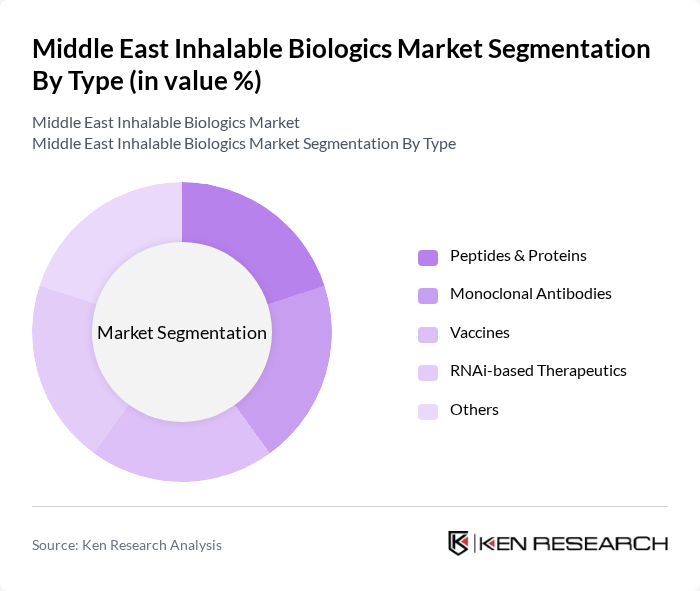
By Type:The market is segmented into various types of inhalable biologics, including Monoclonal Antibodies, Peptides, Proteins, Vaccines, RNAi-based Therapeutics, and Others. Among these, Peptides and Proteins collectively lead the market due to their broad therapeutic applications, improved stability, and efficient pulmonary absorption. Monoclonal antibodies are also gaining traction for their targeted therapeutic effects, particularly in chronic respiratory and immunological conditions .
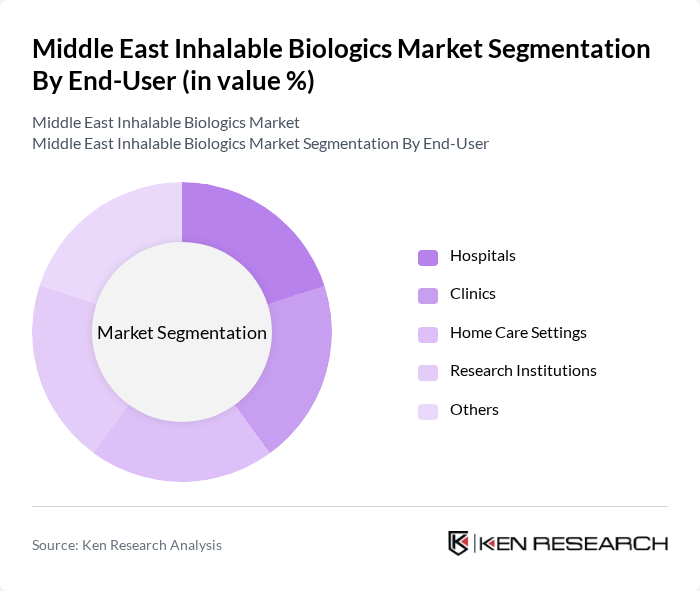
By End-User:The end-user segmentation includes Hospitals, Clinics, Home Care Settings, Research Institutions, and Others. Hospitals remain the dominant end-user segment, driven by the increasing number of patients requiring inhalable biologics for chronic respiratory conditions and the availability of advanced medical facilities. Clinics and home care settings are witnessing growth due to the rising trend of outpatient and self-administered therapies .
The Middle East Inhalable Biologics Market is characterized by a dynamic mix of regional and international players. Leading participants such as AstraZeneca, Novartis, Sanofi, Boehringer Ingelheim, GSK, Teva Pharmaceutical Industries, Merck & Co., Pfizer, AbbVie, Regeneron Pharmaceuticals, Amgen, Eli Lilly and Company, Roche, Bayer AG, Biogen, MannKind Corporation, Kamada Ltd., Cipla Ltd., Chiesi Farmaceutici S.p.A., Hikma Pharmaceuticals contribute to innovation, geographic expansion, and service delivery in this space.
The future of the Middle East inhalable biologics market appears promising, driven by technological advancements and increasing healthcare investments. As healthcare infrastructure expands, particularly in emerging economies, the accessibility of inhalable biologics is expected to improve. Additionally, the integration of digital health technologies will enhance patient engagement and adherence, further propelling market growth. The focus on personalized medicine will also drive innovation, leading to the development of tailored inhalable therapies that meet specific patient needs.
| Segment | Sub-Segments |
|---|---|
| By Type | Monoclonal Antibodies Peptides Proteins Vaccines RNAi-based Therapeutics Others |
| By End-User | Hospitals Clinics Home Care Settings Research Institutions Others |
| By Delivery Device | Nebulizers Dry Powder Inhalers Metered Dose Inhalers Soft Mist Inhalers Others |
| By Therapeutic Area | Asthma Chronic Obstructive Pulmonary Disease (COPD) Cystic Fibrosis Infectious Diseases Oncology Others |
| By Distribution Channel | Retail Pharmacies Online Pharmacies Hospital Pharmacies Others |
| By Region | GCC Countries Levant Region North Africa Others |
| By Regulatory Approval Status | Approved Products Products Under Review Pipeline Products Others |
| Scope Item/Segment | Sample Size | Target Respondent Profiles |
|---|---|---|
| Healthcare Professionals | 120 | Pulmonologists, General Practitioners |
| Pharmaceutical Manufacturers | 90 | Product Managers, R&D Directors |
| Patients Using Inhalable Biologics | 80 | Chronic Respiratory Disease Patients |
| Regulatory Authorities | 50 | Health Policy Makers, Regulatory Affairs Specialists |
| Market Analysts | 70 | Healthcare Market Researchers, Industry Analysts |
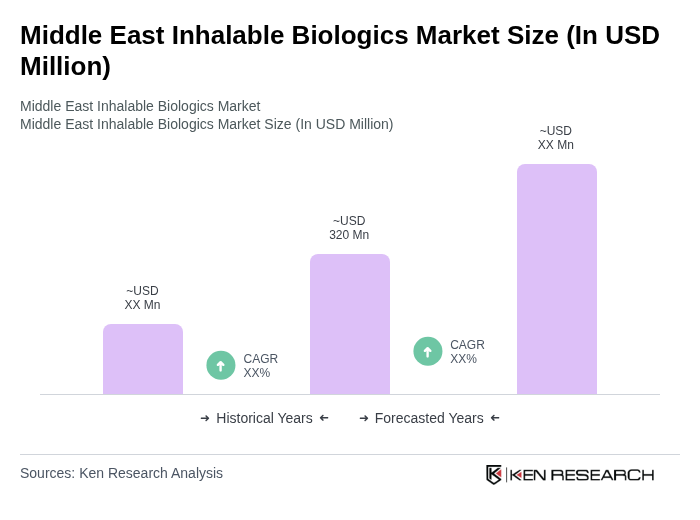
The Middle East Inhalable Biologics Market is valued at approximately USD 320 million, driven by the rising prevalence of respiratory diseases and advancements in inhalation technology, alongside increasing healthcare expenditures in the region.

What makes us stand out is that our consultants follow Robust, Refine and Result (RRR) methodology. Robust for clear definitions, approaches and sanity checking, Refine for differentiating respondents' facts and opinions, and Result for presenting data with story.

We have set a benchmark in the industry by offering our clients with syndicated and customized market research reports featuring coverage of entire market as well as meticulous research and analyst insights.

While we don't replace traditional research, we flip the method upside down. Our dual approach of Top Bottom & Bottom Top ensures quality deliverable by not just verifying company fundamentals but also looking at the sector and macroeconomic factors.

With one step in the future, our research team constantly tries to show you the bigger picture. We help with some of the tough questions you may encounter along the way: How is the industry positioned? Best marketing channel? KPI's of competitors? By aligning every element, we help maximize success.

Our report gives you instant access to the answers and sources that other companies might choose to hide. We elaborate each steps of research methodology we have used and showcase you the sample size to earn your trust.

If you need any support, we are here! We pride ourselves on universe strength, data quality, and quick, friendly, and professional service.













