Region:Middle East
Author(s):Shubham
Product Code:KRAA8508
Pages:86
Published On:November 2025
By Type:The market is segmented into various types of prosthetics and orthotic devices, which cater to different needs and preferences of users. The subsegments include Lower Limb Prosthetics, Upper Limb Prosthetics, Orthotic Devices, Pediatric Prosthetics, Sports Prosthetics, Cosmetic Prosthetics, and Others. Each of these subsegments plays a crucial role in addressing specific requirements of patients, thereby influencing the overall market dynamics. The orthotic devices segment currently holds the largest revenue share, while prosthetics, especially lower limb prosthetics, are registering the fastest growth due to the high incidence of diabetes-related amputations and trauma .
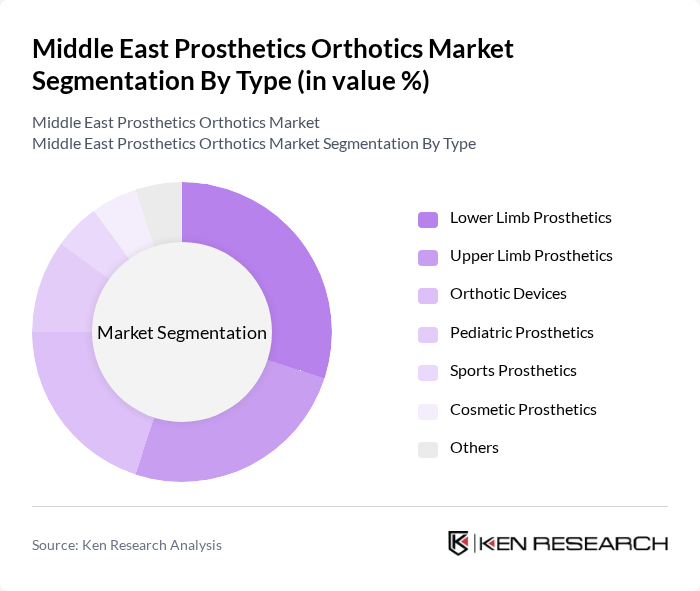
The Lower Limb Prosthetics segment is currently dominating the prosthetics category due to the high incidence of lower limb amputations resulting from diabetes, vascular diseases, and trauma. This segment is characterized by a wide range of products, including advanced bionic limbs and customizable prosthetics that enhance mobility and comfort. The increasing focus on rehabilitation and the development of innovative technologies such as microprocessor-controlled prosthetics and 3D-printed solutions are driving consumer preferences towards lower limb solutions, making it the leading subsegment in the prosthetics market .
By End-User:The market is categorized based on end-users, which include Hospitals, Rehabilitation Centers, Orthopedic Clinics, Prosthetics & Orthotics (O&P) Clinics, Home Care Settings, Sports Organizations, and Others. Each end-user segment has unique requirements and influences the demand for prosthetics and orthotics differently. Hospitals and rehabilitation centers are the primary channels for advanced prosthetic and orthotic device adoption due to their comprehensive care models and access to multidisciplinary teams .
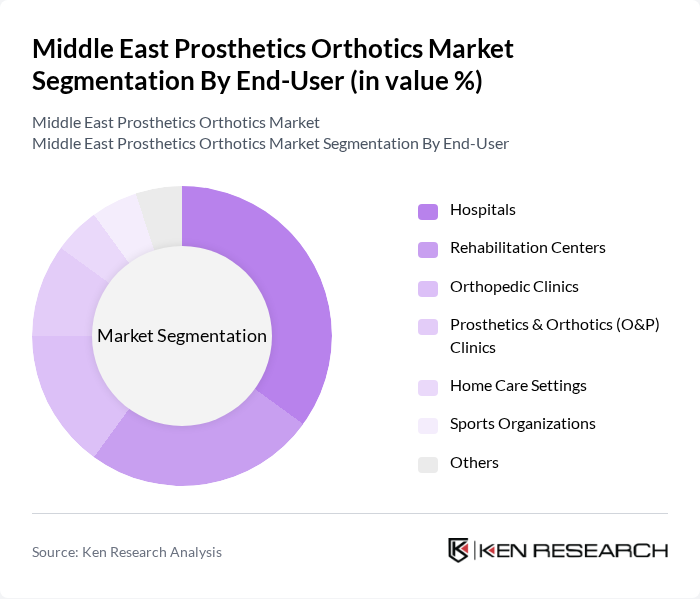
Hospitals are the leading end-user segment in the market, primarily due to their comprehensive healthcare services and the availability of specialized rehabilitation programs. Hospitals provide a wide range of prosthetic and orthotic solutions, catering to patients with varying needs. The increasing number of surgical procedures and the emphasis on post-operative rehabilitation are driving the demand for prosthetics and orthotics within hospital settings, solidifying their position as the dominant end-user segment .
The Middle East Prosthetics Orthotics Market is characterized by a dynamic mix of regional and international players. Leading participants such as Ottobock, Össur, Blatchford, Bauerfeind, WillowWood, Proteor, Steeper Group, Trulife, Ultraflex Systems, Fillauer, Aether Biomedical, Algeos, Create it REAL, Xtremity, Ortholife Group contribute to innovation, geographic expansion, and service delivery in this space.
The Middle East prosthetics and orthotics market is poised for transformative growth driven by technological advancements and demographic shifts. As the prevalence of disabilities rises, coupled with an aging population, the demand for innovative and customized solutions will increase. Furthermore, the integration of telehealth services is expected to enhance accessibility, allowing patients to receive consultations and follow-ups remotely. This evolving landscape presents a unique opportunity for stakeholders to invest in research and development, ensuring that the market adapts to the changing needs of its consumers.
| Segment | Sub-Segments |
|---|---|
| By Type | Lower Limb Prosthetics Upper Limb Prosthetics Orthotic Devices Pediatric Prosthetics Sports Prosthetics Cosmetic Prosthetics Others |
| By End-User | Hospitals Rehabilitation Centers Orthopedic Clinics Prosthetics & Orthotics (O&P) Clinics Home Care Settings Sports Organizations Others |
| By Distribution Channel | Direct Institutional Sales Online Retail Medical Supply Stores Hospitals and Clinics Others |
| By Material | Carbon Fiber Thermoplastics Metal Alloys Silicone Others |
| By Technology | Mechanical Prosthetics Electronic Prosthetics Bionic Prosthetics Hybrid Prosthetics D-Printed Prosthetics Others |
| By Age Group | Pediatric Adult Geriatric Others |
| By Region | GCC Countries (Saudi Arabia, UAE, Qatar, Kuwait, Oman, Bahrain) Levant Region (Jordan, Lebanon, Syria, Palestine, Iraq) North Africa (Egypt, Libya, Sudan, etc.) Others |
| Scope Item/Segment | Sample Size | Target Respondent Profiles |
|---|---|---|
| Orthopedic Surgeons | 60 | Surgeons specializing in limb reconstruction and prosthetics |
| Prosthetic Device Users | 100 | Patients currently using or recently fitted with prosthetic devices |
| Rehabilitation Center Staff | 50 | Physical therapists and rehabilitation specialists |
| Healthcare Policy Makers | 40 | Government officials and health administrators |
| Prosthetics Manufacturers | 40 | Product managers and sales executives from prosthetics companies |
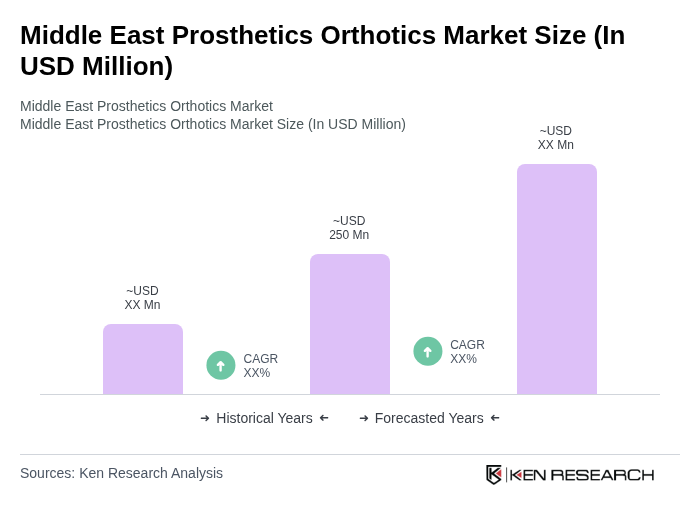
The Middle East Prosthetics Orthotics Market is valued at approximately USD 250 million, driven by increasing disability prevalence, advancements in technology, and rising healthcare expenditures across the region.

What makes us stand out is that our consultants follow Robust, Refine and Result (RRR) methodology. Robust for clear definitions, approaches and sanity checking, Refine for differentiating respondents' facts and opinions, and Result for presenting data with story.

We have set a benchmark in the industry by offering our clients with syndicated and customized market research reports featuring coverage of entire market as well as meticulous research and analyst insights.

While we don't replace traditional research, we flip the method upside down. Our dual approach of Top Bottom & Bottom Top ensures quality deliverable by not just verifying company fundamentals but also looking at the sector and macroeconomic factors.

With one step in the future, our research team constantly tries to show you the bigger picture. We help with some of the tough questions you may encounter along the way: How is the industry positioned? Best marketing channel? KPI's of competitors? By aligning every element, we help maximize success.

Our report gives you instant access to the answers and sources that other companies might choose to hide. We elaborate each steps of research methodology we have used and showcase you the sample size to earn your trust.

If you need any support, we are here! We pride ourselves on universe strength, data quality, and quick, friendly, and professional service.













