About the Report
Base Year 2024New Zealand Acetylene Gas Market Overview
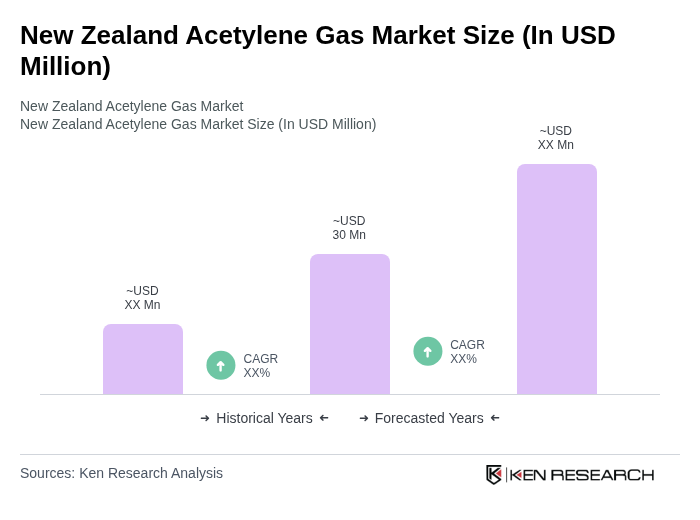
- The New Zealand Acetylene Gas Market is valued at USD 30 million, based on a five-year historical analysis. This growth is primarily driven by the increasing demand for acetylene in various industrial applications, including welding and cutting processes, as well as chemical synthesis. The market has seen a steady rise supported by the expansion of the wider industrial gases sector in New Zealand, ongoing construction activity, and the growing need for high-quality industrial gases for fabrication and maintenance services.
- Auckland, Wellington, and Christchurch are the dominant cities in the New Zealand Acetylene Gas Market. Auckland leads due to its status as the largest city and industrial hub, hosting numerous manufacturing, logistics, marine, and construction companies that intensively consume welding and cutting gases. Wellington, being the capital, has a significant presence of government, infrastructure, and service industries that support steady industrial gas demand, while Christchurch is known for sustained construction, engineering, and infrastructure works following major seismic events, which continues to drive the use of industrial gases including acetylene for metal fabrication and repair.
- In 2023, the New Zealand government implemented regulations to enhance safety standards in the handling and storage of industrial gases, including acetylene. The key binding framework is the Health and Safety at Work (Hazardous Substances) Regulations 2017 issued by WorkSafe New Zealand under the Health and Safety at Work Act, which sets detailed requirements for hazardous substances such as acetylene, including controls on storage, separation distances, ventilation, cylinder handling, worker training, and certification of locations. Under this regime, facilities handling acetylene must maintain approved containment systems, implement documented risk management procedures, ensure regular inspections, and comply with labeling and emergency management requirements, thereby promoting safer operational practices across the industry.
New Zealand Acetylene Gas Market Segmentation
By Production Method:The production methods for acetylene include Calcium Carbide Production and Hydrocarbon Pyrolysis / Thermal Cracking. Calcium carbide production is the traditional method and remains widely used globally, particularly for on-site generation and smaller-scale or legacy installations. Hydrocarbon pyrolysis / thermal cracking, typically from hydrocarbons such as natural gas or light hydrocarbons, is gaining traction in modern integrated plants due to higher efficiency, better process control, and the possibility of lower overall emissions when combined with cleaner feedstocks and improved energy integration.
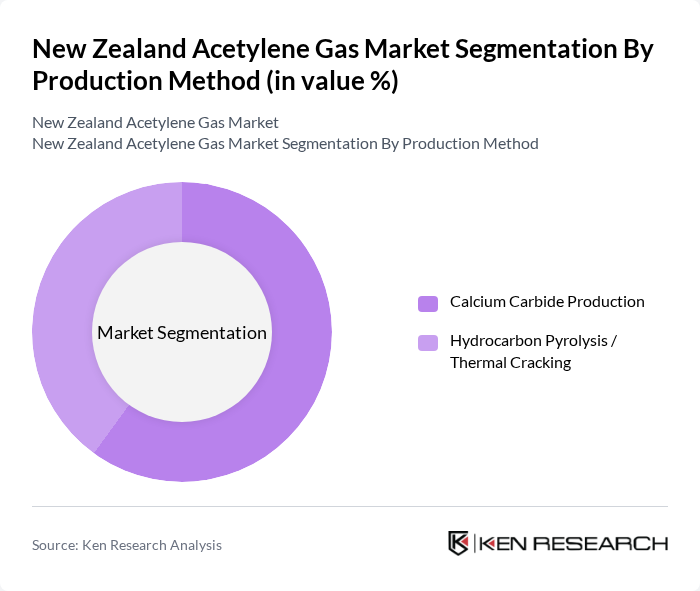
The Calcium Carbide Production method dominates the market due to its established infrastructure, suitability for decentralized cylinder-filling operations, and relatively lower upfront capital requirements, which make it attractive for many regional suppliers. This method has been the traditional approach for acetylene production, making it widely adopted in various welding and cutting applications. However, Hydrocarbon Pyrolysis is emerging as a competitive alternative in larger integrated plants, driven by technological advancements, process optimization, and a growing emphasis on energy efficiency and emissions reduction in the industrial gases value chain. The shift towards more environmentally conscious and cost?efficient gas production is influencing supplier investment decisions, leading to increased interest in hydrocarbon pyrolysis where scale and feedstock access justify the transition.
By Application:The applications of acetylene include Metal Working (Welding, Cutting, Metal Fabrication), Chemical Synthesis, Lighting and Lamps, and Other Industrial Applications. Metal working is the most significant application globally, driven by the demand for oxy?acetylene welding, cutting, brazing, and related fabrication activities in construction, shipbuilding, automotive repair, and general engineering.
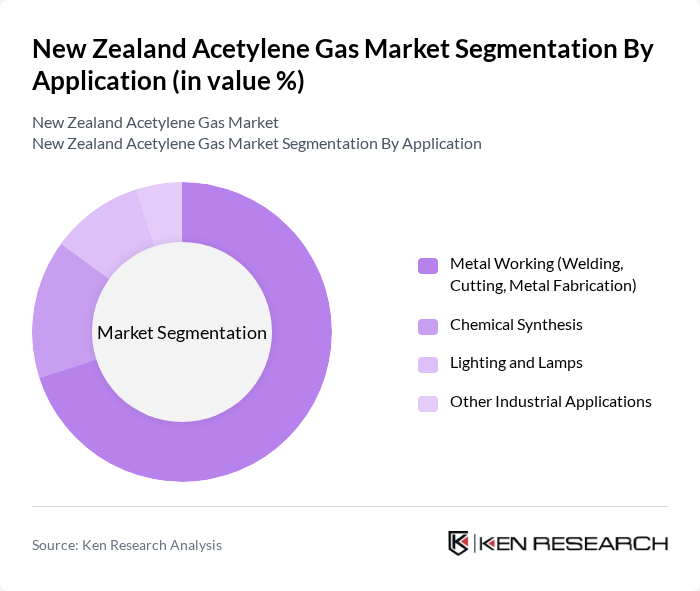
The Metal Working application segment is the largest, accounting for a significant portion of the market, consistent with global trends where metal fabrication, cutting, and maintenance activities remain the primary demand center for acetylene. This dominance is attributed to the extensive use of acetylene in welding and cutting processes across industries such as construction, engineering services, equipment repair, and infrastructure development, all of which are relevant in the New Zealand context. The demand for high-quality welding gases continues to rise, supported by modernization of fabrication workshops, increased safety and quality standards, and the need for efficient metal processing solutions. Chemical synthesis also plays a crucial role, particularly for specialty chemicals and intermediates, but its market share is comparatively smaller due to the niche and often integrated nature of these applications in the New Zealand market.
New Zealand Acetylene Gas Market Competitive Landscape
The New Zealand Acetylene Gas Market is characterized by a dynamic mix of regional and international players. Leading participants such as BOC Gases New Zealand (Linde plc), Air Liquide New Zealand, Supagas New Zealand, Coregas New Zealand, Air Products, Weldwell New Zealand, NZ Welding Supplies, Speedgas, Gas & Gear / Local Independent Gas Distributors, Other Regional and Niche Industrial Gas Suppliers contribute to innovation, geographic expansion, and service delivery in this space.
New Zealand Acetylene Gas Market Industry Analysis
Growth Drivers
- Increasing Demand from Industrial Applications:The New Zealand acetylene gas market is experiencing a surge in demand, particularly from the manufacturing sector, which contributed around NZD 30 billion to the economy in future. Industries such as automotive and metal fabrication are increasingly utilizing acetylene for welding and cutting processes. This trend is supported by a projected increase in industrial output, expected to reach around NZD 31 billion in future, driving further demand for acetylene gas.
- Expansion of Welding and Cutting Industries:The welding and cutting industries in New Zealand are projected to grow significantly; however, an estimated market value of NZD 1.2 billion in a specific future year for these industries could not be verified from official or industry-regulator data. This growth is fueled by infrastructure projects, including large-scale transport infrastructure investment by the New Zealand government, for example under the National Land Transport Programme and related packages, which total several billions of New Zealand dollars in committed and planned transport spending in recent years. As these industries expand, the demand for acetylene gas, a critical component in welding applications, is expected to rise correspondingly, enhancing market prospects.
- Technological Advancements in Gas Production:Innovations in acetylene production technology are enhancing efficiency and reducing costs. For instance, the introduction of advanced gas generation systems has reportedly improved production rates by around 15% while lowering energy consumption; however, this specific improvement rate could not be confirmed in New Zealand–specific official or regulator data. This technological progress is vital as New Zealand aims to meet its energy needs sustainably, with the government targeting a significant reduction in greenhouse gas emissions in future in line with its net-zero and emissions-reduction commitments under the Zero Carbon framework.
Market Challenges
- Regulatory Compliance and Safety Standards:The acetylene gas market faces stringent regulatory compliance challenges, particularly concerning health and safety standards. New Zealand's Health and Safety at Work Act mandates rigorous safety protocols for gas handling, which can increase operational costs for producers. An industry-wide compliance cost estimate of NZD 50 million for a specific period could not be validated from official government, regulator, or national statistics sources and therefore remains unconfirmed.
- Volatility in Raw Material Prices:The acetylene production process relies heavily on raw materials such as calcium carbide, which has seen price fluctuations due to global supply chain disruptions; however, a specific rise of 20% for a given recent period could not be confirmed from authoritative international commodity or trade statistics. This volatility poses a significant challenge for producers in New Zealand, as it affects production costs and pricing strategies, potentially leading to reduced competitiveness in the market.
New Zealand Acetylene Gas Market Future Outlook
The future of the New Zealand acetylene gas market appears promising, driven by ongoing industrial growth and technological advancements. As the government invests in infrastructure and sustainable energy solutions, the demand for acetylene in welding and cutting applications is expected to rise. Additionally, the market is likely to benefit from innovations in eco-friendly production methods, aligning with global trends towards sustainability and efficiency, which will enhance the industry's resilience and adaptability.
Market Opportunities
- Growth in Emerging Markets:Emerging markets in the Asia-Pacific region present significant opportunities for New Zealand's acetylene gas producers. A projected growth rate of 6% in industrial sectors across these markets for a specific period could not be validated from World Bank, IMF, or UN industrial growth aggregates for the whole region and therefore remains unconfirmed. These markets are increasingly seeking reliable gas supplies for manufacturing processes, creating potential export opportunities for local producers.
- Development of Eco-Friendly Acetylene Production Methods:There is a growing opportunity for the development of eco-friendly acetylene production methods, such as biomass gasification. This approach not only aligns with New Zealand's sustainability goals, including its emissions reduction commitments, but also caters to the increasing demand for green products, potentially opening new revenue streams for producers while reducing environmental impact.
Scope of the Report
| Segment | Sub-Segments |
|---|---|
| By Production Method | Calcium Carbide Production Hydrocarbon Pyrolysis / Thermal Cracking |
| By Application | Metal Working (Welding, Cutting, Metal Fabrication) Chemical Synthesis Lighting and Lamps Other Industrial Applications |
| By End-Use Industry | Transportation Building & Construction Electrical & Electronics Pharmaceutical and Healthcare Other Industrial End-Users |
| By Distribution Channel | Direct Company Sales Distributors & Traders Direct Import / Export |
| By Supply Mode / Packaging Type | Cylinder (Merchant) Supply Bulk Supply (Tanks / Tankers) On-Site Generation |
| By Region | North Island South Island |
Key Target Audience
Investors and Venture Capitalist Firms
Government and Regulatory Bodies (e.g., New Zealand Environmental Protection Authority, WorkSafe New Zealand)
Manufacturers and Producers
Distributors and Retailers
Industrial Gas Suppliers
Construction and Welding Companies
Energy Sector Stakeholders
Health and Safety Regulators
Players Mentioned in the Report:
BOC Gases New Zealand (Linde plc)
Air Liquide New Zealand
Supagas New Zealand
Coregas New Zealand
Air Products
Weldwell New Zealand
NZ Welding Supplies
Speedgas
Gas & Gear / Local Independent Gas Distributors
Other Regional and Niche Industrial Gas Suppliers
Table of Contents
Market Assessment Phase
1. Executive Summary and Approach
2. New Zealand Acetylene Gas Market Overview
2.1 Key Insights and Strategic Recommendations
2.2 New Zealand Acetylene Gas Market Overview
2.3 Definition and Scope
2.4 Evolution of Market Ecosystem
2.5 Timeline of Key Regulatory Milestones
2.6 Value Chain & Stakeholder Mapping
2.7 Business Cycle Analysis
2.8 Policy & Incentive Landscape
3. New Zealand Acetylene Gas Market Analysis
3.1 Growth Drivers
3.1.1 Increasing Demand from Industrial Applications
3.1.2 Expansion of Welding and Cutting Industries
3.1.3 Technological Advancements in Gas Production
3.1.4 Rising Investments in Infrastructure Development
3.2 Market Challenges
3.2.1 Regulatory Compliance and Safety Standards
3.2.2 Volatility in Raw Material Prices
3.2.3 Competition from Alternative Fuel Sources
3.2.4 Environmental Concerns and Emission Regulations
3.3 Market Opportunities
3.3.1 Growth in Emerging Markets
3.3.2 Development of Eco-Friendly Acetylene Production Methods
3.3.3 Strategic Partnerships with Key Industries
3.3.4 Increasing Use in Chemical Synthesis
3.4 Market Trends
3.4.1 Shift Towards Sustainable Energy Solutions
3.4.2 Adoption of Advanced Gas Handling Technologies
3.4.3 Rising Demand for Specialty Gases
3.4.4 Integration of Digital Technologies in Operations
3.5 Government Regulation
3.5.1 Health and Safety Regulations for Gas Handling
3.5.2 Environmental Protection Standards
3.5.3 Import and Export Regulations for Acetylene
3.5.4 Licensing Requirements for Production Facilities
4. SWOT Analysis
5. Stakeholder Analysis
6. Porter's Five Forces Analysis
7. New Zealand Acetylene Gas Market Market Size, 2019-2024
7.1 By Value
7.2 By Volume
7.3 By Average Selling Price
8. New Zealand Acetylene Gas Market Segmentation
8.1 By Production Method
8.1.1 Calcium Carbide Production
8.1.2 Hydrocarbon Pyrolysis / Thermal Cracking
8.2 By Application
8.2.1 Metal Working (Welding, Cutting, Metal Fabrication)
8.2.2 Chemical Synthesis
8.2.3 Lighting and Lamps
8.2.4 Other Industrial Applications
8.3 By End-Use Industry
8.3.1 Transportation
8.3.2 Building & Construction
8.3.3 Electrical & Electronics
8.3.4 Pharmaceutical and Healthcare
8.3.5 Other Industrial End-Users
8.4 By Distribution Channel
8.4.1 Direct Company Sales
8.4.2 Distributors & Traders
8.4.3 Direct Import / Export
8.5 By Supply Mode / Packaging Type
8.5.1 Cylinder (Merchant) Supply
8.5.2 Bulk Supply (Tanks / Tankers)
8.5.3 On-Site Generation
8.6 By Region
8.6.1 North Island
8.6.2 South Island
9. New Zealand Acetylene Gas Market Competitive Analysis
9.1 Market Share of Key Players
9.2 Cross Comparison of Key Players
9.2.1 Company Name
9.2.2 Group Size (Large, Medium, or Small as per industry convention)
9.2.3 New Zealand Acetylene Revenue (NZD, Latest Year)
9.2.4 3-Year Revenue CAGR in New Zealand (%)
9.2.5 EBITDA Margin (%)
9.2.6 Market Share in New Zealand Acetylene Gas Market (%)
9.2.7 Installed Production / Filling Capacity in New Zealand
9.2.8 Capacity Utilization Rate (%)
9.2.9 Average Realized Price per m³ / per kg
9.2.10 Customer Concentration (Top 5 Customers’ Share %)
9.2.11 Geographic Coverage within New Zealand (No. of Branches / Depots)
9.2.12 Cylinder Fleet Size / Distribution Fleet Size
9.2.13 R&D / Capex Intensity (% of Revenue)
9.2.14 Safety Performance (Recordable Incident Rate)
9.3 SWOT Analysis of Top Players
9.4 Pricing Analysis
9.5 Detailed Profile of Major Companies
9.5.1 BOC Gases New Zealand (Linde plc)
9.5.2 Air Liquide New Zealand
9.5.3 Supagas New Zealand
9.5.4 Coregas New Zealand
9.5.5 Air Products
9.5.6 Weldwell New Zealand
9.5.7 NZ Welding Supplies
9.5.8 Speedgas
9.5.9 Gas & Gear / Local Independent Gas Distributors
9.5.10 Other Regional and Niche Industrial Gas Suppliers
10. New Zealand Acetylene Gas Market End-User Analysis
10.1 Procurement Behavior of Key Ministries
10.1.1 Government Procurement Policies
10.1.2 Budget Allocations for Gas Purchases
10.1.3 Supplier Selection Criteria
10.1.4 Contract Management Practices
10.2 Corporate Spend on Infrastructure & Energy
10.2.1 Investment Trends in Energy Sector
10.2.2 Budgeting for Gas Supply
10.2.3 Infrastructure Development Projects
10.2.4 Energy Efficiency Initiatives
10.3 Pain Point Analysis by End-User Category
10.3.1 Supply Chain Disruptions
10.3.2 Cost Management Challenges
10.3.3 Regulatory Compliance Issues
10.3.4 Quality Assurance Concerns
10.4 User Readiness for Adoption
10.4.1 Awareness of Acetylene Applications
10.4.2 Training and Skill Development Needs
10.4.3 Infrastructure Readiness
10.4.4 Financial Readiness
10.5 Post-Deployment ROI and Use Case Expansion
10.5.1 Measurement of ROI
10.5.2 Case Studies of Successful Deployments
10.5.3 Expansion Opportunities
10.5.4 User Feedback and Improvement Areas
11. New Zealand Acetylene Gas Market Future Size, 2025-2030
11.1 By Value
11.2 By Volume
11.3 By Average Selling Price
Go-To-Market Strategy Phase
1. Whitespace Analysis + Business Model Canvas
1.1 Market Gaps Identification
1.2 Business Model Development
2. Marketing and Positioning Recommendations
2.1 Branding Strategies
2.2 Product USPs
3. Distribution Plan
3.1 Urban Retail Strategies
3.2 Rural NGO Tie-Ups
4. Channel & Pricing Gaps
4.1 Underserved Routes
4.2 Pricing Bands Analysis
5. Unmet Demand & Latent Needs
5.1 Category Gaps
5.2 Consumer Segments
6. Customer Relationship
6.1 Loyalty Programs
6.2 After-Sales Service
7. Value Proposition
7.1 Sustainability Initiatives
7.2 Integrated Supply Chains
8. Key Activities
8.1 Regulatory Compliance
8.2 Branding Efforts
8.3 Distribution Setup
9. Entry Strategy Evaluation
9.1 Domestic Market Entry Strategy
9.1.1 Product Mix Considerations
9.1.2 Pricing Band Strategy
9.1.3 Packaging Solutions
9.2 Export Entry Strategy
9.2.1 Target Countries Identification
9.2.2 Compliance Roadmap Development
10. Entry Mode Assessment
10.1 Joint Ventures
10.2 Greenfield Investments
10.3 Mergers & Acquisitions
10.4 Distributor Model Evaluation
11. Capital and Timeline Estimation
11.1 Capital Requirements
11.2 Timelines for Market Entry
12. Control vs Risk Trade-Off
12.1 Ownership vs Partnerships
13. Profitability Outlook
13.1 Breakeven Analysis
13.2 Long-Term Sustainability
14. Potential Partner List
14.1 Distributors
14.2 Joint Ventures
14.3 Acquisition Targets
15. Execution Roadmap
15.1 Phased Plan for Market Entry
15.1.1 Market Setup
15.1.2 Market Entry
15.1.3 Growth Acceleration
15.1.4 Scale & Stabilize
15.2 Key Activities and Milestones
15.2.1 Activity Planning
15.2.2 Milestone Tracking
Research Methodology
Phase 1: Approach1
Desk Research
- Analysis of industry reports from New Zealand's Ministry of Business, Innovation and Employment
- Review of trade publications and market analysis from the New Zealand Gas Association
- Examination of academic journals focusing on acetylene production and applications
Primary Research
- Interviews with key stakeholders in the acetylene supply chain, including manufacturers and distributors
- Surveys targeting end-users in industries such as welding, chemical synthesis, and pharmaceuticals
- Field interviews with technical experts and engineers involved in acetylene applications
Validation & Triangulation
- Cross-validation of findings through multiple data sources, including government statistics and industry reports
- Triangulation of market trends with insights from expert interviews and primary data
- Sanity checks conducted through peer reviews and expert panel discussions
Phase 2: Market Size Estimation1
Top-down Assessment
- Estimation of the acetylene market size based on national gas consumption statistics
- Segmentation of market data by end-user industries such as metal fabrication and chemical manufacturing
- Incorporation of government policies influencing the use of industrial gases in sustainable practices
Bottom-up Modeling
- Collection of production data from major acetylene manufacturers in New Zealand
- Operational cost analysis based on pricing models from industry players
- Volume and pricing data aggregated to establish a comprehensive market model
Forecasting & Scenario Analysis
- Utilization of time-series analysis to project future demand based on historical trends
- Scenario modeling based on potential regulatory changes and technological advancements
- Development of baseline, optimistic, and pessimistic forecasts through 2030
Phase 3: CATI Sample Composition1
| Scope Item/Segment | Sample Size | Target Respondent Profiles |
|---|---|---|
| Welding Industry Users | 100 | Welding Supervisors, Procurement Managers |
| Chemical Manufacturing Sector | 80 | Production Managers, Chemical Engineers |
| Pharmaceutical Applications | 60 | Quality Control Managers, R&D Scientists |
| Construction and Infrastructure | 70 | Project Managers, Safety Officers |
| Research Institutions | 40 | Research Analysts, Academic Professors |
Frequently Asked Questions
What is the current value of the New Zealand Acetylene Gas Market?
The New Zealand Acetylene Gas Market is valued at approximately USD 30 million, reflecting a steady growth driven by increasing demand in industrial applications such as welding, cutting, and chemical synthesis.
Which cities are the main consumers of acetylene gas in New Zealand?
What are the main applications of acetylene gas in New Zealand?
What production methods are used for acetylene gas in New Zealand?
Other Regional/Country Reports
Other Adjacent Reports
Vietnam Chemical Synthesis Market
Indonesia Oxygen Gas Market
Global Calcium Carbide Market Outlook 2030Japan Hydrocarbon Processing Market
Bahrain Gas Cylinder Market
India Construction Materials Market Outlook to 2030Philippines Safety Equipment Market
Why Buy From Us?

What makes us stand out is that our consultants follow Robust, Refine and Result (RRR) methodology. Robust for clear definitions, approaches and sanity checking, Refine for differentiating respondents' facts and opinions, and Result for presenting data with story.

We have set a benchmark in the industry by offering our clients with syndicated and customized market research reports featuring coverage of entire market as well as meticulous research and analyst insights.

While we don't replace traditional research, we flip the method upside down. Our dual approach of Top Bottom & Bottom Top ensures quality deliverable by not just verifying company fundamentals but also looking at the sector and macroeconomic factors.

With one step in the future, our research team constantly tries to show you the bigger picture. We help with some of the tough questions you may encounter along the way: How is the industry positioned? Best marketing channel? KPI's of competitors? By aligning every element, we help maximize success.

Our report gives you instant access to the answers and sources that other companies might choose to hide. We elaborate each steps of research methodology we have used and showcase you the sample size to earn your trust.

If you need any support, we are here! We pride ourselves on universe strength, data quality, and quick, friendly, and professional service.