New Zealand Cleanroom Film Bags Market Report Size Share Growth Drivers Trends Opportunities & Forecast 2025–2030

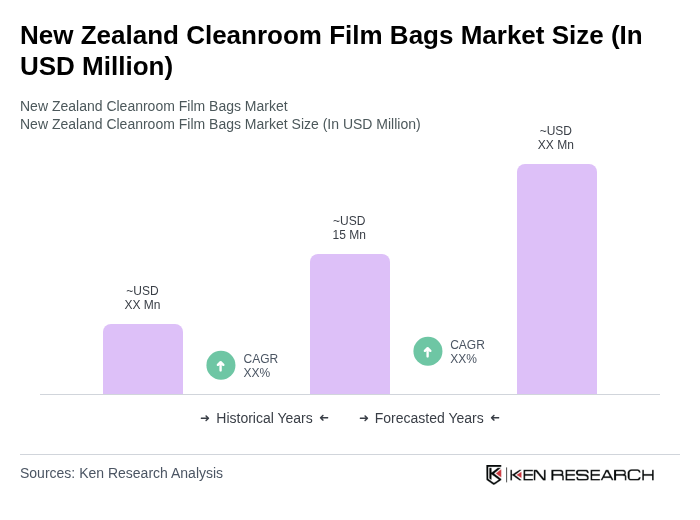
The New Zealand Cleanroom Film Bags Market, worth USD 15 million, is growing due to rising needs in pharma, biotech, and regulatory compliance for sterile environments.

Region:Global

Author(s):Dev

Product Code:KRAC5094

Pages:83

Published On:January 2026
About the Report

Base Year 2024

New Zealand Cleanroom Film Bags Market Overview

  • The New Zealand Cleanroom Film Bags Market is valued at USD 15 million, based on a five-year historical analysis and its proportion within the global cleanroom films and bags market, which is estimated at around USD 5.7–6.0 billion. This growth is primarily driven by the increasing demand for contamination control in pharmaceuticals, biotechnology, medical devices, and high-value electronics, where maintaining controlled and sterile environments is crucial. The rise in research and development activities, including biologics, vaccines, and advanced therapies, along with higher standards for sterile packaging and material handling, has further fueled the need for specialized cleanroom film and bag solutions.
  • Auckland and Wellington are the dominant cities in the New Zealand Cleanroom Film Bags Market due to their concentration of pharmaceutical, biotechnology, and healthcare institutions. Auckland hosts major hospital networks, life sciences companies, and logistics hubs, while Wellington has a strong presence of government health agencies, research organizations, and specialist medical facilities, all of which rely on controlled environments and cleanroom-grade packaging for laboratory, clinical, and manufacturing operations. Additionally, the presence of regional converters and distributors serving cleanroom and healthcare packaging needs in these regions supports market growth.
  • In 2023, the New Zealand government strengthened expectations for contamination control and cleanroom performance in pharmaceutical and related manufacturing through alignment with the New Zealand Code of Good Manufacturing Practice for Manufacture and Distribution of Therapeutic Goods, which incorporates cleanroom design and environmental control requirements consistent with standards such as ISO 14644 for cleanrooms. This framework requires manufacturers of medicines and certain biological products to operate controlled environments appropriate to the risk class of the product, including particulate and microbiological controls, qualification of cleanrooms, and validation of cleaning, sterilization, and packaging processes. As facilities upgrade to meet these expectations and demonstrate compliance during inspections, demand has increased for high-quality cleanroom film bags that support validated sterile or low-particulate packaging, especially for aseptic processing, component handling, and critical intermediates.
New Zealand Cleanroom Film Bags Market Size

New Zealand Cleanroom Film Bags Market Segmentation

By Product Type:The product type segmentation includes various categories such as Cleanroom Bags, Cleanroom Pouches, Cleanroom Liners and Covers, Films & Wraps Used for Bag Fabrication, and Others. This structure is consistent with global cleanroom films and bags segmentation, where bags, pouches, and films & wraps form the core product groups. Among these, Cleanroom Bags are the most widely used due to their versatility in storing components, consumables, and intermediates and their effectiveness in maintaining controlled conditions from manufacturing through transport. The demand for Cleanroom Pouches is also significant, particularly in the medical device and surgical consumables sectors, where secure, puncture-resistant, and often sterilizable packaging is essential for product integrity. Cleanroom Liners and Covers are gaining traction as they provide additional protection for totes, trays, equipment, and large-format items, helping to reduce particulate shedding and cross-contamination, especially in pharmaceutical, semiconductor, and precision electronics applications.
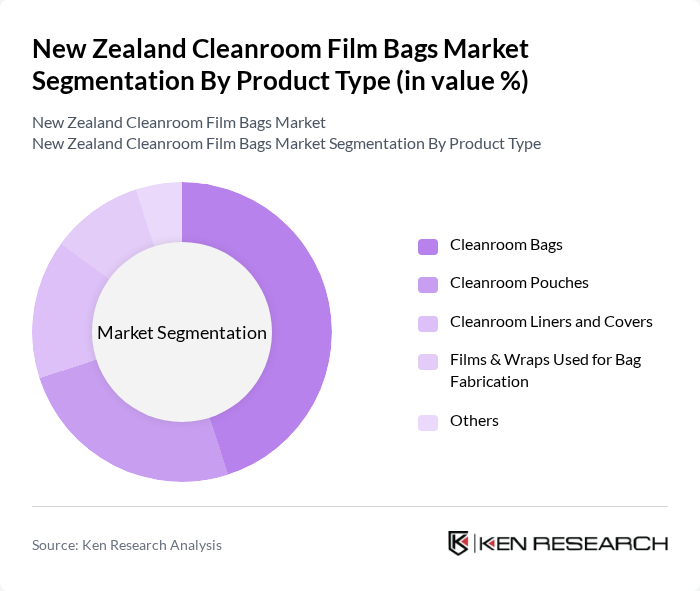
New Zealand Cleanroom Film Bags Market segmentation by Product Type.

By Material:The material segmentation includes Low-Density Polyethylene (LDPE), Linear Low-Density Polyethylene (LLDPE), High-Density Polyethylene (HDPE), Polypropylene (PP), Antistatic / Conductive Polymers, Bio-based & Recyclable Polymers, and Others. At the global level, plastic materials dominate cleanroom films and bags due to their flexibility, mechanical strength, and ability to achieve low particulate and extractable levels, with polyethylene and polypropylene families being the primary substrates. LDPE and LLDPE are the most commonly used materials due to their flexibility, sealability, and toughness, making them ideal for cleanroom bags, pouches, and liners in pharmaceutical, biotech, and electronics applications. HDPE and PP are preferred where higher stiffness, chemical resistance, or barrier performance is required, including for certain medical device and diagnostic packaging. The use of Antistatic / Conductive Polymers is increasing, particularly in the electronics and semiconductor sector, where electrostatic discharge control is critical for sensitive components and assemblies. Bio-based & Recyclable Polymers are emerging in response to New Zealand’s broader sustainability and plastic waste policies, supporting initiatives to reduce conventional single-use plastics and improve end-of-life outcomes for packaging used in controlled environments.
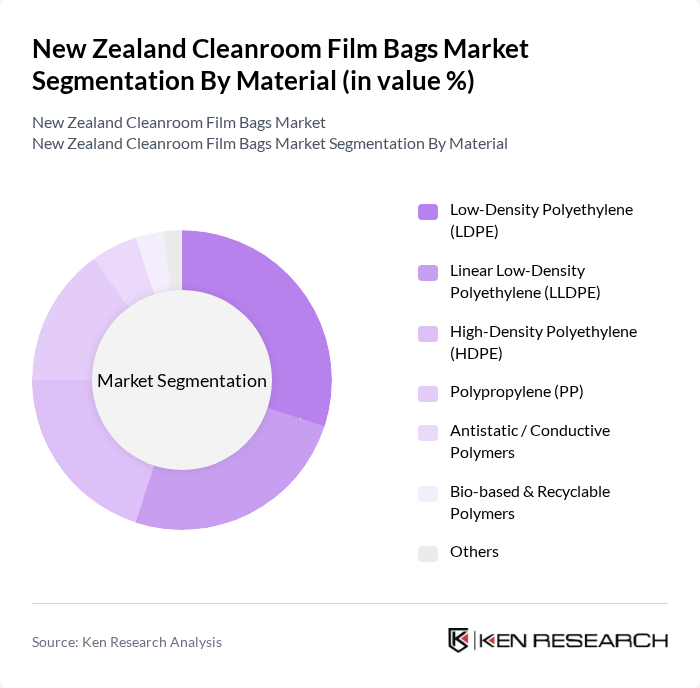
New Zealand Cleanroom Film Bags Market segmentation by Material.

New Zealand Cleanroom Film Bags Market Competitive Landscape

The New Zealand Cleanroom Film Bags Market is characterized by a dynamic mix of regional and international players. Leading participants such as CFB Cleanroom Film and Bags, Tekni-Plex, Inc., Nelipak Corporation, PPC Flexible Packaging LLC, Pristine Clean Bags, AeroPackaging, Inc., Degage Corp., Plitek, L.L.C., Production Automation Corporation, DuPont, 3M, Kimberly-Clark Corporation, Berry Global, Inc., Regional and Local New Zealand Converters, Emerging Niche & Sustainable Packaging Players contribute to innovation, geographic expansion, and service delivery in this space.

CFB Cleanroom Film and Bags

1977

Brighton, Colorado, USA

Tekni-Plex, Inc.

1967

Wayne, Pennsylvania, USA

Nelipak Corporation

1953

Cranston, Rhode Island, USA

PPC Flexible Packaging LLC

2017

Buffalo Grove, Illinois, USA

Pristine Clean Bags

1988

San Diego, California, USA

Company

Establishment Year

Headquarters

Revenue from Cleanroom Films & Bags (NZD, Last 3 Years)

3-Year Revenue CAGR in New Zealand

EBITDA Margin from Cleanroom Packaging Portfolio

Market Share in New Zealand Cleanroom Film Bags (%)

Average Selling Price Index vs Market

Cleanroom Compliance Coverage (ISO Classes Served)

New Zealand Cleanroom Film Bags Market Industry Analysis

Growth Drivers

  • Increasing Demand from Pharmaceutical and Biotechnology Sectors:The New Zealand pharmaceutical sector is projected to reach NZD 1.5 billion by 2024, driving the need for cleanroom film bags. With over 50% of pharmaceutical companies in New Zealand adhering to stringent cleanroom standards, the demand for specialized packaging solutions is surging. Additionally, the biotechnology sector, valued at NZD 1.2 billion, is expanding rapidly, further propelling the need for contamination control measures, including cleanroom film bags.
  • Stringent Regulatory Requirements for Cleanroom Environments:Compliance with AS/NZS ISO 14644 standards is mandatory for cleanroom operations in New Zealand. As of 2024, approximately 70% of cleanroom facilities are expected to undergo audits to ensure adherence to these regulations. This regulatory landscape necessitates the use of high-quality cleanroom film bags, as companies strive to meet the rigorous standards set forth by health authorities, thereby driving market growth.
  • Technological Advancements in Cleanroom Materials:The cleanroom film bags market is witnessing innovations, with new materials enhancing performance and safety. In future, the introduction of antimicrobial and anti-static film materials is expected to increase market penetration by 30%. These advancements not only improve contamination control but also align with the growing demand for high-performance packaging solutions in cleanroom environments, further stimulating market growth.

Market Challenges

  • High Initial Investment Costs:The initial setup costs for cleanroom facilities in New Zealand can exceed NZD 2 million, which poses a significant barrier for new entrants. This high capital requirement limits the number of companies willing to invest in cleanroom technologies, including film bags. As a result, many potential users may opt for less expensive alternatives, hindering market growth and innovation in the cleanroom film bags sector.
  • Limited Availability of Specialized Suppliers:The cleanroom film bags market in New Zealand is characterized by a limited number of specialized suppliers, with only about 15 major players operating in the sector. This scarcity can lead to supply chain disruptions and increased lead times for customers. Consequently, companies may face challenges in sourcing high-quality cleanroom film bags, which can adversely affect their operational efficiency and compliance with regulatory standards.

New Zealand Cleanroom Film Bags Market Future Outlook

The New Zealand cleanroom film bags market is poised for significant growth, driven by increasing investments in the healthcare and biotechnology sectors. As companies prioritize contamination control, the demand for innovative and sustainable packaging solutions will rise. Furthermore, the integration of smart technologies in cleanroom environments is expected to enhance operational efficiency. With a focus on eco-friendly materials and customized solutions, the market is likely to evolve, presenting new opportunities for suppliers and manufacturers in the coming years.

Market Opportunities

  • Development of Eco-Friendly Cleanroom Film Bags:With sustainability becoming a priority, the demand for eco-friendly cleanroom film bags is expected to grow. In future, the market for biodegradable packaging solutions is projected to reach NZD 300 million, offering manufacturers a lucrative opportunity to innovate and capture environmentally conscious consumers.
  • Increasing Adoption of Automation in Cleanroom Processes:The automation trend in cleanroom operations is set to expand, with investments in automated systems projected to reach NZD 500 million in future. This shift will create opportunities for cleanroom film bag manufacturers to develop products that integrate seamlessly with automated processes, enhancing efficiency and reducing contamination risks.

Scope of the Report

SegmentSub-Segments
By Product Type

Cleanroom Bags

Cleanroom Pouches

Cleanroom Liners and Covers

Films & Wraps Used for Bag Fabrication

Others

By Material

Low-Density Polyethylene (LDPE)

Linear Low-Density Polyethylene (LLDPE)

High-Density Polyethylene (HDPE)

Polypropylene (PP)

Antistatic / Conductive Polymers

Bio-based & Recyclable Polymers

Others

By Cleanroom Compatibility

ISO Class 3–4

ISO Class 5–6

ISO Class 7–8

Others

By Application

Sterile Product Packaging

Component & WIP (Work-in-Process) Packaging

Sample Collection, Storage & Transport

Equipment & Tool Protection

Others

By End-Use Industry

Pharmaceuticals & Biologics

Biotechnology & Medical Devices

Electronics & Semiconductor Manufacturing

Food, Beverage & Nutraceutical Cleanrooms

Research Laboratories & CROs

Others

By Bag Format

Flat Bags

Gusseted Bags

Zip/Resealable Bags

Vacuum & Custom-Engineered Bags

Others

By Distribution Channel

Direct Sales to Key Accounts

Specialized Cleanroom Distributors

Industrial & Laboratory Supply Distributors

Online B2B Platforms

Others

Key Target Audience

Investors and Venture Capitalist Firms

Government and Regulatory Bodies (e.g., Ministry of Health, Environmental Protection Authority)

Manufacturers and Producers of Cleanroom Supplies

Distributors and Retailers of Packaging Solutions

Pharmaceutical Companies

Biotechnology Firms

Medical Device Manufacturers

Quality Assurance and Compliance Organizations

Players Mentioned in the Report:

CFB Cleanroom Film and Bags

Tekni-Plex, Inc.

Nelipak Corporation

PPC Flexible Packaging LLC

Pristine Clean Bags

AeroPackaging, Inc.

Degage Corp.

Plitek, L.L.C.

Production Automation Corporation

DuPont

3M

Kimberly-Clark Corporation

Berry Global, Inc.

Regional and Local New Zealand Converters

Emerging Niche & Sustainable Packaging Players

Table of Contents

Market Assessment Phase

1. Executive Summary and Approach


2. New Zealand Cleanroom Film Bags Market Overview

2.1 Key Insights and Strategic Recommendations

2.2 New Zealand Cleanroom Film Bags Market Overview

2.3 Definition and Scope

2.4 Evolution of Market Ecosystem

2.5 Timeline of Key Regulatory Milestones

2.6 Value Chain & Stakeholder Mapping

2.7 Business Cycle Analysis

2.8 Policy & Incentive Landscape


3. New Zealand Cleanroom Film Bags Market Analysis

3.1 Growth Drivers

3.1.1 Increasing demand from pharmaceutical and biotechnology sectors
3.1.2 Stringent regulatory requirements for cleanroom environments
3.1.3 Rising awareness of contamination control
3.1.4 Technological advancements in cleanroom materials

3.2 Market Challenges

3.2.1 High initial investment costs
3.2.2 Limited availability of specialized suppliers
3.2.3 Variability in quality standards
3.2.4 Competition from alternative packaging solutions

3.3 Market Opportunities

3.3.1 Expansion in the healthcare and electronics sectors
3.3.2 Development of eco-friendly cleanroom film bags
3.3.3 Increasing adoption of automation in cleanroom processes
3.3.4 Potential for export to neighboring markets

3.4 Market Trends

3.4.1 Growing focus on sustainability and recyclability
3.4.2 Shift towards customized cleanroom solutions
3.4.3 Integration of smart technologies in cleanroom environments
3.4.4 Rise in demand for single-use cleanroom products

3.5 Government Regulation

3.5.1 Compliance with AS/NZS ISO 14644 standards
3.5.2 Regulations on material safety and environmental impact
3.5.3 Guidelines for cleanroom design and operation
3.5.4 Incentives for adopting cleanroom technologies

4. SWOT Analysis


5. Stakeholder Analysis


6. Porter's Five Forces Analysis


7. New Zealand Cleanroom Film Bags Market Market Size, 2019-2024

7.1 By Value

7.2 By Volume

7.3 By Average Selling Price


8. New Zealand Cleanroom Film Bags Market Segmentation

8.1 By Product Type

8.1.1 Cleanroom Bags
8.1.2 Cleanroom Pouches
8.1.3 Cleanroom Liners and Covers
8.1.4 Films & Wraps Used for Bag Fabrication
8.1.5 Others

8.2 By Material

8.2.1 Low-Density Polyethylene (LDPE)
8.2.2 Linear Low-Density Polyethylene (LLDPE)
8.2.3 High-Density Polyethylene (HDPE)
8.2.4 Polypropylene (PP)
8.2.5 Antistatic / Conductive Polymers
8.2.6 Bio-based & Recyclable Polymers
8.2.7 Others

8.3 By Cleanroom Compatibility

8.3.1 ISO Class 3–4
8.3.2 ISO Class 5–6
8.3.3 ISO Class 7–8
8.3.4 Others

8.4 By Application

8.4.1 Sterile Product Packaging
8.4.2 Component & WIP (Work-in-Process) Packaging
8.4.3 Sample Collection, Storage & Transport
8.4.4 Equipment & Tool Protection
8.4.5 Others

8.5 By End-Use Industry

8.5.1 Pharmaceuticals & Biologics
8.5.2 Biotechnology & Medical Devices
8.5.3 Electronics & Semiconductor Manufacturing
8.5.4 Food, Beverage & Nutraceutical Cleanrooms
8.5.5 Research Laboratories & CROs
8.5.6 Others

8.6 By Bag Format

8.6.1 Flat Bags
8.6.2 Gusseted Bags
8.6.3 Zip/Resealable Bags
8.6.4 Vacuum & Custom-Engineered Bags
8.6.5 Others

8.7 By Distribution Channel

8.7.1 Direct Sales to Key Accounts
8.7.2 Specialized Cleanroom Distributors
8.7.3 Industrial & Laboratory Supply Distributors
8.7.4 Online B2B Platforms
8.7.5 Others

9. New Zealand Cleanroom Film Bags Market Competitive Analysis

9.1 Market Share of Key Players

9.2 Cross Comparison of Key Players

9.2.1 Company Name
9.2.2 Revenue from Cleanroom Films & Bags (NZD, Last 3 Years)
9.2.3 3-Year Revenue CAGR in New Zealand
9.2.4 EBITDA Margin from Cleanroom Packaging Portfolio
9.2.5 Market Share in New Zealand Cleanroom Film Bags (%)
9.2.6 Average Selling Price Index vs Market
9.2.7 Cleanroom Compliance Coverage (ISO Classes Served)
9.2.8 On-time Delivery Performance (%)
9.2.9 New Product Launches / Year
9.2.10 R&D Spend as % of Revenue
9.2.11 Customer Retention / Renewal Rate (%)
9.2.12 Key End-Use Verticals Penetrated

9.3 SWOT Analysis of Top Players

9.4 Pricing Analysis

9.5 Detailed Profile of Major Companies

9.5.1 CFB Cleanroom Film and Bags
9.5.2 Tekni-Plex, Inc.
9.5.3 Nelipak Corporation
9.5.4 PPC Flexible Packaging LLC
9.5.5 Pristine Clean Bags
9.5.6 AeroPackaging, Inc.
9.5.7 Degage Corp.
9.5.8 Plitek, L.L.C.
9.5.9 Production Automation Corporation
9.5.10 DuPont
9.5.11 3M
9.5.12 Kimberly-Clark Corporation
9.5.13 Berry Global, Inc.
9.5.14 Regional and Local New Zealand Converters
9.5.15 Emerging Niche & Sustainable Packaging Players

10. New Zealand Cleanroom Film Bags Market End-User Analysis

10.1 Procurement Behavior of Key Ministries

10.1.1 Government procurement policies
10.1.2 Budget allocation for cleanroom supplies
10.1.3 Supplier selection criteria
10.1.4 Contract management practices

10.2 Corporate Spend on Infrastructure & Energy

10.2.1 Investment in cleanroom facilities
10.2.2 Budgeting for cleanroom consumables
10.2.3 Trends in corporate spending
10.2.4 Cost-saving initiatives

10.3 Pain Point Analysis by End-User Category

10.3.1 Quality assurance challenges
10.3.2 Supply chain disruptions
10.3.3 Compliance with regulations
10.3.4 Cost management issues

10.4 User Readiness for Adoption

10.4.1 Awareness of cleanroom standards
10.4.2 Training and education needs
10.4.3 Technology adoption readiness
10.4.4 Feedback mechanisms

10.5 Post-Deployment ROI and Use Case Expansion

10.5.1 Measurement of ROI
10.5.2 Case studies of successful implementations
10.5.3 Opportunities for scaling
10.5.4 Long-term benefits realization

11. New Zealand Cleanroom Film Bags Market Future Size, 2025-2030

11.1 By Value

11.2 By Volume

11.3 By Average Selling Price


Go-To-Market Strategy Phase

1. Whitespace Analysis + Business Model Canvas

1.1 Market gaps identification

1.2 Value proposition development

1.3 Revenue model exploration

1.4 Customer segmentation analysis

1.5 Competitive landscape overview

1.6 Key partnerships identification

1.7 Operational framework design


2. Marketing and Positioning Recommendations

2.1 Branding strategies

2.2 Product USPs

2.3 Target market identification

2.4 Communication strategies

2.5 Digital marketing initiatives

2.6 Customer engagement tactics

2.7 Performance metrics


3. Distribution Plan

3.1 Urban retail strategies

3.2 Rural NGO tie-ups

3.3 E-commerce integration

3.4 Logistics and supply chain management

3.5 Distribution partnerships

3.6 Inventory management practices

3.7 Customer service protocols


4. Channel & Pricing Gaps

4.1 Underserved routes

4.2 Pricing bands analysis

4.3 Competitor pricing strategies

4.4 Customer willingness to pay

4.5 Value-based pricing models

4.6 Discounting strategies

4.7 Price elasticity considerations


5. Unmet Demand & Latent Needs

5.1 Category gaps identification

5.2 Consumer segments analysis

5.3 Emerging trends exploration

5.4 Product development opportunities

5.5 Market entry barriers

5.6 Customer feedback incorporation

5.7 Future demand forecasting


6. Customer Relationship

6.1 Loyalty programs design

6.2 After-sales service strategies

6.3 Customer feedback mechanisms

6.4 Relationship management tools

6.5 Engagement through social media

6.6 Community building initiatives

6.7 Customer satisfaction measurement


7. Value Proposition

7.1 Sustainability initiatives

7.2 Integrated supply chains

7.3 Unique selling points

7.4 Customer-centric approach

7.5 Competitive advantages

7.6 Value delivery mechanisms

7.7 Long-term vision alignment


8. Key Activities

8.1 Regulatory compliance measures

8.2 Branding strategies

8.3 Distribution setup

8.4 Marketing initiatives

8.5 Training and development programs

8.6 Performance monitoring

8.7 Stakeholder engagement


9. Entry Strategy Evaluation

9.1 Domestic Market Entry Strategy

9.1.1 Product mix considerations
9.1.2 Pricing band analysis
9.1.3 Packaging strategies

9.2 Export Entry Strategy

9.2.1 Target countries identification
9.2.2 Compliance roadmap development

10. Entry Mode Assessment

10.1 Joint Ventures

10.2 Greenfield Investments

10.3 Mergers & Acquisitions

10.4 Distributor Model


11. Capital and Timeline Estimation

11.1 Capital requirements analysis

11.2 Timelines for market entry


12. Control vs Risk Trade-Off

12.1 Ownership considerations

12.2 Partnerships evaluation


13. Profitability Outlook

13.1 Breakeven analysis

13.2 Long-term sustainability strategies


14. Potential Partner List

14.1 Distributors identification

14.2 Joint Ventures exploration

14.3 Acquisition targets


15. Execution Roadmap

15.1 Phased Plan for Market Entry

15.1.1 Market Setup
15.1.2 Market Entry
15.1.3 Growth Acceleration
15.1.4 Scale & Stabilize

15.2 Key Activities and Milestones

15.2.1 Milestone tracking
15.2.2 Activity scheduling

Research Methodology

ApproachModellingSample

Phase 1: Approach1

Desk Research

  • Industry reports from New Zealand's Ministry of Business, Innovation and Employment
  • Market analysis from trade associations such as the New Zealand Plastics Industry
  • Published articles and white papers on cleanroom standards and regulations

Primary Research

  • Interviews with cleanroom facility managers across various sectors
  • Surveys targeting suppliers of cleanroom consumables and packaging
  • Field interviews with quality assurance professionals in pharmaceutical companies

Validation & Triangulation

  • Cross-validation of data from multiple industry sources and reports
  • Triangulation of insights from primary interviews and secondary data
  • Sanity checks through expert panels comprising industry veterans

Phase 2: Market Size Estimation1

Top-down Assessment

  • Analysis of the overall cleanroom market size in New Zealand
  • Segmentation by end-user industries such as pharmaceuticals, electronics, and biotechnology
  • Incorporation of growth trends in cleanroom technology and regulations

Bottom-up Modeling

  • Volume estimates based on cleanroom facility counts and operational scales
  • Cost analysis of cleanroom film bags based on supplier pricing
  • Estimation of demand based on historical usage patterns in cleanroom environments

Forecasting & Scenario Analysis

  • Multi-factor regression analysis considering factors like industry growth and regulatory changes
  • Scenario modeling based on potential shifts in cleanroom standards and practices
  • Baseline, optimistic, and pessimistic forecasts through 2030

Phase 3: CATI Sample Composition1

Scope Item/SegmentSample SizeTarget Respondent Profiles
Pharmaceutical Cleanroom Operations120Quality Control Managers, Facility Managers
Electronics Manufacturing Cleanrooms90Production Supervisors, Supply Chain Managers
Biotechnology Research Facilities80Laboratory Managers, R&D Directors
Medical Device Manufacturing70Regulatory Affairs Specialists, Operations Managers
Cleanroom Equipment Suppliers60Sales Managers, Product Development Engineers

Frequently Asked Questions

What is the current value of the New Zealand Cleanroom Film Bags Market?

The New Zealand Cleanroom Film Bags Market is valued at approximately USD 15 million, reflecting its share within the global cleanroom films and bags market, which is estimated to be around USD 5.76.0 billion.

What factors are driving the growth of the Cleanroom Film Bags Market in New Zealand?

Which cities in New Zealand are key players in the Cleanroom Film Bags Market?

What regulatory standards impact the Cleanroom Film Bags Market in New Zealand?

Other Adjacent Reports

Philippines Cleanroom Consumables Market

Middle East pharmaceutical packaging market size, share, growth drivers, trends, opportunities & forecast 2025–2030

Thailand Biotechnology Packaging Market

Mexico Medical Device Packaging Market

Egypt Sterile Packaging Market

Oman Antistatic Packaging Market

KSA sustainable packaging market report Size, Share, Growth Drivers, Trends, Opportunities & Forecast 2025–2030Apac Cleanroom Technology Market Report Size, Share, Growth Drivers, Trends, Opportunities & Forecast 2025–2030

Brazil Aseptic Processing Market

South Korea Electronics Packaging Market

Why Buy From Us?

Refine Robust Result (RRR) Framework

What makes us stand out is that our consultants follow Robust, Refine and Result (RRR) methodology. Robust for clear definitions, approaches and sanity checking, Refine for differentiating respondents' facts and opinions, and Result for presenting data with story.

Our Reach Is Unmatched

We have set a benchmark in the industry by offering our clients with syndicated and customized market research reports featuring coverage of entire market as well as meticulous research and analyst insights.

Shifting the Research Paradigm

While we don't replace traditional research, we flip the method upside down. Our dual approach of Top Bottom & Bottom Top ensures quality deliverable by not just verifying company fundamentals but also looking at the sector and macroeconomic factors.

More Insights-Better Decisions

With one step in the future, our research team constantly tries to show you the bigger picture. We help with some of the tough questions you may encounter along the way: How is the industry positioned? Best marketing channel? KPI's of competitors? By aligning every element, we help maximize success.

Transparency and Trust

Our report gives you instant access to the answers and sources that other companies might choose to hide. We elaborate each steps of research methodology we have used and showcase you the sample size to earn your trust.

Round the Clock Support

If you need any support, we are here! We pride ourselves on universe strength, data quality, and quick, friendly, and professional service.

Why Clients Choose Us?

400000+
Reports in repository
150+
Consulting projects a year
100+
Analysts
8000+
Client Queries in 2022








