Region:Middle East
Author(s):Dev
Product Code:KRAE4452
Pages:84
Published On:March 2026
By Type:The market is segmented into Natural Corn Fiber, Processed Corn Fiber, Blended Corn Fiber, and Others. Natural Corn Fiber is gaining traction due to its eco-friendly properties, while Processed Corn Fiber is preferred for its versatility in various applications. Blended Corn Fiber combines the benefits of different fibers, catering to diverse consumer needs.
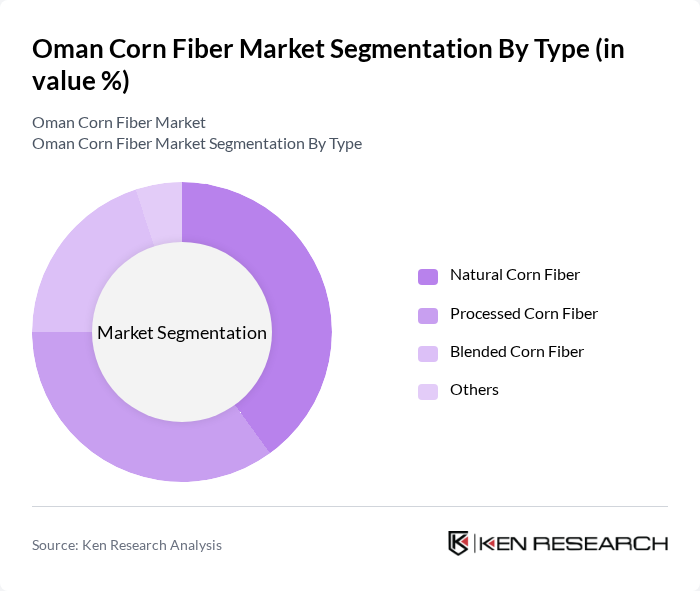
The Natural Corn Fiber segment is currently leading the market due to its organic nature and biodegradability, which align with the growing consumer preference for sustainable products. The increasing use of natural fibers in the textile industry, driven by eco-conscious consumers, has further propelled this segment's growth. Processed Corn Fiber follows closely, offering enhanced properties for various applications, including food packaging and automotive components.
By End-User:The market is segmented into Textile Industry, Automotive Industry, Food Packaging, and Others. The Textile Industry is the largest consumer of corn fiber, driven by the demand for sustainable fabrics. The Automotive Industry is increasingly adopting corn fiber for lightweight components, while Food Packaging is leveraging its biodegradable properties.
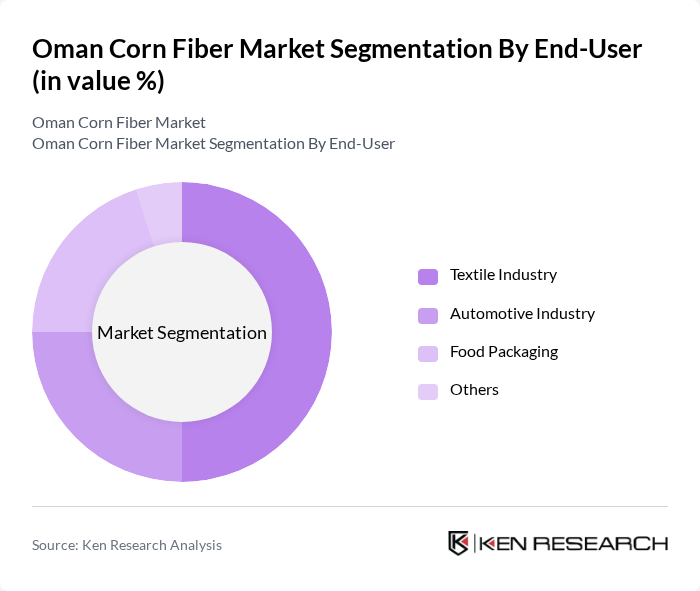
The Textile Industry dominates the market, accounting for a significant share due to the rising trend of sustainable fashion and eco-friendly textiles. The demand for biodegradable materials in clothing and home textiles is driving this segment's growth. The Automotive Industry is also emerging as a key player, utilizing corn fiber for its lightweight and durable properties, which contribute to fuel efficiency and reduced emissions.
The Oman Corn Fiber Market is characterized by a dynamic mix of regional and international players. Leading participants such as DuPont de Nemours, Inc., BASF SE, NatureWorks LLC, Cargill, Incorporated, ADM (Archer Daniels Midland Company), Corbion N.V., Green Dot Bioplastics, BioAmber Inc., Tereos S.A., Futerro, Novamont S.p.A., Plantic Technologies Limited, Biome Bioplastics, Eco-Products, Inc., NatureFlex contribute to innovation, geographic expansion, and service delivery in this space.
The Oman corn fiber market is poised for growth as sustainability trends continue to gain traction. With increasing government support and consumer demand for eco-friendly products, the market is expected to evolve significantly. Innovations in production technology and the development of new applications for corn fiber will likely enhance its appeal. Additionally, the expansion of online retail channels will facilitate greater market access, allowing producers to reach a broader audience and capitalize on emerging opportunities.
| Segment | Sub-Segments |
|---|---|
| By Type | Natural Corn Fiber Processed Corn Fiber Blended Corn Fiber Others |
| By End-User | Textile Industry Automotive Industry Food Packaging Others |
| By Application | Apparel Home Textiles Industrial Textiles Others |
| By Distribution Channel | Direct Sales Online Retail Wholesale Others |
| By Region | Muscat Salalah Sohar Others |
| By Product Form | Staple Fiber Filament Fiber Non-woven Fiber Others |
| By Sustainability Certification | Organic Certification Fair Trade Certification Eco-labels Others |
| Scope Item/Segment | Sample Size | Target Respondent Profiles |
|---|---|---|
| Corn Fiber Producers | 100 | Production Managers, Operations Directors |
| Textile Manufacturers | 80 | Product Development Managers, Sourcing Specialists |
| Packaging Industry Stakeholders | 70 | Procurement Officers, Sustainability Managers |
| Agricultural Experts | 50 | Agronomists, Research Scientists |
| End-Users in Biocomposites | 60 | R&D Managers, Product Managers |
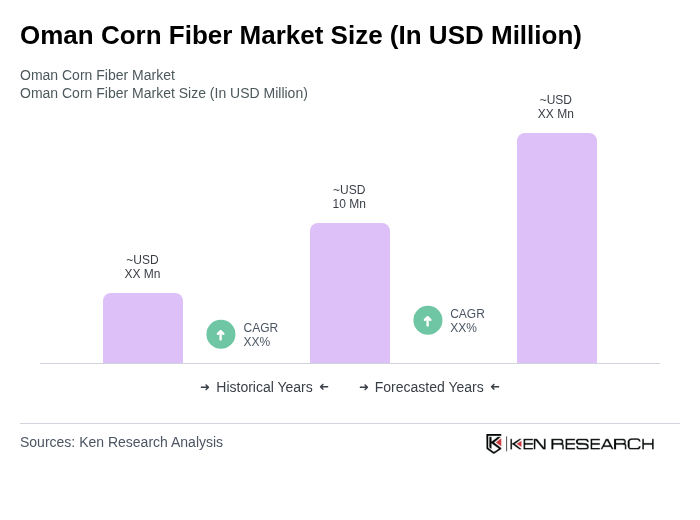
The Oman Corn Fiber Market is valued at approximately USD 10 million, reflecting a growing demand for sustainable and biodegradable materials across various industries, particularly textiles and packaging.

What makes us stand out is that our consultants follow Robust, Refine and Result (RRR) methodology. Robust for clear definitions, approaches and sanity checking, Refine for differentiating respondents' facts and opinions, and Result for presenting data with story.

We have set a benchmark in the industry by offering our clients with syndicated and customized market research reports featuring coverage of entire market as well as meticulous research and analyst insights.

While we don't replace traditional research, we flip the method upside down. Our dual approach of Top Bottom & Bottom Top ensures quality deliverable by not just verifying company fundamentals but also looking at the sector and macroeconomic factors.

With one step in the future, our research team constantly tries to show you the bigger picture. We help with some of the tough questions you may encounter along the way: How is the industry positioned? Best marketing channel? KPI's of competitors? By aligning every element, we help maximize success.

Our report gives you instant access to the answers and sources that other companies might choose to hide. We elaborate each steps of research methodology we have used and showcase you the sample size to earn your trust.

If you need any support, we are here! We pride ourselves on universe strength, data quality, and quick, friendly, and professional service.













