About the Report
Base Year 2024Listen to the audio summary
Oman Diabetic Neuropathy Treatment Market Overview
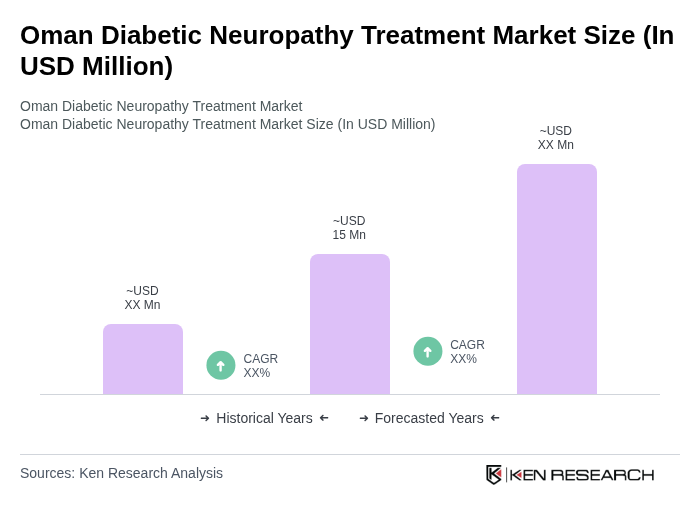
- The Oman Diabetic Neuropathy Treatment Market is valued at USD 15 million, based on a five-year historical analysis. This growth is primarily driven by the increasing prevalence of diabetes in the region, coupled with a rising awareness of diabetic complications among healthcare providers and patients. The demand for effective treatment options has surged, leading to a more robust healthcare infrastructure and investment in medical technologies. Recent trends highlight the adoption of advanced diagnostic tools, integration of digital health solutions, and increased patient education initiatives as key market drivers.
- Muscat, the capital city, is a dominant player in the market due to its advanced healthcare facilities and a higher concentration of healthcare professionals. Other significant cities include Salalah and Sohar, which are witnessing improvements in healthcare access and services, contributing to the overall growth of the diabetic neuropathy treatment market in Oman. The expansion of specialized diabetes clinics and the availability of multidisciplinary care teams in these cities are further enhancing patient outcomes.
- In 2023, the Omani government implemented the "National Diabetes Control and Management Program" issued by the Ministry of Health, Oman. This program mandates the establishment of dedicated diabetes clinics across public hospitals, the integration of diabetes education into primary care, and regular screening for diabetic complications, including neuropathy. The initiative requires all healthcare facilities to adhere to standardized protocols for diabetes management and reporting, with compliance monitored through annual audits.
Oman Diabetic Neuropathy Treatment Market Segmentation
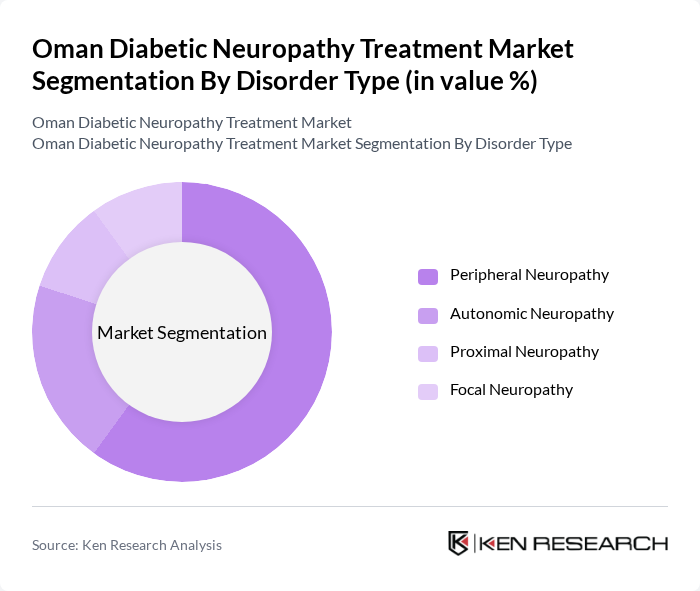
By Disorder Type:The market is segmented into various disorder types, including Peripheral Neuropathy, Autonomic Neuropathy, Proximal Neuropathy, and Focal Neuropathy. Among these, Peripheral Neuropathy is the most prevalent, accounting for a significant portion of the market due to its common occurrence in diabetic patients. The increasing number of diabetes cases in Oman has led to a higher demand for treatments targeting this specific disorder. Autonomic Neuropathy follows, as it affects the autonomic nervous system, leading to various complications that require specialized treatment. The focus on early diagnosis and management of these conditions is driving the growth of this segment.
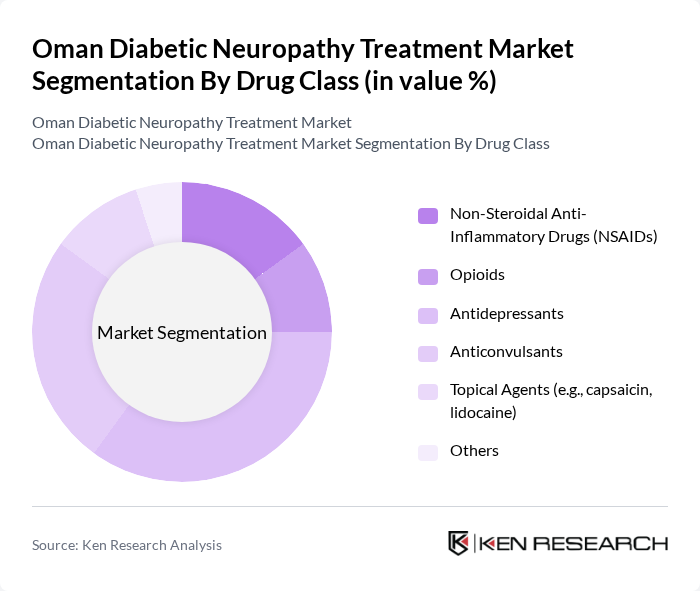
By Drug Class:The treatment market is categorized into several drug classes, including Non-Steroidal Anti-Inflammatory Drugs (NSAIDs), Opioids, Antidepressants, Anticonvulsants, Topical Agents (e.g., capsaicin, lidocaine), and Others. Antidepressants and Anticonvulsants are leading the market due to their effectiveness in managing neuropathic pain associated with diabetic neuropathy. The growing acceptance of these drug classes among healthcare providers and patients is contributing to their dominance. Additionally, the increasing focus on pain management strategies in diabetic care is further propelling the demand for these medications. Recent clinical guidelines in Oman emphasize the use of duloxetine, pregabalin, and gabapentin as first-line therapies for diabetic neuropathy.
Oman Diabetic Neuropathy Treatment Market Competitive Landscape
The Oman Diabetic Neuropathy Treatment Market is characterized by a dynamic mix of regional and international players. Leading participants such as Oman Medical Supplies Co. LLC, Al Nahda Medical Supplies, Muscat Pharmacy & Stores LLC, Gulf Pharmaceutical Industries (Julphar), AstraZeneca Oman, Novartis Pharmaceuticals Oman, Sanofi Oman, Pfizer Oman, Merck Sharp & Dohme (MSD) Oman, Boehringer Ingelheim Oman, Eli Lilly Oman, Bayer Oman, GlaxoSmithKline Oman, Hikma Pharmaceuticals Oman, Takeda Pharmaceuticals Oman contribute to innovation, geographic expansion, and service delivery in this space.
Oman Diabetic Neuropathy Treatment Market Industry Analysis
Growth Drivers
- Increasing Prevalence of Diabetes:The prevalence of diabetes in Oman has reached alarming levels, with approximately 1.2 million adults affected as of 2024. This figure is projected to rise, driven by lifestyle changes and urbanization. The World Health Organization reported that diabetes prevalence in Oman is around 12.3%, significantly higher than the global average of 8.8%. This growing patient population necessitates effective diabetic neuropathy treatments, thereby driving market growth.
- Rising Awareness About Diabetic Complications:Increased public health campaigns and educational initiatives have heightened awareness of diabetic complications, including neuropathy. In future, the Ministry of Health in Oman allocated OMR 2 million for diabetes awareness programs, resulting in a 30% increase in patient consultations for diabetic complications. This awareness is crucial for early diagnosis and treatment, positively impacting the diabetic neuropathy treatment market.
- Advancements in Treatment Options:The Oman healthcare sector has seen significant advancements in diabetic neuropathy treatments, including new pharmacological therapies and non-invasive procedures. In future, the introduction of at least three new therapeutic agents has expanded treatment options for patients. The availability of these innovative treatments is expected to enhance patient outcomes and drive market growth, as healthcare providers adopt more effective solutions.
Market Challenges
- High Cost of Treatment:The cost of diabetic neuropathy treatments in Oman can be prohibitive, with average treatment expenses reaching OMR 1,500 annually per patient. This high cost limits access for many individuals, particularly those without insurance coverage. The financial burden associated with ongoing treatment can deter patients from seeking necessary care, posing a significant challenge to market growth.
- Limited Access to Specialized Healthcare:Access to specialized healthcare services for diabetic neuropathy remains a challenge in Oman, particularly in rural areas. As of 2024, only 30% of healthcare facilities are equipped to provide specialized diabetes care. This limited access results in delayed diagnoses and treatments, negatively impacting patient outcomes and hindering the overall growth of the diabetic neuropathy treatment market.
Oman Diabetic Neuropathy Treatment Market Future Outlook
The future of the Oman diabetic neuropathy treatment market appears promising, driven by ongoing advancements in medical technology and increased healthcare investments. The government is expected to enhance healthcare infrastructure, facilitating better access to specialized care. Additionally, the integration of telemedicine and personalized treatment approaches will likely improve patient engagement and adherence to treatment plans, ultimately leading to better health outcomes for diabetic neuropathy patients in Oman.
Market Opportunities
- Development of New Therapeutic Agents:There is a significant opportunity for pharmaceutical companies to invest in the development of new therapeutic agents targeting diabetic neuropathy. With the increasing prevalence of diabetes, the demand for innovative treatments is expected to rise, creating a lucrative market for new drug development.
- Expansion of Healthcare Infrastructure:The ongoing expansion of healthcare infrastructure in Oman presents a unique opportunity for market growth. With government initiatives aimed at improving healthcare access, new facilities and specialized clinics are being established, which will enhance the availability of diabetic neuropathy treatments and improve patient outcomes.
Scope of the Report
| Segment | Sub-Segments |
|---|---|
| By Disorder Type | Peripheral Neuropathy Autonomic Neuropathy Proximal Neuropathy Focal Neuropathy |
| By Drug Class | Non-Steroidal Anti-Inflammatory Drugs (NSAIDs) Opioids Antidepressants Anticonvulsants Topical Agents (e.g., capsaicin, lidocaine) Others |
| By Distribution Channel | Hospital Pharmacies Retail Pharmacies Online Pharmacies Others |
| By End-User | Hospitals Clinics Homecare Settings Others |
| By Patient Demographics | Age Groups Gender Socioeconomic Status Others |
| By Treatment Duration | Short-term Treatments Long-term Treatments Others |
| By Geographic Distribution | Urban Areas Rural Areas Others |
| By Healthcare Provider Type | Public Healthcare Providers Private Healthcare Providers Others |
| By Insurance Coverage | Public Insurance Private Insurance Out-of-Pocket Payments Others |
Key Target Audience
Investors and Venture Capitalist Firms
Government and Regulatory Bodies (e.g., Ministry of Health, Oman Medical Specialty Board)
Pharmaceutical Manufacturers
Medical Device Manufacturers
Healthcare Providers and Clinics
Insurance Companies
Pharmacy Chains and Distributors
Non-Governmental Organizations (NGOs) focused on diabetes care
Players Mentioned in the Report:
Oman Medical Supplies Co. LLC
Al Nahda Medical Supplies
Muscat Pharmacy & Stores LLC
Gulf Pharmaceutical Industries (Julphar)
AstraZeneca Oman
Novartis Pharmaceuticals Oman
Sanofi Oman
Pfizer Oman
Merck Sharp & Dohme (MSD) Oman
Boehringer Ingelheim Oman
Eli Lilly Oman
Bayer Oman
GlaxoSmithKline Oman
Hikma Pharmaceuticals Oman
Takeda Pharmaceuticals Oman
Table of Contents
Market Assessment Phase
1. Executive Summary and Approach
2. Oman Diabetic Neuropathy Treatment Market Overview
2.1 Key Insights and Strategic Recommendations
2.2 Oman Diabetic Neuropathy Treatment Market Overview
2.3 Definition and Scope
2.4 Evolution of Market Ecosystem
2.5 Timeline of Key Regulatory Milestones
2.6 Value Chain & Stakeholder Mapping
2.7 Business Cycle Analysis
2.8 Policy & Incentive Landscape
3. Oman Diabetic Neuropathy Treatment Market Analysis
3.1 Growth Drivers
3.1.1 Increasing prevalence of diabetes in Oman
3.1.2 Rising awareness about diabetic complications
3.1.3 Advancements in treatment options
3.1.4 Government initiatives for healthcare improvement
3.2 Market Challenges
3.2.1 High cost of treatment
3.2.2 Limited access to specialized healthcare
3.2.3 Lack of patient education
3.2.4 Regulatory hurdles
3.3 Market Opportunities
3.3.1 Development of new therapeutic agents
3.3.2 Expansion of healthcare infrastructure
3.3.3 Increased investment in research and development
3.3.4 Collaborations with international healthcare organizations
3.4 Market Trends
3.4.1 Growing adoption of telemedicine
3.4.2 Shift towards personalized medicine
3.4.3 Integration of technology in treatment
3.4.4 Focus on preventive healthcare
3.5 Government Regulation
3.5.1 Regulatory frameworks for drug approval
3.5.2 Guidelines for clinical trials
3.5.3 Policies promoting healthcare access
3.5.4 Standards for medical devices used in treatment
4. SWOT Analysis
5. Stakeholder Analysis
6. Porter's Five Forces Analysis
7. Oman Diabetic Neuropathy Treatment Market Market Size, 2019-2024
7.1 By Value
7.2 By Volume
7.3 By Average Selling Price
8. Oman Diabetic Neuropathy Treatment Market Segmentation
8.1 By Disorder Type
8.1.1 Peripheral Neuropathy
8.1.2 Autonomic Neuropathy
8.1.3 Proximal Neuropathy
8.1.4 Focal Neuropathy
8.2 By Drug Class
8.2.1 Non-Steroidal Anti-Inflammatory Drugs (NSAIDs)
8.2.2 Opioids
8.2.3 Antidepressants
8.2.4 Anticonvulsants
8.2.5 Topical Agents (e.g., capsaicin, lidocaine)
8.2.6 Others
8.3 By Distribution Channel
8.3.1 Hospital Pharmacies
8.3.2 Retail Pharmacies
8.3.3 Online Pharmacies
8.3.4 Others
8.4 By End-User
8.4.1 Hospitals
8.4.2 Clinics
8.4.3 Homecare Settings
8.4.4 Others
8.5 By Patient Demographics
8.5.1 Age Groups
8.5.2 Gender
8.5.3 Socioeconomic Status
8.5.4 Others
8.6 By Treatment Duration
8.6.1 Short-term Treatments
8.6.2 Long-term Treatments
8.6.3 Others
8.7 By Geographic Distribution
8.7.1 Urban Areas
8.7.2 Rural Areas
8.7.3 Others
8.8 By Healthcare Provider Type
8.8.1 Public Healthcare Providers
8.8.2 Private Healthcare Providers
8.8.3 Others
8.9 By Insurance Coverage
8.9.1 Public Insurance
8.9.2 Private Insurance
8.9.3 Out-of-Pocket Payments
8.9.4 Others
9. Oman Diabetic Neuropathy Treatment Market Competitive Analysis
9.1 Market Share of Key Players
9.2 KPIs for Cross Comparison of Key Players
9.2.1 Market Share (%)
9.2.2 Revenue Growth Rate (YoY)
9.2.3 Product Portfolio Breadth (Number of Diabetic Neuropathy SKUs)
9.2.4 R&D Investment (USD or % of Revenue)
9.2.5 Regulatory Approvals (Number of Approved Products in Oman)
9.2.6 Distribution Network Coverage (Number of Hospitals/Pharmacies Served)
9.2.7 Patient Access Programs (Number/Scope of Programs)
9.2.8 Pricing Strategy (Average Price per Treatment)
9.2.9 Customer Retention Rate (%)
9.2.10 Brand Recognition Score (Survey/Index)
9.3 SWOT Analysis of Top Players
9.4 Pricing Analysis
9.5 List of Major Companies
9.5.1 Oman Medical Supplies Co. LLC
9.5.2 Al Nahda Medical Supplies
9.5.3 Muscat Pharmacy & Stores LLC
9.5.4 Gulf Pharmaceutical Industries (Julphar)
9.5.5 AstraZeneca Oman
9.5.6 Novartis Pharmaceuticals Oman
9.5.7 Sanofi Oman
9.5.8 Pfizer Oman
9.5.9 Merck Sharp & Dohme (MSD) Oman
9.5.10 Boehringer Ingelheim Oman
9.5.11 Eli Lilly Oman
9.5.12 Bayer Oman
9.5.13 GlaxoSmithKline Oman
9.5.14 Hikma Pharmaceuticals Oman
9.5.15 Takeda Pharmaceuticals Oman
10. Oman Diabetic Neuropathy Treatment Market End-User Analysis
10.1 Procurement Behavior of Key Ministries
10.1.1 Ministry of Health
10.1.2 Ministry of Finance
10.1.3 Ministry of Social Development
10.1.4 Others
10.2 Corporate Spend on Infrastructure & Energy
10.2.1 Healthcare Infrastructure Investments
10.2.2 Energy Efficiency Initiatives
10.2.3 Others
10.3 Pain Point Analysis by End-User Category
10.3.1 Patients
10.3.2 Healthcare Providers
10.3.3 Insurance Companies
10.3.4 Others
10.4 User Readiness for Adoption
10.4.1 Awareness Levels
10.4.2 Accessibility of Treatments
10.4.3 Financial Readiness
10.4.4 Others
10.5 Post-Deployment ROI and Use Case Expansion
10.5.1 Treatment Efficacy
10.5.2 Patient Satisfaction
10.5.3 Cost Savings
10.5.4 Others
11. Oman Diabetic Neuropathy Treatment Market Future Size, 2025-2030
11.1 By Value
11.2 By Volume
11.3 By Average Selling Price
Go-To-Market Strategy Phase
1. Whitespace Analysis + Business Model Canvas
1.1 Market Gaps Identification
1.2 Business Model Development
2. Marketing and Positioning Recommendations
2.1 Branding Strategies
2.2 Product USPs
3. Distribution Plan
3.1 Urban Retail Strategies
3.2 Rural NGO Tie-ups
4. Channel & Pricing Gaps
4.1 Underserved Routes
4.2 Pricing Bands
5. Unmet Demand & Latent Needs
5.1 Category Gaps
5.2 Consumer Segments
6. Customer Relationship
6.1 Loyalty Programs
6.2 After-sales Service
7. Value Proposition
7.1 Sustainability
7.2 Integrated Supply Chains
8. Key Activities
8.1 Regulatory Compliance
8.2 Branding
8.3 Distribution Setup
9. Entry Strategy Evaluation
9.1 Domestic Market Entry Strategy
9.1.1 Product Mix
9.1.2 Pricing Band
9.1.3 Packaging
9.2 Export Entry Strategy
9.2.1 Target Countries
9.2.2 Compliance Roadmap
10. Entry Mode Assessment
10.1 JV
10.2 Greenfield
10.3 M&A
10.4 Distributor Model
11. Capital and Timeline Estimation
11.1 Capital Requirements
11.2 Timelines
12. Control vs Risk Trade-Off
12.1 Ownership vs Partnerships
13. Profitability Outlook
13.1 Breakeven Analysis
13.2 Long-term Sustainability
14. Potential Partner List
14.1 Distributors
14.2 JVs
14.3 Acquisition Targets
15. Execution Roadmap
15.1 Phased Plan for Market Entry
15.1.1 Market Setup
15.1.2 Market Entry
15.1.3 Growth Acceleration
15.1.4 Scale & Stabilize
15.2 Key Activities and Milestones
15.2.1 Activity Planning
15.2.2 Milestone Tracking
Research Methodology
Phase 1: Approach1
Desk Research
- Analysis of existing literature on diabetic neuropathy treatment options in Oman
- Review of healthcare expenditure reports from the Ministry of Health, Oman
- Examination of market reports and publications from regional health organizations
Primary Research
- Interviews with endocrinologists and neurologists specializing in diabetic neuropathy
- Surveys conducted with pharmacists regarding medication availability and patient demographics
- Focus groups with diabetic patients to understand treatment preferences and experiences
Validation & Triangulation
- Cross-validation of findings through multiple expert interviews and patient surveys
- Triangulation of data from healthcare providers, patients, and market reports
- Sanity checks through consultations with industry experts and academic researchers
Phase 2: Market Size Estimation1
Top-down Assessment
- Estimation of the diabetic population in Oman based on national health statistics
- Analysis of treatment expenditure trends for diabetic neuropathy in healthcare budgets
- Incorporation of government health initiatives aimed at diabetes management
Bottom-up Modeling
- Data collection on sales volumes of diabetic neuropathy medications from pharmacies
- Cost analysis of treatment regimens including medications and therapies
- Estimation of market share for various treatment modalities based on patient preferences
Forecasting & Scenario Analysis
- Multi-factor regression analysis considering population growth and diabetes prevalence rates
- Scenario modeling based on potential changes in healthcare policies and treatment guidelines
- Baseline, optimistic, and pessimistic forecasts for market growth through 2030
Phase 3: CATI Sample Composition1
| Scope Item/Segment | Sample Size | Target Respondent Profiles |
|---|---|---|
| Endocrinologists | 40 | Healthcare Providers, Diabetes Specialists |
| Neurologists | 40 | Healthcare Providers, Neurology Experts |
| Pharmacists | 40 | Pharmacy Managers, Community Pharmacists |
| Diabetic Patients | 100 | Patients with Diabetic Neuropathy, Caregivers |
| Healthcare Administrators | 40 | Hospital Administrators, Policy Makers |
Frequently Asked Questions
What is the current value of the Oman Diabetic Neuropathy Treatment Market?
The Oman Diabetic Neuropathy Treatment Market is valued at approximately USD 15 million, reflecting a significant increase driven by the rising prevalence of diabetes and heightened awareness of diabetic complications among healthcare providers and patients.
What are the main types of diabetic neuropathy treated in Oman?
What factors are driving the growth of the diabetic neuropathy treatment market in Oman?
What challenges does the Oman Diabetic Neuropathy Treatment Market face?
Other Regional/Country Reports
Indonesia Diabetic Neuropathy Treatment Market
Malaysia Diabetic Neuropathy Treatment Market
KSA Diabetic Neuropathy Treatment Market
APAC Diabetic Neuropathy Treatment Market
SEA Diabetic Neuropathy Treatment Market
Vietnam Diabetic Neuropathy Treatment Market
Other Adjacent Reports
Malaysia Antidiabetic Drugs Market
Thailand Neuropathic Pain Management Market
Mexico Endocrine Disorders Treatment Market
Malaysia Neurology Diagnostics Market
Bahrain Pain Relief Therapeutics Market
Middle East Chronic Disease Management Market Size, Share, Growth Drivers, Trends, Opportunities & Forecast 2025–2030Qatar Medical Nutrition Therapy Market
Belgium Wound Care Products Market
KSA Telemedicine Services Market
Why Buy From Us?

What makes us stand out is that our consultants follow Robust, Refine and Result (RRR) methodology. Robust for clear definitions, approaches and sanity checking, Refine for differentiating respondents' facts and opinions, and Result for presenting data with story.

We have set a benchmark in the industry by offering our clients with syndicated and customized market research reports featuring coverage of entire market as well as meticulous research and analyst insights.

While we don't replace traditional research, we flip the method upside down. Our dual approach of Top Bottom & Bottom Top ensures quality deliverable by not just verifying company fundamentals but also looking at the sector and macroeconomic factors.

With one step in the future, our research team constantly tries to show you the bigger picture. We help with some of the tough questions you may encounter along the way: How is the industry positioned? Best marketing channel? KPI's of competitors? By aligning every element, we help maximize success.

Our report gives you instant access to the answers and sources that other companies might choose to hide. We elaborate each steps of research methodology we have used and showcase you the sample size to earn your trust.

If you need any support, we are here! We pride ourselves on universe strength, data quality, and quick, friendly, and professional service.