About the Report
Base Year 2024Listen to the audio summary
Oman Virtual Influencer Market Overview
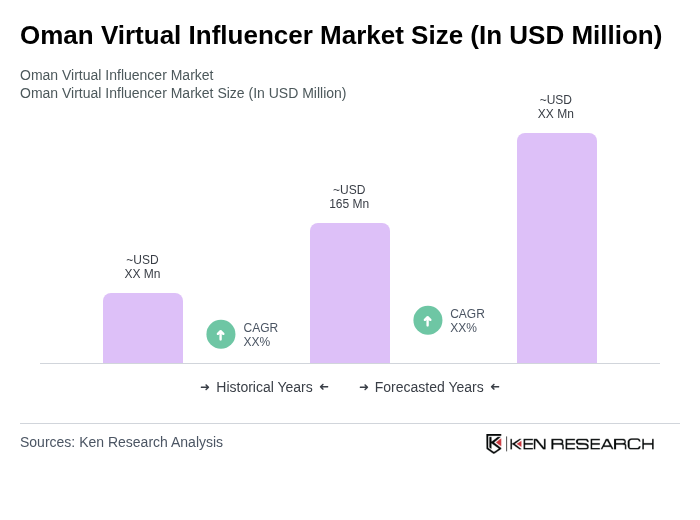
- The Oman Virtual Influencer Market is valued at USD 165 million, based on a five-year historical analysis. This growth is primarily driven by the increasing adoption of digital marketing strategies by brands, coupled with the rising popularity of social media platforms among the youth. The demand for virtual influencers has surged as companies seek innovative ways to engage consumers and enhance brand visibility in a competitive landscape. The global virtual influencer market's expansion, growing at a compound annual growth rate of approximately 40 percent, reflects strong regional opportunities including emerging markets like Oman.
- Key players in this market include Muscat, Salalah, and Sohar, which dominate due to their strategic locations and growing digital infrastructure. Muscat, as the capital, serves as a hub for marketing agencies and tech startups, while Salalah and Sohar are emerging as significant centers for digital innovation, attracting investments in virtual influencer technologies.
- The Omani government has established frameworks to support digital marketing and influencer partnerships, with regulations mandating transparency in advertising practices. These regulatory measures aim to protect consumers from misleading promotions and enhance the credibility of virtual influencers, thereby fostering a more trustworthy digital marketing environment. The regulatory environment aligns with broader Middle Eastern initiatives to standardize digital marketing practices and consumer protection standards.
Oman Virtual Influencer Market Segmentation
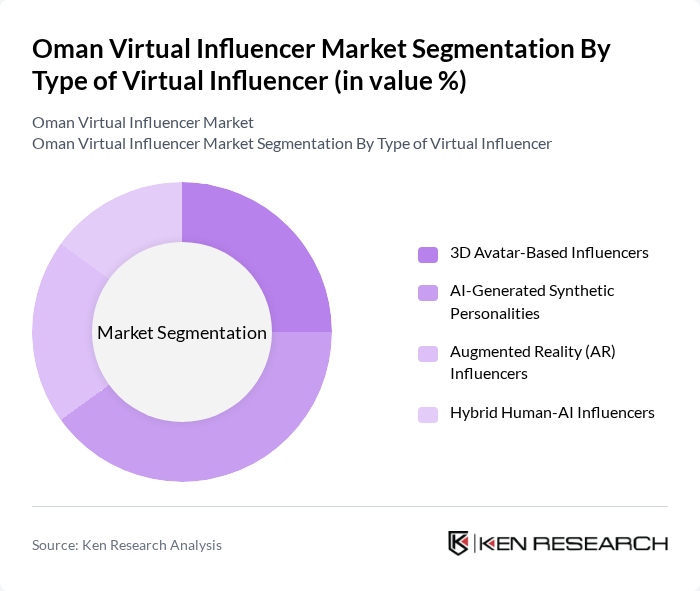
By Type of Virtual Influencer:The market is segmented into various types of virtual influencers, including 3D Avatar-Based Influencers, AI-Generated Synthetic Personalities, Augmented Reality (AR) Influencers, and Hybrid Human-AI Influencers. Among these, AI-Generated Synthetic Personalities are leading the market due to their ability to engage audiences with personalized content and interactive experiences. This segment has gained traction as brands increasingly leverage AI technology to create relatable and engaging virtual personas that resonate with consumers. The advancement in artificial intelligence and deep learning technologies continues to enhance the realism and interactivity of these digital personas.
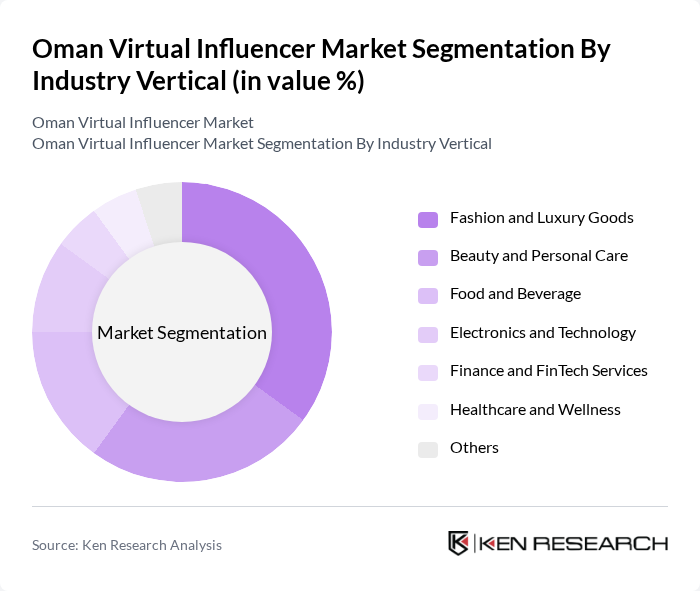
By Industry Vertical:The virtual influencer market is also segmented by industry verticals, including Fashion and Luxury Goods, Beauty and Personal Care, Food and Beverage, Electronics and Technology, Finance and FinTech Services, Healthcare and Wellness, and Others. The Fashion and Luxury Goods sector is currently the dominant segment, driven by the increasing collaboration between brands and virtual influencers to create visually appealing campaigns that attract younger consumers. This trend is fueled by the growing influence of social media on fashion trends and consumer purchasing decisions. The fashion and beauty industries have particularly embraced virtual influencers as trendsetters, leveraging their ability to showcase products and create immersive narratives that resonate with audiences.
Oman Virtual Influencer Market Competitive Landscape
The Oman Virtual Influencer Market is characterized by a dynamic mix of regional and international players. Leading participants such as Diigitals (UK-based virtual influencer agency), The Influencer Marketing Factory (TIMF), Brud Inc. (Creator of Lil Miquela), Realities.io (Virtual influencer platform), Soul Machines (AI-driven digital humans), Synthesia (AI video generation platform), Unreal Gigs (Virtual talent marketplace), CGI Influencer Studios (Regional virtual influencer creators), AI Persona Labs (Custom AI influencer development), Digital Talent Network (Virtual influencer representation), Metaverse Marketing Solutions (Virtual world influencer campaigns), Avatar Commerce Inc. (E-commerce virtual influencer integration), Neural Influencer Agency (AI-powered influencer management), Virtual Reality Content Studios (VR-based influencer experiences), Digital Persona Collective (Multi-platform virtual influencer network) contribute to innovation, geographic expansion, and service delivery in this space.
Oman Virtual Influencer Market Industry Analysis
Growth Drivers
- Increasing Social Media Engagement:In Oman, social media usage has surged, with over 4 million active users reported in the future, representing a 10% increase from the previous year. This growing engagement is pivotal for virtual influencers, as platforms like Instagram and TikTok become primary channels for brand interaction. The average daily time spent on social media is approximately 3.5 hours, indicating a robust environment for virtual influencers to thrive and connect with audiences effectively.
- Rise of Digital Marketing Strategies:The digital marketing sector in Oman is projected to reach $350 million in the future, driven by businesses increasingly allocating budgets towards online advertising. This shift is fostering a conducive environment for virtual influencers, who can deliver targeted campaigns with measurable outcomes. As companies seek innovative ways to engage consumers, the demand for virtual influencers is expected to rise, enhancing brand visibility and consumer interaction.
- Technological Advancements in AI:The integration of AI technologies in Oman is advancing rapidly, with investments in AI expected to exceed $250 million by the future. These advancements enable the creation of more sophisticated virtual influencers capable of personalized interactions. Enhanced AI capabilities allow for real-time engagement and tailored content, making virtual influencers more appealing to brands looking to leverage cutting-edge technology for marketing strategies.
Market Challenges
- Regulatory Uncertainty:The regulatory landscape for digital marketing in Oman remains ambiguous, with no specific guidelines for virtual influencers. This uncertainty can deter brands from investing in virtual influencer campaigns, as they may fear potential legal repercussions. As the government develops clearer regulations, businesses may hesitate to fully embrace this innovative marketing approach, impacting overall market growth.
- Consumer Skepticism:Despite the growing popularity of virtual influencers, consumer skepticism persists, with 65% of Omani consumers expressing doubts about the authenticity of virtual personalities. This skepticism can hinder engagement and trust, making it challenging for brands to effectively utilize virtual influencers. Overcoming this barrier requires strategic marketing efforts to build credibility and foster genuine connections with the audience.
Oman Virtual Influencer Market Future Outlook
The Oman virtual influencer market is poised for significant evolution, driven by technological advancements and changing consumer preferences. As brands increasingly recognize the potential of virtual influencers, we anticipate a surge in innovative marketing campaigns that leverage AI and augmented reality. Additionally, the growing demand for personalized content will likely lead to the emergence of niche virtual influencers, catering to specific audience segments. This dynamic landscape will create new opportunities for brands to engage consumers in more meaningful ways.
Market Opportunities
- Expansion into E-commerce:The e-commerce sector in Oman is projected to reach $1.2 billion in the future, presenting a significant opportunity for virtual influencers to drive sales through direct product promotions. Collaborating with e-commerce platforms can enhance brand visibility and facilitate seamless shopping experiences for consumers, ultimately boosting conversion rates and sales.
- Collaborations with Brands:As brands increasingly seek innovative marketing strategies, collaborations with virtual influencers can provide unique promotional avenues. With over 75% of marketers in Oman planning to invest in influencer marketing, partnerships with virtual influencers can enhance brand storytelling and reach, creating impactful campaigns that resonate with target audiences.
Scope of the Report
| Segment | Sub-Segments |
|---|---|
| By Type of Virtual Influencer | D Avatar-Based Influencers AI-Generated Synthetic Personalities Augmented Reality (AR) Influencers Hybrid Human-AI Influencers |
| By Industry Vertical | Fashion and Luxury Goods Beauty and Personal Care Food and Beverage Electronics and Technology Finance and FinTech Services Healthcare and Wellness Others |
| By Social Media Platform | TikTok YouTube Snapchat Regional Platforms (Weibo, Bilibili, Douyin) |
| By Content Format | Sponsored Product Posts Live Stream Commerce Short-Form Video Content Interactive Stories and Reels Virtual Events and Experiences |
| By Influencer Tier | Mega Influencers (1M+ followers) Macro Influencers (100K-1M followers) Micro Influencers (10K-100K followers) Nano Influencers (1K-10K followers) |
| By Target Audience Demographics | Age Groups (13-24, 25-34, 35-49, 50+) Gender Segmentation Geographic Location (Urban vs Rural) Income Levels |
| By Engagement Metrics | High Engagement (>5% engagement rate) Medium Engagement (2-5% engagement rate) Low Engagement (<2% engagement rate) |
Key Target Audience
Investors and Venture Capitalist Firms
Government and Regulatory Bodies (e.g., Ministry of Commerce, Industry and Investment Promotion)
Advertising and Marketing Agencies
Social Media Platforms and Technology Companies
Content Creators and Digital Marketing Professionals
Brand Managers and Corporate Marketing Teams
Media and Entertainment Companies
Telecommunications Providers
Players Mentioned in the Report:
Diigitals (UK-based virtual influencer agency)
The Influencer Marketing Factory (TIMF)
Brud Inc. (Creator of Lil Miquela)
Realities.io (Virtual influencer platform)
Soul Machines (AI-driven digital humans)
Synthesia (AI video generation platform)
Unreal Gigs (Virtual talent marketplace)
CGI Influencer Studios (Regional virtual influencer creators)
AI Persona Labs (Custom AI influencer development)
Digital Talent Network (Virtual influencer representation)
Metaverse Marketing Solutions (Virtual world influencer campaigns)
Avatar Commerce Inc. (E-commerce virtual influencer integration)
Neural Influencer Agency (AI-powered influencer management)
Virtual Reality Content Studios (VR-based influencer experiences)
Digital Persona Collective (Multi-platform virtual influencer network)
Table of Contents
Market Assessment Phase
1. Executive Summary and Approach
2. Oman Virtual Influencer Market Overview
2.1 Key Insights and Strategic Recommendations
2.2 Oman Virtual Influencer Market Overview
2.3 Definition and Scope
2.4 Evolution of Market Ecosystem
2.5 Timeline of Key Regulatory Milestones
2.6 Value Chain & Stakeholder Mapping
2.7 Business Cycle Analysis
2.8 Policy & Incentive Landscape
3. Oman Virtual Influencer Market Analysis
3.1 Growth Drivers
3.1.1 Increasing Social Media Engagement
3.1.2 Rise of Digital Marketing Strategies
3.1.3 Demand for Authentic Content
3.1.4 Technological Advancements in AI
3.2 Market Challenges
3.2.1 Regulatory Uncertainty
3.2.2 Competition from Traditional Influencers
3.2.3 Consumer Skepticism
3.2.4 High Initial Investment Costs
3.3 Market Opportunities
3.3.1 Expansion into E-commerce
3.3.2 Collaborations with Brands
3.3.3 Growth in Virtual Reality Experiences
3.3.4 Increasing Demand for Niche Influencers
3.4 Market Trends
3.4.1 Personalization of Content
3.4.2 Integration of Augmented Reality
3.4.3 Focus on Sustainability
3.4.4 Rise of Micro and Nano Influencers
3.5 Government Regulation
3.5.1 Data Protection Laws
3.5.2 Advertising Standards
3.5.3 Taxation Policies for Digital Services
3.5.4 Content Ownership Regulations
4. SWOT Analysis
5. Stakeholder Analysis
6. Porter's Five Forces Analysis
7. Oman Virtual Influencer Market Market Size, 2019-2024
7.1 By Value
7.2 By Volume
7.3 By Average Selling Price
8. Oman Virtual Influencer Market Segmentation
8.1 By Type of Virtual Influencer
8.1.1 3D Avatar-Based Influencers
8.1.2 AI-Generated Synthetic Personalities
8.1.3 Augmented Reality (AR) Influencers
8.1.4 Hybrid Human-AI Influencers
8.2 By Industry Vertical
8.2.1 Fashion and Luxury Goods
8.2.2 Beauty and Personal Care
8.2.3 Food and Beverage
8.2.4 Electronics and Technology
8.2.5 Finance and FinTech Services
8.2.6 Healthcare and Wellness
8.2.7 Others
8.3 By Social Media Platform
8.3.1 Instagram
8.3.2 TikTok
8.3.3 YouTube
8.3.4 Snapchat
8.3.5 Regional Platforms (Weibo, Bilibili, Douyin)
8.4 By Content Format
8.4.1 Sponsored Product Posts
8.4.2 Live Stream Commerce
8.4.3 Short-Form Video Content
8.4.4 Interactive Stories and Reels
8.4.5 Virtual Events and Experiences
8.5 By Influencer Tier
8.5.1 Mega Influencers (1M+ followers)
8.5.2 Macro Influencers (100K-1M followers)
8.5.3 Micro Influencers (10K-100K followers)
8.5.4 Nano Influencers (1K-10K followers)
8.6 By Target Audience Demographics
8.6.1 Age Groups (13-24, 25-34, 35-49, 50+)
8.6.2 Gender Segmentation
8.6.3 Geographic Location (Urban vs Rural)
8.6.4 Income Levels
8.7 By Engagement Metrics
8.7.1 High Engagement (>5% engagement rate)
8.7.2 Medium Engagement (2-5% engagement rate)
8.7.3 Low Engagement (<2% engagement rate)
9. Oman Virtual Influencer Market Competitive Analysis
9.1 Market Share of Key Players
9.2 Cross Comparison of Key Players
9.2.1 Company Name
9.2.2 Company Size Classification (Enterprise, Mid-Market, Startup)
9.2.3 Average Campaign Cost (USD per engagement)
9.2.4 Average Engagement Rate (%)
9.2.5 Content Production Capacity (posts/month)
9.2.6 Brand Partnership Success Rate (%)
9.2.7 Campaign Pricing Model (Fixed, Performance-Based, Hybrid)
9.2.8 Follower Growth Rate (% YoY)
9.2.9 Average Campaign ROI (%)
9.2.10 Client Retention Rate (%)
9.3 SWOT Analysis of Top Players
9.4 Pricing Analysis
9.5 Detailed Profile of Major Companies
9.5.1 Diigitals (UK-based virtual influencer agency)
9.5.2 The Influencer Marketing Factory (TIMF)
9.5.3 Brud Inc. (Creator of Lil Miquela)
9.5.4 Realities.io (Virtual influencer platform)
9.5.5 Soul Machines (AI-driven digital humans)
9.5.6 Synthesia (AI video generation platform)
9.5.7 Unreal Gigs (Virtual talent marketplace)
9.5.8 CGI Influencer Studios (Regional virtual influencer creators)
9.5.9 AI Persona Labs (Custom AI influencer development)
9.5.10 Digital Talent Network (Virtual influencer representation)
9.5.11 Metaverse Marketing Solutions (Virtual world influencer campaigns)
9.5.12 Avatar Commerce Inc. (E-commerce virtual influencer integration)
9.5.13 Neural Influencer Agency (AI-powered influencer management)
9.5.14 Virtual Reality Content Studios (VR-based influencer experiences)
9.5.15 Digital Persona Collective (Multi-platform virtual influencer network)
10. Oman Virtual Influencer Market End-User Analysis
10.1 Procurement Behavior of Key Government Entities
10.1.1 Ministry of Commerce, Industry and Investment Promotion
10.1.2 Ministry of Information
10.1.3 Ministry of Tourism
10.1.4 Oman Chamber of Commerce and Industry
10.2 Corporate Spend on Digital Marketing
10.2.1 Marketing and Advertising Budgets
10.2.2 Digital Transformation Investments
10.2.3 Brand Development and Positioning Expenditures
10.2.4 E-commerce Integration Costs
10.3 Pain Point Analysis by End-User Category
10.3.1 Brand Awareness and Market Penetration Challenges
10.3.2 Content Authenticity and Consumer Trust Issues
10.3.3 Campaign Performance Measurement Difficulties
10.3.4 Regulatory Compliance and Data Privacy Concerns
10.4 User Readiness for Adoption
10.4.1 Awareness Levels of Virtual Influencer Technology
10.4.2 Digital Marketing Technology Adoption Rates
10.4.3 Training and Capability Development Needs
10.4.4 Budget Allocation Readiness
10.5 Post-Deployment ROI and Use Case Expansion
10.5.1 Campaign Performance Metrics and KPIs
10.5.2 Successful Implementation Case Studies
10.5.3 Future Use Cases and Scalability Potential
10.5.4 Long-term Partnership Opportunities
11. Oman Virtual Influencer Market Future Size, 2025-2030
11.1 By Value
11.2 By Volume
11.3 By Average Selling Price
Go-To-Market Strategy Phase
1. Whitespace Analysis + Business Model Canvas
1.1 Market Gaps Identification
1.2 Business Model Framework
2. Marketing and Positioning Recommendations
2.1 Branding Strategies
2.2 Product USPs
3. Distribution Plan
3.1 Urban Retail vs Rural NGO Tie-ups
4. Channel & Pricing Gaps
4.1 Underserved Routes
4.2 Pricing Bands
5. Unmet Demand & Latent Needs
5.1 Category Gaps
5.2 Consumer Segments
6. Customer Relationship
6.1 Loyalty Programs
6.2 After-sales Service
7. Value Proposition
7.1 Sustainability
7.2 Integrated Supply Chains
8. Key Activities
8.1 Regulatory Compliance
8.2 Branding
8.3 Distribution Setup
9. Entry Strategy Evaluation
9.1 Domestic Market Entry Strategy
9.1.1 Product Mix
9.1.2 Pricing Band
9.1.3 Packaging
9.2 Export Entry Strategy
9.2.1 Target Countries
9.2.2 Compliance Roadmap
10. Entry Mode Assessment
10.1 JV
10.2 Greenfield
10.3 M&A
10.4 Distributor Model
11. Capital and Timeline Estimation
11.1 Capital Requirements
11.2 Timelines
12. Control vs Risk Trade-Off
12.1 Ownership vs Partnerships
13. Profitability Outlook
13.1 Breakeven Analysis
13.2 Long-term Sustainability
14. Potential Partner List
14.1 Distributors
14.2 JVs
14.3 Acquisition Targets
15. Execution Roadmap
15.1 Phased Plan for Market Entry
Research Methodology
Phase 1: Approach1
Desk Research
- Analysis of social media trends and engagement metrics specific to Oman
- Review of existing literature on virtual influencers and their market impact in the MENA region
- Examination of demographic data and consumer behavior reports related to digital marketing in Oman
Primary Research
- Interviews with marketing executives from leading brands utilizing virtual influencers
- Surveys targeting social media users in Oman to gauge perceptions of virtual influencers
- Focus groups with digital marketing professionals to discuss trends and challenges in the virtual influencer space
Validation & Triangulation
- Cross-validation of findings through comparison with global virtual influencer case studies
- Triangulation of data from social media analytics and consumer feedback
- Sanity checks conducted through expert panel discussions with industry leaders
Phase 2: Market Size Estimation1
Top-down Assessment
- Estimation of market size based on overall digital advertising expenditure in Oman
- Segmentation of the market by industry verticals leveraging virtual influencers
- Incorporation of growth rates from related sectors such as e-commerce and social media marketing
Bottom-up Modeling
- Analysis of revenue generated by virtual influencers through brand partnerships and campaigns
- Estimation of average engagement rates and conversion metrics from influencer marketing reports
- Calculation of potential market share based on influencer follower counts and audience demographics
Forecasting & Scenario Analysis
- Multi-factor regression analysis incorporating social media growth and digital ad spend trends
- Scenario modeling based on varying levels of consumer acceptance and regulatory changes
- Development of baseline, optimistic, and pessimistic forecasts through 2028
Phase 3: CATI Sample Composition1
| Scope Item/Segment | Sample Size | Target Respondent Profiles |
|---|---|---|
| Brand Marketing Executives | 45 | Marketing Managers, Brand Strategists |
| Social Media Users | 120 | Active Instagram and TikTok Users |
| Digital Marketing Professionals | 35 | SEO Specialists, Content Creators |
| Advertising Agencies | 40 | Account Managers, Creative Directors |
| Influencer Marketing Platforms | 30 | Platform Managers, Data Analysts |
Frequently Asked Questions
What is the current value of the Oman Virtual Influencer Market?
The Oman Virtual Influencer Market is valued at approximately USD 165 million, reflecting significant growth driven by the increasing adoption of digital marketing strategies and the rising popularity of social media among the youth in Oman.
What factors are driving the growth of virtual influencers in Oman?
Which cities are leading in the Oman Virtual Influencer Market?
What types of virtual influencers are popular in Oman?
Other Regional/Country Reports
Indonesia Virtual Influencer Market
Malaysia Virtual Influencer Market
KSA Virtual Influencer Market
APAC Virtual Influencer Market
SEA Virtual Influencer Market
Vietnam Virtual Influencer Market
Other Adjacent Reports
Thailand Digital Marketing Market
Malaysia Social Media Advertising Market
Thailand AI Technology Market
APAC augmented reality market Size, Share, Growth Drivers, Trends, Opportunities & Forecast 2025–2030Oman E-commerce Platform Market
Vietnam Fashion and Luxury Goods Market
India Beauty and Personal Care Market Size, Share & Forecast, By Product Type, Price Tier & Distribution Channel, 2026-2031Thailand Influencer Marketing Agency Market
Bahrain Content Creation Software Market
Kuwait Virtual Reality Content Market
Why Buy From Us?

What makes us stand out is that our consultants follow Robust, Refine and Result (RRR) methodology. Robust for clear definitions, approaches and sanity checking, Refine for differentiating respondents' facts and opinions, and Result for presenting data with story.

We have set a benchmark in the industry by offering our clients with syndicated and customized market research reports featuring coverage of entire market as well as meticulous research and analyst insights.

While we don't replace traditional research, we flip the method upside down. Our dual approach of Top Bottom & Bottom Top ensures quality deliverable by not just verifying company fundamentals but also looking at the sector and macroeconomic factors.

With one step in the future, our research team constantly tries to show you the bigger picture. We help with some of the tough questions you may encounter along the way: How is the industry positioned? Best marketing channel? KPI's of competitors? By aligning every element, we help maximize success.

Our report gives you instant access to the answers and sources that other companies might choose to hide. We elaborate each steps of research methodology we have used and showcase you the sample size to earn your trust.

If you need any support, we are here! We pride ourselves on universe strength, data quality, and quick, friendly, and professional service.