Region:Asia
Author(s):Shubham
Product Code:KRAA8733
Pages:81
Published On:November 2025
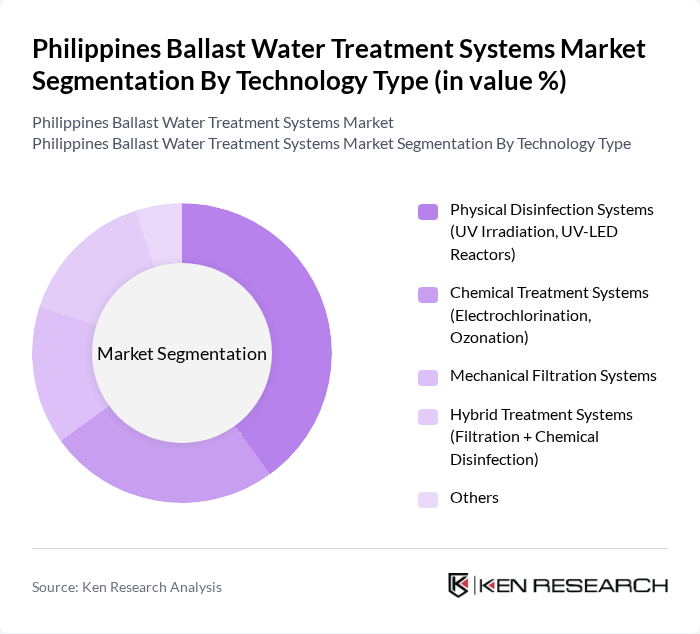
By Technology Type:The technology type segmentation includes various methods for treating ballast water to ensure compliance with environmental regulations. The subsegments are Physical Disinfection Systems (UV Irradiation, UV-LED Reactors), Chemical Treatment Systems (Electrochlorination, Ozonation), Mechanical Filtration Systems, Hybrid Treatment Systems (Filtration + Chemical Disinfection), and Others. Among these, Physical Disinfection Systems are leading due to their effectiveness, lower environmental impact, and minimal chemical residue, making them the preferred choice for many shipping companies. The growing adoption of UV-based and hybrid solutions is also driven by their operational efficiency and ease of integration on both newbuild and retrofit vessels .
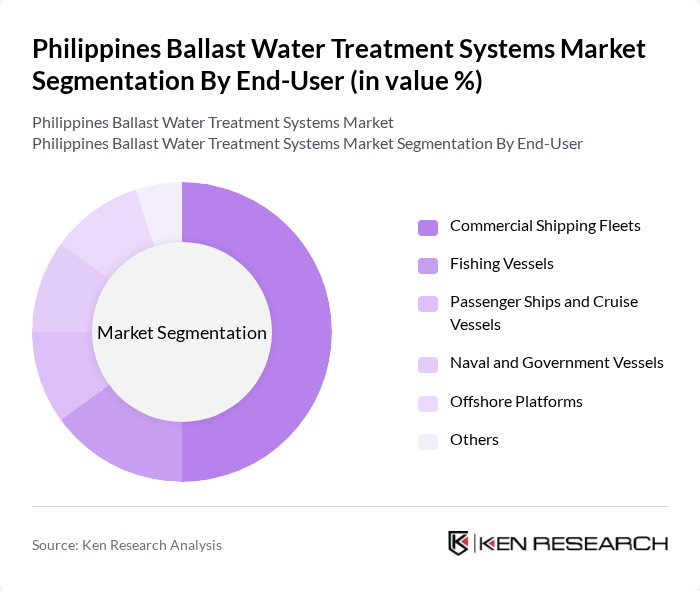
By End-User:The end-user segmentation encompasses various sectors utilizing ballast water treatment systems, including Commercial Shipping Fleets, Fishing Vessels, Passenger Ships and Cruise Vessels, Naval and Government Vessels, Offshore Platforms, and Others. The Commercial Shipping Fleets segment is the most significant due to the high volume of cargo transport and the stringent regulations imposed on these vessels, driving the demand for effective ballast water management solutions. Increasing regulatory enforcement and the need for operational efficiency are further accelerating adoption among commercial operators .
The Philippines Ballast Water Treatment Systems Market is characterized by a dynamic mix of regional and international players. Leading participants such as Alfa Laval, Wärtsilä, Xylem Inc., Ecochlor, Inc., JFE Engineering Corporation, Veolia Water Technologies, Hyundai Heavy Industries, GEA Group, Optimarin, DESMI, Marenco, C-Power, Samsung Heavy Industries, SUEZ, Kongsberg Gruppen contribute to innovation, geographic expansion, and service delivery in this space.
The Philippines ballast water treatment systems market is poised for significant growth as regulatory pressures and environmental awareness continue to rise. In future, the market is expected to see increased investments in innovative technologies, driven by both government incentives and private sector partnerships. Additionally, the expansion of shipping routes in Southeast Asia will create further demand for effective treatment solutions, positioning the Philippines as a leader in sustainable maritime practices.
| Segment | Sub-Segments |
|---|---|
| By Technology Type | Physical Disinfection Systems (UV Irradiation, UV-LED Reactors) Chemical Treatment Systems (Electrochlorination, Ozonation) Mechanical Filtration Systems Hybrid Treatment Systems (Filtration + Chemical Disinfection) Others |
| By End-User | Commercial Shipping Fleets Fishing Vessels Passenger Ships and Cruise Vessels Naval and Government Vessels Offshore Platforms Others |
| By Vessel Type | Bulk Carriers Oil Tankers and VLCCs Container Ships LNG Carriers General Cargo Ships Others |
| By Treatment Capacity | Less Than 1,500 m³/h ,500-5,000 m³/h More Than 5,000 m³/h Others |
| By Service Type | Installation and Calibration Performance Measurement and Monitoring Recommissioning and Maintenance Others |
| By Installation Type | Newbuild Installations Retrofit Installations Others |
| By Region | Luzon (Manila Bay, Port of Manila) Visayas (Cebu, Iloilo) Mindanao (Davao, General Santos) Others |
| Scope Item/Segment | Sample Size | Target Respondent Profiles |
|---|---|---|
| Commercial Shipping Operators | 100 | Fleet Managers, Compliance Officers |
| Ballast Water Treatment System Manufacturers | 60 | Product Development Managers, Sales Directors |
| Port Authority Representatives | 50 | Environmental Compliance Officers, Operations Managers |
| Marine Environmental NGOs | 40 | Policy Advocates, Research Analysts |
| Regulatory Bodies | 40 | Regulatory Affairs Specialists, Marine Safety Inspectors |
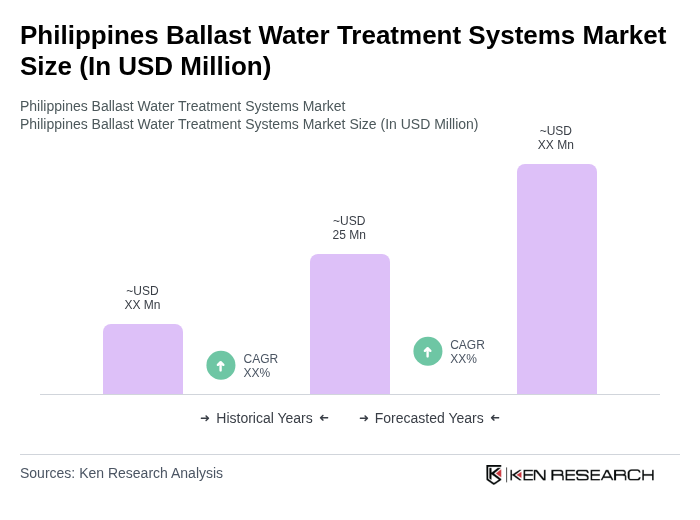
The Philippines Ballast Water Treatment Systems Market is valued at approximately USD 25 million, driven by stringent international regulations and the adoption of advanced treatment technologies aimed at preventing the transfer of invasive aquatic species through ballast water.

What makes us stand out is that our consultants follow Robust, Refine and Result (RRR) methodology. Robust for clear definitions, approaches and sanity checking, Refine for differentiating respondents' facts and opinions, and Result for presenting data with story.

We have set a benchmark in the industry by offering our clients with syndicated and customized market research reports featuring coverage of entire market as well as meticulous research and analyst insights.

While we don't replace traditional research, we flip the method upside down. Our dual approach of Top Bottom & Bottom Top ensures quality deliverable by not just verifying company fundamentals but also looking at the sector and macroeconomic factors.

With one step in the future, our research team constantly tries to show you the bigger picture. We help with some of the tough questions you may encounter along the way: How is the industry positioned? Best marketing channel? KPI's of competitors? By aligning every element, we help maximize success.

Our report gives you instant access to the answers and sources that other companies might choose to hide. We elaborate each steps of research methodology we have used and showcase you the sample size to earn your trust.

If you need any support, we are here! We pride ourselves on universe strength, data quality, and quick, friendly, and professional service.













