Region:Asia
Author(s):Geetanshi
Product Code:KRAC4410
Pages:83
Published On:October 2025
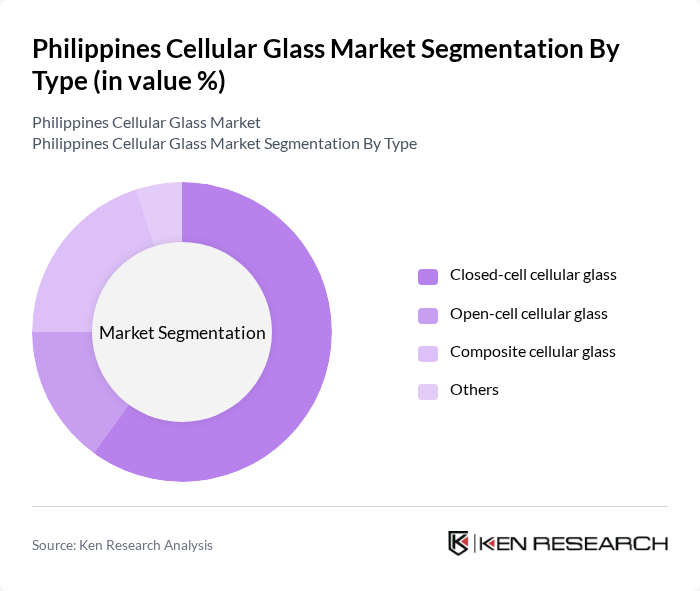
By Type:The market is segmented into various types of cellular glass, including closed-cell cellular glass, open-cell cellular glass, composite cellular glass, and others. Closed-cell cellular glass is gaining traction due to its superior insulation properties, moisture resistance, and fire safety, making it ideal for building and industrial applications. Open-cell cellular glass, while less common, is used in specialized applications requiring flexibility and sound absorption. Composite cellular glass combines the benefits of multiple materials, targeting niche segments. The "Others" category includes innovative and emerging cellular glass products ..
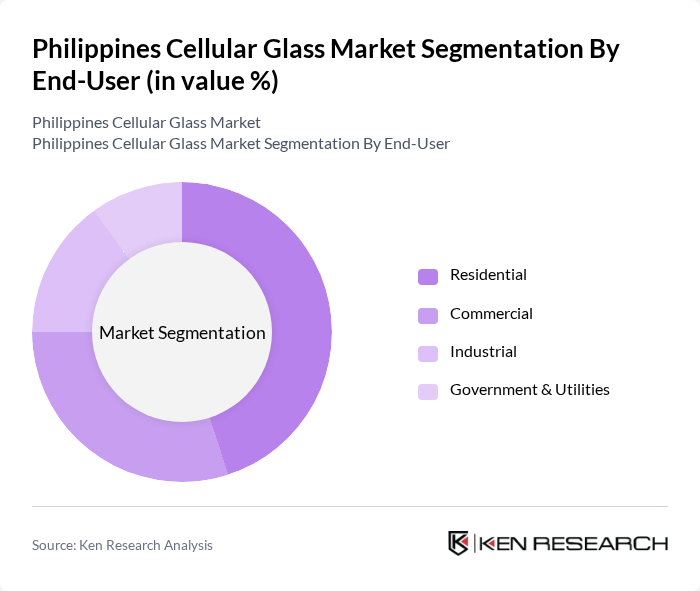
By End-User:The cellular glass market is segmented by end-user into residential, commercial, industrial, and government & utilities. The residential segment is the largest, driven by increasing demand for energy-efficient homes and sustainable building practices. The commercial sector follows, supported by growth in office spaces and retail establishments prioritizing insulation and fire protection. The industrial segment is significant due to the need for durable, efficient materials in factories and warehouses. Government & utilities are adopting cellular glass for public infrastructure projects, especially where fire safety and long-term durability are required ..
The Philippines Cellular Glass Market is characterized by a dynamic mix of regional and international players. Leading participants such as Owens Corning, Saint-Gobain, Johns Manville, Knauf Insulation, Rockwool International, BASF SE, Armacell International, Kingspan Group, Uralita, Solvay, Boral Limited, Cellofoam, Thermafiber, EcoBatt, and Insulfoam contribute to innovation, geographic expansion, and service delivery in this space.
The future of the cellular glass market in the Philippines appears promising, driven by increasing government support for sustainable construction and a growing emphasis on energy efficiency. As the construction sector expands, projected to reach PHP 1.2 trillion by future, the demand for innovative materials will likely rise. Additionally, technological advancements in manufacturing processes are expected to reduce costs, making cellular glass more accessible. This evolving landscape presents significant opportunities for market players to capitalize on emerging trends and consumer preferences.
| Segment | Sub-Segments |
|---|---|
| By Type | Closed-cell cellular glass Open-cell cellular glass Composite cellular glass Others |
| By End-User | Residential Commercial Industrial Government & Utilities |
| By Application | Insulation (thermal and acoustic) Soundproofing Fire protection Others |
| By Distribution Channel | Direct sales (manufacturer to contractor/developer) Distributors (local building material suppliers) Online sales (B2B platforms, e-commerce) Others |
| By Price Range | Low-end (local alternatives, price-sensitive projects) Mid-range (mainstream commercial and residential) High-end (premium, green-certified, and industrial projects) |
| By Material Source | Domestic production (emerging local manufacturing) Imported materials (majority from global suppliers) Recycled materials (niche, sustainability-focused projects) |
| By Policy Support | Subsidies for green building materials Tax exemptions for energy-efficient products Grants for sustainable materials R&D Others (local government incentives, PPPs) |
| Scope Item/Segment | Sample Size | Target Respondent Profiles |
|---|---|---|
| Residential Construction Projects | 60 | Architects, General Contractors |
| Commercial Building Developments | 50 | Project Managers, Real Estate Developers |
| Industrial Applications of Cellular Glass | 40 | Facility Managers, Industrial Engineers |
| Retail Distribution of Insulation Materials | 40 | Retail Managers, Supply Chain Coordinators |
| Government and Regulatory Bodies | 40 | Policy Makers, Environmental Consultants |
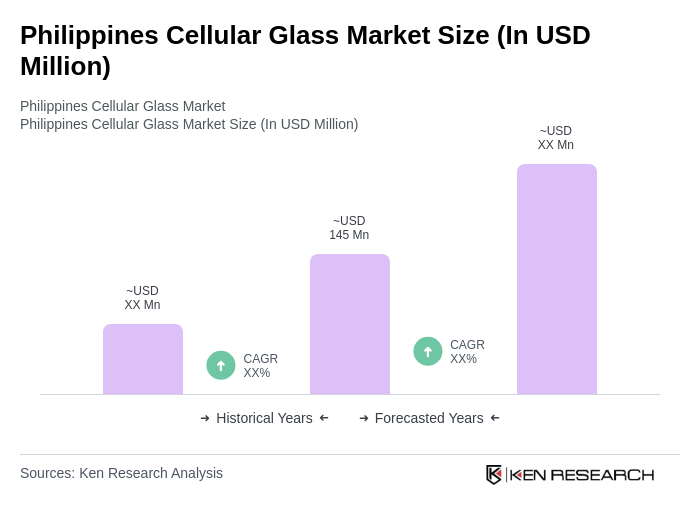
The Philippines Cellular Glass Market is valued at approximately USD 145 million, driven by the increasing demand for energy-efficient building materials and sustainable construction practices, alongside robust construction sector activity.

What makes us stand out is that our consultants follow Robust, Refine and Result (RRR) methodology. Robust for clear definitions, approaches and sanity checking, Refine for differentiating respondents' facts and opinions, and Result for presenting data with story.

We have set a benchmark in the industry by offering our clients with syndicated and customized market research reports featuring coverage of entire market as well as meticulous research and analyst insights.

While we don't replace traditional research, we flip the method upside down. Our dual approach of Top Bottom & Bottom Top ensures quality deliverable by not just verifying company fundamentals but also looking at the sector and macroeconomic factors.

With one step in the future, our research team constantly tries to show you the bigger picture. We help with some of the tough questions you may encounter along the way: How is the industry positioned? Best marketing channel? KPI's of competitors? By aligning every element, we help maximize success.

Our report gives you instant access to the answers and sources that other companies might choose to hide. We elaborate each steps of research methodology we have used and showcase you the sample size to earn your trust.

If you need any support, we are here! We pride ourselves on universe strength, data quality, and quick, friendly, and professional service.













