Region:Asia
Author(s):Dev
Product Code:KRAB6007
Pages:91
Published On:October 2025
By Type:The market is segmented into various types, including Online Courses, Workshops and Seminars, Corporate Training Programs, E-learning Platforms, Coaching and Mentoring, Certification Programs, and Others. Each of these subsegments caters to different learning preferences and organizational needs, contributing to the overall growth of the market.
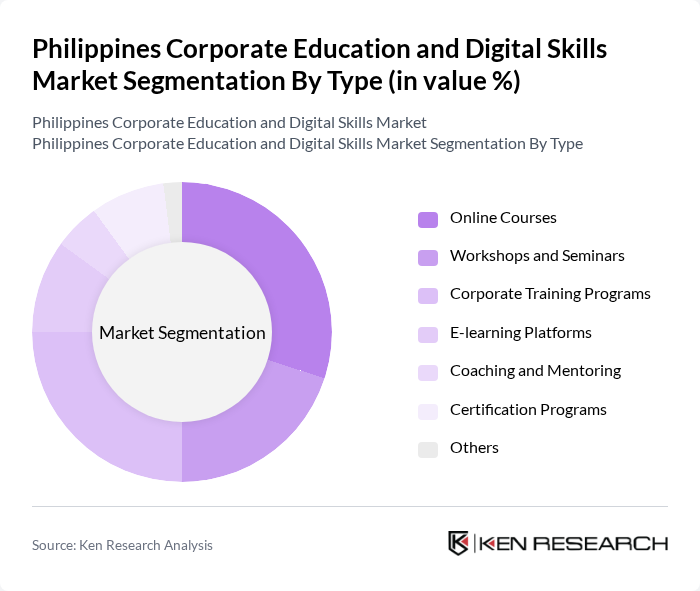
The Online Courses subsegment is currently dominating the market due to the increasing preference for flexible learning options among professionals. The rise of digital platforms has made it easier for individuals to access a wide range of courses that cater to their specific needs. Additionally, the COVID-19 pandemic accelerated the shift towards online learning, making it a preferred choice for many organizations looking to upskill their workforce efficiently.
By End-User:The market is segmented by end-users, including Corporations, Government Agencies, Non-Profit Organizations, Educational Institutions, Individuals, and Others. Each end-user category has unique training requirements and objectives, influencing the types of educational programs they seek.
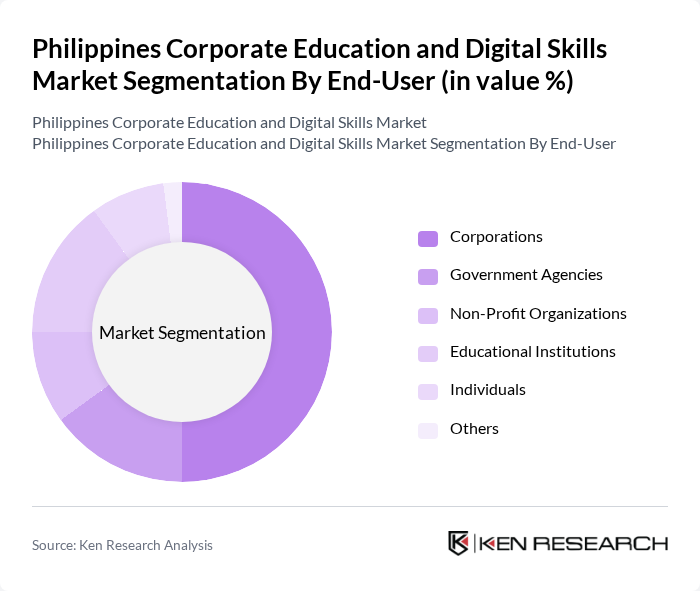
Corporations are the leading end-user segment, accounting for a significant portion of the market. This dominance is attributed to the increasing need for companies to invest in employee training and development to remain competitive in a rapidly changing business environment. Corporations are increasingly recognizing the importance of upskilling their workforce to adapt to new technologies and methodologies.
The Philippines Corporate Education and Digital Skills Market is characterized by a dynamic mix of regional and international players. Leading participants such as Ateneo de Manila University, University of the Philippines, TESDA (Technical Education and Skills Development Authority), Coursera, Udemy, LinkedIn Learning, K12 Inc., Edukasyon.ph, 2U, Inc., Pluralsight, Skillsoft, FutureLearn, Simplilearn, General Assembly, EdX contribute to innovation, geographic expansion, and service delivery in this space.
The future of the Philippines corporate education and digital skills market appears promising, driven by ongoing technological advancements and a growing emphasis on workforce development. As companies increasingly recognize the importance of upskilling their employees, investments in training programs are expected to rise. Additionally, the integration of innovative learning technologies, such as AI and data analytics, will enhance training effectiveness, making it more personalized and efficient. This evolution will likely lead to a more agile workforce capable of adapting to the dynamic demands of the digital economy.
| Segment | Sub-Segments |
|---|---|
| By Type | Online Courses Workshops and Seminars Corporate Training Programs E-learning Platforms Coaching and Mentoring Certification Programs Others |
| By End-User | Corporations Government Agencies Non-Profit Organizations Educational Institutions Individuals Others |
| By Delivery Mode | In-Person Training Virtual Training Hybrid Training Self-Paced Learning Others |
| By Industry | Information Technology Manufacturing Retail Healthcare Finance Others |
| By Skill Level | Beginner Intermediate Advanced Executive Others |
| By Duration | Short-Term Courses Long-Term Programs Ongoing Training Others |
| By Certification Type | Professional Certifications Academic Certifications Industry-Specific Certifications Others |
| Scope Item/Segment | Sample Size | Target Respondent Profiles |
|---|---|---|
| Corporate Training Programs | 150 | Training Managers, Learning & Development Heads |
| Digital Skills Workshops | 100 | HR Professionals, Corporate Trainers |
| Online Learning Platforms | 80 | Product Managers, Educational Technology Specialists |
| Industry-Specific Skill Development | 70 | Sectoral Experts, Business Development Managers |
| Government Initiatives on Digital Literacy | 60 | Policy Makers, Educational Administrators |
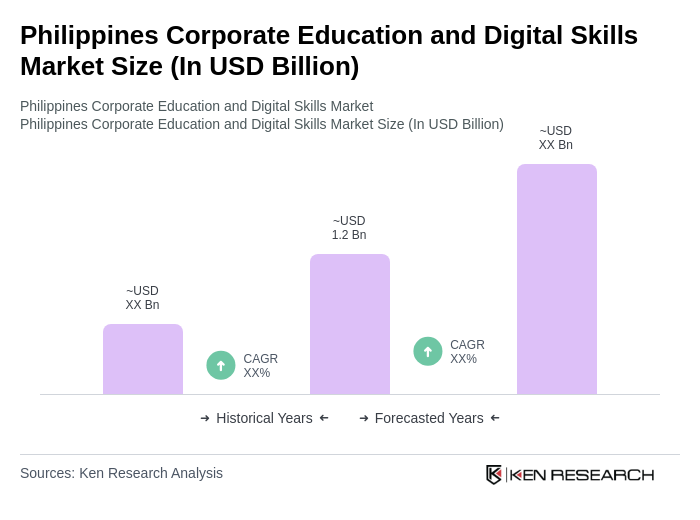
The Philippines Corporate Education and Digital Skills Market is valued at approximately USD 1.2 billion, reflecting significant growth driven by the increasing demand for digital skills among the workforce and the need for companies to enhance productivity in a rapidly evolving technological landscape.

What makes us stand out is that our consultants follow Robust, Refine and Result (RRR) methodology. Robust for clear definitions, approaches and sanity checking, Refine for differentiating respondents' facts and opinions, and Result for presenting data with story.

We have set a benchmark in the industry by offering our clients with syndicated and customized market research reports featuring coverage of entire market as well as meticulous research and analyst insights.

While we don't replace traditional research, we flip the method upside down. Our dual approach of Top Bottom & Bottom Top ensures quality deliverable by not just verifying company fundamentals but also looking at the sector and macroeconomic factors.

With one step in the future, our research team constantly tries to show you the bigger picture. We help with some of the tough questions you may encounter along the way: How is the industry positioned? Best marketing channel? KPI's of competitors? By aligning every element, we help maximize success.

Our report gives you instant access to the answers and sources that other companies might choose to hide. We elaborate each steps of research methodology we have used and showcase you the sample size to earn your trust.

If you need any support, we are here! We pride ourselves on universe strength, data quality, and quick, friendly, and professional service.













