About the Report
Base Year 2024Philippines Kickboxing Equipment Market Overview
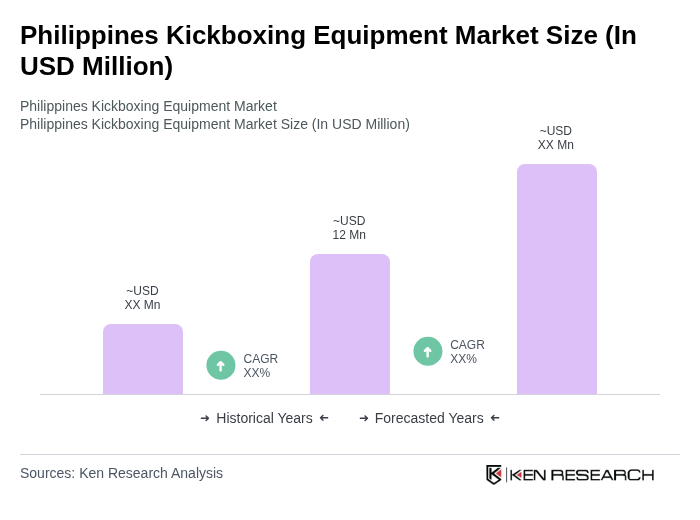
- The Philippines Kickboxing Equipment Market is valued at USD 12 million, based on a five-year historical analysis. This growth is primarily driven by the increasing popularity of kickboxing as a fitness trend, coupled with the rise of combat sports in the region, rising middle-class fitness adoption, and strong cultural integration of martial arts. The growing number of gyms and training centers offering kickboxing classes has significantly contributed to the demand for specialized equipment.
- Metro Manila, Cebu, and Davao are the dominant cities in the Philippines Kickboxing Equipment Market. Metro Manila leads due to its urban population and concentration of fitness facilities, while Cebu and Davao are emerging markets with increasing interest in kickboxing and martial arts. The presence of local gyms and international brands in these areas further fuels market growth.
- The Philippine Sports Commission Administrative Order No. 01, Series of 2012 issued by the Philippine Sports Commission requires all national sports associations to implement mandatory sports development programs, including provision of training equipment and facilities meeting international standards for safety and quality, with compliance monitored through annual audits and funding allocations tied to program execution. This initiative aims to enhance access to sports facilities and equipment, thereby encouraging participation in activities like kickboxing, which is expected to positively impact the market.
Philippines Kickboxing Equipment Market Segmentation
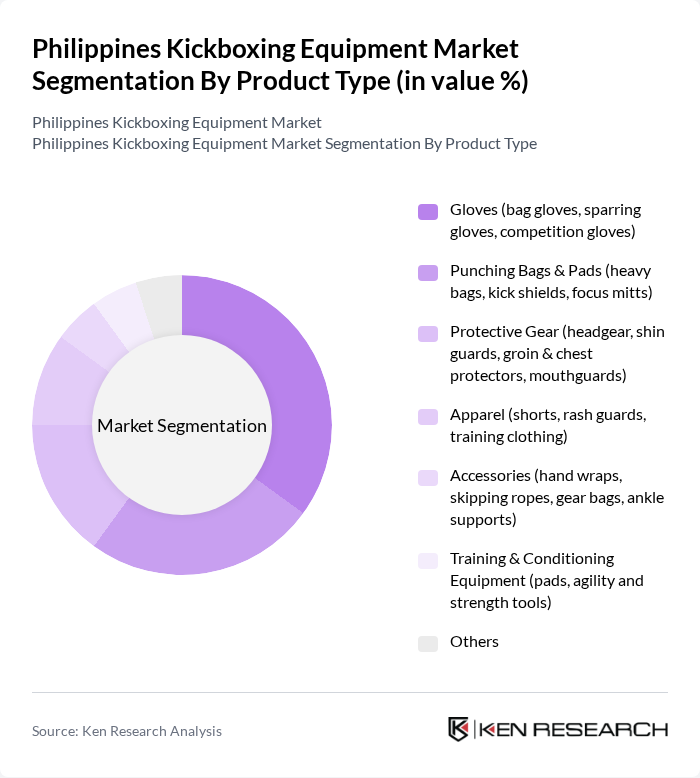
By Product Type:The product type segmentation includes various categories such as gloves, punching bags and pads, protective gear, apparel, accessories, training and conditioning equipment, and others. Among these, gloves are the most popular due to their essential role in kickboxing training and competition. The demand for specialized gloves, including bag gloves, sparring gloves, and competition gloves, has surged as more individuals engage in kickboxing for fitness and sport. Punching bags and pads also hold significant market share, driven by their necessity in training regimens.
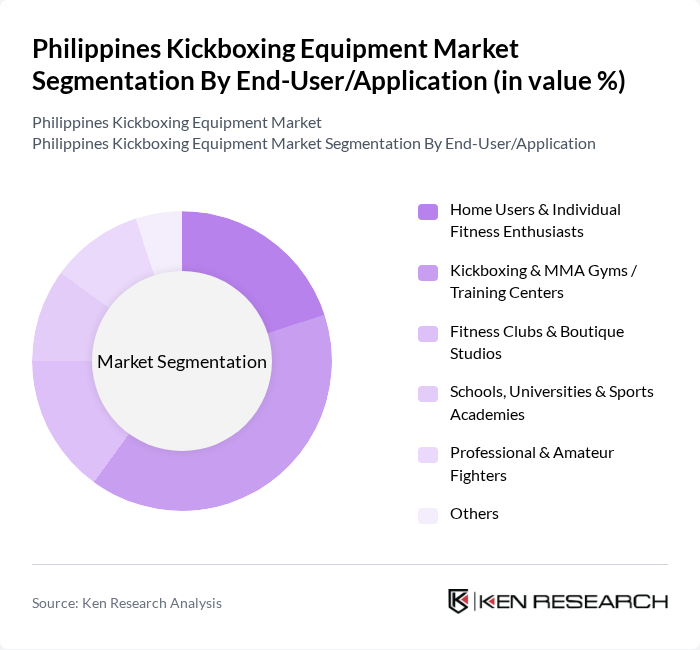
By End-User/Application:The end-user segmentation encompasses home users, kickboxing and MMA gyms, fitness clubs, schools, universities, and professional fighters. The segment of kickboxing and MMA gyms is the most significant, as these facilities require a wide range of equipment to cater to their members. The increasing number of fitness enthusiasts opting for kickboxing as a form of exercise has also led to a rise in demand from home users, who seek quality equipment for personal training.
Philippines Kickboxing Equipment Market Competitive Landscape
The Philippines Kickboxing Equipment Market is characterized by a dynamic mix of regional and international players. Leading participants such as Everlast Worldwide, Inc., Venum, Fairtex, Hayabusa Fightwear Inc., RDX Sports, TITLE Boxing, LLC, Revgear Sports Co., Twins Special Co., Ltd., Top King Boxing Co., Ltd., Winning (FITEC Co., Ltd.), Ringside, Inc., Cleto Reyes (Industria Reyes, S.A. de C.V.), Sanabul LLC, local Philippine distributors and brands (Olympic Village / Olympic World, Chris Sports, Toby’s Sports private labels), Decathlon S.A. (Outshock brand) contribute to innovation, geographic expansion, and service delivery in this space.
Philippines Kickboxing Equipment Market Industry Analysis
Growth Drivers
- Increasing Popularity of Kickboxing as a Fitness Trend:The Philippines has seen a significant rise in fitness trends, with kickboxing gaining traction among health-conscious individuals. In future, the fitness industry is projected to reach PHP 70 billion, with kickboxing contributing approximately PHP 6 billion. This growth is driven by urbanization and a shift towards active lifestyles, as 50% of Filipinos aged 18-35 are now engaging in fitness activities, including kickboxing, highlighting its appeal as a fun and effective workout.
- Rise in the Number of Kickboxing Gyms and Training Centers:The establishment of kickboxing gyms has surged, with over 400 new facilities opening in the last two years alone. This growth is supported by a 20% increase in gym memberships, indicating a robust demand for kickboxing training. The Philippine Sports Commission reported that participation in combat sports has increased by 30% since 2022, further solidifying kickboxing's position as a mainstream fitness option and driving equipment sales.
- Expansion of E-commerce Platforms for Equipment Sales:E-commerce has transformed the retail landscape for kickboxing equipment, with online sales projected to reach PHP 1.5 billion in future. The rise of platforms like Lazada and Shopee has made purchasing accessible, with a 40% increase in online sports equipment sales noted in recent years. This trend is bolstered by the growing internet penetration rate of 80%, allowing consumers to easily access a variety of kickboxing gear from the comfort of their homes.
Market Challenges
- High Import Tariffs on Sports Equipment:The Philippines imposes import tariffs averaging 25% on sports equipment, significantly impacting pricing and accessibility. This tariff structure has led to a 15% increase in retail prices for imported kickboxing gear, making it less competitive against locally produced alternatives. As a result, many consumers opt for cheaper, lower-quality options, which can hinder the growth of premium brands in the market.
- Limited Awareness of Quality Standards:A lack of awareness regarding quality standards for kickboxing equipment poses a challenge for both consumers and manufacturers. Approximately 70% of consumers are unaware of safety certifications, leading to potential safety risks. This gap in knowledge can result in the purchase of substandard products, which may deter new participants from engaging in kickboxing, ultimately affecting market growth and brand reputation.
Philippines Kickboxing Equipment Market Future Outlook
The future of the kickboxing equipment market in the Philippines appears promising, driven by increasing consumer interest in fitness and combat sports. As more individuals seek engaging workout options, the demand for high-quality kickboxing gear is expected to rise. Additionally, the integration of technology in training equipment, such as smart gloves and fitness apps, will likely enhance training experiences. The market is poised for growth as local manufacturers and e-commerce platforms expand their offerings to meet evolving consumer preferences.
Market Opportunities
- Development of Local Manufacturing Capabilities:Investing in local manufacturing can reduce reliance on imports and lower costs. With the Philippine government promoting local production, manufacturers can capitalize on this trend to create affordable, high-quality kickboxing equipment tailored to local preferences, potentially increasing market share and consumer loyalty.
- Collaboration with Fitness Influencers for Marketing:Partnering with fitness influencers can significantly enhance brand visibility and credibility. As social media engagement continues to rise, leveraging influencers with large followings can drive awareness and sales of kickboxing equipment, particularly among younger demographics who are more likely to trust recommendations from their favorite fitness personalities.
Scope of the Report
| Segment | Sub-Segments |
|---|---|
| By Product Type | Gloves (bag gloves, sparring gloves, competition gloves) Punching Bags & Pads (heavy bags, kick shields, focus mitts) Protective Gear (headgear, shin guards, groin & chest protectors, mouthguards) Apparel (shorts, rash guards, training clothing) Accessories (hand wraps, skipping ropes, gear bags, ankle supports) Training & Conditioning Equipment (pads, agility and strength tools) Others |
| By End-User/Application | Home Users & Individual Fitness Enthusiasts Kickboxing & MMA Gyms / Training Centers Fitness Clubs & Boutique Studios Schools, Universities & Sports Academies Professional & Amateur Fighters Others |
| By Distribution Channel | Online Marketplaces (Lazada, Shopee, brand webstores) Specialty Sports & Martial Arts Stores General Sporting Goods Retailers Gym / Studio Direct Sales & Bulk Procurement Supermarkets and Hypermarkets Others |
| By Price Range | Budget / Entry-Level Mid-Range Premium & Professional Others |
| By Brand Origin | Local & Regional Brands Global Combat Sports Brands Private Label & Gym-Branded Products Others |
| By Material | Synthetic Leather (PU, PVC) Genuine Leather Foam & Padding Compounds Eco-friendly & Recycled Materials Others |
| By User Demographics | Age Group (Youth, Adult, Senior) Gender (Male, Female, Unisex) Skill Level (Beginner, Intermediate, Advanced/Professional) Urban vs. Rural Users |
Key Target Audience
Investors and Venture Capitalist Firms
Government and Regulatory Bodies (e.g., Department of Trade and Industry, Department of Health)
Manufacturers and Producers
Distributors and Retailers
Sports Organizations and Federations
Fitness Centers and Gyms
Event Organizers and Promoters
Importers and Exporters
Players Mentioned in the Report:
Everlast Worldwide, Inc.
Venum
Fairtex
Hayabusa Fightwear Inc.
RDX Sports
TITLE Boxing, LLC
Revgear Sports Co.
Twins Special Co., Ltd.
Top King Boxing Co., Ltd.
Winning (FITEC Co., Ltd.)
Ringside, Inc.
Cleto Reyes (Industria Reyes, S.A. de C.V.)
Sanabul LLC
local Philippine distributors and brands (Olympic Village / Olympic World, Chris Sports, Tobys Sports private labels)
Decathlon S.A. (Outshock brand)
Table of Contents
Market Assessment Phase
1. Executive Summary and Approach
2. Philippines Kickboxing Equipment Market Overview
2.1 Key Insights and Strategic Recommendations
2.2 Philippines Kickboxing Equipment Market Overview
2.3 Definition and Scope
2.4 Evolution of Market Ecosystem
2.5 Timeline of Key Regulatory Milestones
2.6 Value Chain & Stakeholder Mapping
2.7 Business Cycle Analysis
2.8 Policy & Incentive Landscape
3. Philippines Kickboxing Equipment Market Analysis
3.1 Growth Drivers
3.1.1 Increasing popularity of kickboxing as a fitness trend
3.1.2 Rise in the number of kickboxing gyms and training centers
3.1.3 Growing interest in combat sports among youth
3.1.4 Expansion of e-commerce platforms for equipment sales
3.2 Market Challenges
3.2.1 High import tariffs on sports equipment
3.2.2 Limited awareness of quality standards
3.2.3 Competition from alternative fitness equipment
3.2.4 Economic fluctuations affecting consumer spending
3.3 Market Opportunities
3.3.1 Development of local manufacturing capabilities
3.3.2 Collaboration with fitness influencers for marketing
3.3.3 Introduction of innovative and eco-friendly products
3.3.4 Expansion into untapped rural markets
3.4 Market Trends
3.4.1 Increasing demand for personalized kickboxing gear
3.4.2 Growth of online training programs and virtual classes
3.4.3 Rising popularity of women's kickboxing
3.4.4 Integration of technology in training equipment
3.5 Government Regulation
3.5.1 Compliance with safety standards for sports equipment
3.5.2 Regulations on advertising and marketing of sports products
3.5.3 Import regulations affecting foreign manufacturers
3.5.4 Support for local sports initiatives and events
4. SWOT Analysis
5. Stakeholder Analysis
6. Porter's Five Forces Analysis
7. Philippines Kickboxing Equipment Market Market Size, 2019-2024
7.1 By Value
7.2 By Volume
7.3 By Average Selling Price
8. Philippines Kickboxing Equipment Market Segmentation
8.1 By Product Type
8.1.1 Gloves (bag gloves, sparring gloves, competition gloves)
8.1.2 Punching Bags & Pads (heavy bags, kick shields, focus mitts)
8.1.3 Protective Gear (headgear, shin guards, groin & chest protectors, mouthguards)
8.1.4 Apparel (shorts, rash guards, training clothing)
8.1.5 Accessories (hand wraps, skipping ropes, gear bags, ankle supports)
8.1.6 Training & Conditioning Equipment (pads, agility and strength tools)
8.1.7 Others
8.2 By End-User/Application
8.2.1 Home Users & Individual Fitness Enthusiasts
8.2.2 Kickboxing & MMA Gyms / Training Centers
8.2.3 Fitness Clubs & Boutique Studios
8.2.4 Schools, Universities & Sports Academies
8.2.5 Professional & Amateur Fighters
8.2.6 Others
8.3 By Distribution Channel
8.3.1 Online Marketplaces (Lazada, Shopee, brand webstores)
8.3.2 Specialty Sports & Martial Arts Stores
8.3.3 General Sporting Goods Retailers
8.3.4 Gym / Studio Direct Sales & Bulk Procurement
8.3.5 Supermarkets and Hypermarkets
8.3.6 Others
8.4 By Price Range
8.4.1 Budget / Entry-Level
8.4.2 Mid-Range
8.4.3 Premium & Professional
8.4.4 Others
8.5 By Brand Origin
8.5.1 Local & Regional Brands
8.5.2 Global Combat Sports Brands
8.5.3 Private Label & Gym-Branded Products
8.5.4 Others
8.6 By Material
8.6.1 Synthetic Leather (PU, PVC)
8.6.2 Genuine Leather
8.6.3 Foam & Padding Compounds
8.6.4 Eco-friendly & Recycled Materials
8.6.5 Others
8.7 By User Demographics
8.7.1 Age Group (Youth, Adult, Senior)
8.7.2 Gender (Male, Female, Unisex)
8.7.3 Skill Level (Beginner, Intermediate, Advanced/Professional)
8.7.4 Urban vs. Rural Users
9. Philippines Kickboxing Equipment Market Competitive Analysis
9.1 Market Share of Key Players
9.2 Cross Comparison of Key Players
9.2.1 Company Name
9.2.2 Company Size (Global, Regional, or Local)
9.2.3 Estimated Kickboxing Equipment Revenue (Philippines, PHP / USD)
9.2.4 3-Year Revenue CAGR in Kickboxing / Combat Sports Segment
9.2.5 Market Share in Philippines Kickboxing Equipment (%)
9.2.6 Channel Mix (Online vs. Offline Sales Share)
9.2.7 Average Selling Price Positioning (Budget / Mid-range / Premium)
9.2.8 Product Portfolio Breadth (Number of SKUs / Product Categories)
9.2.9 Geographic Coverage within Philippines (Metro Manila, Luzon, Visayas, Mindanao)
9.2.10 Brand Awareness & Preference Score (Philippines consumers)
9.2.11 Key Sponsorships & Gym/Studio Partnerships
9.2.12 Online Ratings & Review Score (Major Marketplaces)
9.3 SWOT Analysis of Top Players
9.4 Pricing Analysis
9.5 Detailed Profile of Major Companies
9.5.1 Everlast Worldwide, Inc.
9.5.2 Venum
9.5.3 Fairtex
9.5.4 Hayabusa Fightwear Inc.
9.5.5 RDX Sports
9.5.6 TITLE Boxing, LLC
9.5.7 Revgear Sports Co.
9.5.8 Twins Special Co., Ltd.
9.5.9 Top King Boxing Co., Ltd.
9.5.10 Winning (FITEC Co., Ltd.)
9.5.11 Ringside, Inc.
9.5.12 Cleto Reyes (Industria Reyes, S.A. de C.V.)
9.5.13 Sanabul LLC
9.5.14 local Philippine distributors and brands (Olympic Village / Olympic World, Chris Sports, Toby’s Sports private labels)
9.5.15 Decathlon S.A. (Outshock brand)
10. Philippines Kickboxing Equipment Market End-User Analysis
10.1 Procurement Behavior of Key Ministries
10.1.1 Government Sports Programs
10.1.2 Funding for Local Sports Events
10.1.3 Partnerships with Private Sector
10.1.4 Others
10.2 Corporate Spend on Infrastructure & Energy
10.2.1 Investment in Sports Facilities
10.2.2 Sponsorship of Kickboxing Events
10.2.3 Equipment Procurement for Training Centers
10.2.4 Others
10.3 Pain Point Analysis by End-User Category
10.3.1 Quality Concerns
10.3.2 Availability of Products
10.3.3 Pricing Issues
10.3.4 Others
10.4 User Readiness for Adoption
10.4.1 Awareness of Kickboxing Benefits
10.4.2 Accessibility of Equipment
10.4.3 Training Opportunities
10.4.4 Others
10.5 Post-Deployment ROI and Use Case Expansion
10.5.1 Performance Metrics
10.5.2 User Feedback Mechanisms
10.5.3 Opportunities for Upselling
10.5.4 Others
11. Philippines Kickboxing Equipment Market Future Size, 2025-2030
11.1 By Value
11.2 By Volume
11.3 By Average Selling Price
Go-To-Market Strategy Phase
1. Whitespace Analysis + Business Model Canvas
1.1 Market Gaps Identification
1.2 Business Model Development
2. Marketing and Positioning Recommendations
2.1 Branding Strategies
2.2 Product USPs
3. Distribution Plan
3.1 Urban Retail vs Rural NGO Tie-ups
4. Channel & Pricing Gaps
4.1 Underserved Routes
4.2 Pricing Bands
5. Unmet Demand & Latent Needs
5.1 Category Gaps
5.2 Consumer Segments
6. Customer Relationship
6.1 Loyalty Programs
6.2 After-sales Service
7. Value Proposition
7.1 Sustainability
7.2 Integrated Supply Chains
8. Key Activities
8.1 Regulatory Compliance
8.2 Branding
8.3 Distribution Setup
9. Entry Strategy Evaluation
9.1 Domestic Market Entry Strategy
9.1.1 Product Mix
9.1.2 Pricing Band
9.1.3 Packaging
9.2 Export Entry Strategy
9.2.1 Target Countries
9.2.2 Compliance Roadmap
10. Entry Mode Assessment
10.1 JV
10.2 Greenfield
10.3 M&A
10.4 Distributor Model
11. Capital and Timeline Estimation
11.1 Capital Requirements
11.2 Timelines
12. Control vs Risk Trade-Off
12.1 Ownership vs Partnerships
13. Profitability Outlook
13.1 Breakeven Analysis
13.2 Long-term Sustainability
14. Potential Partner List
14.1 Distributors
14.2 JVs
14.3 Acquisition Targets
15. Execution Roadmap
15.1 Phased Plan for Market Entry
15.1.1 Market Setup
15.1.2 Market Entry
15.1.3 Growth Acceleration
15.1.4 Scale & Stabilize
15.2 Key Activities and Milestones
15.2.1 Activity Planning
15.2.2 Milestone Tracking
Research Methodology
Phase 1: Approach1
Desk Research
- Industry reports from sports equipment associations and market research firms
- Government publications on sports and fitness trends in the Philippines
- Online databases for import/export statistics related to kickboxing equipment
Primary Research
- Interviews with manufacturers and distributors of kickboxing gear
- Surveys targeting gym owners and trainers specializing in kickboxing
- Focus groups with kickboxing enthusiasts and athletes for product feedback
Validation & Triangulation
- Cross-validation of data from multiple industry sources and expert opinions
- Triangulation of market size estimates from sales data and consumer surveys
- Sanity checks through expert panel reviews and industry roundtables
Phase 2: Market Size Estimation1
Top-down Assessment
- Analysis of national sports participation rates and growth in kickboxing
- Estimation of market size based on overall sports equipment spending
- Incorporation of demographic trends influencing kickboxing popularity
Bottom-up Modeling
- Sales data from leading kickboxing equipment retailers and e-commerce platforms
- Volume estimates based on gym memberships and training sessions
- Cost analysis of equipment types and average consumer spending patterns
Forecasting & Scenario Analysis
- Multi-variable regression analysis considering economic growth and fitness trends
- Scenario modeling based on potential regulatory changes in sports equipment
- Baseline, optimistic, and pessimistic forecasts through 2030
Phase 3: CATI Sample Composition1
| Scope Item/Segment | Sample Size | Target Respondent Profiles |
|---|---|---|
| Retail Sales of Kickboxing Equipment | 120 | Store Managers, Sales Representatives |
| Fitness Centers Offering Kickboxing Classes | 100 | Gym Owners, Fitness Instructors |
| Manufacturers of Kickboxing Gear | 80 | Product Managers, Supply Chain Directors |
| Kickboxing Enthusiasts and Athletes | 120 | Amateur and Professional Kickboxers, Trainers |
| Online Retailers of Sports Equipment | 90 | E-commerce Managers, Marketing Directors |
Frequently Asked Questions
What is the current value of the Philippines Kickboxing Equipment Market?
The Philippines Kickboxing Equipment Market is valued at approximately USD 12 million, reflecting a growing interest in kickboxing as a fitness trend and the increasing number of gyms and training centers offering kickboxing classes.
Which cities are the key players in the Philippines Kickboxing Equipment Market?
What factors are driving the growth of the kickboxing equipment market in the Philippines?
How has the Philippine Sports Commission influenced the kickboxing equipment market?
Other Regional/Country Reports
Indonesia Kickboxing Equipment Market
Malaysia Kickboxing Equipment Market
KSA Kickboxing Equipment Market
APAC Kickboxing Equipment Market
SEA Kickboxing Equipment Market
Vietnam Kickboxing Equipment Market
Other Adjacent Reports
UAE Boxing Equipment Market
Thailand Martial Arts Gear Market
Kuwait Fitness Apparel Market
Kuwait Protective Sports Gear Market
Mexico Training Equipment Market
Qatar Combat Sports Accessories Market
Bahrain Gym and Fitness Center Market
Brazil Home Workout Equipment Market
Vietnam Sports Nutrition Market Report Size Share Growth Drivers Trends Opportunities & Forecast 2025–2030UAE E-commerce Sports Goods Market
Why Buy From Us?

What makes us stand out is that our consultants follow Robust, Refine and Result (RRR) methodology. Robust for clear definitions, approaches and sanity checking, Refine for differentiating respondents' facts and opinions, and Result for presenting data with story.

We have set a benchmark in the industry by offering our clients with syndicated and customized market research reports featuring coverage of entire market as well as meticulous research and analyst insights.

While we don't replace traditional research, we flip the method upside down. Our dual approach of Top Bottom & Bottom Top ensures quality deliverable by not just verifying company fundamentals but also looking at the sector and macroeconomic factors.

With one step in the future, our research team constantly tries to show you the bigger picture. We help with some of the tough questions you may encounter along the way: How is the industry positioned? Best marketing channel? KPI's of competitors? By aligning every element, we help maximize success.

Our report gives you instant access to the answers and sources that other companies might choose to hide. We elaborate each steps of research methodology we have used and showcase you the sample size to earn your trust.

If you need any support, we are here! We pride ourselves on universe strength, data quality, and quick, friendly, and professional service.