CHAPTER 1 - MARKET SUMMARY
Market Overview
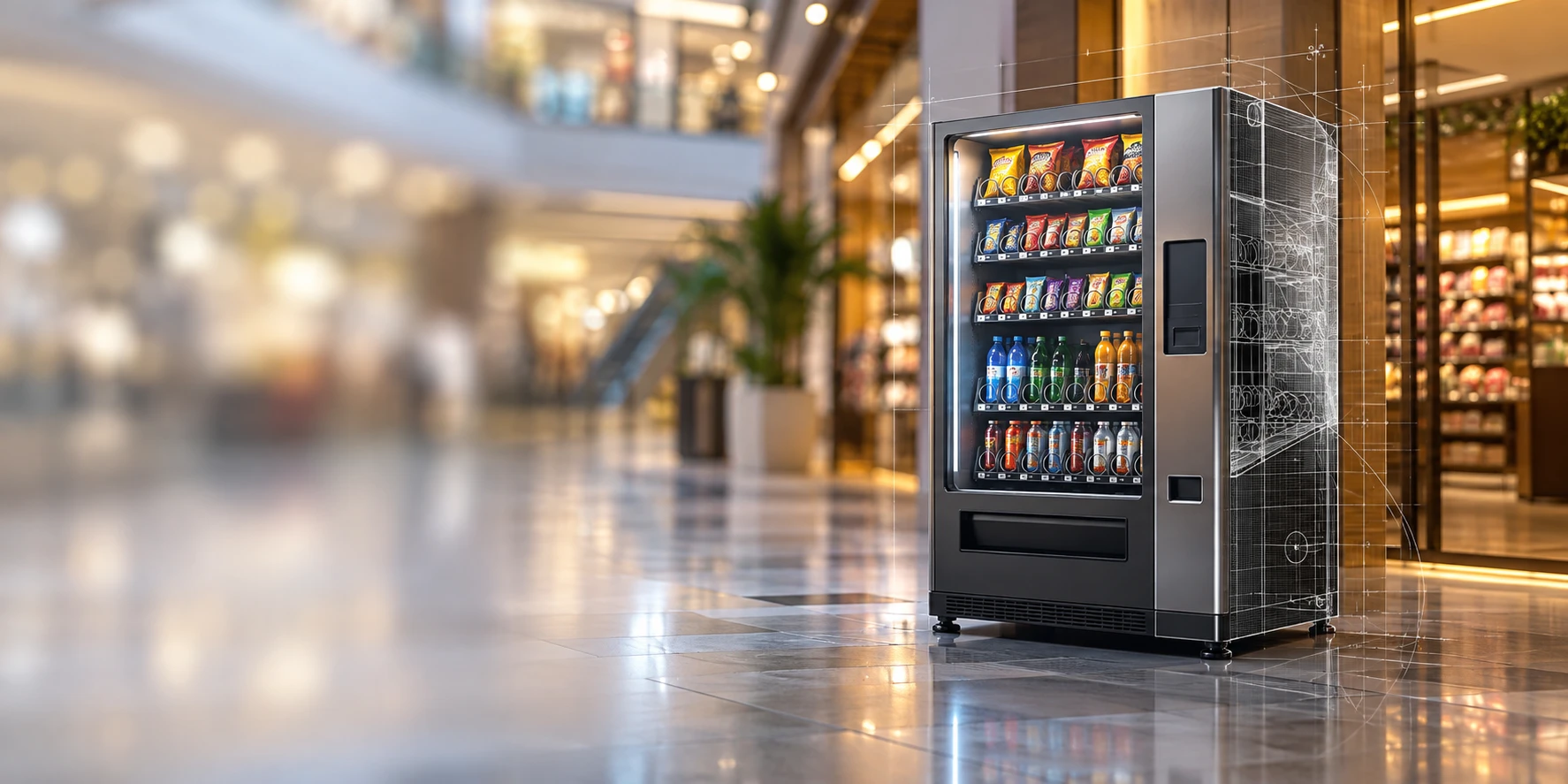
The Philippines Retail Vending Machine Market operates through managed machine fleets, site-host placements, equipment sales and entrepreneur-led deployments, with revenue concentrated in beverages, snacks, meals and selected convenience products. The commercial addressable base is expanding as 62.22 million people, or 55.2% of the population, lived in urban barangays in 2024, creating denser pools of repeat unattended-retail demand.
Metro Manila is the principal deployment hub because of its concentration of offices, campuses, hospitals, transport nodes and high-density residential developments. In 2024, the National Capital Region generated 31.2% of Philippine economic output, while services represented 82.9% of NCR gross regional domestic product. This concentration supports higher machine throughput and more economical replenishment routes than dispersed locations.
Market Value
USD 466 million
2025
Dominant Region
National Capital Region
2025
Dominant Segment
Smart Connected Machines
fastest growing, 2025-2032
Total Number of Players
30+
Future Outlook
The Philippines Retail Vending Machine Market is projected to advance from USD 466 million in 2025 to USD 692 million by 2032, representing a 5.81% forecast CAGR. The modeled 2031 value is USD 654 million, providing an intermediate milestone before terminal-year expansion. This forecast follows an estimated 5.78% historical CAGR during 2020-2025. Expansion is expected to remain strongest where operators combine dense placement networks, cashless acceptance, reliable replenishment and product assortments adapted to workplaces, schools, hospitals, transport facilities and mixed-use developments rather than relying only on machine-count growth.
Transaction volume is projected to increase from approximately 424 million annual vends in 2025 to 554 million in 2032, while the active machine fleet rises from about 64.8 thousand to 85.3 thousand units. Average ticket value is modeled to increase from USD 1.10 to USD 1.25 per transaction as product mix broadens toward premium beverages, prepared food and specialty convenience items. Cashless payment integration, remote inventory monitoring and route optimization should improve operating economics, while intense competition from convenience stores and fragmented local operators will keep the forecast below the most aggressive published growth scenarios.
5.81%
Forecast CAGR
$692 Mn
2030 Projection
Base Year
2025
Historical Period
2020-2025
Forecast Period
2025-2032
Historical CAGR
5.78%
CHAPTER 2 - SCOPE OF REPORT
Scope of the Market
CHAPTER 3 - Key Stakeholders
Key Target Audience
Key stakeholders who can leverage from this market analysis for investment, strategy, and operational planning.
Investors
CAGR, machine productivity, cash yield, capex intensity, scalability
Corporates
workplace convenience, service uptime, commissions, employee adoption, procurement
Government
digital payments, food safety, MSME adoption, consumer protection
Operators
route density, replenishment, uptime, telemetry, payment conversion, assortment
Financial institutions
merchant acquiring, QR payments, equipment finance, transaction economics
CHAPTER 4 - Market Size & Growth
Market Size, Growth Forecast and Trends
This section evaluates the historical market size, analyzes year-over-year growth dynamics, and presents forecast projections supported by market performance indicators and demand-side drivers.
Historical & Projected Market Size ($ Million)
Year-over-Year Growth Rate (%)
Market Value vs Volume Growth (%)
Historical Market Performance (2020-2025)
Historical expansion accelerated most sharply in 2023, when modeled market value increased 7.95%. The operational base grew from approximately 48.0 thousand active machines in 2020 to 64.8 thousand in 2025, while the modeled average retail ticket rose from USD 0.95 to USD 1.10. The 2025 working estimate carries a confidence band of USD 410-522 million, equivalent to approximately +/-12%, with fragmented private-operator disclosure representing the largest source of uncertainty. The 2024 public benchmark of USD 450 million provides an external anchor for the historical series.
Forecast Market Outlook (2025-2032)
The base forecast implies a 5.81% CAGR through 2032. Annual vending transactions are projected to rise from approximately 424 million to 554 million, supported by higher placement density and wider use of cashless interfaces. The active machine base is modeled at 85.3 thousand units in 2032, while average ticket value reaches about USD 1.25. The forecast sits between a more conservative published long-range outlook and the 6.3% 2025-2031 benchmark reported by another market tracker, providing a conservative central case that recognizes both digitization upside and strong substitute-channel competition.
CHAPTER 5 - Market Data
Market Breakdown
The market is transitioning from conventional cash-operated installations toward connected, multi-payment retail endpoints. For CEOs and investors, the principal operating questions are fleet productivity, payment conversion and ticket-value expansion rather than machine deployment alone.
Year | Market Size (USD Mn) | YoY Growth (%) | Active Machine Fleet (000 units) | National Digital Retail Payment Share (%) | Average Vend Ticket (USD) | Period |
|---|---|---|---|---|---|---|
| 2020 | $352 Mn | +- | 48.0 | 20.1% | Forecast | |
| 2021 | $365 Mn | +3.69% | 49.5 | 30.3% | Forecast | |
| 2022 | $390 Mn | +6.85% | 52.0 | 42.1% | Forecast | |
| 2023 | $421 Mn | +7.95% | 56.0 | 52.8% | Forecast | |
| 2024 | $450 Mn | +6.89% | 61.2 | 57.4% | Forecast | |
| 2025 | $466 Mn | +3.56% | 64.8 | 64.7% | Forecast | |
| 2026 | $493 Mn | +5.79% | 67.4 | 68.0% | Forecast | |
| 2027 | $522 Mn | +5.88% | 70.1 | 71.0% | Forecast | |
| 2028 | $552 Mn | +5.75% | 72.9 | 74.0% | Forecast | |
| 2029 | $584 Mn | +5.80% | 75.8 | 77.0% | Forecast | |
| 2030 | $618 Mn | +5.82% | 78.8 | 79.0% | Forecast | |
| 2031 | $654 Mn | +5.83% | 82.0 | 81.0% | Forecast | |
| 2032 | $692 Mn | +5.81% | 85.3 | 83.0% | Forecast |
Active Machine Fleet
64.8 thousand units, 2025, Philippines. Route density is central to profitability because replenishment and maintenance costs fall as machine clusters deepen. The country's largest managed operator publicly reports operating more than 2,000 machines nationwide.
National Digital Retail Payment Share
64.69%, 2025, Philippines. Cashless readiness increasingly determines machine conversion potential. Registered QR Ph merchant IDs reached 2.29 million by end-2025, broadening the payment ecosystem available to unattended-retail deployments.
Average Vend Ticket
USD 1.10, 2025, Philippines. Small-ticket economics favor high-frequency sites and low-friction payment acceptance. Digital merchant transactions reached 2.93 billion in 2025, up 33.22% from 2024, demonstrating the wider normalization of frequent electronic retail purchases.
CHAPTER 6 - Segmentation
Market Segmentation Framework
Comprehensive analysis across key dimensions providing insights into market structure, consumer preferences, and distribution patterns.
No of Segments
7
Dominant Segment
Product Type
Fastest Growing Segment
Technology
Product Type
Technology
Payment Mode
Application
End User
Distribution Channel
Geography
Key Segmentation Takeaways
Comprehensive analysis across all extracted segmentation dimensions providing insights into market structure, consumer preferences, and distribution patterns.
Product Type
Product assortment remains the core revenue-allocation axis because each machine format has distinct throughput, replenishment frequency, storage requirements and average ticket economics. Beverage and packaged-snack machines retain broad workplace applicability, while fresh-food and specialty machines depend more heavily on temperature control, inventory management and dense high-value locations that can support greater service intensity.
Technology
Technology is expected to produce the fastest structural shift as operators add remote inventory monitoring, telemetry, digital payments and interactive interfaces. IoT-connected smart machines are especially attractive because they can reduce stock-outs, improve route planning and provide transaction-level demand data. AI and vision-based cabinets represent a smaller but higher-value emerging format for flexible assortments and frictionless checkout.
CHAPTER 7 - Regional Analysis
Regional Analysis
The Philippines ranks near the upper end of selected Southeast Asian vending markets by 2025 value, supported by a large consumer base and rapidly improving cashless-payment infrastructure. Among the five comparable markets assessed, Indonesia remains larger while Singapore, Thailand and Vietnam provide useful benchmarks for technology intensity, market maturity and deployment economics.
Focus Country Ranking
2nd
Focus Country Market Size
USD 466 Mn (2025)
Philippines CAGR (2025-2032)
5.81%
Focus Country Ranking
2nd
Focus Country Market Size
USD 466 Mn (2025)
Philippines CAGR (2025-2032)
5.81%
Regional Analysis (Current Year)
Market Position
The Philippines ranks 2nd among the five selected peer markets, with a 2025 value of USD 466 million, behind Indonesia but ahead of Singapore, Thailand and Vietnam.
Growth Advantage
The Philippines' 5.81% modeled 2025-2032 CAGR positions it in the peer group's middle tier, above Thailand and Vietnam but below Indonesia and close to Singapore's growth profile.
Competitive Strengths
Competitive advantages include 64.69% digital retail-payment penetration by volume in 2025, interoperable QR Ph infrastructure and 1,566 participating or enjoined LGUs under Paleng-QR Ph Plus by July 2026.
CHAPTER 8 - INDUSTRY ANALYSIS
Growth Drivers, Challenges & Opportunities
Comprehensive analysis of key factors shaping the Philippines Retail Vending Machine Market, including growth catalysts, operational challenges, and emerging opportunities across production, distribution, and consumer segments.
Growth Drivers
Rapid Expansion of Interoperable Cashless Payments
- QR Ph expanded to 48 participating financial institutions (2025, Philippines), giving machine operators a wider interoperable acceptance base instead of requiring proprietary payment ecosystems. This lowers integration barriers for multi-location deployments and supports higher cashless conversion.
- Payment-acceptance terminals increased 12.90% to 316,795 units (2025, Philippines), indicating continued investment in merchant-acquiring infrastructure. Vending operators benefit from broader consumer familiarity with tap, QR and digitally initiated retail payments.
- Person-to-merchant digital volume increased 33.22% year on year (2025, Philippines). The shift toward frequent low-value electronic transactions directly improves the addressability of vending purchases, where checkout speed and low transaction values historically favored cash.
Urban Density and High-Traffic Site Formation
- The National Capital Region contained 14.00 million urban residents (2024, Philippines) and was fully classified as urban, supporting dense route planning and frequent replenishment. Operators capturing office, campus and residential clusters can spread service costs across more machines.
- Urbanization reached 55.2% (2024, Philippines), up 1.2 percentage points from 2020. Expansion beyond Metro Manila widens the investable placement universe across growth corridors in CALABARZON, Central Luzon, Cebu, Iloilo and Mindanao.
- Tourism direct gross value added represented 8.9% of GDP (2024, Philippines), supporting high-footfall airports, hotels, transport nodes and leisure sites. Automated retail can monetize extended operating hours without requiring full-service staffing at each point of sale.
Large Workplace and Institutional Customer Base
- Formal accommodation and food-service establishments numbered 37,500 locations (2024, Philippines), demonstrating the scale of commercially managed food-consumption sites. Vending can complement staffed foodservice during off-hours or at low-throughput micro-locations.
- Restaurants represented 73.7% of formal accommodation and food-service establishments (2024, Philippines). The extensive foodservice network raises consumer expectations for convenience, but it also provides operators with potential co-location and ancillary refreshment opportunities.
- The largest national vending operator manages more than 2,000 machines (latest available, Philippines), demonstrating that scaled managed-service fleets are operationally feasible. National operators can monetize route planning, procurement and technical-service capabilities across multi-site corporate accounts.
Market Challenges
Equipment Import Concentration and Lifecycle Cost Exposure
- China accounted for approximately 78.9% of HS 847619 import value (2024, Philippines). Concentration increases exposure to freight, lead-time and component-availability disruptions, making spare-parts inventories and multi-source technical support strategically important.
- HS 847619 imports included 9,524 items (2024, Philippines), illustrating continuing dependence on cross-border equipment flows despite local technical capability. Operators with inadequate maintenance infrastructure face higher downtime risk and weaker site-host retention.
- One local supplier reports 1,000+ machines deployed (latest available, Philippines), highlighting the scale required to support equipment, installation and after-sales service. Smaller entrants may struggle to match parts availability and nationwide technical coverage.
Dense Substitute Retail and Foodservice Competition
- Beverage-serving establishments totaled 4,374 locations (2024, Philippines). Coffee and beverage vending therefore competes with staffed alternatives on freshness, customization and customer experience, requiring operators to win primarily on access, speed and extended availability.
- Formal foodservice establishment count increased 21.5% versus 2022 (2024, Philippines). Expanding substitute supply raises the threshold for profitable vending placement, making exclusive corporate and institutional access more valuable than indiscriminate machine deployment.
- NCR captured 29.9% of formal foodservice employment (2024, Philippines), reinforcing the intensity of alternatives in the most attractive vending geography. Investors need site-level throughput discipline rather than assuming metropolitan locations automatically deliver superior returns.
Payment Reliability, Data Security and Consumer Trust
- The payment ecosystem processed 6.09 billion total retail transactions (2025, Philippines), increasing the operational importance of network resilience and failed-payment management. Machine operators must design fallback processes that protect conversion when connectivity or payment services are interrupted.
- The Data Privacy Act has governed personal-data processing since 2012 (Philippines). Connected vending platforms collecting customer, device or payment-related information must maintain appropriate privacy controls, adding compliance requirements to telemetry and loyalty deployments.
- BSP Circular No. 1198 introduced a dedicated merchant-payment-acceptance framework in 2024-2025 implementation context (Philippines). Payment partners and vending operators need clear responsibility for acquiring, transaction routing, refunds and customer support to protect uptime and trust.
Market Opportunities
Cashless Retrofit and Smart Telemetry Upgrade Cycle
- Mobile POS terminals increased 20.52% (2025, Philippines), indicating strong demand for flexible acceptance technology. Vendors can monetize payment modules, telemetry subscriptions, remote monitoring and service contracts alongside physical equipment.
- Wider merchant acceptance was cited by 24% of surveyed consumers (2025, Philippines) as a factor encouraging greater digital-payment use. Operators, site hosts, payment providers and machine integrators benefit when unattended checkout accepts familiar rails.
- Paleng-QR Ph Plus had reached 1,566 participating or enjoined LGUs by July 2026. Continued interoperability, reliable connectivity and transparent low-value transaction pricing are required for cashless vending to scale beyond premium urban sites.
Expansion Beyond Metro Manila
- The urban population outside NCR represents approximately 77.5% of the country's urban residents (2024, Philippines). Regional clusters can support route-based recurring revenue once machine density reaches service-efficient thresholds.
- Suppliers with dealer networks can serve new provincial operators; one supplier reports 100+ dealer partners (latest available, Philippines). Equipment sellers and service partners can therefore capture expansion without owning all vending inventory themselves.
- Regional expansion requires denser service coverage, local replenishment and dependable parts access. Nationwide suppliers already market coverage across three major island groups, Luzon, Visayas and Mindanao, demonstrating the commercial model for distributed support.
Premium Food, Coffee and Specialty Automated Retail
- Foodservice e-commerce sales increased 186.1% versus 2022 (2024, Philippines), demonstrating consumer acceptance of digitally mediated food purchasing. Smart vending can extend this behavior into immediate, unattended physical fulfillment.
- NCR accounted for 48.1% of foodservice e-commerce sales (2024, Philippines), making metropolitan hospitals, offices, campuses and condominiums attractive early sites for premium machine formats. Operators and branded food suppliers can share the resulting micro-retail profit pool.
- Fresh-food and beverage operators must maintain food-safety compliance under the Food Safety Act of 2013 (Philippines), reliable temperature control and disciplined replenishment. Stronger telemetry and inventory rotation are necessary to protect margins as assortments become more perishable.
CHAPTER 9 - Competitive Landscape
Competitive Landscape Overview
Competition is fragmented across a leading managed-service operator, domestic suppliers, coffee specialists and entrepreneur-focused dealers; service reach, machine uptime, payment integration and site access are the primary competitive barriers.
Market Share Distribution
Top 5 Players
Market Dynamics
8 new entrants in the past 5 years, indicating strong market attractiveness and growth potential.
Company Name | Market Share | Headquarters | Founding Year | Core Market Focus |
|---|---|---|---|---|
Philippine Vending Corporation | - | Pasig City, Philippines | 1997 | Managed nationwide beverage, snack and workplace vending services |
Barista Choi Vending Solutions Inc. | - | - | - | Coffee and hot-beverage vending systems |
Vending Machine PH by ITADish | - | Pasig City, Philippines | 2016 | Customized retail vending machines, servicing and deployment support |
FIFI Machine Trading | - | Santa Barbara, Pangasinan, Philippines | - | Coffee vending machines, beverage dispensers and dealer support |
Your Vending Solutions | - | - | - | Snack, beverage, coffee and cashless smart vending systems |
Vendix Vending Coffee Solutions | - | Taguig City, Philippines | - | Automated hot and iced coffee vending with cashless acceptance |
Asiatrends Import and Export Corporation (Chong Café) | - | Manila, Philippines | - | Coin-operated coffee and hot-beverage vending equipment |
The PALAG Group Inc. | - | Dasmarinas, Cavite, Philippines | 2018 | Smart snack vending and entrepreneur-oriented machine packages |
Ealvia Vending Machine Retailing | - | - | - | Snack, drink and specialty vending solutions |
Kalidad Vending Services | - | Consolacion, Cebu, Philippines | 2013 | Specialty and hygiene-focused vending solutions |
Cross Comparison Parameters
The report provides detailed cross-comparison of key players across 10 performance parameters to identify competitive strengths and weaknesses.
Active Machine Fleet
Machine Uptime
Revenue per Active Machine
Gross Margin per Vend
Analysis Covered
Market Share Analysis:
Benchmarks operator scale, fleet footprint, placement density and national fragmentation.
Cross Comparison Matrix:
Compares fleet, uptime, unit economics and financial performance across players.
SWOT Analysis:
Evaluates capabilities, sourcing exposure, service reach and cashless readiness by player.
Pricing Strategy Analysis:
Assesses equipment pricing, managed-service fees, payment costs and margin architecture.
Company Profiles:
Maps ownership, operating focus, geographic reach, partnerships and customer proposition.
CHAPTER 10 - REPORT TOC
Table of Contents
Market Assessment Phase
Supply-side and competitive intelligence covering market sizing, segmentation, competitive dynamics, regulatory landscape, and future forecasts.
Go-To-Market Strategy Phase
15 chapters
Entry strategy evaluation, execution roadmap, partner recommendations, and profitability outlook.
Survey Phase
8 chapters
Demand-side primary research conducted through structured interviews and online surveys with end users across priority metros and Tier 2/3 cities to capture consumption behavior, unmet needs, and purchase drivers.
Complete Report Coverage
201+ detailed sections covering every aspect of the market
143
Assessment Sections
58
Strategy Sections
CHAPTER 11 - Our Approach
Research Methodology
Desk Research
- Map vending operator fleet deployments
- Review BSP cashless payment adoption
- Assess vending equipment trade flows
- Benchmark retail site traffic economics
Primary Research
- Interview vending operations managers nationwide
- Survey facilities and procurement managers
- Interview machine suppliers and integrators
- Interview payment acceptance product managers
Validation and Triangulation
- Triangulated 300 respondent evidence base
- Reconciled fleet and transaction estimates
- Cross-checked ticket and throughput assumptions
- Tested regional deployment density patterns
CHAPTER 12 - FAQ
FAQs
Still have questions?
Our research team is here to help you find the right solution
CHAPTER 13 - Related Research
Explore Related Reports
Expand your market intelligence with complementary research across regions and adjacent markets.
Regional/Country ReportsRelated market analysis across key regions
Related market analysis across key regions
No regional reports found.
Adjacent ReportsRelated markets and complementary research
Related markets and complementary research
No adjacent reports found.
500+
Market Research Reports
50+
Countries Covered
15+
Industry Verticals