Region:Middle East
Author(s):Rebecca
Product Code:KRAD8469
Pages:83
Published On:December 2025
By Roaming Type:
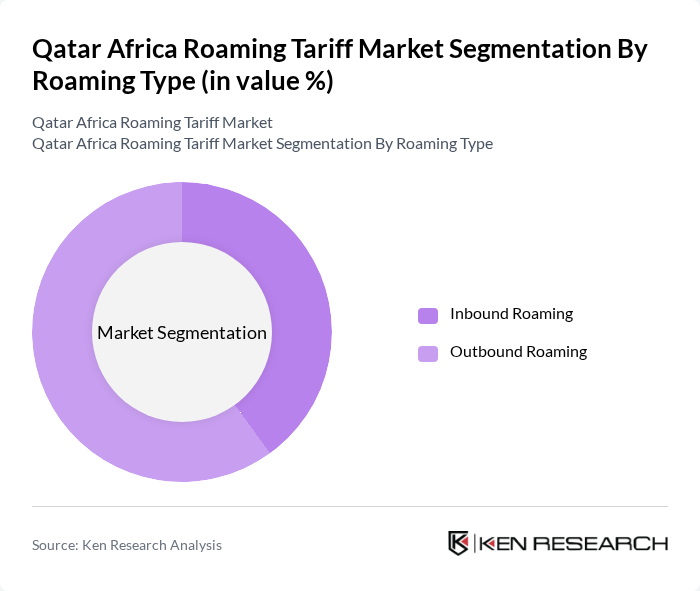
The roaming type segmentation includes inbound roaming and outbound roaming. Inbound roaming is primarily driven by tourists and business travelers visiting Qatar, who require reliable mobile services during their stay. Outbound roaming, on the other hand, is influenced by Qatari residents traveling to Africa for business or leisure, necessitating affordable and efficient roaming solutions. The outbound segment is currently leading the market due to the increasing number of Qatari nationals traveling abroad.
By Service Type:
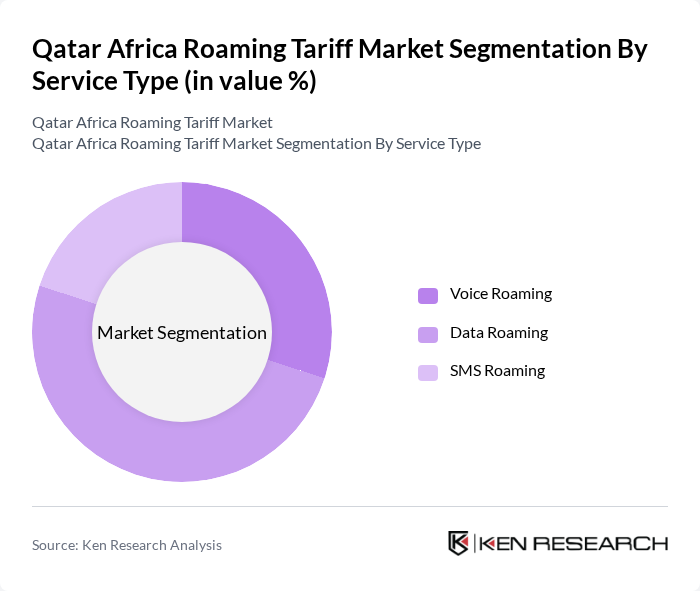
This segmentation encompasses voice roaming, data roaming, and SMS roaming. Voice roaming remains a significant component, as travelers often prioritize voice calls for communication. However, data roaming is rapidly gaining traction due to the increasing reliance on mobile internet for social media, navigation, and business applications. SMS roaming, while still relevant, is experiencing a decline as users shift towards instant messaging apps. Data roaming is currently the dominant service type, reflecting the growing demand for mobile data services among travelers.
The Qatar Africa Roaming Tariff Market is characterized by a dynamic mix of regional and international players. Leading participants such as Ooredoo, Vodafone, Orange S.A., Deutsche Telekom, MTN Group, Airtel Africa, Etisalat, Zain Group, Safaricom, Maroc Telecom, Telecom Egypt, AT&T, Verizon, China Mobile, Liquid Telecom contribute to innovation, geographic expansion, and service delivery in this space.
The Qatar Africa roaming tariff market is poised for significant evolution, driven by technological advancements and changing consumer preferences. As 5G technology becomes more prevalent, operators will likely enhance their service offerings, focusing on data-driven solutions. Additionally, the increasing emphasis on customer experience will push providers to develop more flexible and customizable tariff plans. These trends indicate a dynamic market landscape, where adaptability and innovation will be crucial for success in meeting the demands of travelers.
| Segment | Sub-Segments |
|---|---|
| By Roaming Type | Inbound Roaming Outbound Roaming |
| By Service Type | Voice Roaming Data Roaming SMS Roaming |
| By Distribution Channel | Retail Roaming Wholesale Roaming |
| By Network Technology | G/LTE Roaming Services G Roaming Services |
| By End-User | Individual Consumers Business Travelers Corporate Clients IoT and M2M Connectivity |
| By African Region | North Africa West Africa East Africa Southern Africa |
| Scope Item/Segment | Sample Size | Target Respondent Profiles |
|---|---|---|
| Telecom Operator Insights | 45 | Product Managers, Pricing Analysts |
| Consumer Roaming Behavior | 75 | Frequent Travelers, Business Executives |
| Regulatory Impact Assessment | 50 | Regulatory Affairs Specialists, Policy Makers |
| Market Trends Analysis | 60 | Market Analysts, Industry Consultants |
| Pricing Strategy Evaluation | 55 | Sales Directors, Marketing Managers |
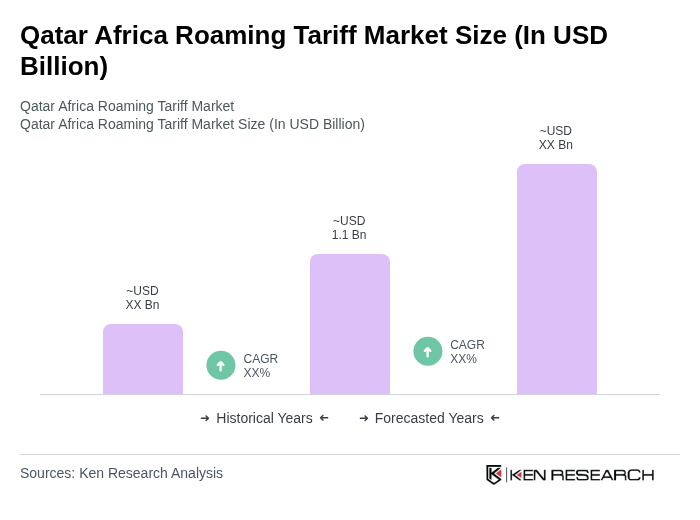
The Qatar Africa Roaming Tariff Market is valued at approximately USD 1.1 billion, reflecting a robust growth driven by increased travel between Qatar and African nations, alongside rising demand for seamless mobile connectivity.

What makes us stand out is that our consultants follow Robust, Refine and Result (RRR) methodology. Robust for clear definitions, approaches and sanity checking, Refine for differentiating respondents' facts and opinions, and Result for presenting data with story.

We have set a benchmark in the industry by offering our clients with syndicated and customized market research reports featuring coverage of entire market as well as meticulous research and analyst insights.

While we don't replace traditional research, we flip the method upside down. Our dual approach of Top Bottom & Bottom Top ensures quality deliverable by not just verifying company fundamentals but also looking at the sector and macroeconomic factors.

With one step in the future, our research team constantly tries to show you the bigger picture. We help with some of the tough questions you may encounter along the way: How is the industry positioned? Best marketing channel? KPI's of competitors? By aligning every element, we help maximize success.

Our report gives you instant access to the answers and sources that other companies might choose to hide. We elaborate each steps of research methodology we have used and showcase you the sample size to earn your trust.

If you need any support, we are here! We pride ourselves on universe strength, data quality, and quick, friendly, and professional service.













