Region:Middle East
Author(s):Geetanshi
Product Code:KRAD3776
Pages:98
Published On:November 2025
By Type:
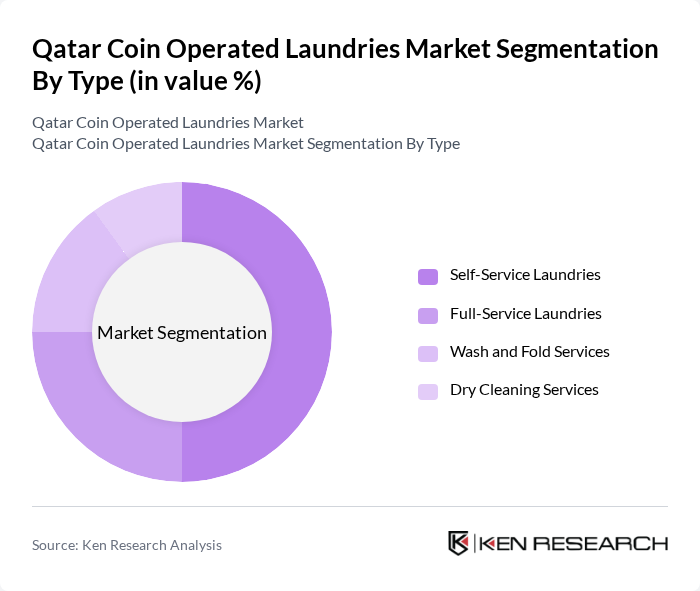
The market is segmented into four main types: Self-Service Laundries, Full-Service Laundries, Wash and Fold Services, and Dry Cleaning Services. Among these, Self-Service Laundries dominate the market due to their affordability and convenience, appealing particularly to budget-conscious consumers and expatriates who prefer to manage their laundry independently. Full-Service Laundries are also gaining traction, especially among busy professionals and families who value time-saving services. The Wash and Fold segment is popular for its ease of use, while Dry Cleaning Services cater to specific needs, such as delicate fabrics.
By End-User:
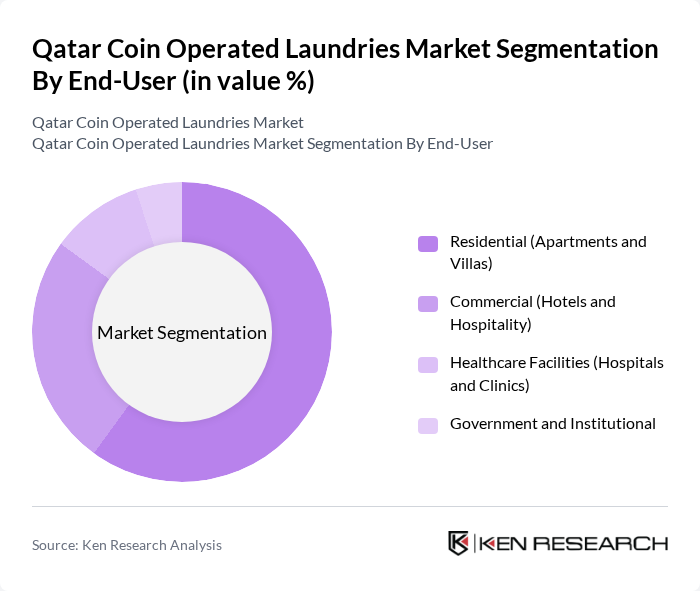
The end-user segmentation includes Residential (Apartments and Villas), Commercial (Hotels and Hospitality), Healthcare Facilities (Hospitals and Clinics), and Government and Institutional. The Residential segment leads the market, driven by the high number of expatriate workers living in apartments who require convenient laundry solutions. The Commercial segment is also significant, as hotels and hospitality businesses seek reliable laundry services to maintain their operations. Healthcare facilities require specialized laundry services to meet hygiene standards, while government institutions also contribute to the demand.
The Qatar Coin Operated Laundries Market is characterized by a dynamic mix of regional and international players. Leading participants such as Alliance Laundry Systems, Electrolux Professional, Whirlpool Corporation, Kannegiesser, Doby Electronics, Laundry Care Qatar, Gulf Laundry Services, Qatari Laundry Solutions, Express Wash Qatar, Premium Laundry Services Qatar, Eco-Wash Middle East, Smart Laundry Qatar, Arabian Laundry Group, Doha Laundry Facilities, Gulf Hospitality Laundry Services contribute to innovation, geographic expansion, and service delivery in this space.
The future of the Qatar coin-operated laundries market appears promising, driven by urbanization and increasing disposable incomes. As more residents seek convenient laundry solutions, the market is likely to witness a shift towards self-service options. Additionally, technological advancements, such as smart laundry systems, are expected to enhance operational efficiency and customer experience. The integration of mobile payment solutions will further streamline transactions, making coin-operated laundries more appealing to tech-savvy consumers.
| Segment | Sub-Segments |
|---|---|
| By Type | Self-Service Laundries Full-Service Laundries Wash and Fold Services Dry Cleaning Services |
| By End-User | Residential (Apartments and Villas) Commercial (Hotels and Hospitality) Healthcare Facilities (Hospitals and Clinics) Government and Institutional |
| By Payment Method | Coin-Based Payments Card Payments Mobile Wallet and Digital Payments Prepaid Cards and Subscription Models |
| By Location | Urban Areas (Doha, Al Rayyan) Suburban Areas Industrial Zones Residential Compounds |
| By Service Type | Wash and Fold Dry Cleaning Ironing and Pressing Services Pickup and Delivery Services |
| By Customer Segment | Expatriate Workers Working Professionals Families Students and Youth |
| By Technology | Traditional Coin-Operated Machines IoT-Enabled Smart Machines Water and Energy-Efficient Machines Automated Vending and Detergent Dispensers |
| Scope Item/Segment | Sample Size | Target Respondent Profiles |
|---|---|---|
| Residential Coin-Operated Laundry Users | 100 | Household Decision Makers, Renters |
| Commercial Laundry Service Providers | 60 | Business Owners, Operations Managers |
| Real Estate Developers | 40 | Project Managers, Property Managers |
| Tourism Sector Stakeholders | 50 | Hotel Managers, Service Coordinators |
| Local Government Officials | 40 | Urban Planners, Policy Makers |
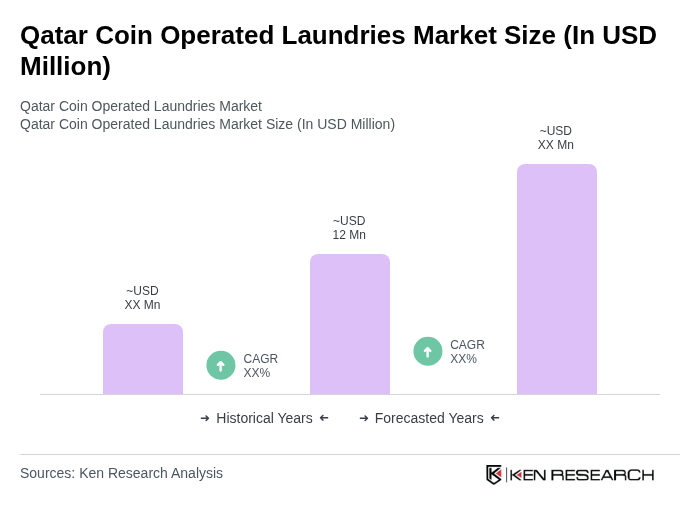
The Qatar Coin Operated Laundries Market is valued at approximately USD 12 million, reflecting a five-year historical analysis of market trends and regional segmentation. This growth is driven by urbanization and rising disposable incomes among residents.

What makes us stand out is that our consultants follow Robust, Refine and Result (RRR) methodology. Robust for clear definitions, approaches and sanity checking, Refine for differentiating respondents' facts and opinions, and Result for presenting data with story.

We have set a benchmark in the industry by offering our clients with syndicated and customized market research reports featuring coverage of entire market as well as meticulous research and analyst insights.

While we don't replace traditional research, we flip the method upside down. Our dual approach of Top Bottom & Bottom Top ensures quality deliverable by not just verifying company fundamentals but also looking at the sector and macroeconomic factors.

With one step in the future, our research team constantly tries to show you the bigger picture. We help with some of the tough questions you may encounter along the way: How is the industry positioned? Best marketing channel? KPI's of competitors? By aligning every element, we help maximize success.

Our report gives you instant access to the answers and sources that other companies might choose to hide. We elaborate each steps of research methodology we have used and showcase you the sample size to earn your trust.

If you need any support, we are here! We pride ourselves on universe strength, data quality, and quick, friendly, and professional service.













