Region:Middle East
Author(s):Dev
Product Code:KRAA3938
Pages:99
Published On:January 2026
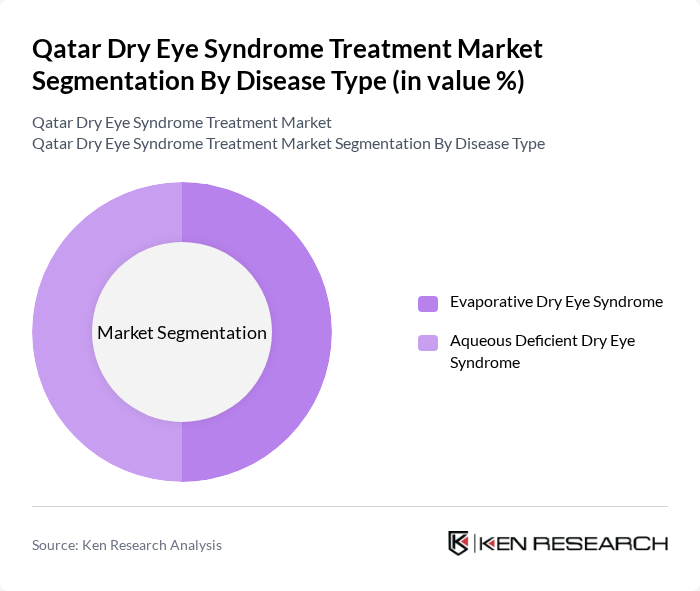
By Disease Type:The market is segmented into two primary disease types: Evaporative Dry Eye Syndrome and Aqueous Deficient Dry Eye Syndrome. Evaporative Dry Eye Syndrome is characterized by a decrease in tear film stability, frequently associated with Meibomian gland dysfunction, environmental factors such as low humidity and air conditioning, and prolonged screen time. Aqueous Deficient Dry Eye Syndrome, on the other hand, results from reduced aqueous tear production, commonly linked with autoimmune conditions such as Sjögren’s syndrome and other systemic diseases. The increasing clinical recognition of mixed-mechanism disease (both evaporative and aqueous-deficient components) and its impact on visual function and daily activities has led to a growing demand for tailored and combination treatment regimens.
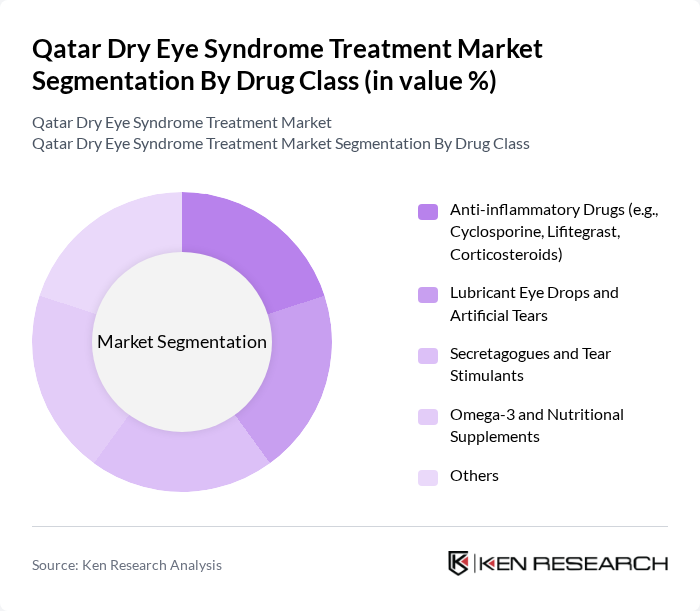
By Drug Class:The drug class segmentation includes Anti-inflammatory Drugs, Lubricant Eye Drops and Artificial Tears, Secretagogues and Tear Stimulants, Omega-3 and Nutritional Supplements, and Others. Anti-inflammatory drugs are gaining traction due to their effectiveness in addressing the inflammatory component of dry eye disease, with cyclosporine and lifitegrast-based formulations recognized globally as standard prescription therapies. Lubricant eye drops and artificial tears remain the most commonly used treatment, providing immediate symptomatic relief and being widely available over the counter through hospital and retail pharmacies. The growing trend towards adjunctive approaches, including omega-3 fatty acids and nutritional supplements targeting ocular surface health and Meibomian gland function, is also notable as consumers and clinicians increasingly adopt holistic and long-term management strategies.
The Qatar Dry Eye Syndrome Treatment Market is characterized by a dynamic mix of regional and international players. Leading participants such as AbbVie (Allergan), Santen Pharmaceutical Co., Ltd., Novartis AG, Johnson & Johnson Vision, Bausch + Lomb Corporation, Ocular Therapeutix, Inc., Eyevance Pharmaceuticals LLC, Akorn Pharmaceuticals, Alcon Inc., Sun Pharmaceutical Industries Ltd., Eyenovia, Inc., Eton Pharmaceuticals, Inc., InSite Vision Inc., Nicox SA, Kala Pharmaceuticals, Inc. contribute to innovation, geographic expansion, and service delivery in this space.
The future of the Qatar dry eye syndrome treatment market appears promising, driven by increasing healthcare investments and technological advancements. In future, the integration of telemedicine is expected to enhance patient access to specialized care, while innovative treatment options will likely emerge, catering to diverse patient needs. Additionally, the growing emphasis on preventive care and early diagnosis will foster a more proactive approach to managing dry eye syndrome, ultimately improving patient outcomes and market dynamics.
| Segment | Sub-Segments |
|---|---|
| By Disease Type | Evaporative Dry Eye Syndrome Aqueous Deficient Dry Eye Syndrome |
| By Drug Class | Anti-inflammatory Drugs (e.g., Cyclosporine, Lifitegrast, Corticosteroids) Lubricant Eye Drops and Artificial Tears Secretagogues and Tear Stimulants Omega-3 and Nutritional Supplements Others |
| By Dosage Form | Eye Drops Ointments and Gels Eye Sprays Oral Formulations Others |
| By Distribution Channel | Hospital Pharmacies Retail Pharmacies Online Pharmacies Others |
| By End-User | Hospitals and Specialty Eye Centers Ophthalmology Clinics Ambulatory Surgical Centers Home Care Settings Others |
| By Patient Profile | Contact Lens Wearers Post-surgical (e.g., Post-LASIK) Autoimmune / Systemic Disease-associated Screen-intensive Occupations Others |
| By Treatment Setting | Over-the-Counter (OTC) Treatments Prescription-based Treatments Device-based and Procedural Therapies |
| Scope Item/Segment | Sample Size | Target Respondent Profiles |
|---|---|---|
| Ophthalmologist Insights | 60 | Ophthalmologists, Eye Care Specialists |
| Patient Treatment Preferences | 120 | Patients diagnosed with dry eye syndrome |
| Healthcare Provider Feedback | 80 | Optometrists, General Practitioners |
| Pharmaceutical Sales Data | 40 | Sales Representatives, Product Managers |
| Market Trend Analysis | 70 | Healthcare Analysts, Market Researchers |
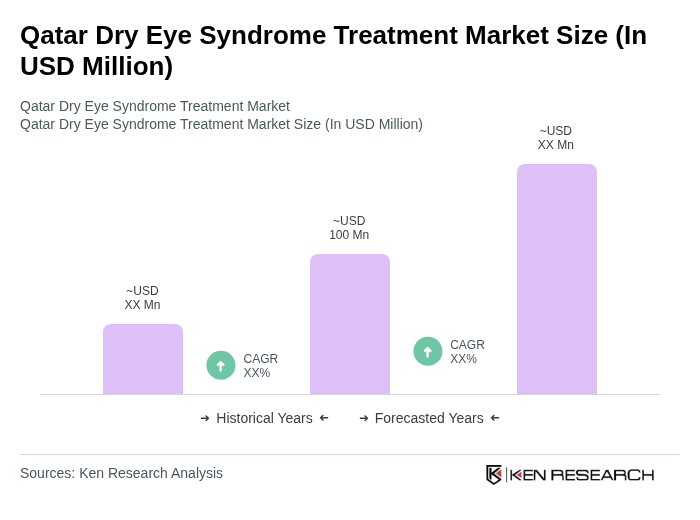
The Qatar Dry Eye Syndrome Treatment Market is valued at approximately USD 100 million, driven by factors such as the increasing prevalence of dry eye syndrome, advancements in treatment options, and rising awareness of eye health among the population.

What makes us stand out is that our consultants follow Robust, Refine and Result (RRR) methodology. Robust for clear definitions, approaches and sanity checking, Refine for differentiating respondents' facts and opinions, and Result for presenting data with story.

We have set a benchmark in the industry by offering our clients with syndicated and customized market research reports featuring coverage of entire market as well as meticulous research and analyst insights.

While we don't replace traditional research, we flip the method upside down. Our dual approach of Top Bottom & Bottom Top ensures quality deliverable by not just verifying company fundamentals but also looking at the sector and macroeconomic factors.

With one step in the future, our research team constantly tries to show you the bigger picture. We help with some of the tough questions you may encounter along the way: How is the industry positioned? Best marketing channel? KPI's of competitors? By aligning every element, we help maximize success.

Our report gives you instant access to the answers and sources that other companies might choose to hide. We elaborate each steps of research methodology we have used and showcase you the sample size to earn your trust.

If you need any support, we are here! We pride ourselves on universe strength, data quality, and quick, friendly, and professional service.













