Region:Middle East
Author(s):Rebecca
Product Code:KRAC8610
Pages:92
Published On:November 2025
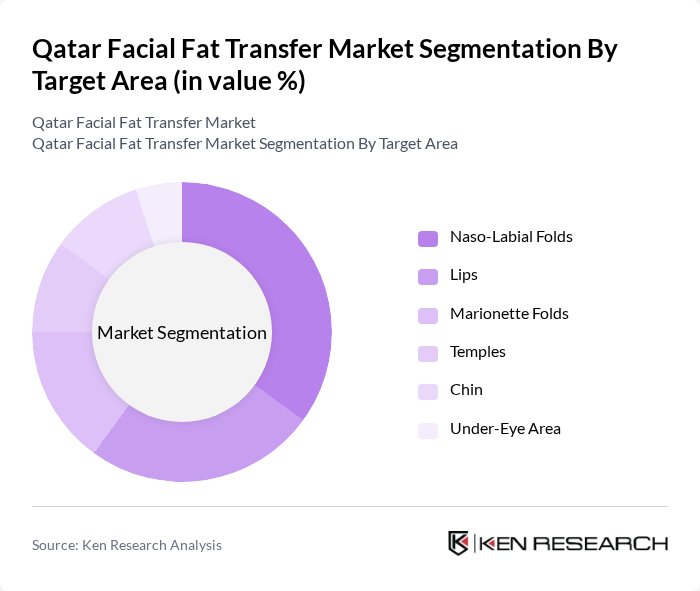
By Target Area:The target area segmentation includes key facial regions where fat transfer procedures are most frequently performed: Naso-Labial Folds, Lips, Marionette Folds, Temples, Chin, and Under-Eye Area. The Naso-Labial Folds segment leads the market, reflecting high demand for wrinkle reduction and facial rejuvenation, as this area is commonly affected by age-related volume loss. The Lips segment is also prominent, driven by consumer interest in lip augmentation and enhancement, mirroring global trends in aesthetic preferences .
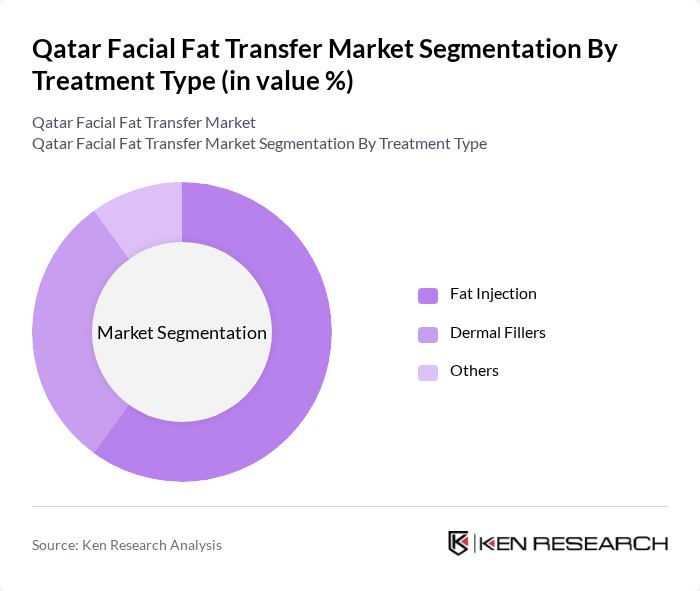
By Treatment Type:The treatment type segmentation covers Fat Injection, Dermal Fillers, and Others. Fat Injection is the dominant method, favored for its natural, long-lasting results and biocompatibility, as it uses the patient’s own tissue. This approach is increasingly preferred by consumers seeking minimally invasive, autologous solutions. Dermal Fillers remain significant, particularly for patients desiring immediate results with minimal downtime. The “Others” category includes emerging techniques and adjunctive therapies .
The Qatar Facial Fat Transfer Market is characterized by a dynamic mix of regional and international players. Leading participants such as Hamad Medical Corporation, Al Ahli Hospital, Al Emadi Hospital, Doha Clinic Hospital, The Pearl Medical Center, Dr. Khaled Al Sheikh Ali Clinic, Elite Medical Center, Turkish Hospital Doha, Dr. Sara Medical Clinic, Dr. Hassan Al-Abdulla Medical Center, NewMe Medical Center, The Cosmetic Surgery Clinic, Aesthetic Clinic Qatar, Qatar Plastic Surgery Center, Qatari German Medical Center contribute to innovation, geographic expansion, and service delivery in this space.
The future of the Qatar facial fat transfer market appears promising, driven by ongoing advancements in technology and a growing consumer base seeking aesthetic enhancements. As the market evolves, the integration of artificial intelligence in procedure planning and patient management is expected to enhance outcomes. Additionally, the increasing influence of social media on beauty standards will likely propel demand, encouraging more individuals to consider cosmetic procedures as a viable option for self-improvement.
| Segment | Sub-Segments |
|---|---|
| By Target Area | Naso-Labial Folds Lips Marionette Folds Temples Chin Under-Eye Area |
| By Treatment Type | Fat Injection Dermal Fillers Others |
| By End-User | Hospitals Clinics & Surgery Centers Medical Spas Others |
| By Age Group | 30 Years 45 Years 60 Years + Years |
| By Gender | Male Female Others |
| By Procedure Purpose | Facial Rejuvenation Post-Oncologic Reconstruction Scar Revision Others |
| By Region | Doha Al Rayyan Al Wakrah Others |
| Scope Item/Segment | Sample Size | Target Respondent Profiles |
|---|---|---|
| Facial Fat Transfer Patients | 100 | Individuals who have undergone the procedure in the last 2 years |
| Plastic Surgeons | 50 | Board-certified plastic surgeons performing facial fat transfer |
| Aesthetic Clinic Managers | 40 | Managers of clinics offering facial fat transfer services |
| Dermatologists | 40 | Dermatologists with experience in cosmetic procedures |
| Healthcare Policy Makers | 40 | Officials involved in healthcare regulations and cosmetic surgery policies |
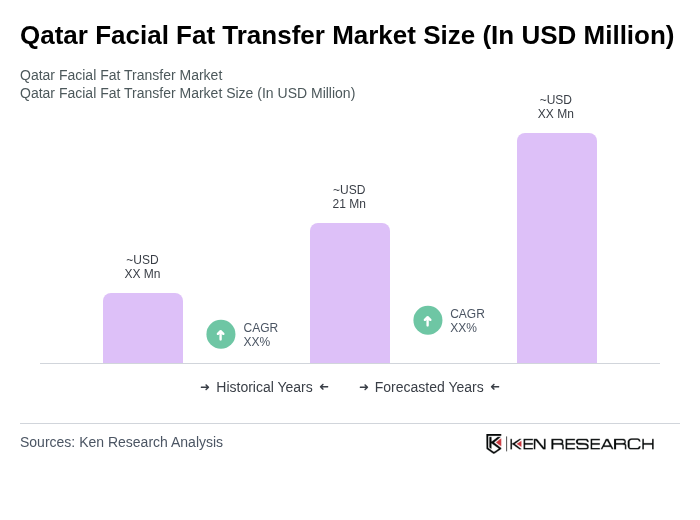
The Qatar Facial Fat Transfer Market is valued at approximately USD 21 million, reflecting a significant growth trend driven by increasing consumer demand for non-surgical aesthetic procedures and advancements in fat transfer techniques.

What makes us stand out is that our consultants follow Robust, Refine and Result (RRR) methodology. Robust for clear definitions, approaches and sanity checking, Refine for differentiating respondents' facts and opinions, and Result for presenting data with story.

We have set a benchmark in the industry by offering our clients with syndicated and customized market research reports featuring coverage of entire market as well as meticulous research and analyst insights.

While we don't replace traditional research, we flip the method upside down. Our dual approach of Top Bottom & Bottom Top ensures quality deliverable by not just verifying company fundamentals but also looking at the sector and macroeconomic factors.

With one step in the future, our research team constantly tries to show you the bigger picture. We help with some of the tough questions you may encounter along the way: How is the industry positioned? Best marketing channel? KPI's of competitors? By aligning every element, we help maximize success.

Our report gives you instant access to the answers and sources that other companies might choose to hide. We elaborate each steps of research methodology we have used and showcase you the sample size to earn your trust.

If you need any support, we are here! We pride ourselves on universe strength, data quality, and quick, friendly, and professional service.













