Region:Middle East
Author(s):Geetanshi
Product Code:KRAA8966
Pages:87
Published On:November 2025
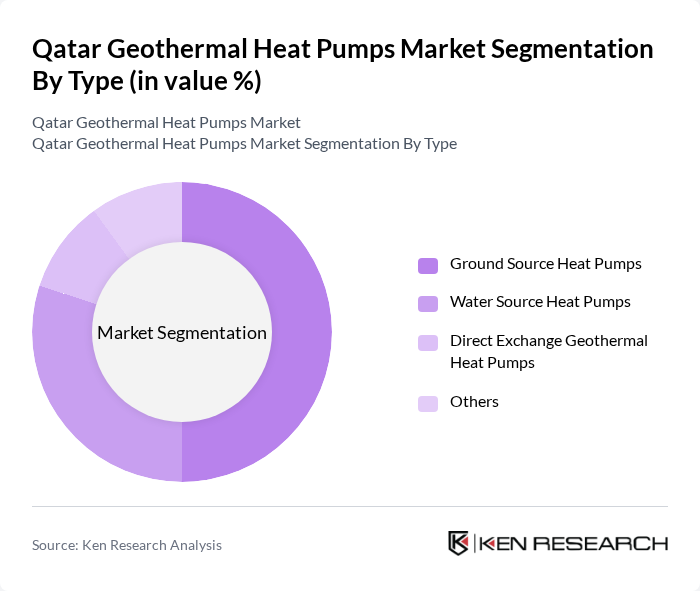
By Type:The market is segmented into various types of geothermal heat pumps, including Ground Source Heat Pumps, Water Source Heat Pumps, Direct Exchange Geothermal Heat Pumps, and Others. Ground Source Heat Pumps are currently the most popular choice due to their high efficiency and reliability in Qatar's climatic conditions. Water Source Heat Pumps are gaining traction, particularly in areas with access to water resources, as they offer stable performance and energy savings. Direct Exchange systems are less common but are noted for their quick installation and lower upfront costs, appealing to smaller-scale projects. The "Others" category includes emerging technologies such as hybrid and advanced modular systems, which are increasingly being piloted in innovative building projects.
By End-User:The end-user segmentation includes Residential, Commercial, Industrial, and Government & Utilities. The Residential segment is leading the market due to the increasing trend of energy-efficient home solutions and rising consumer awareness about sustainability. The Commercial sector is also significant, driven by businesses seeking to reduce operational costs through energy savings. The Industrial segment is growing as industries adopt geothermal systems for process heating and cooling. Government & Utilities are investing in geothermal technologies to meet regulatory requirements and sustainability goals.

The Qatar Geothermal Heat Pumps Market is characterized by a dynamic mix of regional and international players. Leading participants such as Qatar Cool, Qatar Green Building Council, Qatari Diar, Gulf Energy Technology & Projects, Marafeq Qatar, Qatar General Electricity & Water Corporation (Kahramaa), Veolia Qatar, Johnson Controls Qatar, Daikin Middle East & Africa (Qatar), Trane Qatar, NIBE Industrier AB, Stiebel Eltron Middle East, ClimateMaster (Middle East), Qatar Environment and Energy Research Institute (QEERI), and Qatar Development Bank contribute to innovation, geographic expansion, and service delivery in this space.
As Qatar continues to prioritize renewable energy and sustainability, the geothermal heat pump market is poised for significant growth. The integration of smart technologies and increased residential installations will likely enhance system efficiency and user experience. Additionally, the government's commitment to renewable energy targets will foster innovation and investment in geothermal solutions. In future, the market is expected to see a surge in hybrid systems, combining geothermal with other renewable sources, further diversifying energy options for consumers.
| Segment | Sub-Segments |
|---|---|
| By Type | Ground Source Heat Pumps Water Source Heat Pumps Direct Exchange Geothermal Heat Pumps Others |
| By End-User | Residential Commercial Industrial Government & Utilities |
| By Installation Type | New Installations Retrofits Others |
| By System Configuration | Closed Loop Systems Open Loop Systems Hybrid Systems Others |
| By Application | Space Heating & Cooling Water Heating District Heating & Cooling Others |
| By Investment Source | Domestic Investment Foreign Direct Investment (FDI) Public-Private Partnerships (PPP) Government Schemes |
| By Policy Support | Subsidies Tax Exemptions Renewable Energy Certificates (RECs) Others |
| Scope Item/Segment | Sample Size | Target Respondent Profiles |
|---|---|---|
| Residential Heat Pump Installations | 100 | Homeowners, Property Managers |
| Commercial HVAC Solutions | 80 | Facility Managers, Building Owners |
| Industrial Applications of Geothermal Systems | 60 | Operations Managers, Energy Efficiency Consultants |
| Government Policy Impact on Renewable Energy | 40 | Policy Makers, Energy Analysts |
| Geothermal Technology Providers | 70 | Product Managers, Sales Directors |
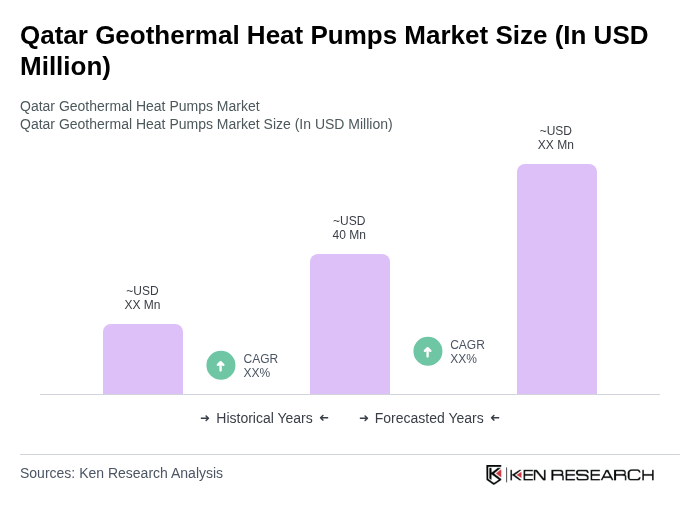
The Qatar Geothermal Heat Pumps Market is valued at approximately USD 40 million, driven by the increasing demand for energy-efficient heating and cooling solutions, rapid urbanization, and government initiatives focused on sustainable energy practices.

What makes us stand out is that our consultants follow Robust, Refine and Result (RRR) methodology. Robust for clear definitions, approaches and sanity checking, Refine for differentiating respondents' facts and opinions, and Result for presenting data with story.

We have set a benchmark in the industry by offering our clients with syndicated and customized market research reports featuring coverage of entire market as well as meticulous research and analyst insights.

While we don't replace traditional research, we flip the method upside down. Our dual approach of Top Bottom & Bottom Top ensures quality deliverable by not just verifying company fundamentals but also looking at the sector and macroeconomic factors.

With one step in the future, our research team constantly tries to show you the bigger picture. We help with some of the tough questions you may encounter along the way: How is the industry positioned? Best marketing channel? KPI's of competitors? By aligning every element, we help maximize success.

Our report gives you instant access to the answers and sources that other companies might choose to hide. We elaborate each steps of research methodology we have used and showcase you the sample size to earn your trust.

If you need any support, we are here! We pride ourselves on universe strength, data quality, and quick, friendly, and professional service.













