Region:Middle East
Author(s):Rebecca
Product Code:KRAC2519
Pages:99
Published On:October 2025
By Product Type:The product type segmentation includes various categories such as absorbent products, non-absorbent products, surgical devices, medications, and others. Among these, absorbent products, including diapers and pads, are leading the market due to their convenience and effectiveness in managing urinary incontinence. The segment has experienced significant technological and design developments aimed at providing consumers with improved ease of use and reliability. The growing awareness of personal hygiene, increasing elderly population, and reduced stigma around discussing incontinence are driving the demand for these products.

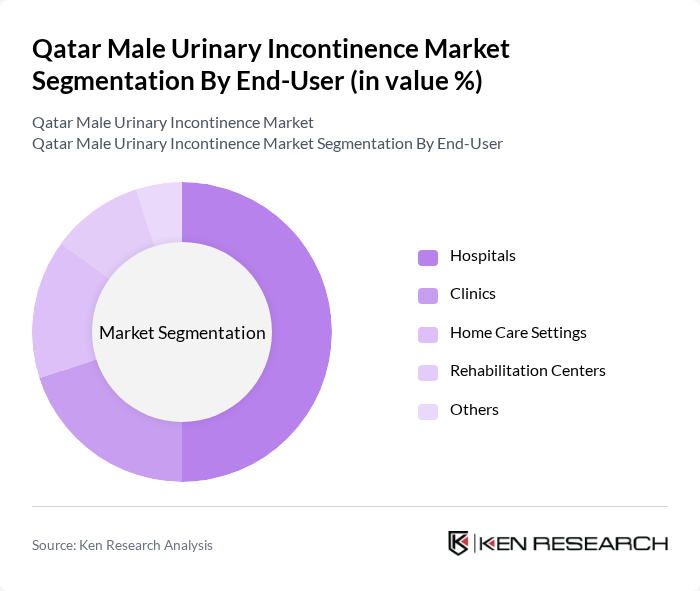
By End-User:The end-user segmentation encompasses hospitals, clinics, home care settings, rehabilitation centers, and others. Hospitals are the leading end-users due to their comprehensive facilities and specialized staff capable of managing complex cases of urinary incontinence. Hospitals play a critical role in educating patients about urinary incontinence, its causes, and treatment choices, while also offering surgical therapies such as sling surgery and artificial urinary sphincter implantation for severe cases. The increasing number of hospital admissions for related conditions, coupled with routine screening by urologists and general practitioners, is further propelling the demand for urinary incontinence products and services.
The Qatar Male Urinary Incontinence Market is characterized by a dynamic mix of regional and international players. Leading participants such as Coloplast A/S, Boston Scientific Corporation, Medtronic plc, ConvaTec Group PLC, B. Braun Melsungen AG, Hollister Incorporated, Acelity L.P. Inc., C.R. Bard, Inc., Teleflex Incorporated, Stryker Corporation, Uroplasty, Inc., Cook Medical, Medline Industries, Inc., 3M Company, Smith & Nephew plc contribute to innovation, geographic expansion, and service delivery in this space.
The future of the male urinary incontinence market in Qatar appears promising, driven by increasing healthcare investments and a focus on patient-centric care. By future, the government is expected to allocate an additional QAR 500 million towards healthcare infrastructure, enhancing access to specialized services. Furthermore, the integration of digital health technologies is anticipated to streamline patient management, improving treatment adherence and outcomes. These trends indicate a robust growth trajectory for the market, addressing both patient needs and healthcare system capabilities.
| Segment | Sub-Segments |
|---|---|
| By Product Type | Absorbent Products (e.g., Diapers, Pads) Non-Absorbent Products (e.g., Catheters, Urine Bags) Surgical Devices (e.g., Sling, Artificial Urinary Sphincter) Medications Others |
| By End-User | Hospitals Clinics Home Care Settings Rehabilitation Centers Others |
| By Distribution Channel | Online Retail Pharmacies Hospitals Direct Sales Others |
| By Age Group | 30 Years 50 Years 70 Years Above 70 Years |
| By Severity of Condition | Mild Moderate Severe Others |
| By Treatment Type | Behavioral Therapy Pharmacological Treatment Surgical Intervention Others |
| By Geographic Distribution | Urban Areas Rural Areas Others |
| Scope Item/Segment | Sample Size | Target Respondent Profiles |
|---|---|---|
| Healthcare Provider Insights | 65 | Urologists, General Practitioners |
| Patient Experience Feedback | 120 | Patients with urinary incontinence, Caregivers |
| Product Usage Surveys | 80 | Users of absorbent products, Medical device users |
| Market Distribution Channels | 70 | Pharmacy Managers, Medical Supply Distributors |
| Policy and Regulation Insights | 50 | Health Policy Makers, Regulatory Officials |
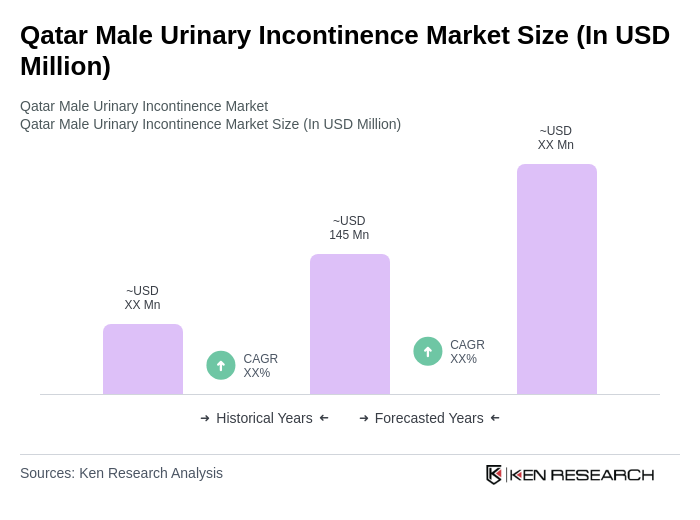
The Qatar Male Urinary Incontinence Market is valued at approximately USD 145 million, reflecting a significant growth driven by increasing prevalence of urinary incontinence among men, particularly due to aging, obesity, and prostate-related health issues.

What makes us stand out is that our consultants follow Robust, Refine and Result (RRR) methodology. Robust for clear definitions, approaches and sanity checking, Refine for differentiating respondents' facts and opinions, and Result for presenting data with story.

We have set a benchmark in the industry by offering our clients with syndicated and customized market research reports featuring coverage of entire market as well as meticulous research and analyst insights.

While we don't replace traditional research, we flip the method upside down. Our dual approach of Top Bottom & Bottom Top ensures quality deliverable by not just verifying company fundamentals but also looking at the sector and macroeconomic factors.

With one step in the future, our research team constantly tries to show you the bigger picture. We help with some of the tough questions you may encounter along the way: How is the industry positioned? Best marketing channel? KPI's of competitors? By aligning every element, we help maximize success.

Our report gives you instant access to the answers and sources that other companies might choose to hide. We elaborate each steps of research methodology we have used and showcase you the sample size to earn your trust.

If you need any support, we are here! We pride ourselves on universe strength, data quality, and quick, friendly, and professional service.













