Qatar Recycled Aluminum Market Report Size Share Growth Drivers Trends Opportunities & Forecast 2025–2030

Market analysis with trends, forecasts, and competitive insights.

Region:Middle East

Author(s):Dev

Product Code:KRAA6841

Pages:95

Published On:January 2026
About the Report

Base Year 2024

Qatar Recycled Aluminum Market Overview

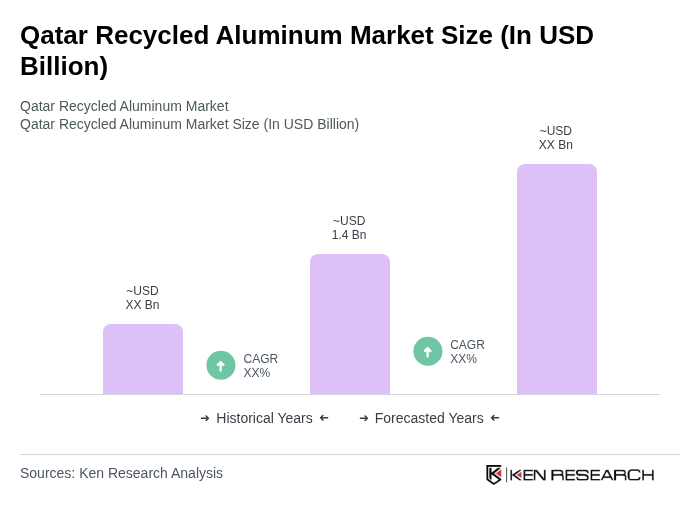
  • The Qatar Recycled Aluminum Market is valued at approximately USD 1.4 billion, based on current market analysis. This growth is primarily driven by increasing environmental awareness, government initiatives promoting recycling, and the rising demand for sustainable materials in various industries. The market has seen a significant uptick in recycled aluminum usage, particularly in construction and automotive sectors, as companies seek to reduce their carbon footprint and meet circular economy objectives.
  • Key players in this market include Qatar Aluminum Extrusion Company (QALCO), Gulf Aluminium Rolling Mill Company (GARMCO), and Qatar Recycling Company. These companies dominate the market due to their advanced recycling technologies, strong supply chains, and strategic partnerships with local industries, enabling them to meet the growing demand for recycled aluminum products effectively. The region benefits from industrial clusters and port access that enable regional processing hubs aggregating imported and local scrap, with emphasis on energy-efficient furnaces and reliable power supply supporting competitive secondary ingot and billet production.
  • Qatar's waste management framework supports aluminum recycling through comprehensive regulatory instruments and collection infrastructure. The establishment of collection centers and operational compliance requirements enhances the overall efficiency of the recycling process and promotes sustainable practices among businesses and consumers. These initiatives align with broader Middle East and Africa regional strategies emphasizing partnerships with beverage and construction sectors to build steady intake of recyclable materials.
Qatar Recycled Aluminum Market Size

Qatar Recycled Aluminum Market Segmentation

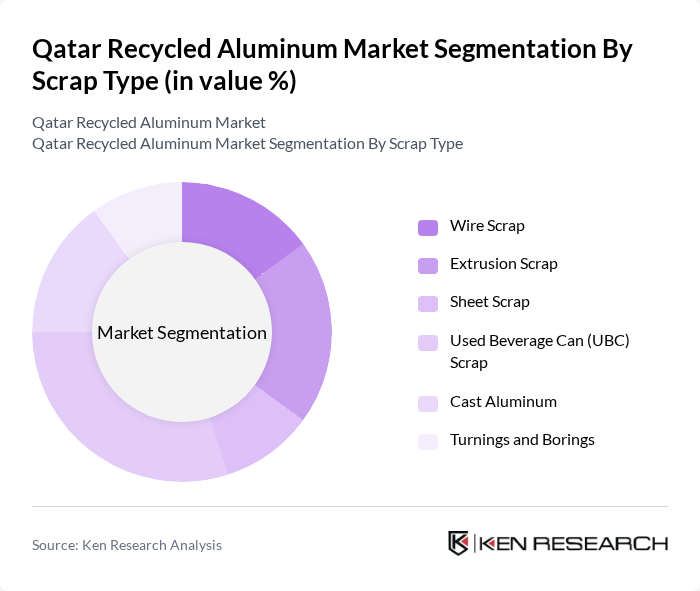
By Scrap Type:The recycled aluminum market is segmented by scrap type into various categories, including Wire Scrap, Extrusion Scrap, Sheet Scrap, Used Beverage Can (UBC) Scrap, Cast Aluminum, and Turnings and Borings. Among these, Used Beverage Can (UBC) Scrap is the leading sub-segment due to its high recycling rate and demand in the packaging industry. The increasing consumer preference for aluminum cans over plastic alternatives has further bolstered this segment's growth.
Qatar Recycled Aluminum Market segmentation by Scrap Type.

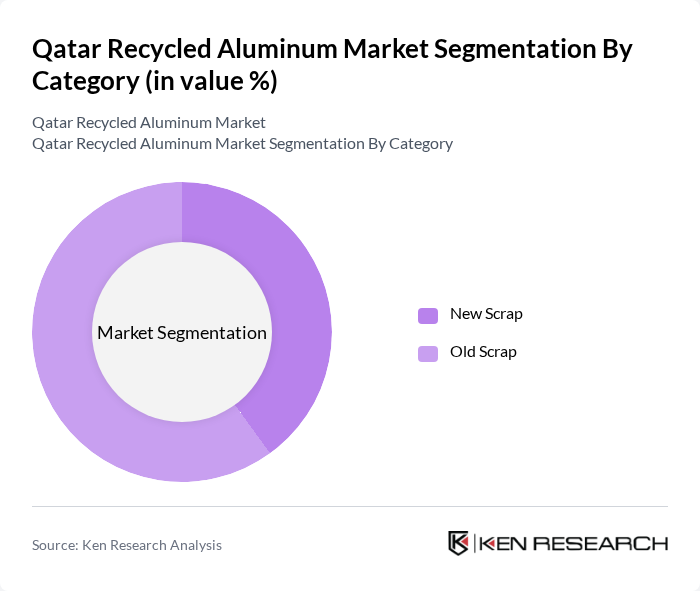
By Category:The market is also segmented by category into New Scrap and Old Scrap. Old Scrap is the dominant category, primarily due to the increasing focus on recycling and sustainability. The growing awareness of environmental issues has led to a higher collection rate of old aluminum products, making it a vital source for recycled aluminum production.
Qatar Recycled Aluminum Market segmentation by Category.

Qatar Recycled Aluminum Market Competitive Landscape

The Qatar Recycled Aluminum Market is characterized by a dynamic mix of regional and international players. Leading participants such as Qatar Aluminum Extrusion Company (QALCO), Gulf Aluminium Rolling Mill Company (GARMCO), Qatar National Aluminum Panel Company (QNAP), Qatar Recycling Company, Qatar Industrial Manufacturing Company, Qatar Aluminium Manufacturing Company (QAM), Qatar Metal Industries Company, Qatar Steel Company, Qatar Petrochemical Company (QAPCO), Qatar National Cement Company, Qatar General Electricity and Water Corporation (Kahramaa), Qatar Development Bank, Qatar Green Building Council, Qatar Chamber of Commerce, Qatar Ministry of Municipality and Environment contribute to innovation, geographic expansion, and service delivery in this space.

Qatar Aluminum Extrusion Company (QALCO)

2007

Doha, Qatar

Gulf Aluminium Rolling Mill Company (GARMCO)

1981

Manama, Bahrain

Qatar National Aluminum Panel Company (QNAP)

2005

Doha, Qatar

Qatar Recycling Company

2010

Doha, Qatar

Qatar Industrial Manufacturing Company

1998

Doha, Qatar

Company

Establishment Year

Headquarters

Group Size (Large, Medium, or Small as per industry convention)

Year-over-Year Revenue Growth Rate (%)

Market Penetration Rate (%)

Customer Retention Rate (%)

Production Capacity Utilization (%)

Environmental Compliance Score

Scope of the Report

SegmentSub-Segments
By Scrap Type

Wire Scrap

Extrusion Scrap

Sheet Scrap

Used Beverage Can (UBC) Scrap

Cast Aluminum

Turnings and Borings

By Category

New Scrap

Old Scrap

By End-Use Industry

Building and Construction

Automotive

Electrical and Electronics

Packaging

Aerospace and Defense

Machinery and Equipment

By Source of Scrap

Household Collection

Commercial Collection

Industrial Collection

Construction and Demolition Waste

By Processing Method

Baling and Collection

Sorting and Shredding

Granulation

Melting and Casting

Chemical and Mechanical Methods

By Alloy Type

Wrought Alloys

Casting Alloys

Mixed Alloys

By Market Channel

Direct Sales

Distributors

Online Platforms

Others

Players Mentioned in the Report:

Qatar Aluminum Extrusion Company (QALCO)

Gulf Aluminium Rolling Mill Company (GARMCO)

Qatar National Aluminum Panel Company (QNAP)

Qatar Recycling Company

Qatar Industrial Manufacturing Company

Qatar Aluminium Manufacturing Company (QAM)

Qatar Metal Industries Company

Qatar Steel Company

Qatar Petrochemical Company (QAPCO)

Qatar National Cement Company

Qatar General Electricity and Water Corporation (Kahramaa)

Qatar Development Bank

Qatar Green Building Council

Qatar Chamber of Commerce

Qatar Ministry of Municipality and Environment

Table of Contents

Market Assessment Phase

1. Executive Summary and Approach


2. Qatar Recycled Aluminum Market Overview

2.1 Key Insights and Strategic Recommendations

2.2 Qatar Recycled Aluminum Market Overview

2.3 Definition and Scope

2.4 Evolution of Market Ecosystem

2.5 Timeline of Key Regulatory Milestones

2.6 Value Chain & Stakeholder Mapping

2.7 Business Cycle Analysis

2.8 Policy & Incentive Landscape


3. Qatar Recycled Aluminum Market Analysis

3.1 Growth Drivers

3.1.1 Increasing demand for sustainable materials
3.1.2 Government initiatives promoting recycling
3.1.3 Rising construction and automotive industries
3.1.4 Technological advancements in recycling processes

3.2 Market Challenges

3.2.1 High initial investment costs
3.2.2 Limited awareness among consumers
3.2.3 Fluctuating raw material prices
3.2.4 Regulatory compliance complexities

3.3 Market Opportunities

3.3.1 Expansion into new industrial applications
3.3.2 Development of innovative recycling technologies
3.3.3 Partnerships with local governments
3.3.4 Export opportunities in neighboring regions

3.4 Market Trends

3.4.1 Growing consumer preference for recycled products
3.4.2 Increased investment in green technologies
3.4.3 Shift towards circular economy practices
3.4.4 Rise of eco-friendly packaging solutions

3.5 Government Regulation

3.5.1 Recycling mandates and targets
3.5.2 Environmental protection laws
3.5.3 Incentives for recycling businesses
3.5.4 Import/export regulations for recycled materials

4. SWOT Analysis


5. Stakeholder Analysis


6. Porter's Five Forces Analysis


7. Qatar Recycled Aluminum Market Market Size, 2019-2024

7.1 By Value

7.2 By Volume

7.3 By Average Selling Price


8. Qatar Recycled Aluminum Market Segmentation

8.1 By Scrap Type

8.1.1 Wire Scrap
8.1.2 Extrusion Scrap
8.1.3 Sheet Scrap
8.1.4 Used Beverage Can (UBC) Scrap
8.1.5 Cast Aluminum
8.1.6 Turnings and Borings

8.2 By Category

8.2.1 New Scrap
8.2.2 Old Scrap

8.3 By End-Use Industry

8.3.1 Building and Construction
8.3.2 Automotive
8.3.3 Electrical and Electronics
8.3.4 Packaging
8.3.5 Aerospace and Defense
8.3.6 Machinery and Equipment

8.4 By Source of Scrap

8.4.1 Household Collection
8.4.2 Commercial Collection
8.4.3 Industrial Collection
8.4.4 Construction and Demolition Waste

8.5 By Processing Method

8.5.1 Baling and Collection
8.5.2 Sorting and Shredding
8.5.3 Granulation
8.5.4 Melting and Casting
8.5.5 Chemical and Mechanical Methods

8.6 By Alloy Type

8.6.1 Wrought Alloys
8.6.2 Casting Alloys
8.6.3 Mixed Alloys

8.7 By Market Channel

8.7.1 Direct Sales
8.7.2 Distributors
8.7.3 Online Platforms
8.7.4 Others

9. Qatar Recycled Aluminum Market Competitive Analysis

9.1 Market Share of Key Players

9.2 Cross Comparison of Key Players

9.2.1 Company Name
9.2.2 Group Size (Large, Medium, or Small as per industry convention)
9.2.3 Year-over-Year Revenue Growth Rate (%)
9.2.4 Market Penetration Rate (%)
9.2.5 Customer Retention Rate (%)
9.2.6 Production Capacity Utilization (%)
9.2.7 Environmental Compliance Score
9.2.8 Average Selling Price per Ton (USD)
9.2.9 R&D Investment as % of Revenue
9.2.10 Supply Chain Responsiveness (Days)

9.3 SWOT Analysis of Top Players

9.4 Pricing Analysis

9.5 Detailed Profile of Major Companies

9.5.1 Qatar Aluminum Extrusion Company (QALCO)
9.5.2 Gulf Aluminium Rolling Mill Company (GARMCO)
9.5.3 Qatar National Aluminum Panel Company (QNAP)
9.5.4 Qatar Recycling Company
9.5.5 Qatar Industrial Manufacturing Company
9.5.6 Qatar Aluminium Manufacturing Company (QAM)
9.5.7 Qatar Metal Industries Company
9.5.8 Qatar Steel Company
9.5.9 Qatar Petrochemical Company (QAPCO)
9.5.10 Qatar National Cement Company
9.5.11 Qatar General Electricity and Water Corporation (Kahramaa)
9.5.12 Qatar Development Bank
9.5.13 Qatar Green Building Council
9.5.14 Qatar Chamber of Commerce
9.5.15 Qatar Ministry of Municipality and Environment

10. Qatar Recycled Aluminum Market End-User Analysis

10.1 Procurement Behavior of Key Ministries

10.1.1 Ministry of Municipality and Environment
10.1.2 Ministry of Commerce and Industry
10.1.3 Ministry of Transport and Communications
10.1.4 Ministry of Energy and Industry

10.2 Corporate Spend on Infrastructure & Energy

10.2.1 Investment in sustainable materials
10.2.2 Budget allocation for recycling initiatives
10.2.3 Corporate social responsibility expenditures
10.2.4 Energy efficiency projects

10.3 Pain Point Analysis by End-User Category

10.3.1 Cost of recycled materials
10.3.2 Availability of quality recycled aluminum
10.3.3 Supply chain disruptions
10.3.4 Regulatory compliance challenges

10.4 User Readiness for Adoption

10.4.1 Awareness of recycling benefits
10.4.2 Availability of recycling facilities
10.4.3 Training and education programs
10.4.4 Financial incentives for adoption

10.5 Post-Deployment ROI and Use Case Expansion

10.5.1 Cost savings from using recycled materials
10.5.2 Increased market competitiveness
10.5.3 Expansion into new markets
10.5.4 Enhanced brand reputation

11. Qatar Recycled Aluminum Market Future Size, 2025-2030

11.1 By Value

11.2 By Volume

11.3 By Average Selling Price


Go-To-Market Strategy Phase

1. Whitespace Analysis + Business Model Canvas

1.1 Market gaps identification

1.2 Value proposition development

1.3 Revenue model exploration

1.4 Customer segmentation analysis

1.5 Competitive landscape assessment

1.6 Key partnerships identification

1.7 Risk assessment and mitigation


2. Marketing and Positioning Recommendations

2.1 Branding strategies

2.2 Product USPs

2.3 Target audience identification

2.4 Communication strategy

2.5 Digital marketing approach

2.6 Event marketing opportunities

2.7 Customer engagement tactics


3. Distribution Plan

3.1 Urban retail strategies

3.2 Rural NGO tie-ups

3.3 E-commerce integration

3.4 Logistics and supply chain management

3.5 Distribution channel optimization

3.6 Partnership with local distributors

3.7 Inventory management solutions


4. Channel & Pricing Gaps

4.1 Underserved routes

4.2 Pricing bands analysis

4.3 Competitor pricing strategies

4.4 Customer willingness to pay

4.5 Price elasticity assessment

4.6 Discount and promotion strategies

4.7 Value-based pricing recommendations


5. Unmet Demand & Latent Needs

5.1 Category gaps identification

5.2 Consumer segments analysis

5.3 Product development opportunities

5.4 Service enhancement suggestions

5.5 Market entry barriers

5.6 Customer feedback incorporation

5.7 Future trends anticipation


6. Customer Relationship

6.1 Loyalty programs

6.2 After-sales service

6.3 Customer feedback mechanisms

6.4 Community engagement initiatives

6.5 Customer education programs

6.6 Relationship management tools

6.7 Customer satisfaction measurement


7. Value Proposition

7.1 Sustainability benefits

7.2 Integrated supply chains

7.3 Cost-effectiveness

7.4 Quality assurance

7.5 Innovation in recycling processes

7.6 Customer-centric solutions

7.7 Long-term partnerships


8. Key Activities

8.1 Regulatory compliance

8.2 Branding initiatives

8.3 Distribution setup

8.4 Market research and analysis

8.5 Training and development programs

8.6 Stakeholder engagement

8.7 Performance monitoring


9. Entry Strategy Evaluation

9.1 Domestic Market Entry Strategy

9.1.1 Product mix considerations
9.1.2 Pricing band analysis
9.1.3 Packaging strategies

9.2 Export Entry Strategy

9.2.1 Target countries identification
9.2.2 Compliance roadmap development

10. Entry Mode Assessment

10.1 Joint Ventures

10.2 Greenfield investments

10.3 Mergers & Acquisitions

10.4 Distributor Model

10.5 Risk assessment

10.6 Market entry feasibility

10.7 Strategic fit evaluation


11. Capital and Timeline Estimation

11.1 Capital requirements

11.2 Timelines for market entry

11.3 Funding sources identification

11.4 Financial projections

11.5 Budget allocation

11.6 Cost management strategies

11.7 Investment return expectations


12. Control vs Risk Trade-Off

12.1 Ownership considerations

12.2 Partnership dynamics

12.3 Risk management strategies

12.4 Control mechanisms

12.5 Long-term sustainability

12.6 Exit strategies

12.7 Stakeholder alignment


13. Profitability Outlook

13.1 Breakeven analysis

13.2 Long-term sustainability

13.3 Profit margin expectations

13.4 Revenue growth projections

13.5 Cost reduction strategies

13.6 Financial health assessment

13.7 Market share growth potential


14. Potential Partner List

14.1 Distributors

14.2 Joint Ventures

14.3 Acquisition targets

14.4 Strategic alliances

14.5 Local partnerships

14.6 International collaborations

14.7 Industry associations


15. Execution Roadmap

15.1 Phased Plan for Market Entry

15.1.1 Market Setup
15.1.2 Market Entry
15.1.3 Growth Acceleration
15.1.4 Scale & Stabilize

15.2 Key Activities and Milestones

15.2.1 Timeline for key activities
15.2.2 Milestone tracking
15.2.3 Performance evaluation
15.2.4 Adjustment strategies

Frequently Asked Questions

Other Adjacent Reports

Why Buy From Us?

Refine Robust Result (RRR) Framework

What makes us stand out is that our consultants follow Robust, Refine and Result (RRR) methodology. Robust for clear definitions, approaches and sanity checking, Refine for differentiating respondents' facts and opinions, and Result for presenting data with story.

Our Reach Is Unmatched

We have set a benchmark in the industry by offering our clients with syndicated and customized market research reports featuring coverage of entire market as well as meticulous research and analyst insights.

Shifting the Research Paradigm

While we don't replace traditional research, we flip the method upside down. Our dual approach of Top Bottom & Bottom Top ensures quality deliverable by not just verifying company fundamentals but also looking at the sector and macroeconomic factors.

More Insights-Better Decisions

With one step in the future, our research team constantly tries to show you the bigger picture. We help with some of the tough questions you may encounter along the way: How is the industry positioned? Best marketing channel? KPI's of competitors? By aligning every element, we help maximize success.

Transparency and Trust

Our report gives you instant access to the answers and sources that other companies might choose to hide. We elaborate each steps of research methodology we have used and showcase you the sample size to earn your trust.

Round the Clock Support

If you need any support, we are here! We pride ourselves on universe strength, data quality, and quick, friendly, and professional service.

Why Clients Choose Us?

400000+
Reports in repository
150+
Consulting projects a year
100+
Analysts
8000+
Client Queries in 2022








