Region:Middle East
Author(s):Dev
Product Code:KRAD3296
Pages:100
Published On:November 2025
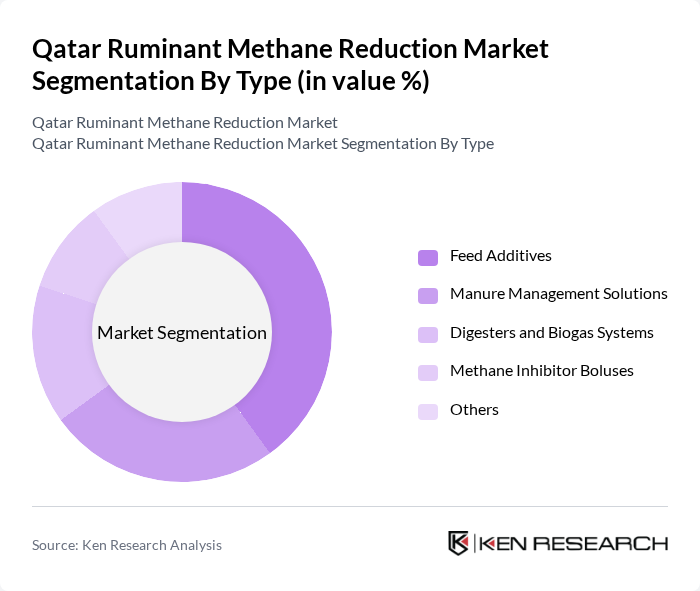
By Type:The market is segmented into Feed Additives, Manure Management Solutions, Digesters and Biogas Systems, Methane Inhibitor Boluses, and Others. Among these, Feed Additives are gaining the most traction due to their proven effectiveness in reducing methane emissions during digestion, particularly through plant-based compounds and microbial formulations. The increasing focus on nutritional supplements that enhance feed efficiency and animal productivity is driving this segment's growth. Manure Management Solutions are also significant, as they address both waste management and methane reduction, with adoption supported by government incentives and sustainability targets .
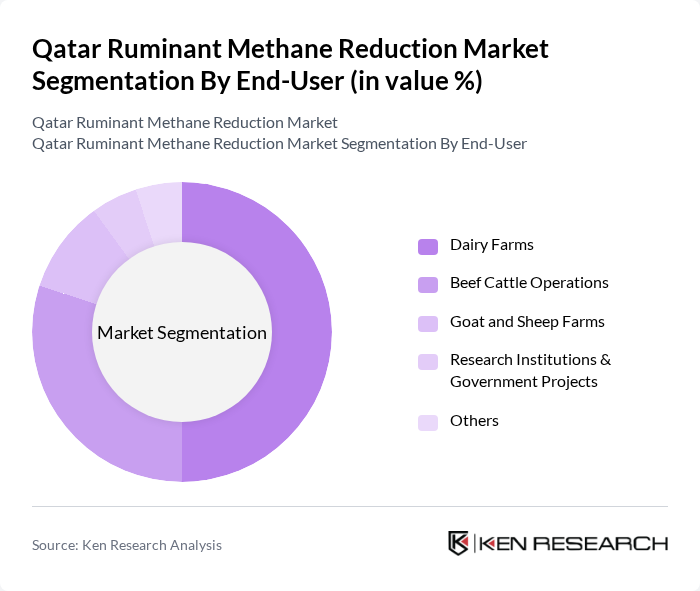
By End-User:The end-user segmentation includes Dairy Farms, Beef Cattle Operations, Goat and Sheep Farms, Research Institutions & Government Projects, and Others. Dairy Farms are the leading segment, driven by the high demand for milk and dairy products in Qatar, and by government-backed programs to improve milk production efficiency while minimizing environmental impact. Beef Cattle Operations also contribute significantly, as they seek to enhance sustainability in meat production through methane reduction technologies .
The Qatar Ruminant Methane Reduction Market is characterized by a dynamic mix of regional and international players. Leading participants such as Alltech, DSM-Firmenich (formerly DSM Nutritional Products), Cargill Incorporated, BASF SE, Evonik Industries AG, Novus International Inc., Adisseo, Kemin Industries, Phibro Animal Health Corporation, Merck Animal Health, Nutreco N.V., Provimi, De Heus Animal Nutrition, ForFarmers N.V., Trouw Nutrition International B.V., Elanco Animal Health Incorporated, Yara International, Lallemand Animal Nutrition, Volac International, Zinpro Corporation, AB Vista Limited, Calysta Inc., Agolin SA, Blue Ocean Barns Inc., CH4 Global Inc., FutureFeed Pty Ltd, Mootral SA, Rumin8 Ltd, Symbrosia Inc. contribute to innovation, geographic expansion, and service delivery in this space.
The future of the Qatar ruminant methane reduction market appears promising, driven by increasing environmental awareness and technological advancements. As the government intensifies its focus on sustainability, more farmers are expected to adopt innovative practices. Additionally, the integration of precision livestock farming and IoT technologies will enhance efficiency and monitoring capabilities. These trends will likely lead to a more sustainable agricultural sector, aligning with Qatar's long-term environmental goals and improving food security.
| Segment | Sub-Segments |
|---|---|
| By Type | Feed Additives Manure Management Solutions Digesters and Biogas Systems Methane Inhibitor Boluses Others |
| By End-User | Dairy Farms Beef Cattle Operations Goat and Sheep Farms Research Institutions & Government Projects Others |
| By Application | Emission Monitoring Feed Optimization Waste Management Carbon Credit Generation Others |
| By Technology | Anaerobic Digestion Fermentation Technologies Nutritional Supplements (e.g., 3-NOP, seaweed-based additives) Methane Inhibitor Delivery Systems Others |
| By Investment Source | Private Investments Government Grants International Funding Public-Private Partnerships Others |
| By Policy Support | Tax Incentives Research Grants Regulatory Support Carbon Pricing Mechanisms Others |
| By Market Segment | Large Scale Operations Small Scale Operations Cooperative Models Pilot & Demonstration Projects Others |
| Scope Item/Segment | Sample Size | Target Respondent Profiles |
|---|---|---|
| Ruminant Farmers | 120 | Livestock Owners, Farm Managers |
| Feed Manufacturers | 60 | Production Managers, R&D Specialists |
| Agricultural Policy Makers | 50 | Government Officials, Environmental Consultants |
| Veterinary Experts | 40 | Veterinarians, Animal Health Specialists |
| Research Institutions | 40 | Academic Researchers, Agricultural Scientists |
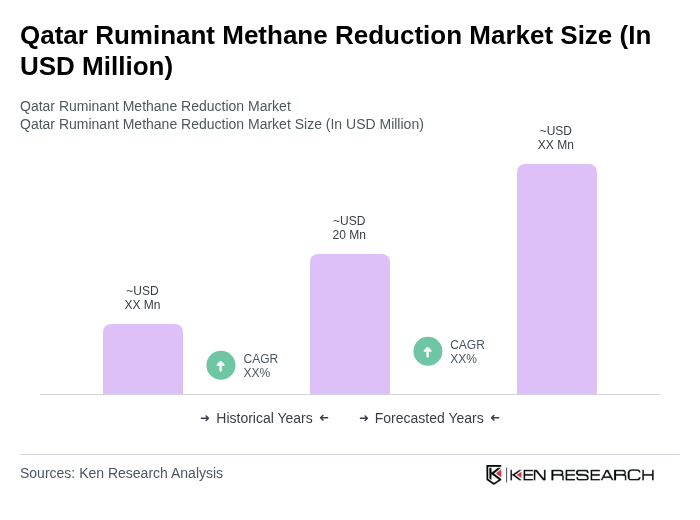
The Qatar Ruminant Methane Reduction Market is valued at approximately USD 20 million, reflecting a growing awareness of climate change and the need for sustainable agricultural practices, alongside increased adoption of feed additives and manure management solutions.

What makes us stand out is that our consultants follow Robust, Refine and Result (RRR) methodology. Robust for clear definitions, approaches and sanity checking, Refine for differentiating respondents' facts and opinions, and Result for presenting data with story.

We have set a benchmark in the industry by offering our clients with syndicated and customized market research reports featuring coverage of entire market as well as meticulous research and analyst insights.

While we don't replace traditional research, we flip the method upside down. Our dual approach of Top Bottom & Bottom Top ensures quality deliverable by not just verifying company fundamentals but also looking at the sector and macroeconomic factors.

With one step in the future, our research team constantly tries to show you the bigger picture. We help with some of the tough questions you may encounter along the way: How is the industry positioned? Best marketing channel? KPI's of competitors? By aligning every element, we help maximize success.

Our report gives you instant access to the answers and sources that other companies might choose to hide. We elaborate each steps of research methodology we have used and showcase you the sample size to earn your trust.

If you need any support, we are here! We pride ourselves on universe strength, data quality, and quick, friendly, and professional service.













