Region:Middle East
Author(s):Rebecca
Product Code:KRAC2937
Pages:98
Published On:January 2026
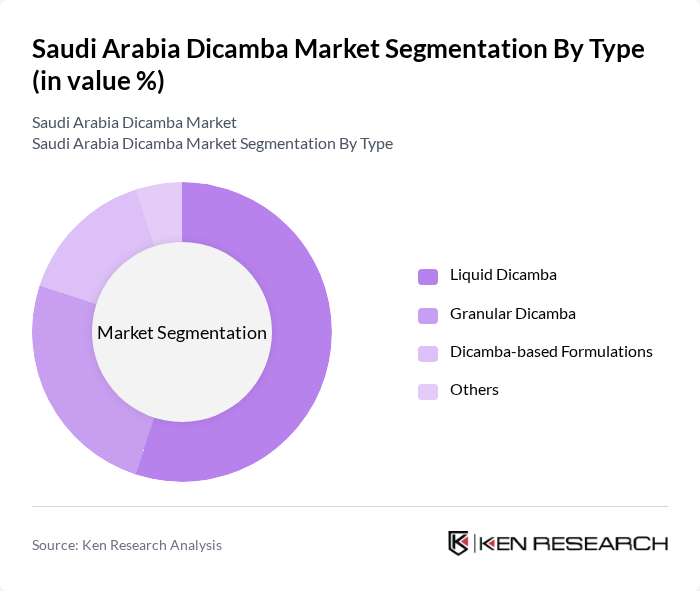
By Type:The market is segmented into various types of dicamba products, including Liquid Dicamba, Granular Dicamba, Dicamba-based formulations, and Others. Liquid Dicamba is the most widely used form due to its ease of application and effectiveness in controlling a broad spectrum of weeds. Granular Dicamba is also popular, particularly in areas where soil application is preferred. Dicamba-based formulations combine dicamba with other active ingredients to enhance efficacy, while the 'Others' category includes niche products.
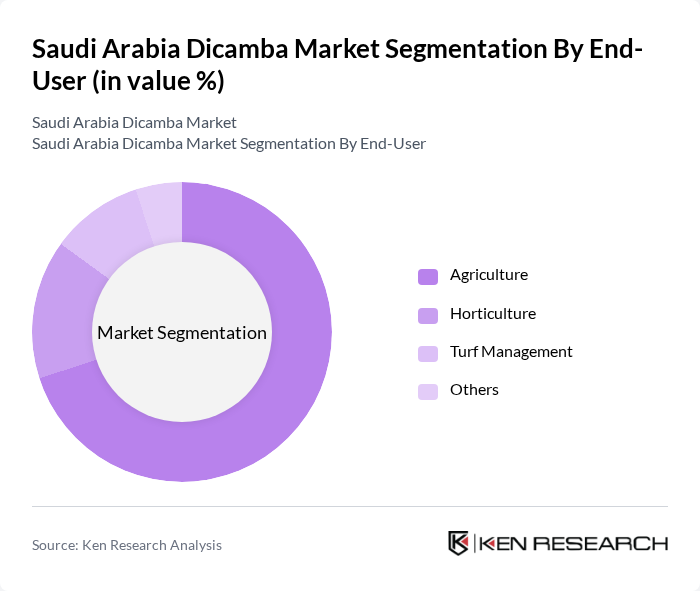
By End-User:The dicamba market is primarily driven by its applications in Agriculture, Horticulture, Forestry, and Others. Agriculture is the leading end-user segment, as dicamba is extensively used for weed control in major crops like cereals, grains, oilseeds, and pulses. Horticulture follows, where it is used to manage weeds in fruit and vegetable production. Forestry applications are growing, particularly for land management and reforestation efforts, while the 'Others' category includes non-agricultural uses.
The Saudi Arabia Dicamba Market is characterized by a dynamic mix of regional and international players. Leading participants such as BASF SE, Bayer AG, Corteva Agriscience, Syngenta AG, FMC Corporation, ADAMA Agricultural Solutions Ltd., Nufarm Limited, UPL Limited, Sumitomo Chemical Co., Ltd., Arysta LifeScience Corporation, Albaugh, LLC, Cheminova A/S, Isagro S.p.A., KWS SAAT SE, DuPont de Nemours, Inc. contribute to innovation, geographic expansion, and service delivery in this space.
The future outlook for the Saudi Arabia dicamba market appears promising, driven by a combination of technological advancements and a shift towards sustainable agricultural practices. As farmers increasingly adopt precision agriculture techniques, the demand for targeted herbicide applications is expected to rise. Additionally, government support for research and development in crop protection solutions will likely foster innovation, enabling the introduction of new formulations that align with environmental standards and enhance agricultural productivity.
| Segment | Sub-Segments |
|---|---|
| By Type | Liquid Dicamba Granular Dicamba Dicamba-based formulations Others |
| By End-User | Agriculture Horticulture Forestry Others |
| By Crop Type | Soybeans Corn Cotton Others |
| By Application Method | Ground application Aerial application Others |
| By Distribution Channel | Direct sales Retail distribution Online sales Others |
| By Region | Central Region Eastern Region Western Region Southern Region |
| By Policy Support | Subsidies for herbicide use Tax incentives for agricultural practices Research grants for sustainable agriculture Others |
| Scope Item/Segment | Sample Size | Target Respondent Profiles |
|---|---|---|
| Cereal Crop Producers | 120 | Farm Owners, Agronomists |
| Agrochemical Distributors | 100 | Sales Managers, Product Specialists |
| Research Institutions | 50 | Research Scientists, Policy Analysts |
| Government Agricultural Agencies | 60 | Policy Makers, Regulatory Officials |
| Retail Agrochemical Outlets | 70 | Store Managers, Inventory Controllers |
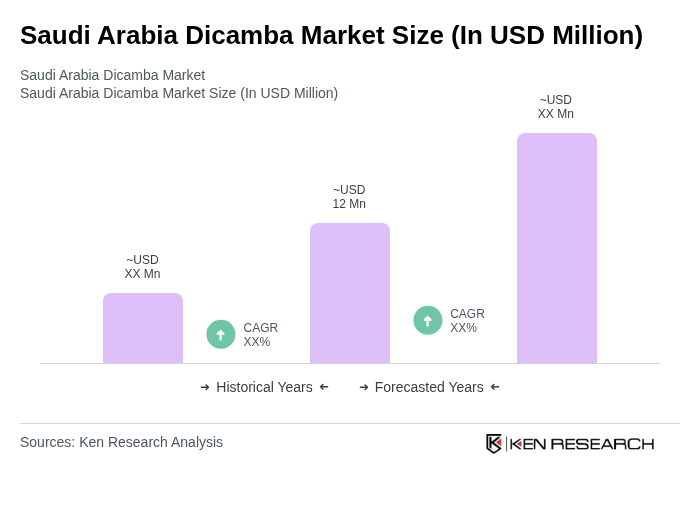
The Saudi Arabia Dicamba Market is valued at approximately USD 12 million, reflecting a significant increase due to the growing adoption of advanced agricultural practices and the need for effective weed management solutions.

What makes us stand out is that our consultants follow Robust, Refine and Result (RRR) methodology. Robust for clear definitions, approaches and sanity checking, Refine for differentiating respondents' facts and opinions, and Result for presenting data with story.

We have set a benchmark in the industry by offering our clients with syndicated and customized market research reports featuring coverage of entire market as well as meticulous research and analyst insights.

While we don't replace traditional research, we flip the method upside down. Our dual approach of Top Bottom & Bottom Top ensures quality deliverable by not just verifying company fundamentals but also looking at the sector and macroeconomic factors.

With one step in the future, our research team constantly tries to show you the bigger picture. We help with some of the tough questions you may encounter along the way: How is the industry positioned? Best marketing channel? KPI's of competitors? By aligning every element, we help maximize success.

Our report gives you instant access to the answers and sources that other companies might choose to hide. We elaborate each steps of research methodology we have used and showcase you the sample size to earn your trust.

If you need any support, we are here! We pride ourselves on universe strength, data quality, and quick, friendly, and professional service.













