Region:Middle East
Author(s):Rebecca
Product Code:KRAC2585
Pages:86
Published On:January 2026
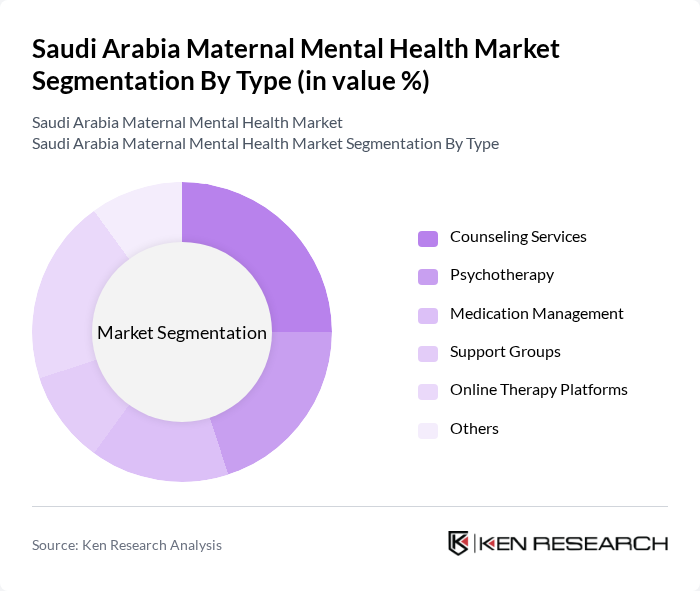
By Type:The market is segmented into various types of services that cater to maternal mental health needs. The subsegments include Counseling Services, Psychotherapy, Medication Management, Support Groups, Online Therapy Platforms, and Others. Counseling Services are gaining traction as they provide immediate support and guidance to mothers facing mental health challenges. Psychotherapy is also significant, as it offers in-depth therapeutic interventions. Medication Management is crucial for those requiring pharmacological support, while Support Groups foster community and shared experiences. Online Therapy Platforms are increasingly popular due to their accessibility, especially in remote areas.
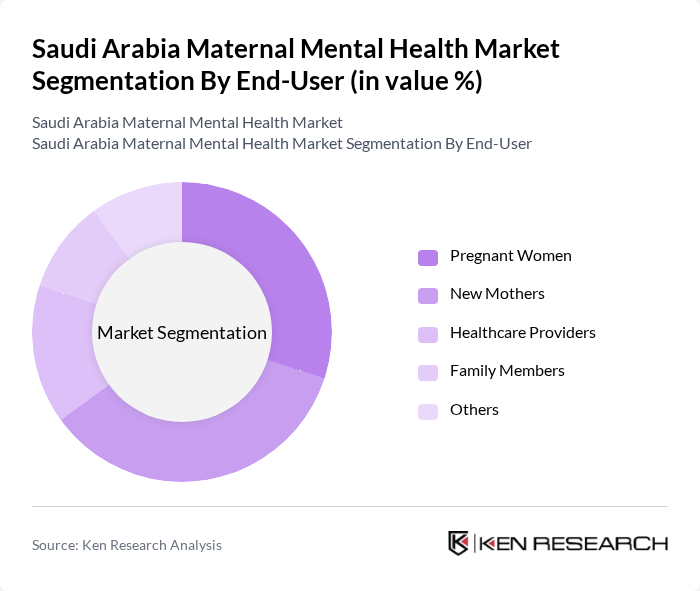
By End-User:This segmentation focuses on the primary users of maternal mental health services, which include Pregnant Women, Postpartum Women, Healthcare Providers, Family Members, and Others. Pregnant Women represent a significant portion of the market as they often experience anxiety and depression during pregnancy. Postpartum Women also require specialized support due to the challenges faced after childbirth. Healthcare Providers play a crucial role in delivering these services, while Family Members are increasingly involved in supporting maternal mental health.
The Saudi Arabia Maternal Mental Health Market is characterized by a dynamic mix of regional and international players. Leading participants such as Al Nahda, King Saud Medical City, Al-Moosa Specialist Hospital, Dallah Hospital, Saudi German Hospital, King Faisal Specialist Hospital & Research Centre, Dr. Sulaiman Al Habib Medical Group, Al-Hayat Medical Center, Al-Jazeera Hospital, Al-Muhaidib Group, Al-Faisal Hospital, Al-Salam Hospital, Al-Mahd Hospital, Al-Mansour Hospital, Al-Bilad Medical Center contribute to innovation, geographic expansion, and service delivery in this space.
The future of maternal mental health in Saudi Arabia appears promising, driven by increasing government support and societal shifts towards recognizing mental health as a priority. The integration of mental health services into maternal care is expected to enhance treatment accessibility. Additionally, the rise of community-based support initiatives and digital platforms will likely foster a more inclusive environment, encouraging women to seek help. Continued investment in research and training will further strengthen the sector, paving the way for improved maternal mental health outcomes.
| Segment | Sub-Segments |
|---|---|
| By Type | Counseling Services Psychotherapy Medication Management Support Groups Online Therapy Platforms Others |
| By End-User | Pregnant Women Postpartum Women Healthcare Providers Family Members Others |
| By Region | Central Region Eastern Region Western Region Southern Region |
| By Service Delivery Model | In-Person Services Telehealth Services Mobile Health Applications Community Outreach Programs Others |
| By Age Group | Adolescents Adults Elderly Others |
| By Socioeconomic Status | Low-Income Middle-Income High-Income Others |
| By Policy Support | Government Funded Programs Private Sector Initiatives International Aid Programs Others |
| Scope Item/Segment | Sample Size | Target Respondent Profiles |
|---|---|---|
| Healthcare Provider Insights | 100 | Psychiatrists, Obstetricians, Midwives |
| Maternal Mental Health Awareness | 120 | Expectant Mothers, New Mothers |
| Support Group Feedback | 80 | Group Facilitators, Participants |
| Policy Maker Perspectives | 50 | Health Policy Analysts, Government Officials |
| Community Health Worker Input | 70 | Community Health Workers, Social Workers |
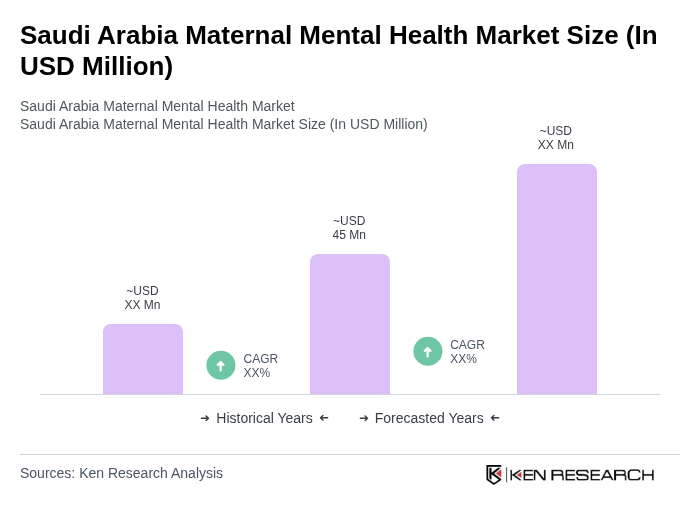
The Saudi Arabia Maternal Mental Health Market is valued at approximately USD 45 million, reflecting a growing recognition of maternal mental health issues and increased healthcare expenditure aimed at improving services for mothers.

What makes us stand out is that our consultants follow Robust, Refine and Result (RRR) methodology. Robust for clear definitions, approaches and sanity checking, Refine for differentiating respondents' facts and opinions, and Result for presenting data with story.

We have set a benchmark in the industry by offering our clients with syndicated and customized market research reports featuring coverage of entire market as well as meticulous research and analyst insights.

While we don't replace traditional research, we flip the method upside down. Our dual approach of Top Bottom & Bottom Top ensures quality deliverable by not just verifying company fundamentals but also looking at the sector and macroeconomic factors.

With one step in the future, our research team constantly tries to show you the bigger picture. We help with some of the tough questions you may encounter along the way: How is the industry positioned? Best marketing channel? KPI's of competitors? By aligning every element, we help maximize success.

Our report gives you instant access to the answers and sources that other companies might choose to hide. We elaborate each steps of research methodology we have used and showcase you the sample size to earn your trust.

If you need any support, we are here! We pride ourselves on universe strength, data quality, and quick, friendly, and professional service.













