Region:Middle East
Author(s):Dev
Product Code:KRAD1817
Pages:96
Published On:November 2025
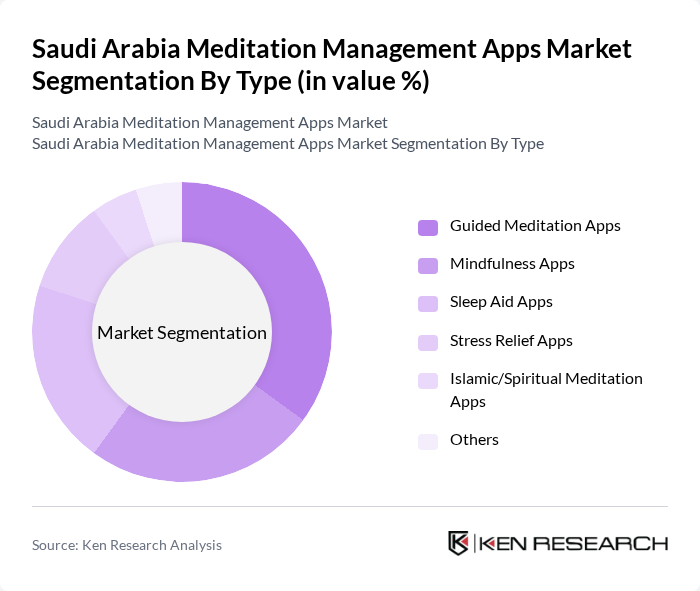
By Type:The market is segmented into various types of meditation management apps, including Guided Meditation Apps, Mindfulness Apps, Sleep Aid Apps, Stress Relief Apps, Islamic/Spiritual Meditation Apps, and Others. Guided Meditation Apps are particularly popular due to their structured approach, making them accessible for beginners and those seeking step-by-step guidance. Mindfulness Apps also see significant adoption, reflecting the growing trend of integrating mindfulness practices into daily routines for stress reduction and emotional balance. The demand for Sleep Aid Apps has increased, especially as more individuals seek digital solutions for sleep-related issues. Islamic/Spiritual Meditation Apps are gaining traction, mirroring the cultural and religious context of the region and the emphasis on spiritual well-being .
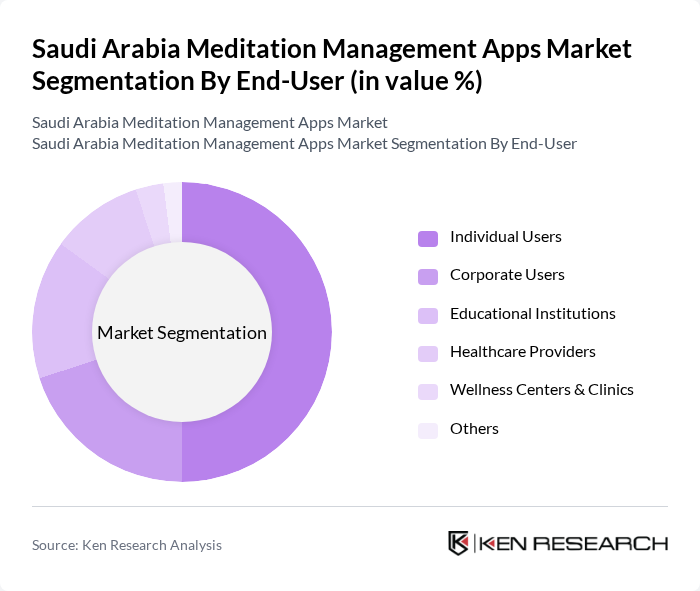
By End-User:The end-user segmentation includes Individual Users, Corporate Users, Educational Institutions, Healthcare Providers, Wellness Centers & Clinics, and Others. Individual Users represent the largest segment, driven by increased focus on personal well-being and mental health. Corporate Users are a fast-growing segment as organizations implement employee wellness programs to address workplace stress and improve productivity. Educational Institutions are integrating meditation and mindfulness practices into curricula to support student mental health, while Healthcare Providers and Wellness Centers use these apps to enhance patient care and support holistic health initiatives .
The Saudi Arabia Meditation Management Apps Market is characterized by a dynamic mix of regional and international players. Leading participants such as Calm, Headspace, Insight Timer, Meditopia, Sabeer (Sabeer App), Aura, Simple Habit, Breethe, Mindfulness Coach, Mindful Muslim, 10% Happier, Buddhify, Stop, Breathe & Think, Zen Friend, Nafas (??????) contribute to innovation, geographic expansion, and service delivery in this space .
The future of the Saudi Arabia meditation management apps market appears promising, driven by technological advancements and a growing focus on mental health. As more users seek personalized meditation experiences, app developers are likely to integrate artificial intelligence to enhance user engagement. Additionally, partnerships with healthcare providers can facilitate the promotion of these apps, ensuring they reach a broader audience. The market is poised for growth as awareness and acceptance of mental health solutions continue to evolve.
| Segment | Sub-Segments |
|---|---|
| By Type | Guided Meditation Apps Mindfulness Apps Sleep Aid Apps Stress Relief Apps Islamic/Spiritual Meditation Apps Others |
| By End-User | Individual Users Corporate Users Educational Institutions Healthcare Providers Wellness Centers & Clinics Others |
| By Subscription Model | Free Apps Freemium Apps Paid Subscription Apps In-App Purchase Models Others |
| By User Demographics | Age Group (18-24, 25-34, 35-44, 45+) Gender Income Level Nationality (Saudi, Expatriate) Others |
| By Device Type | Mobile Phones Tablets Wearable Devices Smart Speakers Others |
| By Language Support | Arabic English Other Regional Languages Others |
| By Marketing Channel | Social Media Influencer Marketing Traditional Advertising App Store Optimization Partnerships with Local Healthcare Providers Others |
| Scope Item/Segment | Sample Size | Target Respondent Profiles |
|---|---|---|
| General Meditation App Users | 120 | Individuals aged 18-45, Regular app users |
| Corporate Wellness Program Participants | 60 | HR Managers, Employees involved in wellness initiatives |
| Mental Health Professionals | 50 | Psychologists, Therapists, Counselors |
| Fitness Enthusiasts | 40 | Personal Trainers, Gym Members |
| App Developers and Entrepreneurs | 40 | Startup Founders, App Development Teams |
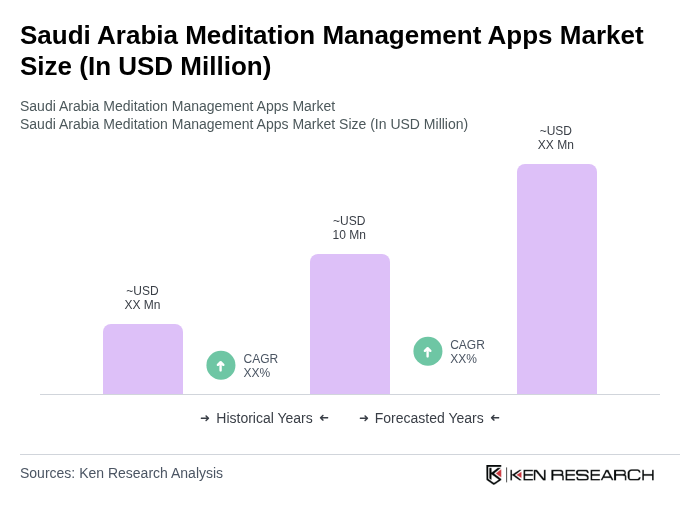
The Saudi Arabia Meditation Management Apps Market is valued at approximately USD 10 million, reflecting a growing interest in mental health and digital wellness solutions among the population, driven by smartphone adoption and increased awareness of self-care practices.

What makes us stand out is that our consultants follow Robust, Refine and Result (RRR) methodology. Robust for clear definitions, approaches and sanity checking, Refine for differentiating respondents' facts and opinions, and Result for presenting data with story.

We have set a benchmark in the industry by offering our clients with syndicated and customized market research reports featuring coverage of entire market as well as meticulous research and analyst insights.

While we don't replace traditional research, we flip the method upside down. Our dual approach of Top Bottom & Bottom Top ensures quality deliverable by not just verifying company fundamentals but also looking at the sector and macroeconomic factors.

With one step in the future, our research team constantly tries to show you the bigger picture. We help with some of the tough questions you may encounter along the way: How is the industry positioned? Best marketing channel? KPI's of competitors? By aligning every element, we help maximize success.

Our report gives you instant access to the answers and sources that other companies might choose to hide. We elaborate each steps of research methodology we have used and showcase you the sample size to earn your trust.

If you need any support, we are here! We pride ourselves on universe strength, data quality, and quick, friendly, and professional service.













