About the Report
Base Year 2024Saudi Arabia Southeast Biomass Market Overview
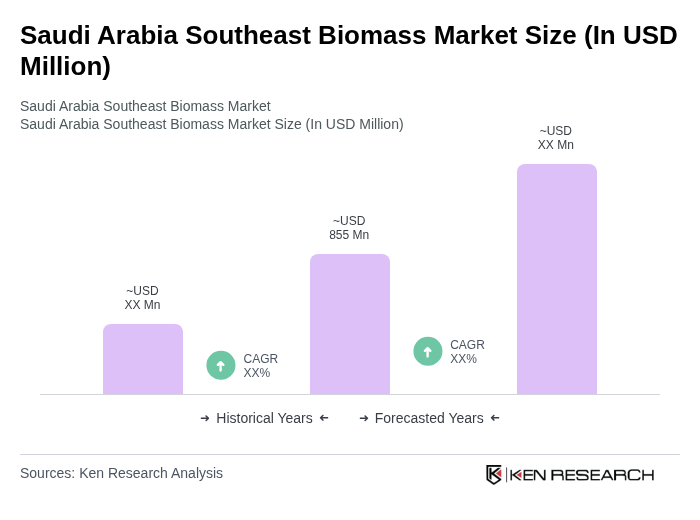
- The Saudi Arabia Southeast Biomass Market is valued at USD 855 million, based on recent analysis. Market growth is propelled by supportive national renewable energy targets and investments into bioenergy infrastructure, as the Kingdom accelerates its transition from fossil fuels and embraces sustainability. Expansion is further stimulated by rising demand for clean energy alternatives and strategic emphasis on converting waste into biomass resources.
- Key players in this market include ACWA Power, Masdar, EDF Renewables, and TotalEnergies, which are active in solar and hybrid projects that shape energy dynamics in related sectors. Their growing presence and expertise in deploying large-scale renewable solutions suggest a strengthening of biomass capabilities by association, driven by their innovation and financial capacity.
- One significant government initiative underpinning this sector is the Saudi Green Initiative, which channels over USD 188 billion into more than 80 sustainability projects, including renewable energy and biomass-related programs, and aims to reshape the national energy mix toward greener alternatives.
Saudi Arabia Southeast Biomass Market Segmentation
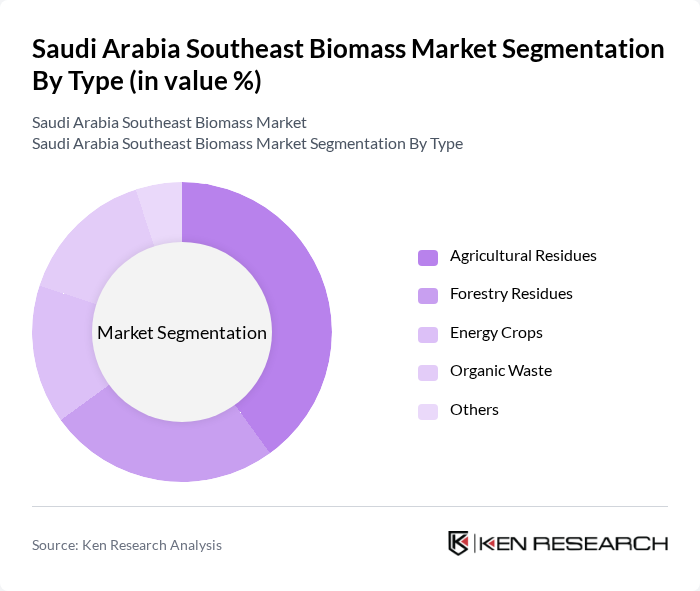
By Type:The biomass market in Saudi Arabia is segmented into various types, including Agricultural Residues, Forestry Residues, Energy Crops, Organic Waste, and Others. Among these, Agricultural Residues dominate the market due to the extensive agricultural activities in the region, which generate significant amounts of waste that can be converted into biomass. The increasing focus on sustainable waste management and energy generation from these residues is driving their market share.
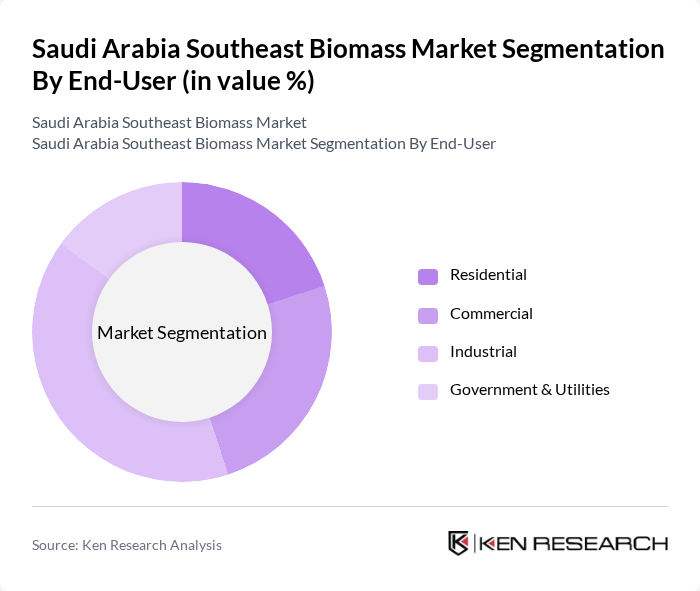
By End-User:The end-user segmentation of the biomass market includes Residential, Commercial, Industrial, and Government & Utilities. The Industrial segment is the leading end-user, driven by the need for sustainable energy solutions in manufacturing processes. Industries are increasingly adopting biomass as a cleaner alternative to fossil fuels, which is enhancing their operational sustainability and reducing carbon footprints.
Saudi Arabia Southeast Biomass Market Competitive Landscape
The Saudi Arabia Southeast Biomass Market is characterized by a dynamic mix of regional and international players. Leading participants such as Saudi Electricity Company, National Renewable Energy Program, Alfanar Energy, ACWA Power, Bioenergy International, Green Energy Solutions, Saudi Bioenergy Company, Al-Jomaih Energy and Water Company, Al-Faisaliah Group, Al-Muhaidib Group, Saudi Investment Bank, Saudi Industrial Development Fund, Saudi Arabian Oil Company (Saudi Aramco), National Industrialization Company (Tasnee), and Saudi Basic Industries Corporation (SABIC) contribute to innovation, geographic expansion, and service delivery in this space.
Saudi Arabia Southeast Biomass Market Industry Analysis
Growth Drivers
- Increasing Energy Demand:The biomass market in Saudi Arabia is projected to reach USD 857.16 million in the future, driven by a significant rise in energy demand. The country's non-oil GDP grew by 4.3% in the future, indicating a robust economic expansion that necessitates alternative energy sources. This growth is further supported by the government's commitment to diversifying energy sources, which enhances the biomass sector's potential to meet rising energy needs.
- Government Initiatives for Renewable Energy:The Saudi Green Initiative (SGI) has seen over USD 188 billion invested in renewable energy projects, with a target of achieving 50% renewable electricity in the future. This initiative has led to the addition of 2,100 MW of renewable capacity in the recent past, creating a favorable environment for biomass development. The government's focus on sustainability and renewable energy integration is crucial for the growth of the biomass market.
- Technological Advancements in Biomass Conversion:Significant investments totaling SAR 19.839 billion have been made in renewable energy capacity, reaching 6,551 MW by the end of the future. These advancements in biomass conversion technologies enhance efficiency and reduce costs, making biomass a more attractive energy source. The integration of innovative technologies is essential for optimizing biomass utilization and expanding its market presence in Saudi Arabia.
Market Challenges
- High Initial Investment Costs:The biomass market, valued at USD 857.16 million in the future, faces challenges due to high initial investment costs associated with biomass projects. These costs can deter potential investors and limit the market's growth. The financial burden of establishing biomass facilities and infrastructure can hinder the sector's ability to scale and compete effectively with established energy sources.
- Limited Awareness and Education:Despite the potential of biomass energy, there remains a significant gap in awareness and education regarding its benefits and applications. This lack of understanding can impede market growth, as stakeholders may be hesitant to invest in or adopt biomass solutions. Increased educational initiatives are necessary to inform businesses and consumers about the advantages of biomass energy and its role in the renewable energy landscape.
Saudi Arabia Southeast Biomass Market Future Outlook
The future of the biomass market in Saudi Arabia appears promising, driven by emerging circular biofuel initiatives and synergies with renewable energy expansion. Projects like biochar production and sustainable aviation fuel plants indicate a shift towards innovative biomass applications. Additionally, the ongoing expansion of renewable infrastructure, including 6,551 MW of solar and wind capacity, provides a solid foundation for integrating biomass into the broader energy system, enhancing its viability and attractiveness as a sustainable energy source.
Market Opportunities
- Emerging Biochar and SAF Projects:Strategic partnerships announced in the future for biochar and sustainable aviation fuel (SAF) production represent significant market opportunities. These projects leverage biomass for advanced materials and fuels, expanding the scope of biomass applications beyond traditional energy uses, thus enhancing market potential.
- Underserved Solid Biofuel Demand:With solid biofuel consumption reaching 222,000 tons in the future, valued at USD 134 million, there is a clear opportunity to enhance local production and value chain integration. This existing demand indicates a market ripe for development, allowing for the establishment of localized biomass production facilities to meet growing energy needs.
Scope of the Report
| Segment | Sub-Segments |
|---|---|
| By Type (e.g., Agricultural Residues, Forestry Residues, Energy Crops, Organic Waste, Others) | Agricultural Residues Forestry Residues Energy Crops Organic Waste Others |
| By End-User (Residential, Commercial, Industrial, Government & Utilities) | Residential Commercial Industrial Government & Utilities |
| By Region (Central, Eastern, Western, Southern) | Central Eastern Western Southern |
| By Technology (Anaerobic Digestion, Combustion, Gasification, Pyrolysis) | Anaerobic Digestion Combustion Gasification Pyrolysis |
| By Application (Electricity Generation, Heat Production, Transportation Fuels) | Electricity Generation Heat Production Transportation Fuels |
| By Investment Source (Domestic, FDI, PPP, Government Schemes) | Domestic FDI PPP Government Schemes |
| By Policy Support (Subsidies, Tax Exemptions, RECs) | Subsidies Tax Exemptions RECs |
Key Target Audience
Investors and Venture Capitalist Firms
Government and Regulatory Bodies (e.g., Ministry of Environment, Water and Agriculture)
Manufacturers and Producers of Biomass Energy
Biomass Technology Providers
Energy Sector Stakeholders
Environmental NGOs and Advocacy Groups
Local Municipalities and Urban Planners
Financial Institutions and Banks
Players Mentioned in the Report:
Saudi Electricity Company
National Renewable Energy Program
Alfanar Energy
ACWA Power
Bioenergy International
Green Energy Solutions
Saudi Bioenergy Company
Al-Jomaih Energy and Water Company
Al-Faisaliah Group
Al-Muhaidib Group
Saudi Investment Bank
Saudi Industrial Development Fund
Saudi Arabian Oil Company (Saudi Aramco)
National Industrialization Company (Tasnee)
Saudi Basic Industries Corporation (SABIC)
Table of Contents
Market Assessment Phase
1. Executive Summary and Approach
2. Saudi Arabia Southeast Biomass Market Overview
2.1 Key Insights and Strategic Recommendations
2.2 Saudi Arabia Southeast Biomass Market Overview
2.3 Definition and Scope
2.4 Evolution of Market Ecosystem
2.5 Timeline of Key Regulatory Milestones
2.6 Value Chain & Stakeholder Mapping
2.7 Business Cycle Analysis
2.8 Policy & Incentive Landscape
3. Saudi Arabia Southeast Biomass Market Analysis
3.1 Growth Drivers
3.1.1 Increasing Energy Demand
3.1.2 Government Initiatives for Renewable Energy
3.1.3 Technological Advancements in Biomass Conversion
3.1.4 Environmental Sustainability Goals
3.2 Market Challenges
3.2.1 High Initial Investment Costs
3.2.2 Limited Awareness and Education
3.2.3 Regulatory Hurdles
3.2.4 Competition from Fossil Fuels
3.3 Market Opportunities
3.3.1 Expansion of Biomass Supply Chains
3.3.2 Collaboration with International Firms
3.3.3 Development of New Biomass Technologies
3.3.4 Increased Investment in Renewable Energy
3.4 Market Trends
3.4.1 Rise in Bioenergy Projects
3.4.2 Integration of Smart Technologies
3.4.3 Focus on Waste-to-Energy Solutions
3.4.4 Growing Consumer Demand for Green Energy
3.5 Government Regulation
3.5.1 Renewable Energy Policies
3.5.2 Environmental Protection Laws
3.5.3 Subsidies for Biomass Projects
3.5.4 Emission Reduction Targets
4. SWOT Analysis
5. Stakeholder Analysis
6. Porter's Five Forces Analysis
7. Saudi Arabia Southeast Biomass Market Market Size, 2019-2024
7.1 By Value
7.2 By Volume
7.3 By Average Selling Price
8. Saudi Arabia Southeast Biomass Market Segmentation
8.1 By Type (e.g., Agricultural Residues, Forestry Residues, Energy Crops, Organic Waste, Others)
8.1.1 Agricultural Residues
8.1.2 Forestry Residues
8.1.3 Energy Crops
8.1.4 Organic Waste
8.1.5 Others
8.2 By End-User (Residential, Commercial, Industrial, Government & Utilities)
8.2.1 Residential
8.2.2 Commercial
8.2.3 Industrial
8.2.4 Government & Utilities
8.3 By Region (Central, Eastern, Western, Southern)
8.3.1 Central
8.3.2 Eastern
8.3.3 Western
8.3.4 Southern
8.4 By Technology (Anaerobic Digestion, Combustion, Gasification, Pyrolysis)
8.4.1 Anaerobic Digestion
8.4.2 Combustion
8.4.3 Gasification
8.4.4 Pyrolysis
8.5 By Application (Electricity Generation, Heat Production, Transportation Fuels)
8.5.1 Electricity Generation
8.5.2 Heat Production
8.5.3 Transportation Fuels
8.6 By Investment Source (Domestic, FDI, PPP, Government Schemes)
8.6.1 Domestic
8.6.2 FDI
8.6.3 PPP
8.6.4 Government Schemes
8.7 By Policy Support (Subsidies, Tax Exemptions, RECs)
8.7.1 Subsidies
8.7.2 Tax Exemptions
8.7.3 RECs
9. Saudi Arabia Southeast Biomass Market Competitive Analysis
9.1 Market Share of Key Players(Micro, Small, Medium, Large Enterprises)
9.2 Cross Comparison of Key Players
9.2.1 Company Name
9.2.2 Group Size (Large, Medium, or Small as per industry convention)
9.2.3 Revenue Growth Rate
9.2.4 Market Penetration Rate
9.2.5 Customer Retention Rate
9.2.6 Operational Efficiency
9.2.7 Pricing Strategy
9.2.8 Product Diversification
9.2.9 Supply Chain Efficiency
9.2.10 Brand Recognition
9.3 SWOT Analysis of Top Players
9.4 Pricing Analysis(By Class and Payload)
9.5 Detailed Profile of Major Companies
9.5.1 Saudi Electricity Company
9.5.2 National Renewable Energy Program
9.5.3 Alfanar Energy
9.5.4 ACWA Power
9.5.5 Bioenergy International
9.5.6 Green Energy Solutions
9.5.7 Saudi Bioenergy Company
9.5.8 Al-Jomaih Energy and Water Company
9.5.9 Al-Faisaliah Group
9.5.10 Al-Muhaidib Group
9.5.11 Saudi Investment Bank
9.5.12 Saudi Industrial Development Fund
9.5.13 Saudi Arabian Oil Company (Saudi Aramco)
9.5.14 National Industrialization Company (Tasnee)
9.5.15 Saudi Basic Industries Corporation (SABIC)
10. Saudi Arabia Southeast Biomass Market End-User Analysis
10.1 Procurement Behavior of Key Ministries
10.1.1 Ministry of Energy
10.1.2 Ministry of Environment, Water and Agriculture
10.1.3 Ministry of Industry and Mineral Resources
10.1.4 Ministry of Finance
10.2 Corporate Spend on Infrastructure & Energy
10.2.1 Energy Sector Investments
10.2.2 Infrastructure Development Budgets
10.2.3 Renewable Energy Project Funding
10.2.4 Corporate Sustainability Initiatives
10.3 Pain Point Analysis by End-User Category
10.3.1 Residential Users
10.3.2 Commercial Users
10.3.3 Industrial Users
10.3.4 Government Entities
10.4 User Readiness for Adoption
10.4.1 Awareness Levels
10.4.2 Financial Readiness
10.4.3 Technical Capability
10.4.4 Policy Support
10.5 Post-Deployment ROI and Use Case Expansion
10.5.1 ROI Measurement Techniques
10.5.2 Use Case Development
10.5.3 Long-term Sustainability Assessments
10.5.4 Expansion Opportunities
11. Saudi Arabia Southeast Biomass Market Future Size, 2025-2030
11.1 By Value
11.2 By Volume
11.3 By Average Selling Price
Go-To-Market Strategy Phase
1. Whitespace Analysis + Business Model Canvas
1.1 Market Gaps Identification
1.2 Business Model Framework
2. Marketing and Positioning Recommendations
2.1 Branding Strategies
2.2 Product USPs
3. Distribution Plan
3.1 Urban Retail Strategies
3.2 Rural NGO Tie-ups
4. Channel & Pricing Gaps
4.1 Underserved Routes
4.2 Pricing Bands
5. Unmet Demand & Latent Needs
5.1 Category Gaps
5.2 Consumer Segments
6. Customer Relationship
6.1 Loyalty Programs
6.2 After-sales Service
7. Value Proposition
7.1 Sustainability Initiatives
7.2 Integrated Supply Chains
8. Key Activities
8.1 Regulatory Compliance
8.2 Branding Efforts
8.3 Distribution Setup
9. Entry Strategy Evaluation
9.1 Domestic Market Entry Strategy
9.1.1 Product Mix
9.1.2 Pricing Band
9.1.3 Packaging
9.2 Export Entry Strategy
9.2.1 Target Countries
9.2.2 Compliance Roadmap
10. Entry Mode Assessment
10.1 JV Opportunities
10.2 Greenfield Investments
10.3 M&A Prospects
10.4 Distributor Model
11. Capital and Timeline Estimation
11.1 Capital Requirements
11.2 Timelines
12. Control vs Risk Trade-Off
12.1 Ownership Considerations
12.2 Partnerships
13. Profitability Outlook
13.1 Breakeven Analysis
13.2 Long-term Sustainability
14. Potential Partner List
14.1 Distributors
14.2 JVs
14.3 Acquisition Targets
15. Execution Roadmap
15.1 Phased Plan for Market Entry
15.1.1 Market Setup
15.1.2 Market Entry
15.1.3 Growth Acceleration
15.1.4 Scale & Stabilize
15.2 Key Activities and Milestones
15.2.1 Activity Planning
15.2.2 Milestone Tracking
Research Methodology
Phase 1: Approach1
Desk Research
- Analysis of government reports and publications on biomass energy policies in Saudi Arabia
- Review of industry reports from organizations such as the Saudi Arabian Renewable Energy Project Development Office
- Examination of academic journals and articles focusing on biomass technology and market trends in the region
Primary Research
- Interviews with key stakeholders in the biomass supply chain, including producers and distributors
- Surveys conducted with energy policy experts and environmental consultants in Saudi Arabia
- Field visits to biomass production facilities and energy plants to gather firsthand insights
Validation & Triangulation
- Cross-validation of data through multiple sources, including government statistics and industry reports
- Triangulation of findings from primary interviews with secondary data to ensure consistency
- Sanity checks through expert panel discussions to validate assumptions and findings
Phase 2: Market Size Estimation1
Top-down Assessment
- Estimation of total biomass potential based on agricultural waste and forestry resources in the Southeast region
- Analysis of energy consumption patterns and the role of biomass in the national energy mix
- Incorporation of government targets for renewable energy adoption and biomass utilization
Bottom-up Modeling
- Collection of data on biomass production capacities from local producers and cooperatives
- Cost analysis of biomass production, including feedstock procurement and processing expenses
- Volume estimates based on operational data from existing biomass facilities in the region
Forecasting & Scenario Analysis
- Development of market forecasts using historical growth rates and projected policy changes
- Scenario modeling based on varying levels of government support and market adoption rates
- Assessment of potential market disruptions due to technological advancements or regulatory shifts
Phase 3: CATI Sample Composition1
| Scope Item/Segment | Sample Size | Target Respondent Profiles |
|---|---|---|
| Biomass Producers | 100 | Farm Owners, Biomass Facility Operators |
| Energy Policy Experts | 75 | Government Officials, Energy Consultants |
| Environmental NGOs | 50 | Sustainability Advocates, Research Analysts |
| End-users of Biomass Energy | 80 | Industrial Energy Managers, Utility Company Representatives |
| Academic Researchers | 60 | University Professors, Research Scholars |
Frequently Asked Questions
What is the current value of the Saudi Arabia Southeast Biomass Market?
The Saudi Arabia Southeast Biomass Market is valued at approximately USD 855 million, driven by national renewable energy targets and investments in bioenergy infrastructure as the country transitions towards sustainability and clean energy alternatives.
What are the main drivers of growth in the Saudi Arabia Southeast Biomass Market?
Who are the key players in the Saudi Arabia Southeast Biomass Market?
What types of biomass are prevalent in the Saudi Arabia Southeast Biomass Market?
Other Regional/Country Reports
Indonesia Biomass Market
Malaysia Biomass Market
KSA Biomass Market
APAC Biomass Market
SEA Biomass Market
Other Adjacent Reports
Indonesia Hybrid Energy Market
India Waste Management Market (2022-2030)Bahrain Agricultural Technology Market
UAE Forestry Products Market
Belgium Industrial Energy Solutions Market
Kuwait sustainable aviation fuel market report Size, Share, Growth Drivers, Trends, Opportunities & Forecast 2025–2030Indonesia Circular Economy Market
Why Buy From Us?

What makes us stand out is that our consultants follow Robust, Refine and Result (RRR) methodology. Robust for clear definitions, approaches and sanity checking, Refine for differentiating respondents' facts and opinions, and Result for presenting data with story.

We have set a benchmark in the industry by offering our clients with syndicated and customized market research reports featuring coverage of entire market as well as meticulous research and analyst insights.

While we don't replace traditional research, we flip the method upside down. Our dual approach of Top Bottom & Bottom Top ensures quality deliverable by not just verifying company fundamentals but also looking at the sector and macroeconomic factors.

With one step in the future, our research team constantly tries to show you the bigger picture. We help with some of the tough questions you may encounter along the way: How is the industry positioned? Best marketing channel? KPI's of competitors? By aligning every element, we help maximize success.

Our report gives you instant access to the answers and sources that other companies might choose to hide. We elaborate each steps of research methodology we have used and showcase you the sample size to earn your trust.

If you need any support, we are here! We pride ourselves on universe strength, data quality, and quick, friendly, and professional service.