Region:Asia
Author(s):Shubham
Product Code:KRAA4692
Pages:100
Published On:September 2025
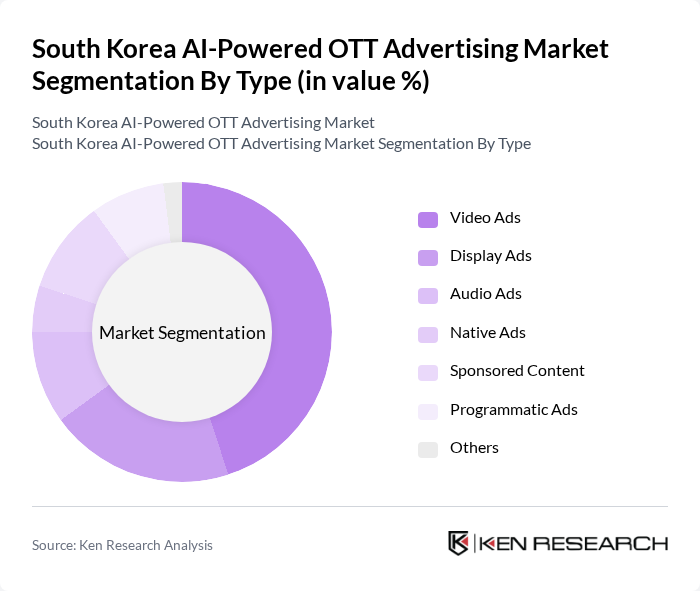
By Type:The market is segmented into various types of advertising formats, including Video Ads, Display Ads, Audio Ads, Native Ads, Sponsored Content, Programmatic Ads, and Others. Among these, Video Ads are currently dominating the market due to the increasing consumption of video content across OTT platforms. The rise of platforms like YouTube and Netflix has led to a surge in video advertising, as brands seek to engage consumers through visually appealing and interactive content. Display Ads and Programmatic Ads are also gaining traction, but Video Ads remain the preferred choice for advertisers aiming to capture audience attention effectively.
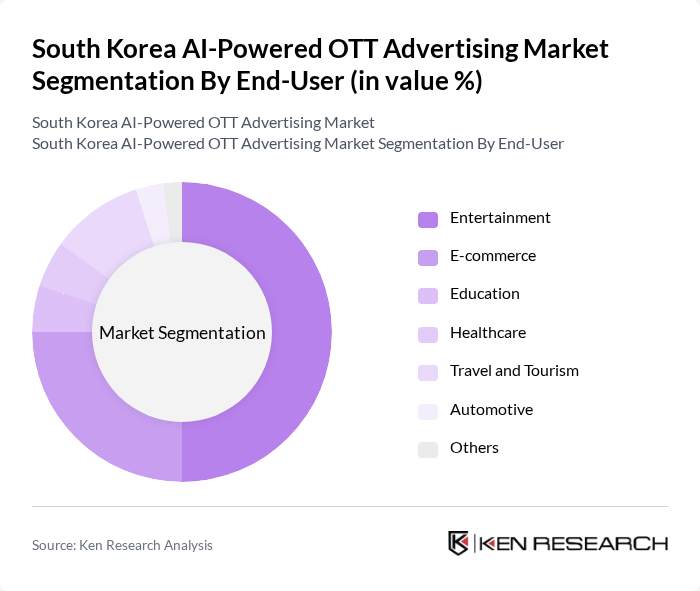
By End-User:The end-user segmentation includes Entertainment, E-commerce, Education, Healthcare, Travel and Tourism, Automotive, and Others. The Entertainment sector is the leading segment, driven by the increasing popularity of streaming services and the demand for engaging content. E-commerce is also a significant contributor, as brands leverage OTT platforms to reach consumers directly. The rise of online shopping has prompted advertisers to invest heavily in targeted advertising strategies within the OTT space, making it a competitive landscape for various industries.
The South Korea AI-Powered OTT Advertising Market is characterized by a dynamic mix of regional and international players. Leading participants such as Samsung Ads, LG Ads, Kakao M, Naver Corporation, CJ ENM, SK Telecom, Daum Kakao, Tving, Watcha, Coupang Play, Netflix Korea, Disney+ Korea, Amazon Prime Video Korea, YouTube Korea, Spotify Korea contribute to innovation, geographic expansion, and service delivery in this space.
The South Korean AI-powered OTT advertising market is poised for significant evolution, driven by technological advancements and changing consumer behaviors. As advertisers increasingly adopt programmatic advertising, the demand for real-time analytics will grow, enabling more effective targeting. Additionally, the integration of augmented reality (AR) and virtual reality (VR) technologies is expected to enhance user engagement, creating immersive advertising experiences. These trends will shape the future landscape, fostering innovation and collaboration within the industry.
| Segment | Sub-Segments |
|---|---|
| By Type | Video Ads Display Ads Audio Ads Native Ads Sponsored Content Programmatic Ads Others |
| By End-User | Entertainment E-commerce Education Healthcare Travel and Tourism Automotive Others |
| By Platform | Smart TVs Mobile Devices Desktop Computers Streaming Devices Gaming Consoles Others |
| By Advertising Model | Cost Per Click (CPC) Cost Per Impression (CPI) Cost Per Acquisition (CPA) Subscription-Based Pay-Per-View Others |
| By Content Type | Movies TV Shows Sports News Documentaries Others |
| By Audience Targeting | Demographic Targeting Behavioral Targeting Contextual Targeting Retargeting Others |
| By Pricing Model | Fixed Pricing Dynamic Pricing Tiered Pricing Freemium Model Others |
| Scope Item/Segment | Sample Size | Target Respondent Profiles |
|---|---|---|
| OTT Platform Advertising Strategies | 100 | Marketing Directors, Advertising Managers |
| Consumer Insights on AI Ads | 150 | General Consumers, Tech-Savvy Users |
| Agency Perspectives on AI Integration | 80 | Creative Directors, Digital Strategists |
| Regulatory Impact on Advertising | 60 | Policy Makers, Compliance Officers |
| Trends in OTT Viewership | 120 | Content Analysts, Market Researchers |
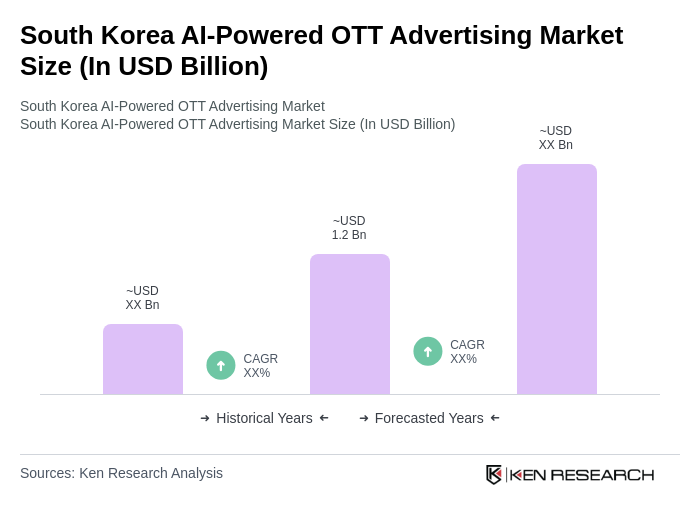
The South Korea AI-Powered OTT Advertising Market is valued at approximately USD 1.2 billion, reflecting significant growth driven by the increasing use of smart devices and demand for personalized advertising experiences across various streaming platforms.

What makes us stand out is that our consultants follow Robust, Refine and Result (RRR) methodology. Robust for clear definitions, approaches and sanity checking, Refine for differentiating respondents' facts and opinions, and Result for presenting data with story.

We have set a benchmark in the industry by offering our clients with syndicated and customized market research reports featuring coverage of entire market as well as meticulous research and analyst insights.

While we don't replace traditional research, we flip the method upside down. Our dual approach of Top Bottom & Bottom Top ensures quality deliverable by not just verifying company fundamentals but also looking at the sector and macroeconomic factors.

With one step in the future, our research team constantly tries to show you the bigger picture. We help with some of the tough questions you may encounter along the way: How is the industry positioned? Best marketing channel? KPI's of competitors? By aligning every element, we help maximize success.

Our report gives you instant access to the answers and sources that other companies might choose to hide. We elaborate each steps of research methodology we have used and showcase you the sample size to earn your trust.

If you need any support, we are here! We pride ourselves on universe strength, data quality, and quick, friendly, and professional service.













