Region:Asia
Author(s):Geetanshi
Product Code:KRAA3266
Pages:91
Published On:September 2025

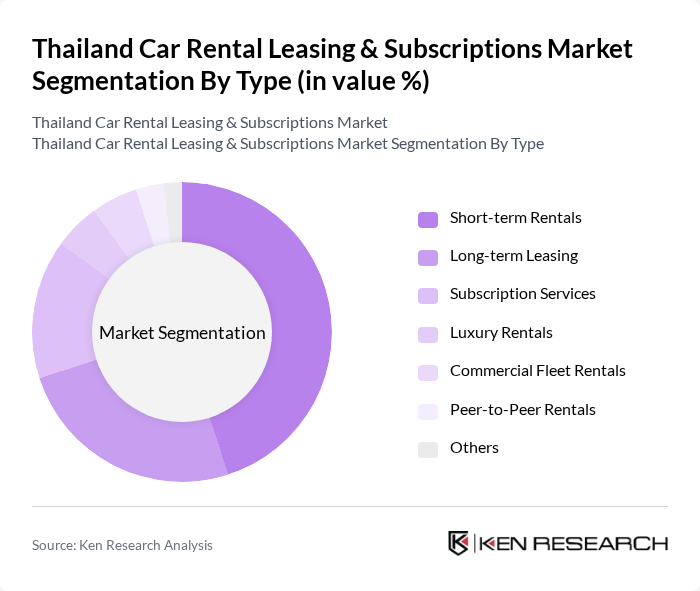
By Type:The market is segmented into Short-term Rentals, Long-term Leasing, Subscription Services, Luxury Rentals, Commercial Fleet Rentals, Peer-to-Peer Rentals, and Others.Short-term Rentalsremain the most popular segment, primarily due to the high influx of tourists seeking flexible transportation for short stays.Long-term LeasingandSubscription Servicesare gaining momentum as consumers and businesses increasingly favor convenient, cost-effective alternatives to traditional car ownership. The market also reflects a growing interest in luxury rentals and commercial fleet solutions, driven by corporate demand and premium travel experiences.
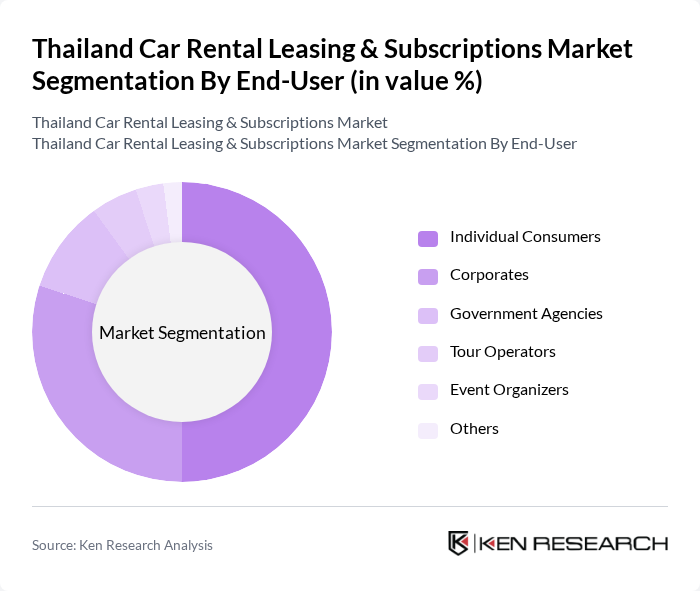
By End-User:The market is segmented by end-users: Individual Consumers, Corporates, Government Agencies, Tour Operators, Event Organizers, and Others.Individual Consumersconstitute the largest segment, reflecting the growing trend of urban mobility and the increasing need for personal transportation.Corporatesare a significant segment, leveraging rental and leasing services for business travel and employee mobility. Government agencies, tour operators, and event organizers also contribute to market demand, particularly for specialized and fleet-based rental solutions.
The Thailand Car Rental Leasing & Subscriptions Market is characterized by a dynamic mix of regional and international players. Leading participants such as Hertz Thailand, Avis Thailand, Budget Car Rental Thailand, Sixt Thailand, Thai Rent A Car, Bizcar Rental, Europcar Thailand, Drive Car Rental, Chic Car Rent, GrabRentals Thailand, GoCar Thailand, ASAP Car Rental, Thrifty Car Rental Thailand, Carro Thailand, Easy Rent A Car contribute to innovation, geographic expansion, and service delivery in this space.
The Thailand car rental market is poised for significant transformation driven by technological advancements and changing consumer preferences. As urbanization continues, the demand for flexible mobility solutions will rise, particularly among younger demographics. Companies are likely to invest in digital platforms for seamless booking experiences and enhanced fleet management. Additionally, the integration of eco-friendly vehicles will become a priority, aligning with global sustainability trends and government initiatives aimed at reducing carbon emissions in urban areas.
| Segment | Sub-Segments |
|---|---|
| By Type | Short-term Rentals Long-term Leasing Subscription Services Luxury Rentals Commercial Fleet Rentals Peer-to-Peer Rentals Others |
| By End-User | Individual Consumers Corporates Government Agencies Tour Operators Event Organizers Others |
| By Vehicle Type | Economy Cars SUVs/MPVs Vans Luxury Cars Electric Vehicles Others |
| By Rental Duration | Daily Rentals Weekly Rentals Monthly Rentals Annual Rentals |
| By Distribution Channel | Online Platforms Offline Agencies Direct Corporate Contracts Travel Agencies |
| By Payment Model | Pay-per-use Subscription-based Lease-to-own Others |
| By Geographic Coverage | Bangkok Metropolitan Area Major Tourist Destinations (e.g., Phuket, Chiang Mai, Pattaya) Secondary Cities & Suburban Areas Rural/Other Regions |
| Scope Item/Segment | Sample Size | Target Respondent Profiles |
|---|---|---|
| Leisure Car Rentals | 100 | Tourists, Travel Planners |
| Corporate Leasing Services | 60 | Corporate Fleet Managers, HR Executives |
| Subscription Services | 50 | Millennials, Urban Professionals |
| Long-term Rentals | 40 | Expatriates, Long-term Travelers |
| Market Trends and Insights | 60 | Industry Analysts, Market Researchers |
The Thailand Car Rental Leasing & Subscriptions Market is valued at approximately USD 1.16 billion, reflecting strong demand driven by tourism, rising disposable incomes, and a preference for flexible transportation solutions among both tourists and business travelers.

What makes us stand out is that our consultants follow Robust, Refine and Result (RRR) methodology. Robust for clear definitions, approaches and sanity checking, Refine for differentiating respondents' facts and opinions, and Result for presenting data with story.

We have set a benchmark in the industry by offering our clients with syndicated and customized market research reports featuring coverage of entire market as well as meticulous research and analyst insights.

While we don't replace traditional research, we flip the method upside down. Our dual approach of Top Bottom & Bottom Top ensures quality deliverable by not just verifying company fundamentals but also looking at the sector and macroeconomic factors.

With one step in the future, our research team constantly tries to show you the bigger picture. We help with some of the tough questions you may encounter along the way: How is the industry positioned? Best marketing channel? KPI's of competitors? By aligning every element, we help maximize success.

Our report gives you instant access to the answers and sources that other companies might choose to hide. We elaborate each steps of research methodology we have used and showcase you the sample size to earn your trust.

If you need any support, we are here! We pride ourselves on universe strength, data quality, and quick, friendly, and professional service.













