Region:Middle East
Author(s):Dev
Product Code:KRAA5167
Pages:98
Published On:September 2025
By Type:This segmentation includes various cybersecurity solutions tailored for the oil and gas sector, focusing on protecting networks, endpoints, applications, and data. The increasing complexity of cyber threats necessitates a multi-faceted approach to security, leading to a diverse range of solutions being adopted.
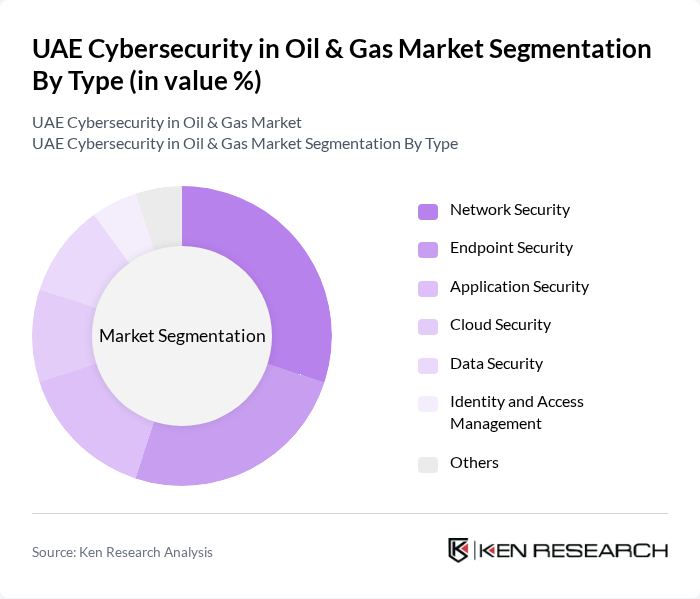
The Network Security sub-segment is currently dominating the market due to the increasing number of cyberattacks targeting critical infrastructure in the oil and gas sector. Companies are investing heavily in network security solutions to protect their operational technology (OT) environments from unauthorized access and potential disruptions. The rise of sophisticated cyber threats has led to a heightened awareness of the importance of securing network perimeters, making this sub-segment a priority for organizations in the industry.
By End-User:This segmentation categorizes the market based on the various entities utilizing cybersecurity solutions within the oil and gas sector. The end-users include oil exploration companies, refining companies, distribution companies, government agencies, and service providers.
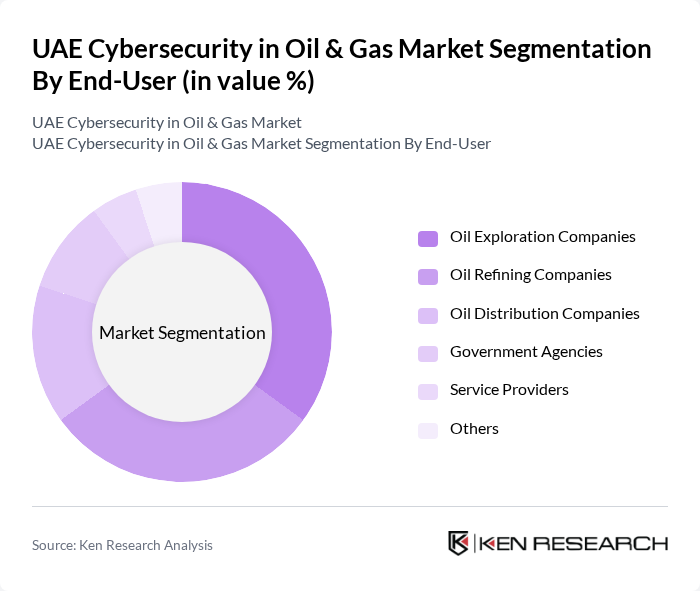
Oil Exploration Companies lead the market due to their critical role in the oil and gas supply chain. These companies face significant cybersecurity risks, given the sensitive nature of their operations and the potential impact of cyber incidents on production and safety. As a result, they are increasingly investing in comprehensive cybersecurity solutions to safeguard their assets and ensure operational continuity.
The UAE Cybersecurity in Oil & Gas Market is characterized by a dynamic mix of regional and international players. Leading participants such as DarkMatter, Help AG, Paladion Networks, CyberKnight Technologies, Etisalat Digital, IBM Security, Cisco Systems, McAfee, Fortinet, Check Point Software Technologies, Trend Micro, FireEye, Palo Alto Networks, Kaspersky Lab, Symantec contribute to innovation, geographic expansion, and service delivery in this space.
The future of cybersecurity in the UAE's oil and gas sector is poised for significant evolution, driven by technological advancements and increasing regulatory pressures. Companies are expected to adopt more sophisticated security measures, including AI-driven threat detection and response systems. Additionally, collaboration with government initiatives will enhance the overall cybersecurity framework, ensuring a more resilient infrastructure. As the industry continues to digitalize, the focus on proactive cybersecurity strategies will become paramount, shaping the market landscape in the coming years.
| Segment | Sub-Segments |
|---|---|
| By Type | Network Security Endpoint Security Application Security Cloud Security Data Security Identity and Access Management Others |
| By End-User | Oil Exploration Companies Oil Refining Companies Oil Distribution Companies Government Agencies Service Providers Others |
| By Deployment Mode | On-Premises Cloud-Based Hybrid Others |
| By Service Type | Consulting Services Managed Security Services Incident Response Services Training and Awareness Services Others |
| By Region | Abu Dhabi Dubai Sharjah Ajman Ras Al Khaimah Fujairah Others |
| By Compliance Standards | ISO 27001 NIST Cybersecurity Framework GDPR Compliance Others |
| By Pricing Model | Subscription-Based Pay-Per-Use One-Time License Fee Others |
| Scope Item/Segment | Sample Size | Target Respondent Profiles |
|---|---|---|
| Cybersecurity in Oil Exploration | 100 | IT Security Managers, Risk Assessment Officers |
| Cybersecurity in Oil Refining | 80 | Operational Technology Specialists, Compliance Officers |
| Cybersecurity in Distribution Networks | 70 | Network Security Engineers, Logistics Managers |
| Incident Response Strategies | 60 | Incident Response Team Leaders, Cybersecurity Analysts |
| Regulatory Compliance in Cybersecurity | 90 | Legal Advisors, Compliance Managers |
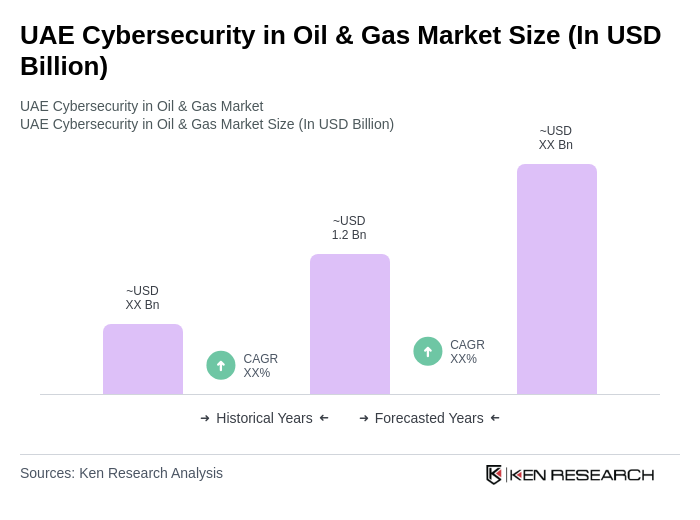
The UAE Cybersecurity in Oil & Gas Market is valued at approximately USD 1.2 billion, reflecting significant growth driven by increased digitization, rising cyber threats, and compliance with regulatory frameworks in the sector.

What makes us stand out is that our consultants follow Robust, Refine and Result (RRR) methodology. Robust for clear definitions, approaches and sanity checking, Refine for differentiating respondents' facts and opinions, and Result for presenting data with story.

We have set a benchmark in the industry by offering our clients with syndicated and customized market research reports featuring coverage of entire market as well as meticulous research and analyst insights.

While we don't replace traditional research, we flip the method upside down. Our dual approach of Top Bottom & Bottom Top ensures quality deliverable by not just verifying company fundamentals but also looking at the sector and macroeconomic factors.

With one step in the future, our research team constantly tries to show you the bigger picture. We help with some of the tough questions you may encounter along the way: How is the industry positioned? Best marketing channel? KPI's of competitors? By aligning every element, we help maximize success.

Our report gives you instant access to the answers and sources that other companies might choose to hide. We elaborate each steps of research methodology we have used and showcase you the sample size to earn your trust.

If you need any support, we are here! We pride ourselves on universe strength, data quality, and quick, friendly, and professional service.













