Region:Europe
Author(s):Geetanshi
Product Code:KRAA3722
Pages:88
Published On:September 2025
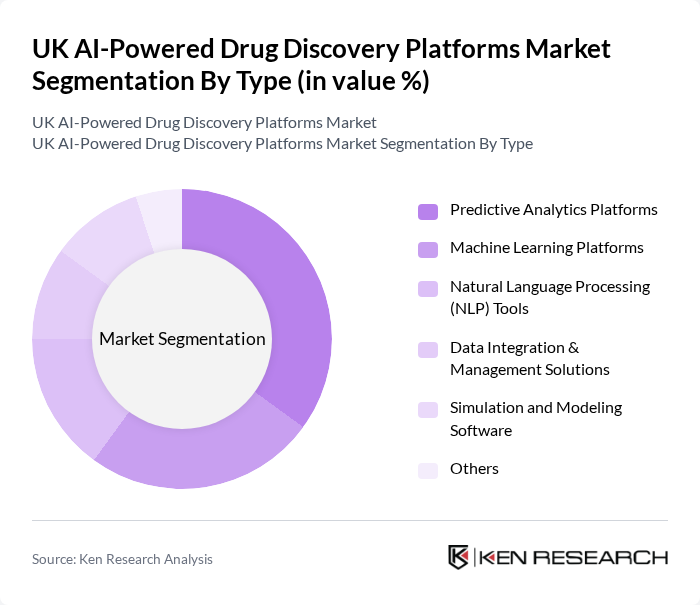
By Type:The market is segmented into various types, including Predictive Analytics Platforms, Machine Learning Platforms, Natural Language Processing (NLP) Tools, Data Integration & Management Solutions, Simulation and Modeling Software, and Others. Among these, Predictive Analytics Platforms are leading due to their ability to analyze vast datasets and predict drug interactions effectively. The demand for these platforms is driven by the need for faster and more accurate drug discovery processes, which are essential in today’s competitive pharmaceutical landscape. Machine Learning Platforms are also gaining traction for their role in automating complex tasks and enabling deep learning approaches in molecular analysis .
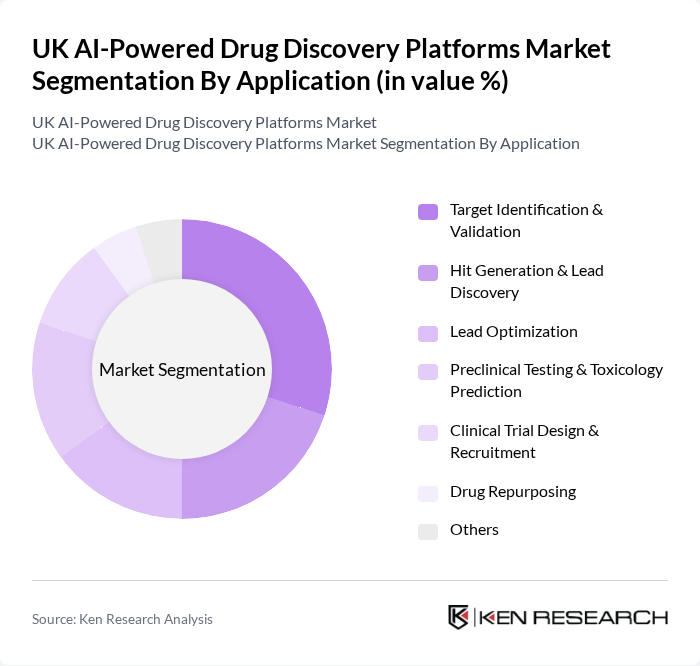
By Application:The applications of AI-powered drug discovery platforms include Target Identification & Validation, Hit Generation & Lead Discovery, Lead Optimization, Preclinical Testing & Toxicology Prediction, Clinical Trial Design & Recruitment, Drug Repurposing, and Others. The segment of Target Identification & Validation is currently dominating the market, as it is crucial for the early stages of drug development. The increasing focus on precision medicine and the need for targeted therapies are driving the demand for advanced tools that can accurately identify potential drug targets. Additionally, AI platforms are increasingly used for hit generation and lead optimization, supporting the development of novel therapeutics .
The UK AI-Powered Drug Discovery Platforms Market is characterized by a dynamic mix of regional and international players. Leading participants such as BenevolentAI, Exscientia, Healx, AstraZeneca, GSK (GlaxoSmithKline), DeepMatter Group, Arctoris, Optibrium, Eagle Genomics, IBM Watson Health, Insilico Medicine, Atomwise, Recursion Pharmaceuticals, Cyclica, BioSymetrics contribute to innovation, geographic expansion, and service delivery in this space.
The future of AI-powered drug discovery platforms in the UK appears promising, driven by ongoing technological advancements and increasing collaboration between biotech firms and tech companies. As the demand for personalized medicine continues to rise, the integration of AI into drug discovery processes will likely become more prevalent. Additionally, the focus on real-world evidence and data-driven decision-making will shape the development of innovative therapies, enhancing patient outcomes and streamlining drug development timelines.
| Segment | Sub-Segments |
|---|---|
| By Type | Predictive Analytics Platforms Machine Learning Platforms Natural Language Processing (NLP) Tools Data Integration & Management Solutions Simulation and Modeling Software Others |
| By Application | Target Identification & Validation Hit Generation & Lead Discovery Lead Optimization Preclinical Testing & Toxicology Prediction Clinical Trial Design & Recruitment Drug Repurposing Others |
| By End-User | Pharmaceutical Companies Biotechnology Firms Contract Research Organizations (CROs) Academic & Research Institutions Others |
| By Sales Channel | Direct Sales Online Platforms Distributors Strategic Partnerships & Alliances Others |
| By Region | England Scotland Wales Northern Ireland Others |
| By Investment Source | Venture Capital Government Grants Private Equity Corporate Investments Others |
| By Policy Support | Research and Development Tax Credits Innovation Grants Regulatory Support Programs Others |
| Scope Item/Segment | Sample Size | Target Respondent Profiles |
|---|---|---|
| AI Drug Discovery Platforms | 100 | CEOs, CTOs, and Founders of AI firms |
| Pharmaceutical R&D Departments | 80 | Lead Researchers, Project Managers |
| Healthcare Professionals | 70 | Clinical Researchers, Pharmacologists |
| Regulatory Bodies | 40 | Policy Makers, Compliance Officers |
| Investors in Biotech and AI | 50 | Venture Capitalists, Angel Investors |
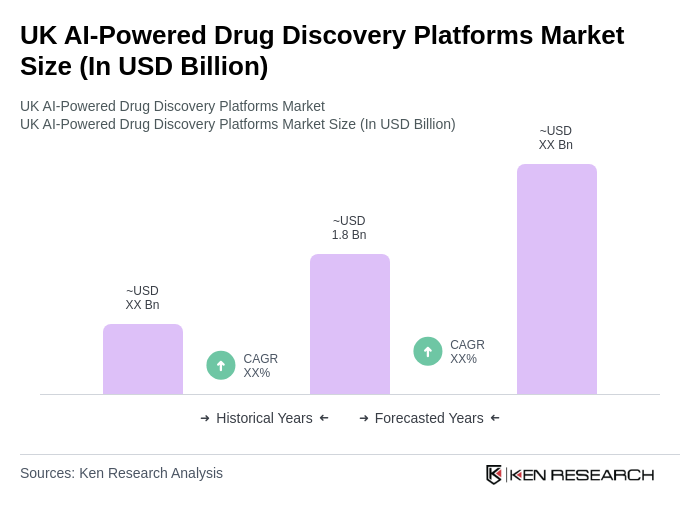
The UK AI-Powered Drug Discovery Platforms Market is valued at approximately USD 1.8 billion, reflecting significant growth driven by advancements in AI technologies and increased investments in personalized medicine.

What makes us stand out is that our consultants follow Robust, Refine and Result (RRR) methodology. Robust for clear definitions, approaches and sanity checking, Refine for differentiating respondents' facts and opinions, and Result for presenting data with story.

We have set a benchmark in the industry by offering our clients with syndicated and customized market research reports featuring coverage of entire market as well as meticulous research and analyst insights.

While we don't replace traditional research, we flip the method upside down. Our dual approach of Top Bottom & Bottom Top ensures quality deliverable by not just verifying company fundamentals but also looking at the sector and macroeconomic factors.

With one step in the future, our research team constantly tries to show you the bigger picture. We help with some of the tough questions you may encounter along the way: How is the industry positioned? Best marketing channel? KPI's of competitors? By aligning every element, we help maximize success.

Our report gives you instant access to the answers and sources that other companies might choose to hide. We elaborate each steps of research methodology we have used and showcase you the sample size to earn your trust.

If you need any support, we are here! We pride ourselves on universe strength, data quality, and quick, friendly, and professional service.













