Region:Europe
Author(s):Geetanshi
Product Code:KRAA3817
Pages:80
Published On:September 2025
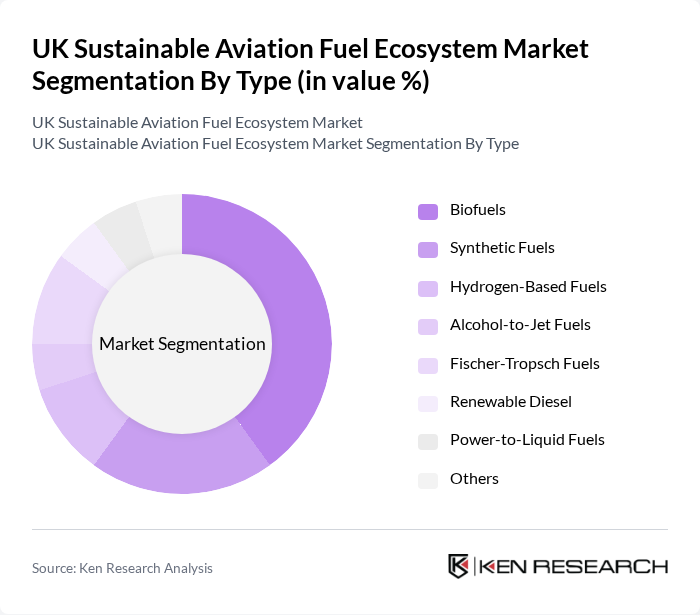
By Type:The market is segmented into biofuels, synthetic fuels, hydrogen-based fuels, alcohol-to-jet fuels, Fischer-Tropsch fuels, renewable diesel, power-to-liquid fuels, and others. Among these,biofuelsremain the leading segment, attributed to their mature production processes, compatibility with existing aviation infrastructure, and established supply chains. The segment’s growth is further propelled by regulatory incentives, airline commitments to emission reduction, and ongoing investments in feedstock and refining technologies .
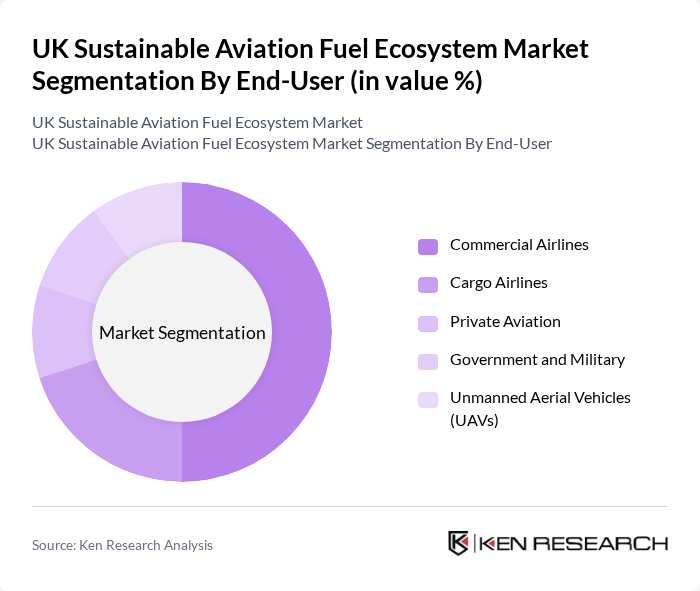
By End-User:The end-user segmentation includes commercial airlines, cargo airlines, private aviation, government and military, and unmanned aerial vehicles (UAVs).Commercial airlinesrepresent the dominant segment, driven by regulatory compliance requirements, sustainability commitments, and the scaling of airline-SAF producer partnerships. The segment’s expansion is further supported by voluntary industry targets and government incentives for SAF adoption .
The UK Sustainable Aviation Fuel Ecosystem Market features a dynamic mix of regional and international participants. Leading companies such as Neste Corporation, Velocys plc, LanzaTech Inc., British Airways, Shell Aviation, TotalEnergies SE, Air BP, Gevo, Inc., World Energy LLC, Aemetis, Inc., Carbon Clean, Fulcrum BioEnergy, Green Plains Inc., Johnson Matthey, and Phillips 66 Limited are driving innovation, capacity expansion, and strategic partnerships across the sector.
The future of the UK sustainable aviation fuel ecosystem appears promising, driven by increasing regulatory support and technological advancements. As the UK aims for net-zero emissions by 2050, investments in SAF production are expected to rise significantly. Collaborations between airlines and fuel producers will likely enhance supply chain efficiency, while consumer demand for greener travel options will further propel market growth. The focus on innovative feedstock utilization will also play a crucial role in shaping the industry's landscape.
| Segment | Sub-Segments |
|---|---|
| By Type | Biofuels Synthetic Fuels Hydrogen-Based Fuels Alcohol-to-Jet Fuels Fischer-Tropsch Fuels Renewable Diesel Power-to-Liquid Fuels Others |
| By End-User | Commercial Airlines Cargo Airlines Private Aviation Government and Military Unmanned Aerial Vehicles (UAVs) |
| By Application | Domestic Flights International Flights Charter Services |
| By Distribution Channel | Direct Sales Distributors Online Platforms |
| By Feedstock Type | Used Cooking Oil Agricultural Residues Forestry Residues Municipal Solid Waste Algae Jatropha Others |
| By Blending Platform | Below 30% Blend % to 50% Blend Above 50% Blend |
| By Manufacturing Technology | HEFA-SPK (Hydroprocessed Esters and Fatty Acids) FT-SPK (Fischer-Tropsch Synthetic Paraffinic Kerosene) ATJ-SPK (Alcohol-to-Jet Synthetic Paraffinic Kerosene) CHJ (Catalytic Hydrothermolysis Jet) SIP (Synthesized Iso-Paraffins) Power-to-Liquid |
| By Regulatory Compliance | EU RED II Compliance UK RTFO Compliance ICAO CORSIA Compliance |
| By Policy Support | Subsidies Tax Exemptions Grants for R&D |
| Scope Item/Segment | Sample Size | Target Respondent Profiles |
|---|---|---|
| Airline Fuel Procurement | 100 | Fuel Managers, Procurement Officers |
| SAF Production Facilities | 60 | Plant Managers, Operations Directors |
| Regulatory Bodies | 40 | Policy Makers, Environmental Analysts |
| Research Institutions | 50 | Research Scientists, Sustainability Experts |
| Airline Sustainability Initiatives | 50 | Sustainability Officers, Corporate Social Responsibility Managers |
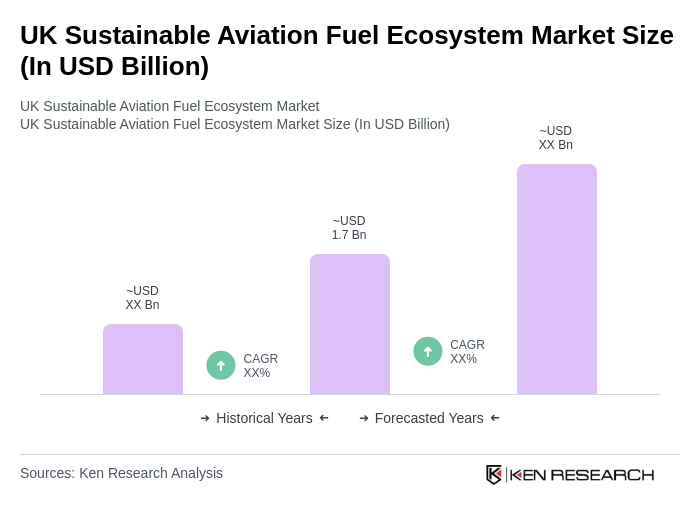
The UK Sustainable Aviation Fuel Ecosystem Market is valued at approximately USD 1.7 billion, driven by regulatory mandates, consumer demand for sustainable travel, and investments in research and production capacity for alternative fuels.

What makes us stand out is that our consultants follow Robust, Refine and Result (RRR) methodology. Robust for clear definitions, approaches and sanity checking, Refine for differentiating respondents' facts and opinions, and Result for presenting data with story.

We have set a benchmark in the industry by offering our clients with syndicated and customized market research reports featuring coverage of entire market as well as meticulous research and analyst insights.

While we don't replace traditional research, we flip the method upside down. Our dual approach of Top Bottom & Bottom Top ensures quality deliverable by not just verifying company fundamentals but also looking at the sector and macroeconomic factors.

With one step in the future, our research team constantly tries to show you the bigger picture. We help with some of the tough questions you may encounter along the way: How is the industry positioned? Best marketing channel? KPI's of competitors? By aligning every element, we help maximize success.

Our report gives you instant access to the answers and sources that other companies might choose to hide. We elaborate each steps of research methodology we have used and showcase you the sample size to earn your trust.

If you need any support, we are here! We pride ourselves on universe strength, data quality, and quick, friendly, and professional service.













