Region:North America
Author(s):Geetanshi
Product Code:KRAB3445
Pages:95
Published On:October 2025
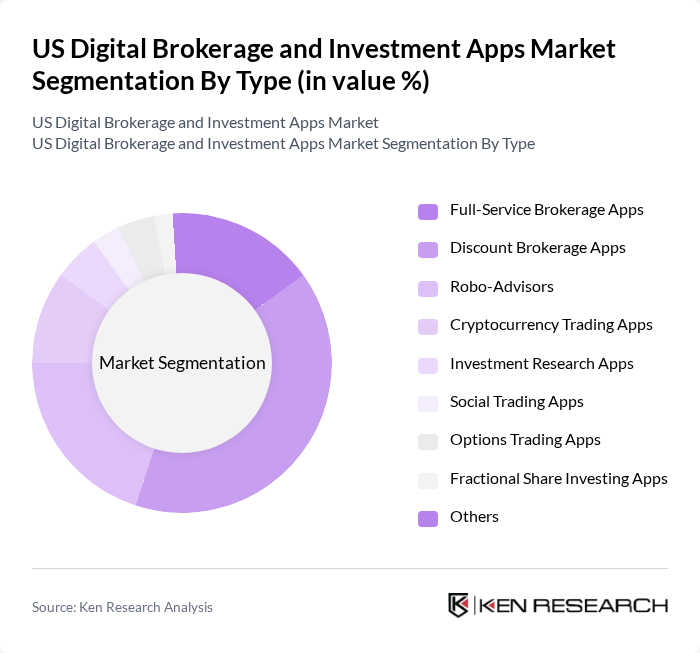
By Type:The market is segmented into various types of digital brokerage and investment apps, including Full-Service Brokerage Apps, Discount Brokerage Apps, Robo-Advisors, Cryptocurrency Trading Apps, Investment Research Apps, Social Trading Apps, Options Trading Apps, Fractional Share Investing Apps, and Others. Discount Brokerage Apps continue to lead the market, driven by their commission-free trading models, intuitive user interfaces, and appeal to cost-sensitive retail investors. Robo-advisors and cryptocurrency trading apps are also experiencing rapid growth, reflecting evolving investor preferences for automated and diversified investment solutions .
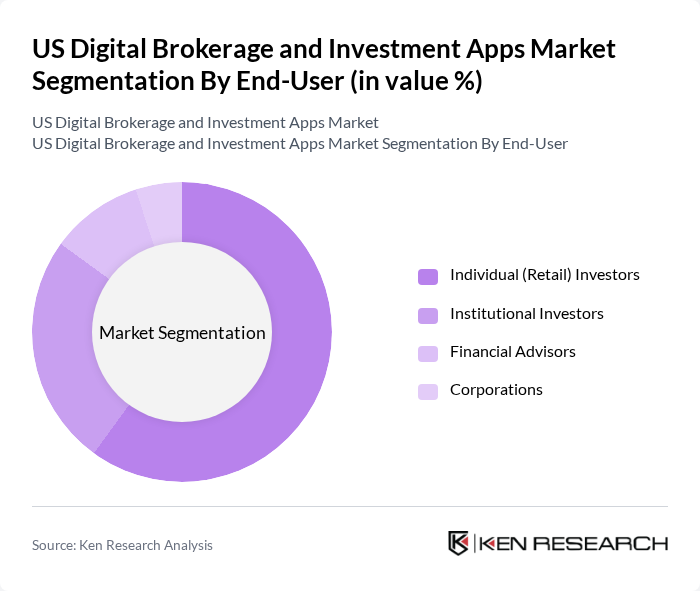
By End-User:The market is segmented by end-users, including Individual (Retail) Investors, Institutional Investors, Financial Advisors, and Corporations. Individual (Retail) Investors dominate the market, accounting for the majority share, propelled by the proliferation of mobile trading platforms and a growing focus on personal finance among millennials and Gen Z. The increasing availability of educational resources and simplified onboarding processes further supports retail investor growth .
The US Digital Brokerage and Investment Apps Market is characterized by a dynamic mix of regional and international players. Leading participants such as Charles Schwab Corporation, Fidelity Investments, Robinhood Markets, Inc., E*TRADE Financial Holdings, LLC, TD Ameritrade, Inc., Interactive Brokers Group, Inc., SoFi Technologies, Inc., Webull Financial LLC, Merrill (Bank of America Corporation), Acorns Grow Incorporated, Stash Financial, Inc., Public Holdings, Inc., Betterment LLC, Wealthfront Corporation, tastytrade, Inc., Ally Invest (Ally Financial Inc.), M1 Finance LLC, TradeStation Group, Inc. contribute to innovation, geographic expansion, and service delivery in this space.
The future of the U.S. digital brokerage and investment apps market appears promising, driven by ongoing technological advancements and a growing base of retail investors. As platforms continue to innovate, integrating features like AI-driven analytics and personalized investment strategies, user engagement is expected to rise. Additionally, the increasing focus on sustainable investing will likely attract a new demographic of socially conscious investors, further expanding the market. Overall, the landscape is set for dynamic growth, with firms adapting to evolving consumer preferences and regulatory environments.
| Segment | Sub-Segments |
|---|---|
| By Type | Full-Service Brokerage Apps Discount Brokerage Apps Robo-Advisors Cryptocurrency Trading Apps Investment Research Apps Social Trading Apps Options Trading Apps Fractional Share Investing Apps Others |
| By End-User | Individual (Retail) Investors Institutional Investors Financial Advisors Corporations |
| By Investment Type | Stocks Bonds ETFs Mutual Funds Options Cryptocurrencies Commodities Others |
| By User Experience | Beginner-Friendly Apps Advanced Trading Platforms Educational Apps Gamified Investment Apps |
| By Payment Method | Bank Transfers Credit/Debit Cards Digital Wallets ACH Transfers Others |
| By Geographic Focus | National Focus Regional Focus Global Focus |
| By Customer Support Type | In-App Support Phone Support Email Support Live Chat Support Community Forums Others |
| Scope Item/Segment | Sample Size | Target Respondent Profiles |
|---|---|---|
| Retail Investor Usage Patterns | 100 | Individual Investors, Financial Planners |
| Institutional Investor Insights | 60 | Portfolio Managers, Investment Analysts |
| App Feature Preferences | 80 | Active Traders, Casual Investors |
| Regulatory Impact on App Usage | 50 | Compliance Officers, Legal Advisors |
| Market Trends and Future Outlook | 40 | Market Researchers, Economic Analysts |
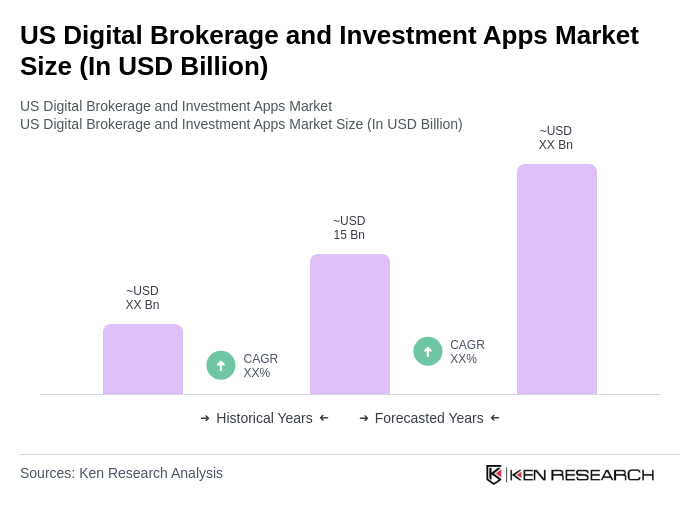
The US Digital Brokerage and Investment Apps Market is valued at approximately USD 15 billion, reflecting significant growth driven by increased retail investing, mobile technology adoption, and the democratization of financial services.

What makes us stand out is that our consultants follow Robust, Refine and Result (RRR) methodology. Robust for clear definitions, approaches and sanity checking, Refine for differentiating respondents' facts and opinions, and Result for presenting data with story.

We have set a benchmark in the industry by offering our clients with syndicated and customized market research reports featuring coverage of entire market as well as meticulous research and analyst insights.

While we don't replace traditional research, we flip the method upside down. Our dual approach of Top Bottom & Bottom Top ensures quality deliverable by not just verifying company fundamentals but also looking at the sector and macroeconomic factors.

With one step in the future, our research team constantly tries to show you the bigger picture. We help with some of the tough questions you may encounter along the way: How is the industry positioned? Best marketing channel? KPI's of competitors? By aligning every element, we help maximize success.

Our report gives you instant access to the answers and sources that other companies might choose to hide. We elaborate each steps of research methodology we have used and showcase you the sample size to earn your trust.

If you need any support, we are here! We pride ourselves on universe strength, data quality, and quick, friendly, and professional service.













