About the Report
Base Year 2024US Flip Flops Market Overview
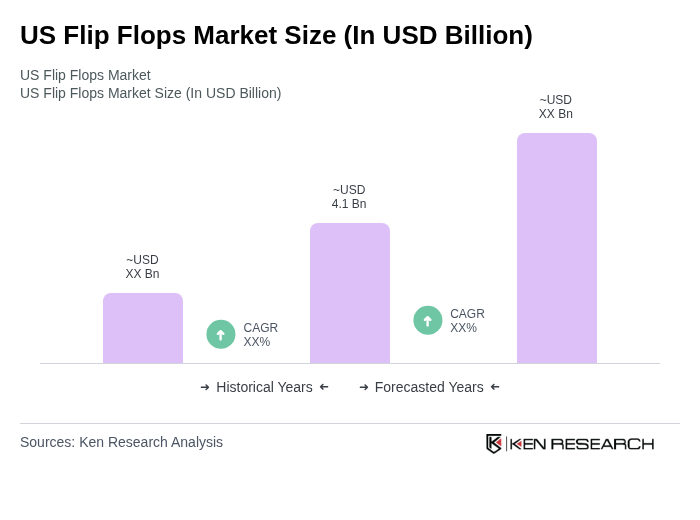
- The U.S. flip flops market is valued at approximately USD 4.1 billion, based on a five?year historical analysis. This growth is primarily driven by increasing consumer demand for casual and comfortable footwear, particularly during the summer months and vacation seasons. The rise in outdoor leisure, resort travel, and beach?oriented tourism continues to support demand for flip flops as preferred footwear for relaxation and low?intensity outdoor activities.
- Key cities dominating the U.S. flip flops market include large coastal and warm?weather metros such as Miami, Los Angeles, and other Sun Belt and coastal tourism hubs, supported by strong beach culture, resort retail, and tourism flows; New York and other major cities contribute significant sales via fashion?driven and lifestyle retail, but available data generally groups performance at the national level rather than by individual city. These locations benefit from high tourist traffic, dense retail networks (including specialty surf shops and department stores), and strong brand presence from leading global and U.S. footwear companies active in the flip flops category.
- In 2023, the U.S. government implemented and advanced broader sustainability?related policies (for example on emissions, waste, and chemicals) and supported voluntary frameworks that affect apparel and footwear supply chains. Sustainability in the U.S. flip flops market is being driven largely by brand?led initiatives—such as the use of bio?based or recycled materials and take?back programs—and by consumer preference for eco?friendly products, which is pushing more brands to introduce environmentally oriented flip flop lines.
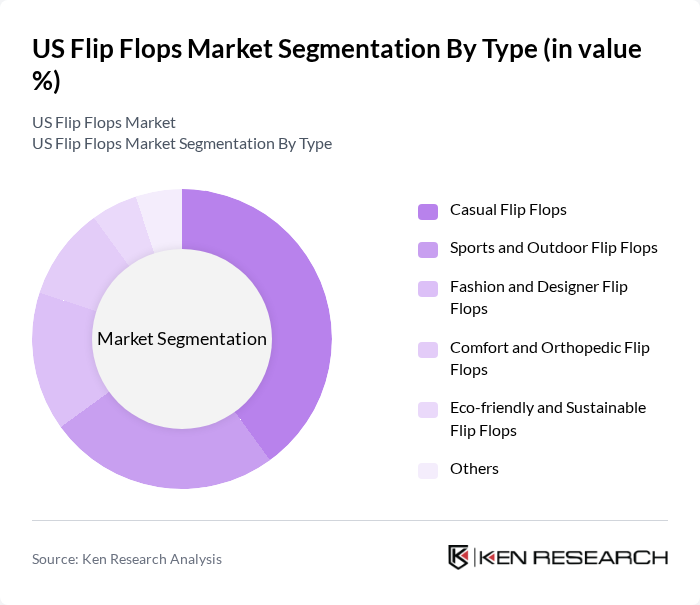
US Flip Flops Market Segmentation
By Type:The market is segmented into various types of flip flops, including Casual Flip Flops, Sports and Outdoor Flip Flops, Fashion and Designer Flip Flops, Comfort and Orthopedic Flip Flops, Eco?friendly and Sustainable Flip Flops, and Others. Among these, Casual Flip Flops dominate the market due to their versatility and comfort, appealing to a wide range of consumers. The trend towards casual wear has further solidified their position, as more people opt for comfortable footwear in everyday settings.
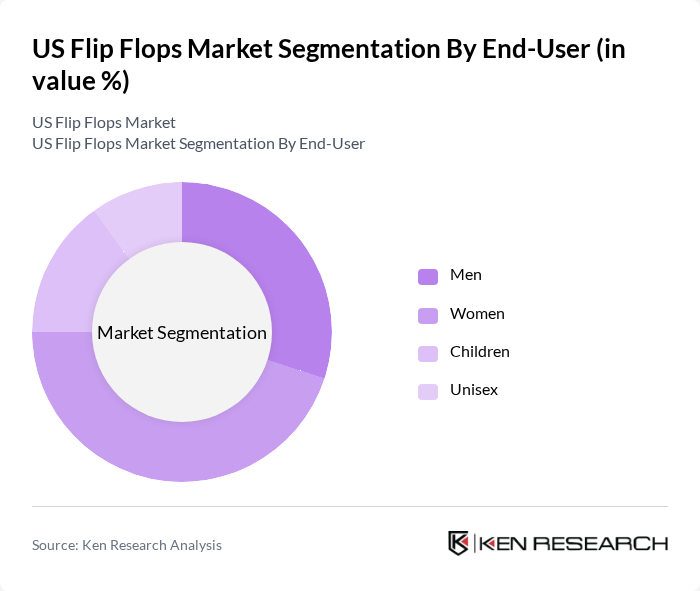
By End-User:The end-user segmentation includes Men, Women, Children, and Unisex. The Women’s segment leads the market, driven by a higher preference for stylish and comfortable footwear options. Women are more likely to purchase multiple pairs for different occasions, contributing to the segment's growth. Additionally, the increasing trend of gender-neutral fashion has also bolstered the Unisex category, appealing to a broader audience.
US Flip Flops Market Competitive Landscape
The U.S. flip flops market is characterized by a dynamic mix of regional and international players. Leading participants such as Havaianas (Alpargatas S.A.), Reef (a brand historically associated with surf footwear), Crocs, Inc., Adidas AG, Nike, Inc., Teva (Deckers Outdoor Corporation), Old Navy (Gap Inc.), OOFOS LLC, Sanuk (Deckers Outdoor Corporation), Quiksilver and Roxy (Boardriders, Inc.), Skechers U.S.A., Inc., Tommy Bahama Group, Inc., Vionic Group LLC, and Merrell (Wolverine World Wide, Inc.) contribute to innovation, geographic expansion, and service delivery in this space.
US Flip Flops Market Industry Analysis
Growth Drivers
- Increased Consumer Spending:The US economy is projected to grow by approximately $1.2 trillion in the future, driven by rising disposable incomes. As consumer confidence improves, spending on non-essential items, including footwear, is expected to rise. In the future, the average American household spent about $1,200 on apparel and footwear, indicating a strong market for flip flops. This trend is likely to continue, providing a solid foundation for growth in the flip flop segment.
- Seasonal Demand Surge:The US experiences a significant increase in flip flop sales during the summer months, with sales peaking at around 200 million pairs in June alone. The National Oceanic and Atmospheric Administration (NOAA) forecasts a warmer-than-average summer in the future, which is expected to boost outdoor activities and increase demand for casual footwear. This seasonal trend is a critical driver for the flip flop market, as consumers seek comfortable options for leisure and travel.
- Growing Health and Wellness Trends:The health and wellness industry in the US is projected to reach $6 trillion by the future, with consumers increasingly prioritizing comfort in their footwear choices. Flip flops, known for their lightweight and breathable design, align with this trend. The American Podiatric Medical Association reports that 70% of Americans experience foot pain, leading many to seek comfortable footwear solutions, further driving the demand for flip flops as a preferred choice.
Market Challenges
- Intense Competition:The US flip flop market is characterized by intense competition, with over 200 brands vying for market share. Major players like Nike and Adidas dominate, accounting for approximately 40% of total sales. This competitive landscape pressures smaller brands to innovate and differentiate their products. As a result, profit margins are squeezed, making it challenging for new entrants to establish a foothold in the market.
- Environmental Concerns:The flip flop industry faces increasing scrutiny regarding environmental sustainability. In the future, approximately 300 million pairs of flip flops were discarded, contributing to significant plastic waste. As consumers become more eco-conscious, brands are pressured to adopt sustainable practices. This shift may require substantial investment in eco-friendly materials and production processes, posing a challenge for companies that are slow to adapt to these changing consumer preferences.
US Flip Flops Market Future Outlook
The US flip flop market is poised for continued growth, driven by evolving consumer preferences and economic recovery. As disposable incomes rise, consumers are likely to invest more in casual footwear. Additionally, the trend towards sustainability will push brands to innovate with eco-friendly materials. The anticipated warmer climate in the future will further enhance seasonal demand, while health-conscious consumers will increasingly seek comfortable footwear options, solidifying flip flops as a staple in American wardrobes.
Market Opportunities
- Sustainable Product Lines:There is a growing opportunity for brands to develop eco-friendly flip flops using recycled materials. With 70% of consumers expressing interest in sustainable products, companies that invest in green initiatives can capture a significant market share. This shift not only meets consumer demand but also enhances brand loyalty and reputation in an increasingly eco-conscious market.
- Expansion into E-commerce:E-commerce sales in the footwear sector are expected to exceed $50 billion in the future. Brands that enhance their online presence and optimize their digital marketing strategies can tap into this lucrative market. By offering direct-to-consumer sales and personalized shopping experiences, companies can reach a broader audience and increase sales, particularly among younger consumers who prefer online shopping.
Scope of the Report
| Segment | Sub-Segments |
|---|---|
| By Type | Casual Flip Flops Sports and Outdoor Flip Flops Fashion and Designer Flip Flops Comfort and Orthopedic Flip Flops Eco-friendly and Sustainable Flip Flops Others |
| By End-User | Men Women Children Unisex |
| By Distribution Channel | Offline Retail (Specialty Footwear Stores) Offline Retail (Supermarkets, Hypermarkets, and Department Stores) Brand-owned Stores and Direct-to-Consumer Online Marketplaces Brand E-commerce Platforms Others |
| By Material | Rubber EVA (Ethylene Vinyl Acetate) PU and Other Synthetics Leather Recycled and Bio-based Materials Others |
| By Price Range | Economy Mid-range Premium Luxury |
| By Occasion | Beach and Pool Everyday Casual Wear Travel and Vacation Sports and Recovery Others |
| By Brand Orientation | Mass-market Brands Sports and Outdoor Brands Fashion and Lifestyle Brands Private Label and Store Brands |
Key Target Audience
Investors and Venture Capitalist Firms
Government and Regulatory Bodies (e.g., Consumer Product Safety Commission, Environmental Protection Agency)
Manufacturers and Producers
Distributors and Retailers
Footwear Design and Innovation Firms
Trade Associations (e.g., Footwear Distributors and Retailers of America)
Logistics and Supply Chain Companies
Marketing and Advertising Agencies
Players Mentioned in the Report:
Havaianas (Alpargatas S.A.)
Reef (Rockport Company, LLC)
Crocs, Inc.
Adidas AG
Nike, Inc.
Teva (Deckers Outdoor Corporation)
Old Navy (Gap Inc.)
OOFOS LLC
Sanuk (Deckers Outdoor Corporation)
Quiksilver (Boardriders, Inc.)
Skechers U.S.A., Inc.
Tommy Bahama Group, Inc.
Vionic Group LLC
Merrell (Wolverine World Wide, Inc.)
Roxy (Boardriders, Inc.)
Table of Contents
Research Methodology
Phase 1: Approach1
Desk Research
- Analysis of industry reports from footwear associations and market research firms
- Review of consumer behavior studies and trend reports specific to flip flops
- Examination of sales data from major retailers and e-commerce platforms
Primary Research
- Interviews with product managers at leading flip flop manufacturers
- Surveys targeting consumers to understand preferences and buying habits
- Focus groups with retail staff to gather insights on customer interactions
Validation & Triangulation
- Cross-validation of findings with sales data and consumer feedback
- Triangulation of insights from interviews, surveys, and market reports
- Sanity checks through expert reviews from industry veterans
Phase 2: Market Size Estimation1
Top-down Assessment
- Estimation of total market size based on footwear industry growth rates
- Segmentation by demographics, including age, gender, and geographic location
- Incorporation of seasonal trends and their impact on flip flop sales
Bottom-up Modeling
- Collection of sales volume data from key retailers and online platforms
- Analysis of average selling prices across different flip flop categories
- Calculation of market size based on unit sales and revenue generation
Forecasting & Scenario Analysis
- Utilization of historical sales data to project future growth trends
- Scenario modeling based on economic indicators and consumer spending patterns
- Development of best-case, worst-case, and most-likely market scenarios through 2030
Phase 3: CATI Sample Composition1
| Scope Item/Segment | Sample Size | Target Respondent Profiles |
|---|---|---|
| Consumer Preferences for Flip Flops | 120 | General Consumers, Fashion Enthusiasts |
| Retail Insights on Flip Flop Sales | 90 | Store Managers, Sales Associates |
| Manufacturing Perspectives on Production Trends | 70 | Production Managers, Supply Chain Analysts |
| Market Trends from E-commerce Platforms | 80 | E-commerce Managers, Digital Marketing Specialists |
| Seasonal Buying Behavior Analysis | 60 | Seasonal Shoppers, Trend Analysts |
Frequently Asked Questions
What is the current value of the US flip flops market?
The US flip flops market is valued at approximately USD 4.1 billion, driven by increasing consumer demand for casual and comfortable footwear, especially during summer and vacation seasons.
Which cities are the largest markets for flip flops in the US?
What types of flip flops are most popular in the US market?
Who are the primary consumers of flip flops in the US?
Other Regional/Country Reports
Indonesia Flip Flops Market
Malaysia Flip Flops Market
KSA Flip Flops Market
APAC Flip Flops Market
SEA Flip Flops Market
Other Adjacent Reports
Germany Sandals Market
Egypt Slippers Market
Egypt Beachwear Market
Singapore Swimwear Market
KSA Casual Footwear Market
South Africa Athletic Footwear Market
Bahrain Orthopedic Footwear Market
Kuwait Sustainable Footwear Market
Qatar Childrens Footwear Market
Brazil Fashion Footwear Market
Why Buy From Us?

What makes us stand out is that our consultants follow Robust, Refine and Result (RRR) methodology. Robust for clear definitions, approaches and sanity checking, Refine for differentiating respondents' facts and opinions, and Result for presenting data with story.

We have set a benchmark in the industry by offering our clients with syndicated and customized market research reports featuring coverage of entire market as well as meticulous research and analyst insights.

While we don't replace traditional research, we flip the method upside down. Our dual approach of Top Bottom & Bottom Top ensures quality deliverable by not just verifying company fundamentals but also looking at the sector and macroeconomic factors.

With one step in the future, our research team constantly tries to show you the bigger picture. We help with some of the tough questions you may encounter along the way: How is the industry positioned? Best marketing channel? KPI's of competitors? By aligning every element, we help maximize success.

Our report gives you instant access to the answers and sources that other companies might choose to hide. We elaborate each steps of research methodology we have used and showcase you the sample size to earn your trust.

If you need any support, we are here! We pride ourselves on universe strength, data quality, and quick, friendly, and professional service.