About the Report
Base Year 2024Us Food Service Restaurant Market Overview
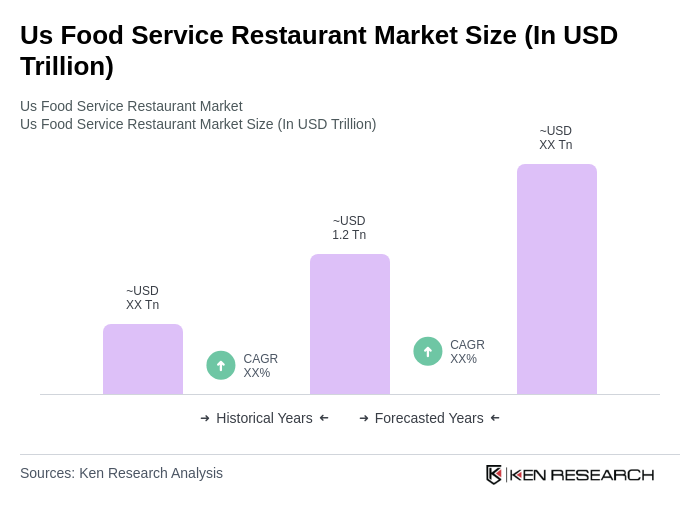
- The Us Food Service Restaurant Market is valued at USD 1.2 trillion, based on a five-year historical analysis. This growth is primarily driven by increasing consumer demand for convenience, the rise of food delivery services, and a growing trend towards dining out. The market has seen a significant shift towards digital ordering and delivery platforms, which have become essential for many restaurants to reach their customers effectively.
- Key players in this market include major cities such as New York, Los Angeles, and Chicago, which dominate due to their large populations, diverse culinary scenes, and high tourist traffic. These urban centers are hubs for innovation in food service, with a high concentration of both independent and chain restaurants that cater to a wide range of consumer preferences.
- The U.S. government continues to implement regulations aimed at improving food safety standards in the restaurant industry. The Food Safety Modernization Act (FSMA) mandates stricter guidelines for food handling and preparation, ensuring that restaurants maintain high hygiene standards to protect public health.
Us Food Service Restaurant Market Segmentation
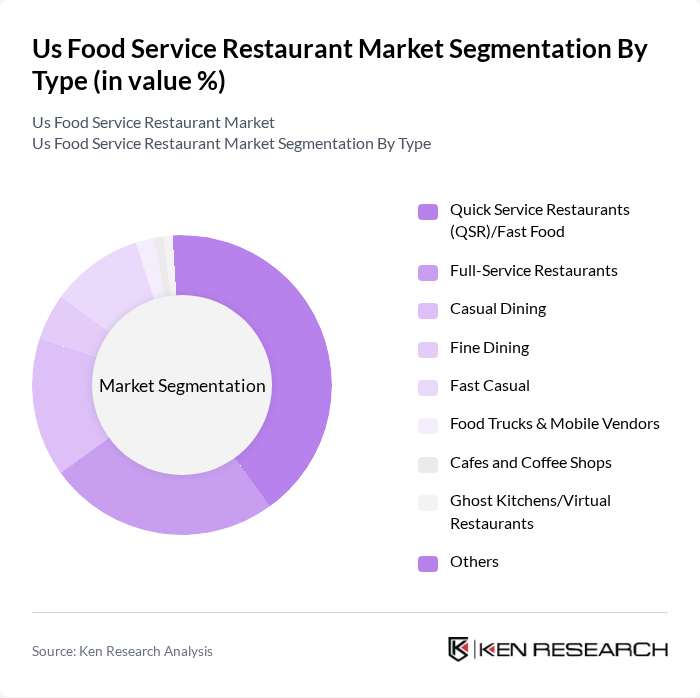
By Type:The market is segmented into various types of food service establishments, including Quick Service Restaurants (QSR)/Fast Food, Full-Service Restaurants, Casual Dining, Fine Dining, Fast Casual, Food Trucks & Mobile Vendors, Cafes and Coffee Shops, Ghost Kitchens/Virtual Restaurants, and Others. Each of these segments caters to different consumer preferences and dining experiences. Quick Service Restaurants remain the dominant segment, driven by consumer preference for convenience and affordability. Fast Casual and Ghost Kitchens are experiencing growth due to demand for flexible, tech-enabled dining options.
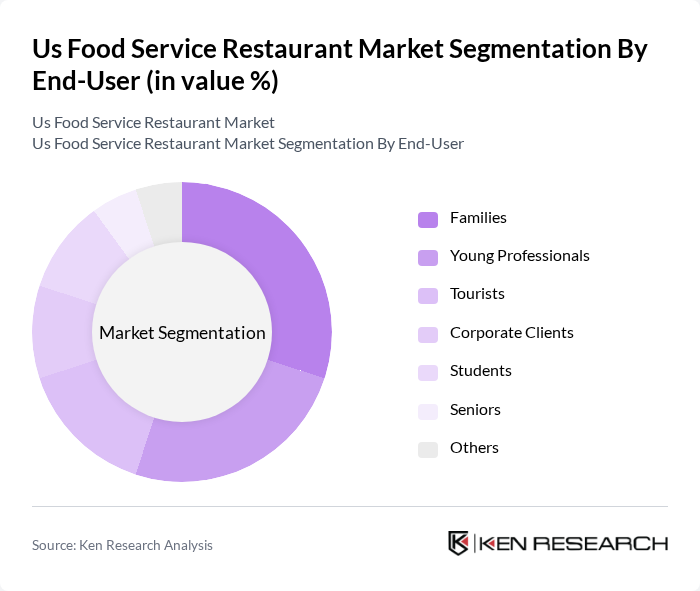
By End-User:The end-user segmentation includes Families, Young Professionals, Tourists, Corporate Clients, Students, Seniors, and Others. Each group has distinct dining preferences and spending habits, influencing the types of food service establishments that thrive in the market. Families and young professionals are the largest consumer groups, with young professionals driving demand for fast casual and delivery-focused formats.
Us Food Service Restaurant Market Competitive Landscape
The Us Food Service Restaurant Market is characterized by a dynamic mix of regional and international players. Leading participants such as McDonald's Corporation, Starbucks Corporation, Yum! Brands, Inc. (KFC, Taco Bell, Pizza Hut), Domino's Pizza, Inc., Chipotle Mexican Grill, Inc., Darden Restaurants, Inc. (Olive Garden, LongHorn Steakhouse), Restaurant Brands International Inc. (Burger King, Popeyes, Tim Hortons), Panera Bread Company, Shake Shack Inc., Wingstop Inc., Bloomin' Brands, Inc. (Outback Steakhouse, Carrabba's Italian Grill), Brinker International, Inc. (Chili's Grill & Bar, Maggiano's Little Italy), Cracker Barrel Old Country Store, Inc., Texas Roadhouse, Inc., BJ's Restaurants, Inc., Inspire Brands, Inc. (Arby's, Dunkin', Sonic Drive-In, Buffalo Wild Wings), The Wendy's Company, Papa John's International, Inc., JAB Holding Company (Krispy Kreme, Panera Bread, Pret A Manger), CAVA Group, Inc. contribute to innovation, geographic expansion, and service delivery in this space.
Us Food Service Restaurant Market Industry Analysis
Growth Drivers
- Increasing Consumer Demand for Convenience:The U.S. food service restaurant market is experiencing a surge in consumer demand for convenience, with 65% of consumers preferring quick-service options. According to the National Restaurant Association, in future is projected to see a 12% increase in off-premise dining, driven by busy lifestyles and the desire for time-saving meal solutions. This trend is further supported by the rise of mobile ordering, which is expected to account for $40 billion in sales, reflecting a significant shift in consumer behavior.
- Growth of Online Food Delivery Services:The online food delivery sector is projected to reach $30 billion, fueled by the increasing adoption of technology and changing consumer preferences. A report from IBISWorld indicates that the number of online food delivery orders is expected to grow by 18% annually. This growth is driven by the convenience of app-based services, with 45% of consumers using delivery apps at least once a week, highlighting a significant shift in dining habits.
- Rising Health Consciousness Among Consumers:Health consciousness is reshaping the U.S. food service landscape, with 75% of consumers actively seeking healthier menu options. The market for health-focused dining is projected to grow by $25 billion, as restaurants increasingly offer plant-based and organic choices. According to Mintel, 55% of consumers are willing to pay more for healthier meals, indicating a strong demand for nutritious offerings that cater to evolving dietary preferences.
Market Challenges
- Labor Shortages in the Food Service Industry:The U.S. food service industry is grappling with a significant labor shortage, with an estimated 1.5 million job vacancies in future. The Bureau of Labor Statistics reports that the sector's unemployment rate remains at 5.5%, higher than the national average. This shortage is exacerbated by rising wages, with many restaurants increasing pay to attract talent, leading to increased operational costs and potential service disruptions.
- Rising Food Costs and Supply Chain Disruptions:Food costs are projected to rise by 10%, driven by inflation and supply chain disruptions. The U.S. Department of Agriculture reports that commodity prices for key ingredients, such as meat and dairy, have surged by 18% over the past year. These rising costs are forcing restaurants to either increase menu prices or absorb the costs, impacting profitability and consumer spending behavior.
Us Food Service Restaurant Market Future Outlook
The U.S. food service restaurant market is poised for transformation as it adapts to evolving consumer preferences and technological advancements. The integration of AI and automation is expected to streamline operations, enhancing efficiency and customer experience. Additionally, sustainability practices will become increasingly important, with restaurants focusing on eco-friendly sourcing and waste reduction. As the market navigates challenges, innovative solutions will drive growth and reshape the dining landscape, positioning the industry for a resilient future.
Market Opportunities
- Growth in Plant-Based Menu Offerings:The demand for plant-based options is surging, with a projected market value of $15 billion. Restaurants that expand their plant-based offerings can attract health-conscious consumers and capitalize on this growing trend. This shift not only meets consumer demand but also aligns with sustainability goals, providing a competitive edge in a crowded market.
- Technological Innovations in Ordering Systems:The adoption of advanced ordering systems, including AI-driven platforms, is expected to enhance customer engagement and streamline operations. In future, restaurants implementing these technologies could see a 25% increase in order accuracy and a 20% reduction in wait times. This innovation presents a significant opportunity for restaurants to improve service quality and customer satisfaction.
Scope of the Report
| Segment | Sub-Segments |
|---|---|
| By Type | Quick Service Restaurants (QSR)/Fast Food Full-Service Restaurants Casual Dining Fine Dining Fast Casual Food Trucks & Mobile Vendors Cafes and Coffee Shops Ghost Kitchens/Virtual Restaurants Others |
| By End-User | Families Young Professionals Tourists Corporate Clients Students Seniors Others |
| By Service Type | Dine-In Takeout Delivery (including third-party platforms) Catering Drive-Thru Others |
| By Cuisine Type | American Italian Asian (Chinese, Japanese, Thai, etc.) Mexican Mediterranean Middle Eastern Others |
| By Price Range | Budget Mid-Range Premium Luxury Others |
| By Location | Urban Suburban Rural Highway/Travel Centers Others |
| By Franchise vs Independent | Franchise Independent Chain-Owned Others |
Key Target Audience
Investors and Venture Capitalist Firms
Government and Regulatory Bodies (e.g., U.S. Food and Drug Administration, U.S. Department of Agriculture)
Manufacturers and Producers
Distributors and Retailers
Food Service Equipment Suppliers
Franchise Owners and Operators
Food Safety and Quality Assurance Organizations
Logistics and Supply Chain Management Firms
Players Mentioned in the Report:
McDonald's Corporation
Starbucks Corporation
Yum! Brands, Inc. (KFC, Taco Bell, Pizza Hut)
Domino's Pizza, Inc.
Chipotle Mexican Grill, Inc.
Darden Restaurants, Inc. (Olive Garden, LongHorn Steakhouse)
Restaurant Brands International Inc. (Burger King, Popeyes, Tim Hortons)
Panera Bread Company
Shake Shack Inc.
Wingstop Inc.
Bloomin' Brands, Inc. (Outback Steakhouse, Carrabba's Italian Grill)
Brinker International, Inc. (Chili's Grill & Bar, Maggiano's Little Italy)
Cracker Barrel Old Country Store, Inc.
Texas Roadhouse, Inc.
BJ's Restaurants, Inc.
Inspire Brands, Inc. (Arby's, Dunkin', Sonic Drive-In, Buffalo Wild Wings)
The Wendy's Company
Papa John's International, Inc.
JAB Holding Company (Krispy Kreme, Panera Bread, Pret A Manger)
CAVA Group, Inc.
Table of Contents
Market Assessment Phase
1. Executive Summary and Approach
2. Us Food Service Restaurant Market Overview
2.1 Key Insights and Strategic Recommendations
2.2 Us Food Service Restaurant Market Overview
2.3 Definition and Scope
2.4 Evolution of Market Ecosystem
2.5 Timeline of Key Regulatory Milestones
2.6 Value Chain & Stakeholder Mapping
2.7 Business Cycle Analysis
2.8 Policy & Incentive Landscape
3. Us Food Service Restaurant Market Analysis
3.1 Growth Drivers
3.1.1 Increasing Consumer Demand for Convenience
3.1.2 Growth of Online Food Delivery Services
3.1.3 Rising Health Consciousness Among Consumers
3.1.4 Expansion of Fast Casual Dining Options
3.2 Market Challenges
3.2.1 Labor Shortages in the Food Service Industry
3.2.2 Rising Food Costs and Supply Chain Disruptions
3.2.3 Intense Competition Among Restaurants
3.2.4 Regulatory Compliance and Health Standards
3.3 Market Opportunities
3.3.1 Growth in Plant-Based Menu Offerings
3.3.2 Technological Innovations in Ordering Systems
3.3.3 Expansion into Untapped Markets
3.3.4 Partnerships with Local Food Producers
3.4 Market Trends
3.4.1 Increased Focus on Sustainability Practices
3.4.2 Rise of Ghost Kitchens and Virtual Brands
3.4.3 Integration of AI and Automation in Operations
3.4.4 Shift Towards Healthier Menu Options
3.5 Government Regulation
3.5.1 Food Safety Regulations and Compliance
3.5.2 Labor Laws and Minimum Wage Increases
3.5.3 Health and Nutrition Labeling Requirements
3.5.4 Environmental Regulations on Waste Management
4. SWOT Analysis
5. Stakeholder Analysis
6. Porter's Five Forces Analysis
7. Us Food Service Restaurant Market Market Size, 2019-2024
7.1 By Value
7.2 By Volume
7.3 By Average Selling Price
8. Us Food Service Restaurant Market Segmentation
8.1 By Type
8.1.1 Quick Service Restaurants (QSR)/Fast Food
8.1.2 Full-Service Restaurants
8.1.3 Casual Dining
8.1.4 Fine Dining
8.1.5 Fast Casual
8.1.6 Food Trucks & Mobile Vendors
8.1.7 Cafes and Coffee Shops
8.1.8 Ghost Kitchens/Virtual Restaurants
8.1.9 Others
8.2 By End-User
8.2.1 Families
8.2.2 Young Professionals
8.2.3 Tourists
8.2.4 Corporate Clients
8.2.5 Students
8.2.6 Seniors
8.2.7 Others
8.3 By Service Type
8.3.1 Dine-In
8.3.2 Takeout
8.3.3 Delivery (including third-party platforms)
8.3.4 Catering
8.3.5 Drive-Thru
8.3.6 Others
8.4 By Cuisine Type
8.4.1 American
8.4.2 Italian
8.4.3 Asian (Chinese, Japanese, Thai, etc.)
8.4.4 Mexican
8.4.5 Mediterranean
8.4.6 Middle Eastern
8.4.7 Others
8.5 By Price Range
8.5.1 Budget
8.5.2 Mid-Range
8.5.3 Premium
8.5.4 Luxury
8.5.5 Others
8.6 By Location
8.6.1 Urban
8.6.2 Suburban
8.6.3 Rural
8.6.4 Highway/Travel Centers
8.6.5 Others
8.7 By Franchise vs Independent
8.7.1 Franchise
8.7.2 Independent
8.7.3 Chain-Owned
8.7.4 Others
9. Us Food Service Restaurant Market Competitive Analysis
9.1 Market Share of Key Players
9.2 Cross Comparison of Key Players
9.2.1 Company Name
9.2.2 Group Size (Large, Medium, or Small as per industry convention)
9.2.3 Total Revenue (USD)
9.2.4 Revenue Growth Rate (%)
9.2.5 Number of Locations/Units
9.2.6 Same-Store Sales Growth (%)
9.2.7 Average Order Value (USD)
9.2.8 Market Penetration Rate (%)
9.2.9 Customer Retention Rate (%)
9.2.10 Digital Sales Share (%)
9.2.11 Employee Turnover Rate (%)
9.2.12 Customer Satisfaction Score (NPS or equivalent)
9.2.13 Operational Efficiency Ratio (e.g., labor cost as % of sales)
9.2.14 Pricing Strategy (Value, Premium, etc.)
9.3 SWOT Analysis of Top Players
9.4 Pricing Analysis
9.5 Detailed Profile of Major Companies
9.5.1 McDonald's Corporation
9.5.2 Starbucks Corporation
9.5.3 Yum! Brands, Inc. (KFC, Taco Bell, Pizza Hut)
9.5.4 Domino's Pizza, Inc.
9.5.5 Chipotle Mexican Grill, Inc.
9.5.6 Darden Restaurants, Inc. (Olive Garden, LongHorn Steakhouse)
9.5.7 Restaurant Brands International Inc. (Burger King, Popeyes, Tim Hortons)
9.5.8 Panera Bread Company
9.5.9 Shake Shack Inc.
9.5.10 Wingstop Inc.
9.5.11 Bloomin' Brands, Inc. (Outback Steakhouse, Carrabba's Italian Grill)
9.5.12 Brinker International, Inc. (Chili's Grill & Bar, Maggiano's Little Italy)
9.5.13 Cracker Barrel Old Country Store, Inc.
9.5.14 Texas Roadhouse, Inc.
9.5.15 BJ's Restaurants, Inc.
9.5.16 Inspire Brands, Inc. (Arby's, Dunkin', Sonic Drive-In, Buffalo Wild Wings)
9.5.17 The Wendy's Company
9.5.18 Papa John's International, Inc.
9.5.19 JAB Holding Company (Krispy Kreme, Panera Bread, Pret A Manger)
9.5.20 CAVA Group, Inc.
10. Us Food Service Restaurant Market End-User Analysis
10.1 Procurement Behavior of Key Ministries
10.1.1 Budget Allocation for Food Services
10.1.2 Preference for Local Sourcing
10.1.3 Compliance with Health Standards
10.1.4 Evaluation of Vendor Performance
10.2 Corporate Spend on Infrastructure & Energy
10.2.1 Investment in Energy-Efficient Equipment
10.2.2 Budget for Renovation and Expansion
10.2.3 Spending on Technology Upgrades
10.3 Pain Point Analysis by End-User Category
10.3.1 Quality of Service
10.3.2 Menu Variety
10.3.3 Pricing Concerns
10.3.4 Accessibility Issues
10.4 User Readiness for Adoption
10.4.1 Awareness of New Trends
10.4.2 Willingness to Try New Cuisines
10.4.3 Adaptability to Technology
10.5 Post-Deployment ROI and Use Case Expansion
10.5.1 Measurement of Customer Feedback
10.5.2 Analysis of Sales Growth
10.5.3 Evaluation of Operational Costs
11. Us Food Service Restaurant Market Future Size, 2025-2030
11.1 By Value
11.2 By Volume
11.3 By Average Selling Price
Go-To-Market Strategy Phase
1. Whitespace Analysis + Business Model Canvas
1.1 Identification of Market Gaps
1.2 Value Proposition Development
1.3 Revenue Streams Analysis
1.4 Cost Structure Evaluation
1.5 Key Partnerships and Resources
1.6 Customer Segments Identification
1.7 Channels for Delivery
2. Marketing and Positioning Recommendations
2.1 Branding Strategies
2.2 Product USPs
2.3 Target Audience Engagement
2.4 Digital Marketing Tactics
2.5 Social Media Strategies
3. Distribution Plan
3.1 Urban Retail vs Rural NGO Tie-Ups
3.2 Logistics and Supply Chain Management
3.3 Distribution Channel Optimization
4. Channel & Pricing Gaps
4.1 Underserved Routes
4.2 Pricing Bands Analysis
4.3 Competitor Pricing Strategies
5. Unmet Demand & Latent Needs
5.1 Category Gaps
5.2 Consumer Segments Analysis
5.3 Emerging Trends and Preferences
6. Customer Relationship
6.1 Loyalty Programs
6.2 After-Sales Service
6.3 Customer Feedback Mechanisms
7. Value Proposition
7.1 Sustainability Initiatives
7.2 Integrated Supply Chains
7.3 Unique Selling Points
8. Key Activities
8.1 Regulatory Compliance
8.2 Branding Efforts
8.3 Distribution Setup
9. Entry Strategy Evaluation
9.1 Domestic Market Entry Strategy
9.1.1 Product Mix Considerations
9.1.2 Pricing Band Strategy
9.1.3 Packaging Innovations
9.2 Export Entry Strategy
9.2.1 Target Countries Identification
9.2.2 Compliance Roadmap Development
10. Entry Mode Assessment
10.1 JV, Greenfield, M&A, Distributor Model
10.2 Risk Assessment and Mitigation
11. Capital and Timeline Estimation
11.1 Capital Requirements
11.2 Timelines for Implementation
12. Control vs Risk Trade-Off
12.1 Ownership vs Partnerships
12.2 Risk Management Strategies
13. Profitability Outlook
13.1 Breakeven Analysis
13.2 Long-Term Sustainability Strategies
14. Potential Partner List
14.1 Distributors
14.2 JVs
14.3 Acquisition Targets
15. Execution Roadmap
15.1 Phased Plan for Market Entry
15.1.1 Market Setup
15.1.2 Market Entry
15.1.3 Growth Acceleration
15.1.4 Scale & Stabilize
15.2 Key Activities and Milestones
15.2.1 Milestone Planning
15.2.2 Activity Tracking
Research Methodology
Phase 1: Approach1
Desk Research
- Analysis of industry reports from the National Restaurant Association and USDA
- Review of market trends and consumer behavior studies published by food service research firms
- Examination of economic indicators and demographic data from the U.S. Census Bureau
Primary Research
- Interviews with restaurant owners and operators across various segments (fast food, casual dining, etc.)
- Surveys targeting food service managers and chefs to gather insights on menu trends and sourcing
- Field visits to restaurants to observe operational practices and customer interactions
Validation & Triangulation
- Cross-validation of findings through multiple data sources, including sales data and consumer surveys
- Triangulation of insights from primary interviews with secondary data trends
- Sanity checks conducted through expert panel discussions with industry veterans
Phase 2: Market Size Estimation1
Top-down Assessment
- Estimation of total market size based on national food service sales data
- Segmentation analysis by restaurant type, geographic region, and service model (dine-in, takeout, delivery)
- Incorporation of growth rates from historical data and economic forecasts
Bottom-up Modeling
- Collection of sales data from a representative sample of restaurants across various segments
- Operational cost analysis based on menu pricing and ingredient sourcing
- Volume x average ticket price calculations to derive revenue estimates
Forecasting & Scenario Analysis
- Multi-variable regression analysis incorporating factors such as consumer spending, health trends, and economic conditions
- Scenario modeling based on potential impacts of regulatory changes and market disruptions (e.g., pandemics)
- Development of baseline, optimistic, and pessimistic forecasts through 2030
Phase 3: CATI Sample Composition1
| Scope Item/Segment | Sample Size | Target Respondent Profiles |
|---|---|---|
| Fast Food Chains | 100 | Franchise Owners, Regional Managers |
| Casual Dining Restaurants | 80 | Restaurant Managers, Head Chefs |
| Food Trucks and Mobile Vendors | 60 | Owner-Operators, Marketing Managers |
| Fine Dining Establishments | 40 | Executive Chefs, General Managers |
| Delivery and Takeout Services | 50 | Operations Managers, Customer Experience Leads |
Frequently Asked Questions
What is the current value of the US Food Service Restaurant Market?
The US Food Service Restaurant Market is valued at approximately USD 1.2 trillion, reflecting a significant growth driven by consumer demand for convenience, food delivery services, and a trend towards dining out.
What are the main segments of the US Food Service Restaurant Market?
Which cities are key players in the US Food Service Restaurant Market?
What are the growth drivers for the US Food Service Restaurant Market?
Other Regional/Country Reports
Indonesia Food Service Restaurant Market
Malaysia Food Service Restaurant Market
KSA Food Service Restaurant Market
APAC Food Service Restaurant Market
SEA Food Service Restaurant Market
Why Buy From Us?

What makes us stand out is that our consultants follow Robust, Refine and Result (RRR) methodology. Robust for clear definitions, approaches and sanity checking, Refine for differentiating respondents' facts and opinions, and Result for presenting data with story.

We have set a benchmark in the industry by offering our clients with syndicated and customized market research reports featuring coverage of entire market as well as meticulous research and analyst insights.

While we don't replace traditional research, we flip the method upside down. Our dual approach of Top Bottom & Bottom Top ensures quality deliverable by not just verifying company fundamentals but also looking at the sector and macroeconomic factors.

With one step in the future, our research team constantly tries to show you the bigger picture. We help with some of the tough questions you may encounter along the way: How is the industry positioned? Best marketing channel? KPI's of competitors? By aligning every element, we help maximize success.

Our report gives you instant access to the answers and sources that other companies might choose to hide. We elaborate each steps of research methodology we have used and showcase you the sample size to earn your trust.

If you need any support, we are here! We pride ourselves on universe strength, data quality, and quick, friendly, and professional service.