Region:North America
Author(s):Shubham
Product Code:KRAD6688
Pages:80
Published On:December 2025
By Type:
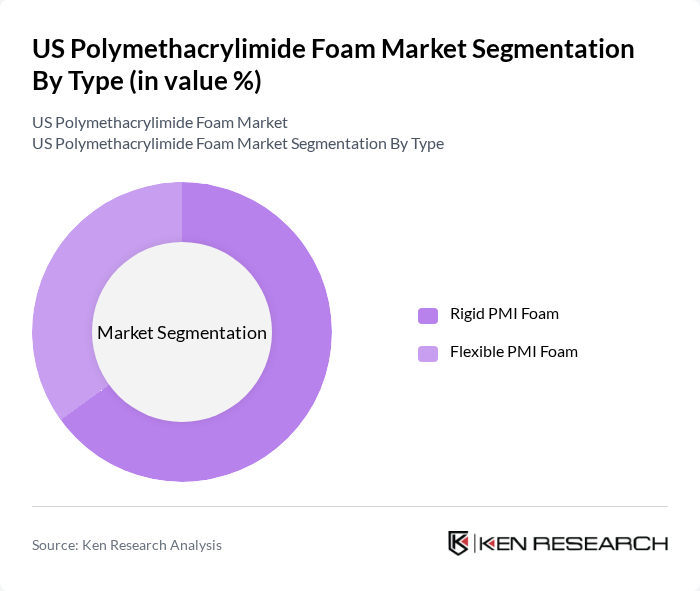
The market is segmented into two main types: Rigid PMI Foam and Flexible PMI Foam. Rigid PMI Foam is dominating the market due to its superior mechanical properties and thermal insulation capabilities, making it ideal for applications in aerospace and defense. The demand for lightweight and high-strength materials in these sectors is driving the growth of rigid foams. Flexible PMI Foam, while growing, is primarily used in applications requiring cushioning and impact resistance, such as in automotive interiors and sporting goods.
By Application:
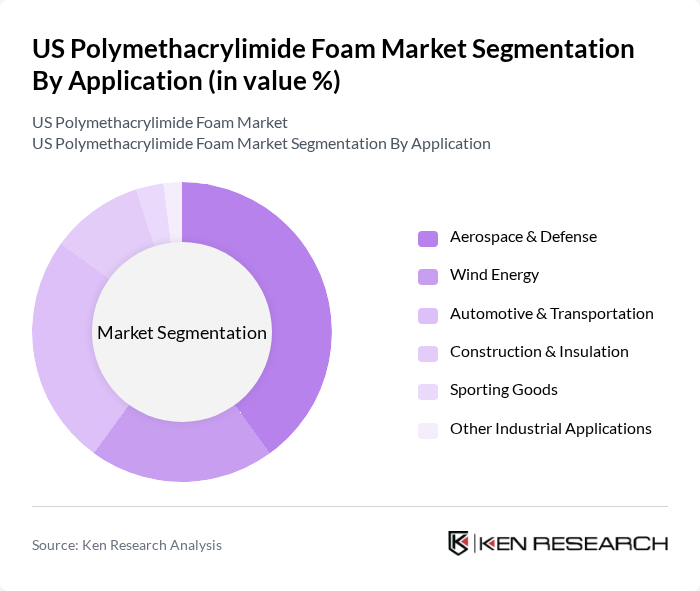
The applications of polymethacrylimide foam include Aerospace & Defense, Wind Energy, Automotive & Transportation, Construction & Insulation, Sporting Goods, and Other Industrial Applications. The Aerospace & Defense sector is the leading application area, driven by the need for lightweight materials that enhance fuel efficiency and performance. The growing focus on renewable energy sources is also boosting demand in the Wind Energy sector, while the Automotive & Transportation sector benefits from the increasing adoption of lightweight materials for improved vehicle efficiency.
The US Polymethacrylimide Foam Market is characterized by a dynamic mix of regional and international players. Leading participants such as Evonik Industries AG (ROHACELL), Röhm GmbH, SABIC, 3A Composites (Schweiter Technologies AG), Diab Group, Gurit Holding AG, General Plastics Manufacturing Company, Plascore, Inc., Zotefoams plc, Armacell International S.A., Huntsman Corporation, BASF SE, Carpenter Co., Cellofoam North America, Inc., Axiom Materials, Inc. contribute to innovation, geographic expansion, and service delivery in this space.
The US polymethacrylimide foam market is poised for significant growth, driven by increasing demand for lightweight materials and advancements in manufacturing technologies. As industries prioritize sustainability and energy efficiency, the adoption of these foams is expected to rise. Furthermore, collaborations between manufacturers and research institutions will likely lead to innovative applications and improved product formulations, enhancing market competitiveness. The focus on eco-friendly materials will also shape future developments, creating a favorable environment for market expansion.
| Segment | Sub-Segments |
|---|---|
| By Type | Rigid PMI Foam Flexible PMI Foam |
| By Application | Aerospace & Defense Wind Energy Automotive & Transportation Construction & Insulation Sporting Goods Other Industrial Applications |
| By End-User | Aerospace OEMs Defense Contractors Automotive Manufacturers Wind Turbine Manufacturers Construction & Insulation Providers Others |
| By Density (kg/m³) | < 52 –75 –110 > 110 |
| By Region | Northeast Midwest South West |
| By Manufacturing / Core Material Form | Foam Sheets & Panels Foam Blocks Sandwich Core Materials Custom-Machined Shapes |
| By Sales Channel | Direct Sales to OEMs Distributors & Converters Online / Catalogue Sales |
| Scope Item/Segment | Sample Size | Target Respondent Profiles |
|---|---|---|
| Aerospace Applications | 120 | Materials Engineers, Procurement Managers |
| Automotive Industry Usage | 90 | Product Development Engineers, Quality Assurance Managers |
| Construction Sector Insulation | 80 | Architects, Building Material Suppliers |
| Consumer Goods Packaging | 70 | Packaging Designers, Supply Chain Coordinators |
| Medical Device Applications | 60 | Regulatory Affairs Specialists, Product Managers |
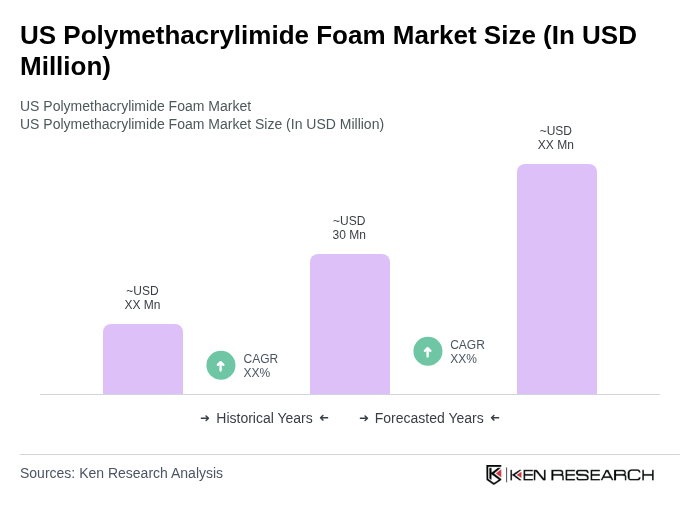
The US Polymethacrylimide Foam Market is valued at approximately USD 30 million, driven by the increasing demand for lightweight materials in industries such as aerospace and automotive, where performance and fuel efficiency are critical.

What makes us stand out is that our consultants follow Robust, Refine and Result (RRR) methodology. Robust for clear definitions, approaches and sanity checking, Refine for differentiating respondents' facts and opinions, and Result for presenting data with story.

We have set a benchmark in the industry by offering our clients with syndicated and customized market research reports featuring coverage of entire market as well as meticulous research and analyst insights.

While we don't replace traditional research, we flip the method upside down. Our dual approach of Top Bottom & Bottom Top ensures quality deliverable by not just verifying company fundamentals but also looking at the sector and macroeconomic factors.

With one step in the future, our research team constantly tries to show you the bigger picture. We help with some of the tough questions you may encounter along the way: How is the industry positioned? Best marketing channel? KPI's of competitors? By aligning every element, we help maximize success.

Our report gives you instant access to the answers and sources that other companies might choose to hide. We elaborate each steps of research methodology we have used and showcase you the sample size to earn your trust.

If you need any support, we are here! We pride ourselves on universe strength, data quality, and quick, friendly, and professional service.













