Region:North America
Author(s):Geetanshi
Product Code:KRAD7911
Pages:90
Published On:December 2025

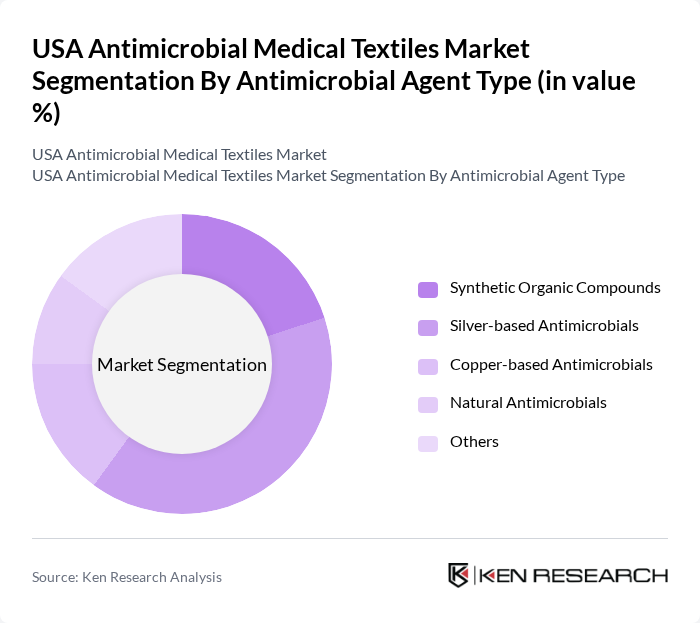
By Antimicrobial Agent Type:The antimicrobial agent type segmentation includes various subsegments such as Synthetic Organic Compounds, Silver-based Antimicrobials, Copper-based Antimicrobials, Natural Antimicrobials, and Others. Among these, Silver-based Antimicrobials are leading the market due to their proven efficacy against a broad spectrum of pathogens and their widespread acceptance in healthcare settings. The increasing adoption of silver-infused textiles in surgical gowns and wound care products is a significant trend driving this segment.
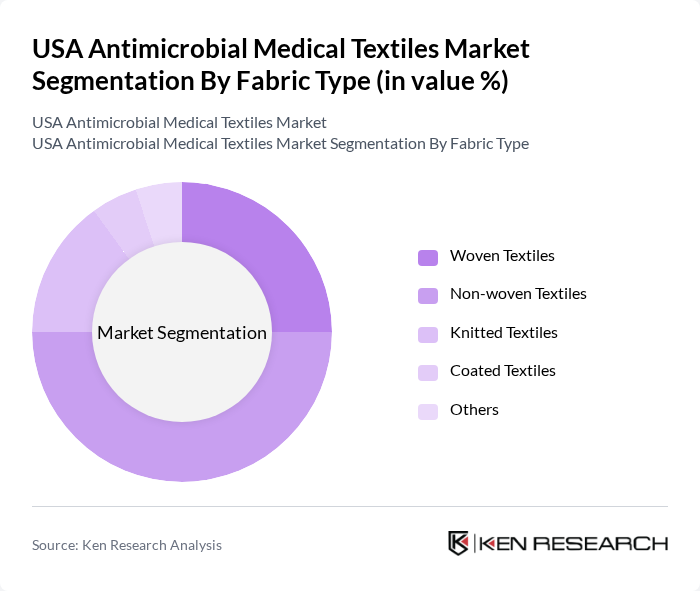
By Fabric Type:The fabric type segmentation encompasses Woven Textiles, Non-woven Textiles, Knitted Textiles, Coated Textiles, and Others. Non-woven Textiles are currently dominating the market due to their cost-effectiveness and versatility in various medical applications. The increasing demand for disposable medical products, such as surgical drapes and gowns, is significantly contributing to the growth of this segment.
The USA Antimicrobial Medical Textiles Market is characterized by a dynamic mix of regional and international players. Leading participants such as Medline Industries, Inc., 3M Company, DuPont de Nemours, Inc., Halyard Health, Inc., Cardinal Health, Inc., Ahlstrom-Munksjö Oyj, Berry Global Group, Inc., Johnson & Johnson, Smith & Nephew plc, Mölnlycke Health Care AB, BioCote Ltd., Lonza Group AG, BASF SE, Microban International, Ltd., LifeThreads LLC contribute to innovation, geographic expansion, and service delivery in this space.
The future of the USA antimicrobial medical textiles market appears promising, driven by ongoing innovations and a heightened focus on infection control. As healthcare facilities increasingly prioritize patient safety, the demand for advanced antimicrobial solutions is expected to rise in future. Additionally, the integration of smart technologies and sustainable practices will likely shape product development, aligning with broader healthcare trends. The market is poised for growth as stakeholders adapt to evolving healthcare needs and regulatory landscapes, fostering a more resilient industry.
| Segment | Sub-Segments |
|---|---|
| By Antimicrobial Agent Type | Synthetic Organic Compounds Silver-based Antimicrobials Copper-based Antimicrobials Natural Antimicrobials Others |
| By Fabric Type | Woven Textiles Non-woven Textiles Knitted Textiles Coated Textiles Others |
| By Application | Surgical Gowns and Drapes Wound Care Textiles (Bandages, Dressings) Patient Bed Linens and Covers Medical Masks and Protective Apparel Hospital Curtains and Uniforms Others |
| By Material Composition | Cotton Polyester Nylon Rayon Blended Materials Others |
| By End-User | Hospitals Surgical Centers and Clinics Long-term Care Facilities Home Healthcare Others |
| By Distribution Channel | Direct Sales to Healthcare Facilities Medical Device Distributors Online Sales Retail Pharmacies Others |
| By Region | Northeast Midwest South West |
| Scope Item/Segment | Sample Size | Target Respondent Profiles |
|---|---|---|
| Healthcare Facilities | 120 | Hospital Administrators, Infection Control Specialists |
| Textile Manufacturers | 100 | Product Development Managers, Quality Assurance Officers |
| Retail Sector | 80 | Merchandising Managers, Supply Chain Coordinators |
| End-User Surveys | 100 | Healthcare Workers, Patients using antimicrobial textiles |
| Regulatory Bodies | 50 | Policy Makers, Compliance Officers |
The USA Antimicrobial Medical Textiles Market is valued at approximately USD 4 billion, driven by factors such as the rising prevalence of healthcare-associated infections and increasing demand for advanced medical textiles in surgical and wound care applications.

What makes us stand out is that our consultants follow Robust, Refine and Result (RRR) methodology. Robust for clear definitions, approaches and sanity checking, Refine for differentiating respondents' facts and opinions, and Result for presenting data with story.

We have set a benchmark in the industry by offering our clients with syndicated and customized market research reports featuring coverage of entire market as well as meticulous research and analyst insights.

While we don't replace traditional research, we flip the method upside down. Our dual approach of Top Bottom & Bottom Top ensures quality deliverable by not just verifying company fundamentals but also looking at the sector and macroeconomic factors.

With one step in the future, our research team constantly tries to show you the bigger picture. We help with some of the tough questions you may encounter along the way: How is the industry positioned? Best marketing channel? KPI's of competitors? By aligning every element, we help maximize success.

Our report gives you instant access to the answers and sources that other companies might choose to hide. We elaborate each steps of research methodology we have used and showcase you the sample size to earn your trust.

If you need any support, we are here! We pride ourselves on universe strength, data quality, and quick, friendly, and professional service.













