APAC acerola extract market report size, share, growth drivers, trends, opportunities & forecast 2025–2030

The APAC Acerola Extract Market report presents insights on acerola extract applications in nutraceuticals and food segments, covers market segmentation by formulation and end use, competitive landscape analysis, regulatory influences, demand drivers such as wellness trends, challenges, and future outlook across key Asia Pacific markets.

Region:Asia

Author(s):Shubham

Product Code:KRAC8997

Pages:87

Published On:November 2025
About the Report

Base Year 2024

APAC Acerola Extract Market Overview

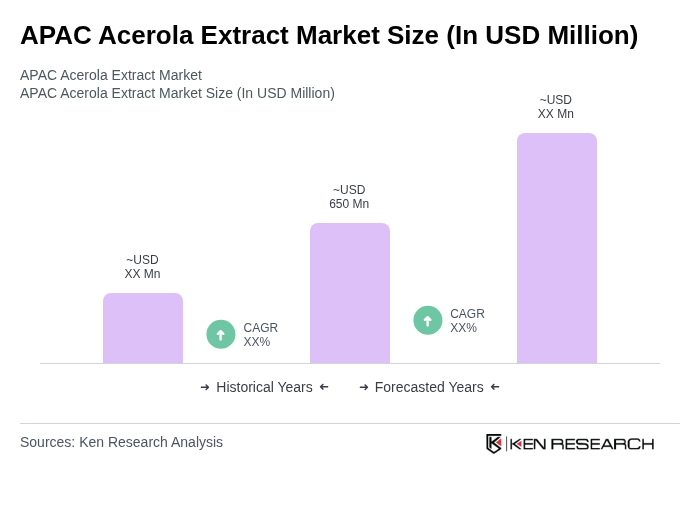
  • The APAC Acerola Extract Market is valued at USD 650 million, based on a five-year historical analysis. Growth is primarily driven by increasing demand for natural ingredients in food and beverage products, as well as rising awareness of health benefits associated with acerola extract, such as its high vitamin C content and antioxidant properties. The region’s focus on preventive healthcare and clean-label products further accelerates adoption .
  • Countries like China, Japan, and India dominate the market due to their large populations, a growing health-conscious consumer base, and expanding food and beverage industries. These nations have seen a surge in the incorporation of acerola extract in various applications, including dietary supplements, functional foods, and beverages. The popularity of acerola extract in skincare and beauty products is also notable, especially in markets with strong interest in natural cosmetic ingredients .
  • The Food Safety and Standards (Food Products Standards and Food Additives) Regulations, 2011, issued by the Food Safety and Standards Authority of India (FSSAI), govern the use of natural food additives, including acerola extract, in food products. These regulations set standards for purity, permissible limits, and labeling requirements, ensuring food safety and quality while promoting the use of natural additives in the Indian market .
APAC Acerola Extract Market Size

APAC Acerola Extract Market Segmentation

By Product Form:

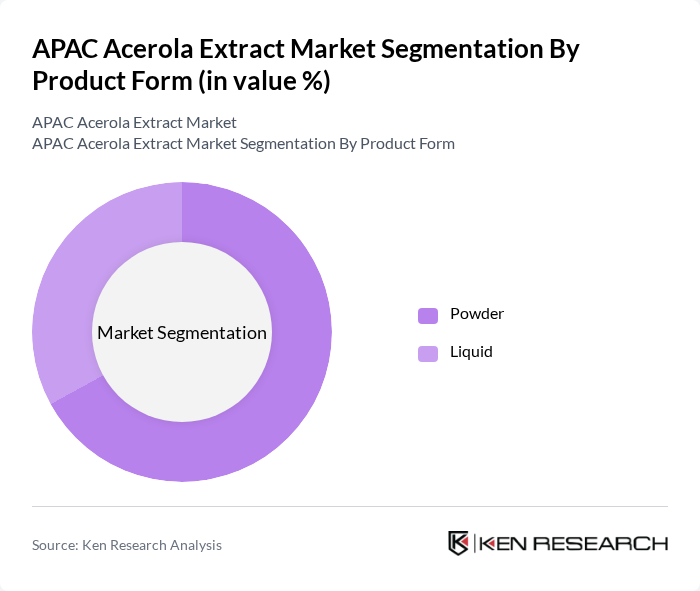
APAC Acerola Extract Market segmentation by Product Form.

The product form segmentation includes powder and liquid. The powder form dominates the market due to its versatility and ease of incorporation into various products, such as dietary supplements and food formulations. Consumers prefer powdered acerola extract for its convenience and longer shelf life, aligning with the growing trend of health and wellness products. Liquid forms are also gaining traction, particularly in beverages, but the powder segment remains the leader due to its broader application range .

By Application:
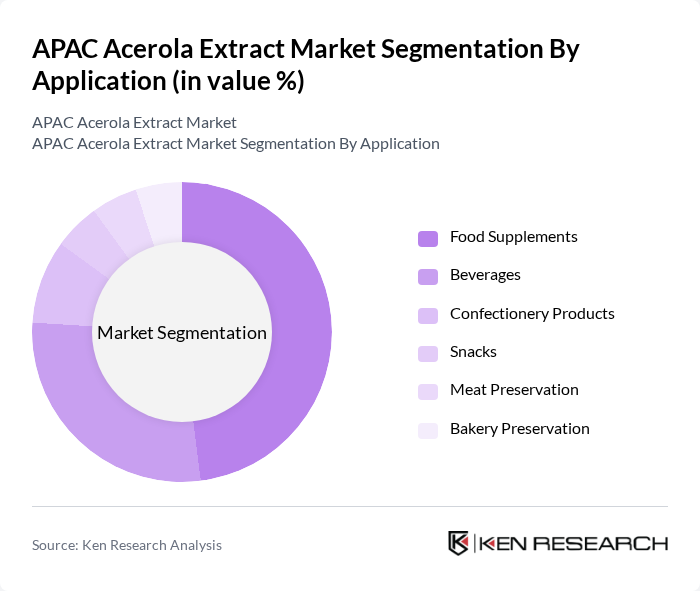
APAC Acerola Extract Market segmentation by Application.

The application segmentation includes food supplements, beverages, confectionery products, snacks, meat preservation, and bakery preservation. Food supplements are the leading application segment, driven by increasing consumer focus on health and wellness. The demand for acerola extract in dietary supplements is fueled by its high vitamin C content and antioxidant properties, making it a popular choice among health-conscious consumers. Beverages are also a significant segment, with acerola extract being used in functional drinks and juices, but food supplements currently hold the largest market share .

APAC Acerola Extract Market Competitive Landscape

The APAC Acerola Extract Market is characterized by a dynamic mix of regional and international players. Leading participants such as DSM Nutritional Products, Duas Rodas, Nexira, Naturex (Givaudan), Dohler GmbH, The Green Labs LLC, NutriBotanica, Nichirei Corporation, Suntory Holdings Limited, Yakult Honsha Co., Ltd., Amway (Nutrilite), Diana Food S.A.S (Symrise), Blue Macaw Flora, Vidya Herbs Pvt Ltd, Florida Food, Inc. contribute to innovation, geographic expansion, and service delivery in this space .

DSM Nutritional Products

1902

Heerlen, Netherlands

Duas Rodas

1925

Jaraguá do Sul, Brazil

Nexira

1895

Rouen, France

Naturex (Givaudan)

1992

Avignon, France

Dohler GmbH

1838

Darmstadt, Germany

Company

Establishment Year

Headquarters

Group Size (Large, Medium, or Small as per industry convention)

Revenue Growth Rate (APAC-specific, 3-year CAGR)

Market Share in APAC Acerola Extract Segment (%)

Product Portfolio Breadth (Number of SKUs or Applications)

Distribution Channel Reach (Number of APAC countries served)

R&D Investment as % of Revenue

APAC Acerola Extract Market Industry Analysis

Growth Drivers

  • Increasing Health Consciousness:The APAC region has witnessed a significant rise in health consciousness, with 60% of consumers actively seeking healthier food options. This trend is driven by rising obesity rates, which reached 27% in urban areas of countries like India and China. As a result, the demand for acerola extract, known for its high vitamin C content, is surging, with the market expected to benefit from this shift towards healthier lifestyles and preventive health measures.
  • Rising Demand for Natural Ingredients:The global shift towards natural ingredients is evident in the APAC market, where the natural food segment is projected to grow by $22 billion in future. Consumers are increasingly avoiding synthetic additives, with 72% preferring products with natural components. Acerola extract, being a natural source of antioxidants, aligns perfectly with this trend, driving its adoption in food and beverage formulations across the region.
  • Expanding Functional Food Market:The functional food market in APAC is projected to reach $110 billion in future, fueled by consumer interest in foods that offer health benefits beyond basic nutrition. Acerola extract, recognized for its immune-boosting properties, is increasingly incorporated into functional foods. This growth is supported by a 16% annual increase in the consumption of fortified foods, highlighting the potential for acerola extract to thrive in this expanding market segment.

Market Challenges

  • Supply Chain Disruptions:The APAC acerola extract market faces significant supply chain disruptions, exacerbated by the COVID-19 pandemic. In future, logistics costs surged by 32%, impacting the availability of raw materials. Additionally, transportation delays have led to a 22% increase in lead times for acerola extract shipments, hindering manufacturers' ability to meet growing demand and maintain competitive pricing in the market.
  • High Production Costs:The production costs for acerola extract have risen sharply, with raw material prices increasing by 27% in the last year due to climate-related impacts on acerola crops. This has resulted in a 17% increase in the overall cost of acerola extract production. Manufacturers are struggling to balance quality and affordability, which poses a challenge in maintaining market competitiveness while ensuring profitability.

APAC Acerola Extract Market Future Outlook

The future of the APAC acerola extract market appears promising, driven by increasing consumer demand for health-oriented products and natural ingredients. As the trend towards functional foods continues to grow, acerola extract is likely to see expanded applications in various sectors, including beverages and dietary supplements. Additionally, advancements in extraction technologies may enhance product quality and yield, further supporting market growth. Companies that adapt to these trends will likely gain a competitive edge in this evolving landscape.

Market Opportunities

  • Expansion into Emerging Markets:Emerging markets in Southeast Asia are experiencing rapid economic growth, with a projected GDP increase of over 6% in future. This growth presents a significant opportunity for acerola extract producers to tap into new consumer bases that are increasingly health-conscious and willing to invest in natural products, potentially boosting sales and market penetration.
  • Product Innovation and Development:There is a growing demand for innovative acerola extract products, particularly in the beverage sector, which is expected to grow by $12 billion in future. Companies that invest in research and development to create unique formulations, such as acerola-infused functional drinks, can capitalize on this trend, attracting health-conscious consumers and enhancing brand loyalty.

Scope of the Report

SegmentSub-Segments
By Product Form

Powder

Liquid

By Application

Food Supplements

Beverages

Confectionery Products

Snacks

Meat Preservation

Bakery Preservation

By End-User Industry

Food and Beverage

Nutraceuticals

Cosmetics & Personal Care

Pharmaceuticals

By Nature

Conventional

Organic

By Distribution Channel

Indirect (Supermarkets/Hypermarkets, Health Stores, E-commerce)

Direct (B2B, Ingredient Supply)

By Country

China

Japan

India

Australia

Southeast Asia

Rest of APAC

Key Target Audience

Investors and Venture Capitalist Firms

Government and Regulatory Bodies (e.g., Food Safety and Standards Authority of India, Ministry of Health, Singapore Food Agency)

Manufacturers and Producers

Distributors and Retailers

Pharmaceutical Companies

Cosmetic and Personal Care Product Manufacturers

Health and Wellness Product Companies

Food and Beverage Companies

Players Mentioned in the Report:

DSM Nutritional Products

Duas Rodas

Nexira

Naturex (Givaudan)

Dohler GmbH

The Green Labs LLC

NutriBotanica

Nichirei Corporation

Suntory Holdings Limited

Yakult Honsha Co., Ltd.

Amway (Nutrilite)

Diana Food S.A.S (Symrise)

Blue Macaw Flora

Vidya Herbs Pvt Ltd

Florida Food, Inc.

Table of Contents

Go-To-Market Strategy Phase

1. Whitespace Analysis + Business Model Canvas

1.1 Market Gaps Identification

1.2 Value Proposition Development

1.3 Revenue Streams Analysis

1.4 Cost Structure Evaluation

1.5 Key Partnerships Exploration

1.6 Customer Segmentation

1.7 Channels of Distribution


2. Marketing and Positioning Recommendations

2.1 Branding Strategies

2.2 Product USPs

2.3 Target Audience Identification

2.4 Communication Strategies

2.5 Digital Marketing Approaches

2.6 Offline Marketing Tactics

2.7 Performance Metrics


3. Distribution Plan

3.1 Urban Retail Strategies

3.2 Rural NGO Tie-Ups

3.3 E-commerce Integration

3.4 Logistics and Supply Chain Management

3.5 Distribution Partnerships

3.6 Inventory Management

3.7 Performance Tracking


4. Channel & Pricing Gaps

4.1 Underserved Routes

4.2 Pricing Bands Analysis

4.3 Competitor Pricing Strategies

4.4 Customer Willingness to Pay

4.5 Price Sensitivity Analysis

4.6 Discounting Strategies

4.7 Pricing Model Evaluation


5. Unmet Demand & Latent Needs

5.1 Category Gaps

5.2 Consumer Segments Analysis

5.3 Product Development Opportunities

5.4 Market Entry Strategies

5.5 Customer Feedback Mechanisms

5.6 Future Trends Exploration

5.7 Competitive Landscape Assessment


6. Customer Relationship

6.1 Loyalty Programs

6.2 After-sales Service

6.3 Customer Engagement Strategies

6.4 Feedback and Improvement Processes

6.5 Community Building Initiatives

6.6 Customer Retention Strategies

6.7 Performance Metrics


7. Value Proposition

7.1 Sustainability Initiatives

7.2 Integrated Supply Chains

7.3 Unique Selling Points

7.4 Customer-Centric Approaches

7.5 Competitive Advantages

7.6 Market Differentiation Strategies

7.7 Performance Metrics


8. Key Activities

8.1 Regulatory Compliance

8.2 Branding Initiatives

8.3 Distribution Setup

8.4 Marketing Campaigns

8.5 Training and Development

8.6 Performance Monitoring

8.7 Continuous Improvement Processes


9. Entry Strategy Evaluation

9.1 Domestic Market Entry Strategy

9.1.1 Product Mix
9.1.2 Pricing Band
9.1.3 Packaging Considerations

9.2 Export Entry Strategy

9.2.1 Target Countries
9.2.2 Compliance Roadmap

10. Entry Mode Assessment

10.1 Joint Ventures

10.2 Greenfield Investments

10.3 Mergers & Acquisitions

10.4 Distributor Model

10.5 Risk Assessment

10.6 Strategic Fit Evaluation

10.7 Performance Metrics


11. Capital and Timeline Estimation

11.1 Capital Requirements

11.2 Timelines

11.3 Funding Sources

11.4 Financial Projections

11.5 Risk Management Strategies

11.6 Performance Metrics


12. Control vs Risk Trade-Off

12.1 Ownership vs Partnerships

12.2 Risk Mitigation Strategies

12.3 Control Mechanisms

12.4 Performance Metrics


13. Profitability Outlook

13.1 Breakeven Analysis

13.2 Long-term Sustainability

13.3 Financial Health Indicators

13.4 Market Positioning

13.5 Performance Metrics


14. Potential Partner List

14.1 Distributors

14.2 Joint Ventures

14.3 Acquisition Targets

14.4 Strategic Alliances

14.5 Performance Metrics


15. Execution Roadmap

15.1 Phased Plan for Market Entry

15.1.1 Market Setup
15.1.2 Market Entry
15.1.3 Growth Acceleration
15.1.4 Scale & Stabilize

15.2 Key Activities and Milestones

15.2.1 Activity Planning
15.2.2 Milestone Tracking
15.2.3 Performance Metrics

Research Methodology

ApproachModellingSample

Phase 1: Approach1

Desk Research

  • Market reports from industry associations such as the Asia-Pacific Food and Beverage Association
  • Scientific literature on the health benefits and applications of acerola extract
  • Government publications on agricultural production and export statistics in APAC countries

Primary Research

  • Interviews with key stakeholders in the acerola supply chain, including farmers and processors
  • Surveys targeting product development teams in food and beverage companies
  • Focus group discussions with health and wellness experts regarding consumer preferences

Validation & Triangulation

  • Cross-validation of findings through multiple data sources, including trade publications and market surveys
  • Triangulation of insights from primary interviews with secondary data trends
  • Sanity checks conducted through expert panels comprising industry veterans and market analysts

Phase 2: Market Size Estimation1

Top-down Assessment

  • Analysis of the overall health supplement market size in APAC to estimate acerola extract's share
  • Segmentation by application areas such as dietary supplements, cosmetics, and food products
  • Incorporation of regional growth rates and consumer trends in health consciousness

Bottom-up Modeling

  • Volume estimates based on production capacities of acerola extract manufacturers in the region
  • Pricing analysis derived from market rates for acerola extract across different applications
  • Estimation of market size through product consumption rates and end-user demand

Forecasting & Scenario Analysis

  • Multi-variable forecasting models incorporating factors such as population growth and health trends
  • Scenario analysis based on potential regulatory changes affecting natural extracts
  • Development of baseline, optimistic, and pessimistic market growth scenarios through 2030

Phase 3: CATI Sample Composition1

Scope Item/SegmentSample SizeTarget Respondent Profiles
Food and Beverage Manufacturers120Product Development Managers, Quality Assurance Specialists
Health Supplement Retailers90Store Managers, Category Buyers
Cosmetic Product Developers60Formulation Chemists, Brand Managers
Agricultural Producers of Acerola50Farm Owners, Agricultural Consultants
Health and Wellness Experts40Nutritionists, Health Coaches

Frequently Asked Questions

1. What is the current value of the APAC Acerola Extract Market?

The APAC Acerola Extract Market is valued at approximately USD 650 million, driven by increasing demand for natural ingredients in food and beverages, as well as rising awareness of the health benefits associated with acerola extract, particularly its high vitamin C content.

2. Which countries dominate the APAC Acerola Extract Market?

3. What are the main applications of acerola extract in the APAC region?

4. What are the growth drivers for the APAC Acerola Extract Market?

Other Regional/Country Reports

Indonesia Acerola Extract Market

Malaysia Acerola Extract Market

KSA Acerola Extract Market

SEA Acerola Extract Market

Vietnam Acerola Extract Market

Thailand Acerola Extract Market

Why Buy From Us?

Refine Robust Result (RRR) Framework

What makes us stand out is that our consultants follow Robust, Refine and Result (RRR) methodology. Robust for clear definitions, approaches and sanity checking, Refine for differentiating respondents' facts and opinions, and Result for presenting data with story.

Our Reach Is Unmatched

We have set a benchmark in the industry by offering our clients with syndicated and customized market research reports featuring coverage of entire market as well as meticulous research and analyst insights.

Shifting the Research Paradigm

While we don't replace traditional research, we flip the method upside down. Our dual approach of Top Bottom & Bottom Top ensures quality deliverable by not just verifying company fundamentals but also looking at the sector and macroeconomic factors.

More Insights-Better Decisions

With one step in the future, our research team constantly tries to show you the bigger picture. We help with some of the tough questions you may encounter along the way: How is the industry positioned? Best marketing channel? KPI's of competitors? By aligning every element, we help maximize success.

Transparency and Trust

Our report gives you instant access to the answers and sources that other companies might choose to hide. We elaborate each steps of research methodology we have used and showcase you the sample size to earn your trust.

Round the Clock Support

If you need any support, we are here! We pride ourselves on universe strength, data quality, and quick, friendly, and professional service.

Why Clients Choose Us?

400000+
Reports in repository
150+
Consulting projects a year
100+
Analysts
8000+
Client Queries in 2022