About the Report
Base Year 2024Listen to the audio summary
Australia Fleet Management Outsourcing Market Overview
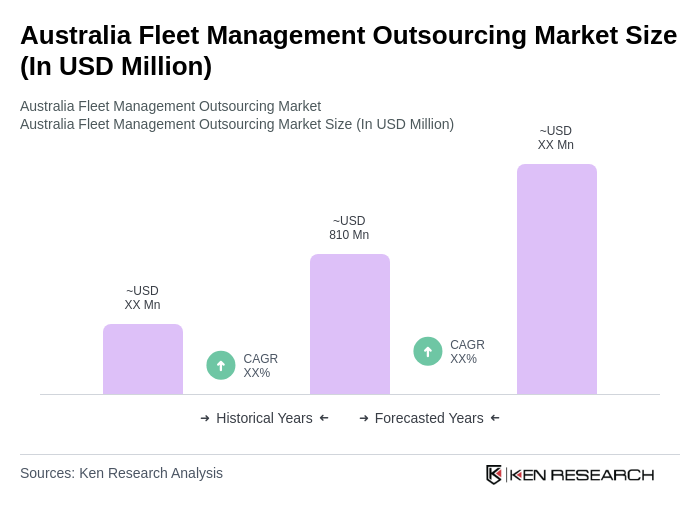
- The Australia Fleet Management Outsourcing Market is valued at USD 810 million, based on a five-year historical analysis. This growth is primarily driven by the increasing demand for cost-efficient fleet operations, advancements in telematics and data analytics, and a heightened focus on sustainability and regulatory compliance. Companies are increasingly outsourcing fleet management to enhance operational efficiency, leverage technology, and reduce overhead costs .
- Key cities dominating this market include Sydney, Melbourne, and Brisbane. Sydney serves as a financial and logistics hub attracting major transportation companies, Melbourne's diversified economy supports a broad range of fleet-dependent sectors, and Brisbane's strategic position enhances its role in trade and logistics, making it a significant contributor to the fleet management landscape .
- In 2023, the Australian government introduced the National Electric Vehicle Strategy to accelerate the adoption of electric vehicles in commercial fleets. This policy includes incentives for businesses to transition to electric vehicles, supporting sustainability goals and reducing carbon emissions in the transportation sector .
Australia Fleet Management Outsourcing Market Segmentation
By Type:The market is segmented into a range of services tailored to diverse operational requirements. The subsegments include Full-service fleet management, Maintenance and repair services, Fuel management services, Telematics and tracking solutions, Driver management services, Compliance and regulatory services, Vehicle acquisition and leasing, Accident and risk management, and Others. Full-service fleet management leads the segment, as it enables organizations to outsource all aspects of fleet operations, thereby improving efficiency and cost control .

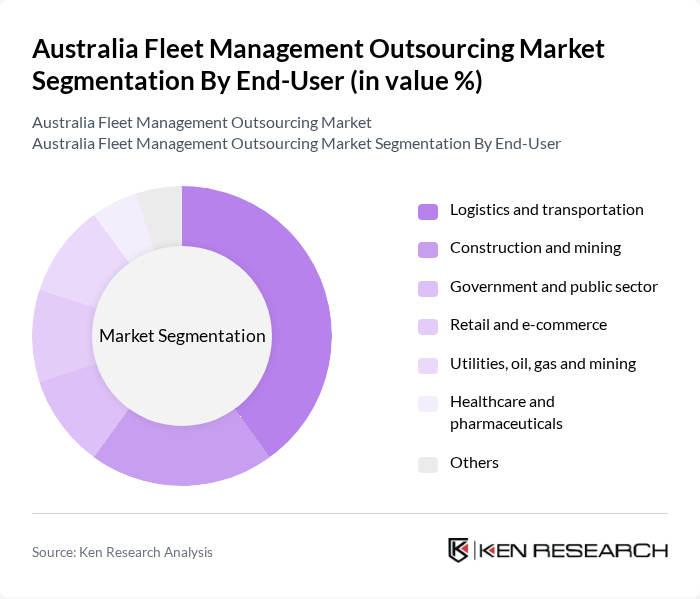
By End-User:The market is segmented by end-users, including Logistics and transportation, Construction and mining, Government and public sector, Retail and e-commerce, Utilities, oil, gas and mining, Healthcare and pharmaceuticals, and Others. The Logistics and transportation sector is the largest end-user, driven by the need for efficient supply chain management, real-time tracking, and fleet optimization. Other sectors such as construction, mining, and utilities also significantly utilize outsourced fleet management for operational reliability and compliance .
Australia Fleet Management Outsourcing Market Competitive Landscape
The Australia Fleet Management Outsourcing Market features a dynamic mix of regional and international providers. Leading participants such as Fleetcare, SG Fleet Group Limited, Eclipx Group, LeasePlan Australia, Smartfleet, Orix Australia, Custom Fleet, FleetPartners, AFS Fleet Management, Summit Fleet Lease Australia Pty Ltd., Future Fleet International Pty Ltd., Teletrac Navman, Linxio, McMillan Shakespeare Ltd., Geotab, Bridgestone Fleet Solutions, and Telstra Group Ltd. (MTData) drive innovation, geographic expansion, and enhanced service delivery in this sector .
Australia Fleet Management Outsourcing Market Industry Analysis
Growth Drivers
- Increasing Demand for Cost Efficiency:The Australian fleet management outsourcing market is driven by a significant demand for cost efficiency, with businesses seeking to reduce operational expenses. In future, the average operational cost per vehicle is projected to be around AUD 13,000 annually. Companies are increasingly outsourcing fleet management to cut costs by approximately AUD 2,700 per vehicle, allowing them to allocate resources more effectively and improve overall profitability.
- Technological Advancements in Fleet Management:The integration of advanced technologies such as telematics and GPS tracking is revolutionizing fleet management in Australia. In future, it is estimated that over 65% of fleet operators will utilize telematics solutions, enhancing operational efficiency. These technologies can reduce fuel consumption by up to 16%, translating to savings of approximately AUD 1,900 per vehicle annually, thus driving the demand for outsourcing services.
- Rising Focus on Sustainability and Environmental Regulations:With Australia aiming to reduce greenhouse gas emissions by 26-28% by 2030, fleet operators are increasingly focusing on sustainable practices. In future, the adoption of electric vehicles (EVs) in fleets is expected to rise by 22%, driven by government incentives and regulations. This shift not only meets compliance requirements but also reduces operational costs, making outsourcing an attractive option for businesses aiming to enhance their sustainability efforts.
Market Challenges
- High Initial Investment Costs:One of the significant challenges in the fleet management outsourcing market is the high initial investment required for technology and infrastructure. In future, the average cost of implementing a comprehensive fleet management system is estimated at AUD 55,000 per fleet. This upfront cost can deter small and medium-sized enterprises from outsourcing, limiting market growth and adoption rates in this segment.
- Data Security and Privacy Concerns:As fleet management increasingly relies on data analytics and cloud-based solutions, concerns regarding data security and privacy are rising. In future, it is projected that 45% of fleet operators will experience data breaches, leading to potential financial losses averaging AUD 220,000 per incident. This challenge creates hesitance among businesses to fully embrace outsourcing, impacting market expansion and trust in service providers.
Australia Fleet Management Outsourcing Market Future Outlook
The future of the Australia fleet management outsourcing market appears promising, driven by technological innovations and a growing emphasis on sustainability. As businesses increasingly adopt electric vehicles and integrate AI-driven solutions, operational efficiencies are expected to improve significantly. Furthermore, the expansion of e-commerce and logistics sectors will create additional demand for fleet management services, fostering a competitive landscape that encourages innovation and collaboration among service providers.
Market Opportunities
- Growth in Electric Vehicle Adoption:The increasing adoption of electric vehicles presents a significant opportunity for fleet management outsourcing. In future, it is anticipated that the number of electric vehicles in commercial fleets will reach 60,000, creating demand for specialized management services that can optimize charging infrastructure and maintenance, thus enhancing operational efficiency.
- Integration of AI and IoT in Fleet Management:The integration of AI and IoT technologies into fleet management systems offers substantial growth potential. In future, it is expected that 75% of fleet operators will utilize AI-driven analytics for predictive maintenance, reducing downtime by 30%. This technological advancement will drive demand for outsourcing services that can provide these sophisticated solutions effectively.
Scope of the Report
| Segment | Sub-Segments |
|---|---|
| By Type | Full-service fleet management Maintenance and repair services Fuel management services Telematics and tracking solutions Driver management services Compliance and regulatory services Vehicle acquisition and leasing Accident and risk management Others |
| By End-User | Logistics and transportation Construction and mining Government and public sector Retail and e-commerce Utilities, oil, gas and mining Healthcare and pharmaceuticals Others |
| By Fleet Size | Small fleet (1-10 vehicles) Medium fleet (11-50 vehicles) Large fleet (51+ vehicles) |
| By Service Model | Outsourced fleet management In-house fleet management |
| By Geographic Coverage | New South Wales Victoria Queensland Western Australia South Australia Australian Capital Territory Tasmania Northern Territory |
| By Vehicle Type | Light-duty vehicles Heavy-duty vehicles Electric vehicles Commercial vehicles Passenger vehicles |
| By Pricing Model | Fixed pricing Variable pricing Subscription-based pricing |
Key Target Audience
Investors and Venture Capitalist Firms
Government and Regulatory Bodies (e.g., Australian Competition and Consumer Commission, Department of Infrastructure, Transport, Regional Development and Communications)
Fleet Operators and Logistics Companies
Automotive Manufacturers
Telematics and Fleet Management Software Providers
Insurance Companies
Transport and Logistics Industry Associations
Financial Institutions and Banks
Players Mentioned in the Report:
Fleetcare
SG Fleet Group Limited
Eclipx Group
LeasePlan Australia
Smartfleet
Orix Australia
Custom Fleet
FleetPartners
AFS Fleet Management
Summit Fleet Lease Australia Pty Ltd.
Future Fleet International Pty Ltd.
Teletrac Navman
Linxio
McMillan Shakespeare Ltd.
Geotab
Bridgestone Fleet Solutions
Telstra Group Ltd. (MTData)
Table of Contents
Market Assessment Phase
1. Executive Summary and Approach
2. Australia Fleet Management Outsourcing Market Overview
2.1 Key Insights and Strategic Recommendations
2.2 Australia Fleet Management Outsourcing Market Overview
2.3 Definition and Scope
2.4 Evolution of Market Ecosystem
2.5 Timeline of Key Regulatory Milestones
2.6 Value Chain & Stakeholder Mapping
2.7 Business Cycle Analysis
2.8 Policy & Incentive Landscape
3. Australia Fleet Management Outsourcing Market Analysis
3.1 Growth Drivers
3.1.1 Increasing demand for cost efficiency
3.1.2 Technological advancements in fleet management
3.1.3 Rising focus on sustainability and environmental regulations
3.1.4 Expansion of e-commerce and logistics sectors
3.2 Market Challenges
3.2.1 High initial investment costs
3.2.2 Data security and privacy concerns
3.2.3 Limited awareness among small businesses
3.2.4 Regulatory compliance complexities
3.3 Market Opportunities
3.3.1 Growth in electric vehicle adoption
3.3.2 Integration of AI and IoT in fleet management
3.3.3 Expansion into rural and underserved markets
3.3.4 Partnerships with technology providers
3.4 Market Trends
3.4.1 Shift towards telematics and real-time tracking
3.4.2 Increasing use of data analytics for decision making
3.4.3 Emphasis on driver safety and training programs
3.4.4 Growth of mobility-as-a-service (MaaS) solutions
3.5 Government Regulation
3.5.1 Emission reduction targets
3.5.2 Safety standards for fleet operations
3.5.3 Incentives for electric vehicle usage
3.5.4 Compliance with data protection laws
4. SWOT Analysis
5. Stakeholder Analysis
6. Porter's Five Forces Analysis
7. Australia Fleet Management Outsourcing Market Market Size, 2019-2024
7.1 By Value
7.2 By Volume
7.3 By Average Selling Price
8. Australia Fleet Management Outsourcing Market Segmentation
8.1 By Type
8.1.1 Full-service fleet management
8.1.2 Maintenance and repair services
8.1.3 Fuel management services
8.1.4 Telematics and tracking solutions
8.1.5 Driver management services
8.1.6 Compliance and regulatory services
8.1.7 Vehicle acquisition and leasing
8.1.8 Accident and risk management
8.1.9 Others
8.2 By End-User
8.2.1 Logistics and transportation
8.2.2 Construction and mining
8.2.3 Government and public sector
8.2.4 Retail and e-commerce
8.2.5 Utilities, oil, gas and mining
8.2.6 Healthcare and pharmaceuticals
8.2.7 Others
8.3 By Fleet Size
8.3.1 Small fleet (1-10 vehicles)
8.3.2 Medium fleet (11-50 vehicles)
8.3.3 Large fleet (51+ vehicles)
8.4 By Service Model
8.4.1 Outsourced fleet management
8.4.2 In-house fleet management
8.5 By Geographic Coverage
8.5.1 New South Wales
8.5.2 Victoria
8.5.3 Queensland
8.5.4 Western Australia
8.5.5 South Australia
8.5.6 Australian Capital Territory
8.5.7 Tasmania
8.5.8 Northern Territory
8.6 By Vehicle Type
8.6.1 Light-duty vehicles
8.6.2 Heavy-duty vehicles
8.6.3 Electric vehicles
8.6.4 Commercial vehicles
8.6.5 Passenger vehicles
8.7 By Pricing Model
8.7.1 Fixed pricing
8.7.2 Variable pricing
8.7.3 Subscription-based pricing
9. Australia Fleet Management Outsourcing Market Competitive Analysis
9.1 Market Share of Key Players
9.2 Cross Comparison of Key Players
9.2.1 Company Name
9.2.2 Group Size (Large, Medium, or Small as per industry convention)
9.2.3 Revenue Growth Rate
9.2.4 Customer Retention Rate
9.2.5 Fleet Utilization Rate
9.2.6 Average Vehicle Downtime
9.2.7 Pricing Strategy
9.2.8 Service Level Agreement (SLA) Compliance Rate
9.2.9 Net Promoter Score (NPS)
9.2.10 Market Penetration Rate
9.2.11 Technology Adoption Level (e.g., telematics, EV integration)
9.2.12 Geographic Coverage (number of states/territories served)
9.3 SWOT Analysis of Top Players
9.4 Pricing Analysis
9.5 Detailed Profile of Major Companies
9.5.1 Fleetcare
9.5.2 SG Fleet Group Limited
9.5.3 Eclipx Group
9.5.4 LeasePlan Australia
9.5.5 Smartfleet
9.5.6 Orix Australia
9.5.7 Custom Fleet
9.5.8 FleetPartners
9.5.9 AFS Fleet Management
9.5.10 Summit Fleet Lease Australia Pty Ltd.
9.5.11 Future Fleet International Pty Ltd.
9.5.12 Teletrac Navman
9.5.13 Linxio
9.5.14 McMillan Shakespeare Ltd.
9.5.15 Geotab
9.5.16 Bridgestone Fleet Solutions
9.5.17 Telstra Group Ltd. (MTData)
10. Australia Fleet Management Outsourcing Market End-User Analysis
10.1 Procurement Behavior of Key Ministries
10.1.1 Government fleet procurement policies
10.1.2 Budget allocation for fleet management
10.1.3 Decision-making processes
10.2 Corporate Spend on Infrastructure & Energy
10.2.1 Investment trends in fleet management
10.2.2 Budget priorities for fleet operations
10.3 Pain Point Analysis by End-User Category
10.3.1 Cost management challenges
10.3.2 Compliance and regulatory issues
10.3.3 Technology integration difficulties
10.4 User Readiness for Adoption
10.4.1 Awareness of fleet management solutions
10.4.2 Training and support needs
10.5 Post-Deployment ROI and Use Case Expansion
10.5.1 Measurement of ROI post-implementation
10.5.2 Opportunities for service expansion
11. Australia Fleet Management Outsourcing Market Future Size, 2025-2030
11.1 By Value
11.2 By Volume
11.3 By Average Selling Price
Go-To-Market Strategy Phase
1. Whitespace Analysis + Business Model Canvas
1.1 Market gaps and opportunities
1.2 Business model components
2. Marketing and Positioning Recommendations
2.1 Branding strategies
2.2 Product USPs
3. Distribution Plan
3.1 Urban retail vs rural NGO tie-ups
4. Channel & Pricing Gaps
4.1 Underserved routes
4.2 Pricing bands
5. Unmet Demand & Latent Needs
5.1 Category gaps
5.2 Consumer segments
6. Customer Relationship
6.1 Loyalty programs
6.2 After-sales service
7. Value Proposition
7.1 Sustainability
7.2 Integrated supply chains
8. Key Activities
8.1 Regulatory compliance
8.2 Branding
8.3 Distribution setup
9. Entry Strategy Evaluation
9.1 Domestic Market Entry Strategy
9.1.1 Product mix
9.1.2 Pricing band
9.1.3 Packaging
9.2 Export Entry Strategy
9.2.1 Target countries
9.2.2 Compliance roadmap
10. Entry Mode Assessment
10.1 JV, Greenfield, M&A, Distributor Model
11. Capital and Timeline Estimation
11.1 Capital requirements
11.2 Timelines
12. Control vs Risk Trade-Off
12.1 Ownership vs Partnerships
13. Profitability Outlook
13.1 Breakeven analysis
13.2 Long-term sustainability
14. Potential Partner List
14.1 Distributors
14.2 JVs
14.3 Acquisition targets
15. Execution Roadmap
15.1 Phased Plan for Market Entry
15.1.1 Market Setup
15.1.2 Market Entry
15.1.3 Growth Acceleration
15.1.4 Scale & Stabilize
15.2 Key Activities and Milestones
15.2.1 Milestone tracking
15.2.2 Activity scheduling
Research Methodology
Phase 1: Approach1
Desk Research
- Analysis of industry reports from Australian logistics and fleet management associations
- Review of government publications on transportation and fleet regulations
- Examination of market trends through academic journals and white papers on fleet management outsourcing
Primary Research
- Interviews with fleet managers and procurement officers in various industries
- Surveys targeting decision-makers in logistics and transportation firms
- Field interviews with operational staff from fleet management service providers
Validation & Triangulation
- Cross-validation of data through multiple industry sources and expert opinions
- Triangulation of findings from primary interviews and secondary data sources
- Sanity checks conducted through expert panel discussions and feedback sessions
Phase 2: Market Size Estimation1
Top-down Assessment
- Estimation of total addressable market based on national fleet size and outsourcing trends
- Segmentation of market by industry verticals such as logistics, construction, and healthcare
- Incorporation of economic indicators and government initiatives promoting fleet outsourcing
Bottom-up Modeling
- Collection of data on fleet management service pricing from leading providers
- Estimation of service uptake rates across different sectors and fleet sizes
- Calculation of market size based on aggregated service volumes and pricing models
Forecasting & Scenario Analysis
- Utilization of historical growth rates and market trends to project future demand
- Scenario modeling based on potential regulatory changes and technological advancements
- Development of baseline, optimistic, and pessimistic forecasts through 2030
Phase 3: CATI Sample Composition1
| Scope Item/Segment | Sample Size | Target Respondent Profiles |
|---|---|---|
| Logistics Fleet Management | 100 | Fleet Managers, Operations Directors |
| Construction Equipment Fleet | 60 | Procurement Managers, Site Supervisors |
| Healthcare Transport Services | 40 | Logistics Coordinators, Facility Managers |
| Public Sector Fleet Operations | 50 | Government Fleet Managers, Policy Advisors |
| Technology-Driven Fleet Solutions | 45 | IT Managers, Innovation Officers |
Frequently Asked Questions
What is the current value of the Australia Fleet Management Outsourcing Market?
The Australia Fleet Management Outsourcing Market is valued at approximately USD 810 million, reflecting a significant growth trend driven by the demand for cost-efficient operations, technological advancements, and a focus on sustainability and regulatory compliance.
Which cities are key players in the Australia Fleet Management Outsourcing Market?
What are the main drivers of growth in the Australia Fleet Management Outsourcing Market?
What challenges does the Australia Fleet Management Outsourcing Market face?
Other Regional/Country Reports
Indonesia Fleet Management Outsourcing Market
Malaysia Fleet Management Outsourcing Market
Why Buy From Us?

What makes us stand out is that our consultants follow Robust, Refine and Result (RRR) methodology. Robust for clear definitions, approaches and sanity checking, Refine for differentiating respondents' facts and opinions, and Result for presenting data with story.

We have set a benchmark in the industry by offering our clients with syndicated and customized market research reports featuring coverage of entire market as well as meticulous research and analyst insights.

While we don't replace traditional research, we flip the method upside down. Our dual approach of Top Bottom & Bottom Top ensures quality deliverable by not just verifying company fundamentals but also looking at the sector and macroeconomic factors.

With one step in the future, our research team constantly tries to show you the bigger picture. We help with some of the tough questions you may encounter along the way: How is the industry positioned? Best marketing channel? KPI's of competitors? By aligning every element, we help maximize success.

Our report gives you instant access to the answers and sources that other companies might choose to hide. We elaborate each steps of research methodology we have used and showcase you the sample size to earn your trust.

If you need any support, we are here! We pride ourselves on universe strength, data quality, and quick, friendly, and professional service.