Region:Middle East
Author(s):Geetanshi
Product Code:KRAD4750
Pages:82
Published On:December 2025
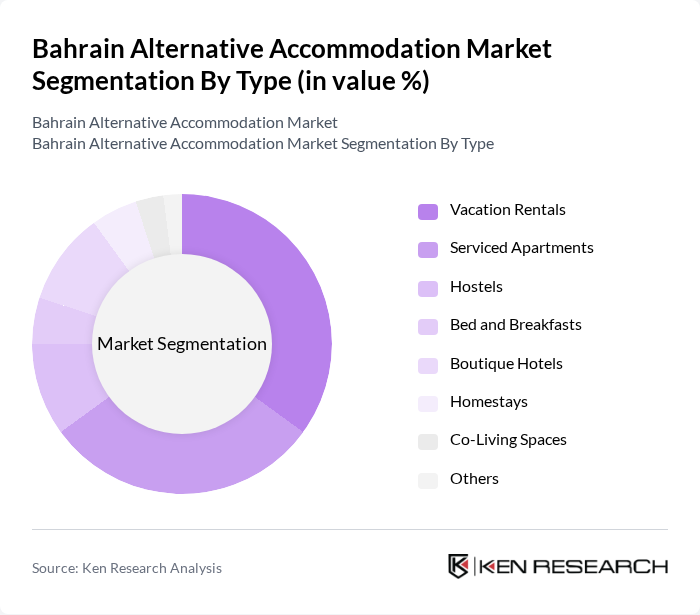
By Type:The alternative accommodation market in Bahrain is segmented into various types, including vacation rentals, serviced apartments, hostels, bed and breakfasts, boutique hotels, homestays, co-living spaces, and others. Among these, vacation rentals and serviced apartments are particularly popular due to their flexibility and home-like amenities, catering to both leisure and business travelers. The demand for unique and personalized experiences has led to a rise in boutique hotels and homestays, appealing to tourists seeking local culture and authenticity. The market is also witnessing growth in co-living spaces that offer integrated amenities such as gyms, coworking areas, and digital management platforms, appealing to tech-savvy and socially oriented tenants.
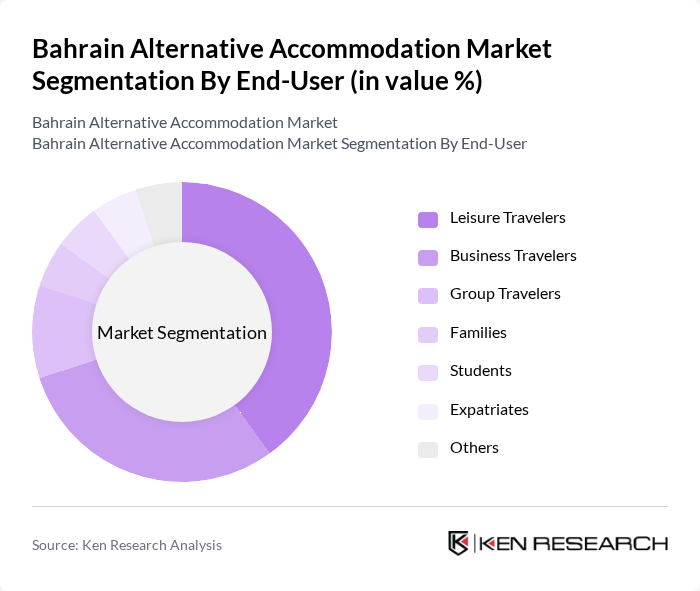
By End-User:The end-user segmentation of the alternative accommodation market includes leisure travelers, business travelers, group travelers, families, students, expatriates, and others. Leisure travelers dominate the market, driven by the increasing trend of experiential travel and the desire for unique accommodations. Business travelers also represent a significant segment, seeking convenience and comfort during their stays. The growing number of expatriates in Bahrain further contributes to the demand for flexible living arrangements. Young professionals and digital nomads are increasingly attracted by the convenience, affordability, and social connectivity offered by alternative accommodation spaces.
The Bahrain Alternative Accommodation Market is characterized by a dynamic mix of regional and international players. Leading participants such as Airbnb, Booking.com, Expedia Group, OYO Rooms, Trivago, HomeAway (Vrbo), Stayz, Agoda, Mumtalakat Real Estate & Hospitality, Bahrain Bay Development Company, The Collective (Co-Living Operator), WeLive (Co-Living Operator), Hmlet (Co-Living Operator), OYO Life, Sonder contribute to innovation, geographic expansion, and service delivery in this space.
The future of the Bahrain alternative accommodation market appears promising, driven by evolving consumer preferences and technological advancements. As the tourism sector continues to rebound post-pandemic, the demand for diverse lodging options is expected to rise. Additionally, the integration of smart technology in booking systems will enhance user experience, making it easier for travelers to find and book accommodations. This trend, coupled with a growing emphasis on sustainability, will shape the market landscape in the coming years.
| Segment | Sub-Segments |
|---|---|
| By Type | Vacation Rentals Serviced Apartments Hostels Bed and Breakfasts Boutique Hotels Homestays Co-Living Spaces Others |
| By End-User | Leisure Travelers Business Travelers Group Travelers Families Students Expatriates Others |
| By Region | Manama Muharraq Southern Governorate Northern Governorate |
| By Customer Segment | International Tourists Local Residents Expatriates Corporate Clients Students Others |
| By Booking Channel | Online Travel Agencies (OTAs) Direct Booking Travel Agents Mobile Apps Others |
| By Duration of Stay | Short-Term Stays Long-Term Stays Extended Stays Others |
| By Amenities Offered | Kitchen Facilities Wi-Fi Access Parking Availability Pet-Friendly Options Shared Workspaces Fitness Centers Community Events Cleaning Services Others |
| Scope Item/Segment | Sample Size | Target Respondent Profiles |
|---|---|---|
| Alternative Accommodation Providers | 90 | Property Owners, Managers of Vacation Rentals |
| Travelers Using Alternative Accommodations | 120 | Domestic and International Tourists |
| Local Tourism Stakeholders | 70 | Hotel Association Representatives, Travel Agents |
| Regulatory Bodies and Policy Makers | 40 | Government Officials, Tourism Policy Advisors |
| Market Analysts and Industry Experts | 40 | Market Researchers, Economic Analysts |
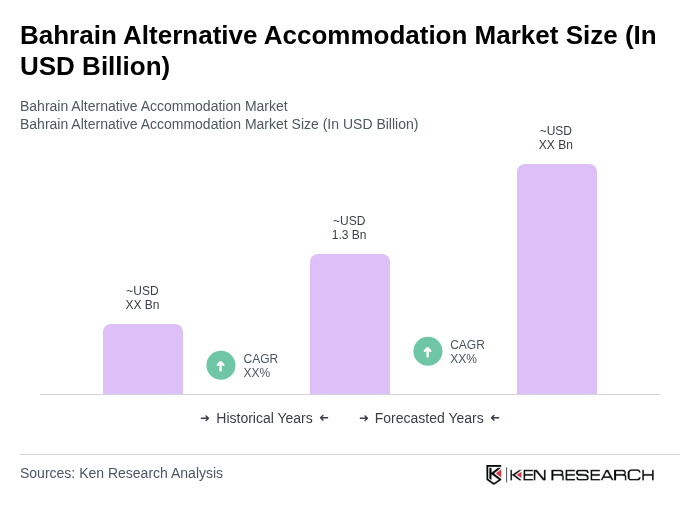
The Bahrain Alternative Accommodation Market is valued at approximately USD 1.3 billion, reflecting a significant growth driven by increased international tourism, business travel, and the popularity of short-term rental options among locals and expatriates.

What makes us stand out is that our consultants follow Robust, Refine and Result (RRR) methodology. Robust for clear definitions, approaches and sanity checking, Refine for differentiating respondents' facts and opinions, and Result for presenting data with story.

We have set a benchmark in the industry by offering our clients with syndicated and customized market research reports featuring coverage of entire market as well as meticulous research and analyst insights.

While we don't replace traditional research, we flip the method upside down. Our dual approach of Top Bottom & Bottom Top ensures quality deliverable by not just verifying company fundamentals but also looking at the sector and macroeconomic factors.

With one step in the future, our research team constantly tries to show you the bigger picture. We help with some of the tough questions you may encounter along the way: How is the industry positioned? Best marketing channel? KPI's of competitors? By aligning every element, we help maximize success.

Our report gives you instant access to the answers and sources that other companies might choose to hide. We elaborate each steps of research methodology we have used and showcase you the sample size to earn your trust.

If you need any support, we are here! We pride ourselves on universe strength, data quality, and quick, friendly, and professional service.













