Region:Middle East
Author(s):Rebecca
Product Code:KRAD1407
Pages:91
Published On:November 2025
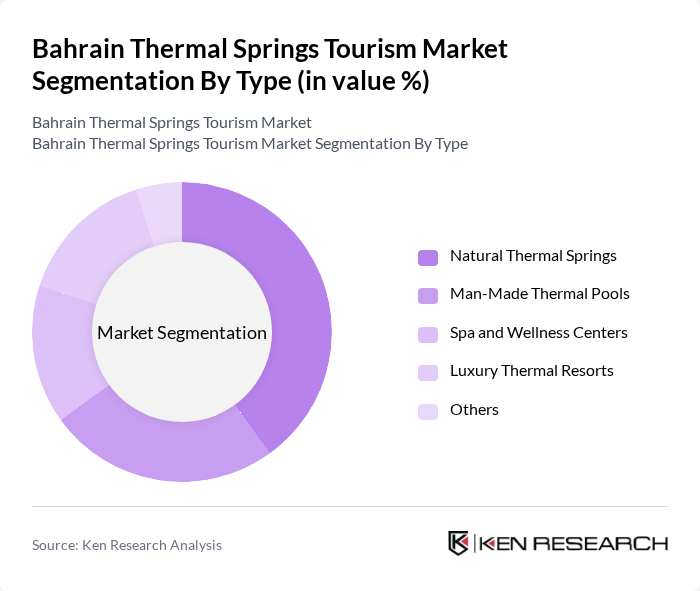
By Type:The market is segmented into Natural Thermal Springs, Man-Made Thermal Pools, Spa and Wellness Centers, Luxury Thermal Resorts, and Others. Natural Thermal Springs are gaining significant traction due to their authenticity and therapeutic benefits, reflecting a global consumer preference for natural wellness experiences. Man-Made Thermal Pools and Luxury Thermal Resorts remain popular among tourists seeking premium, high-end wellness services, with luxury offerings increasingly integrating advanced spa treatments, personalized wellness programs, and eco-friendly design .
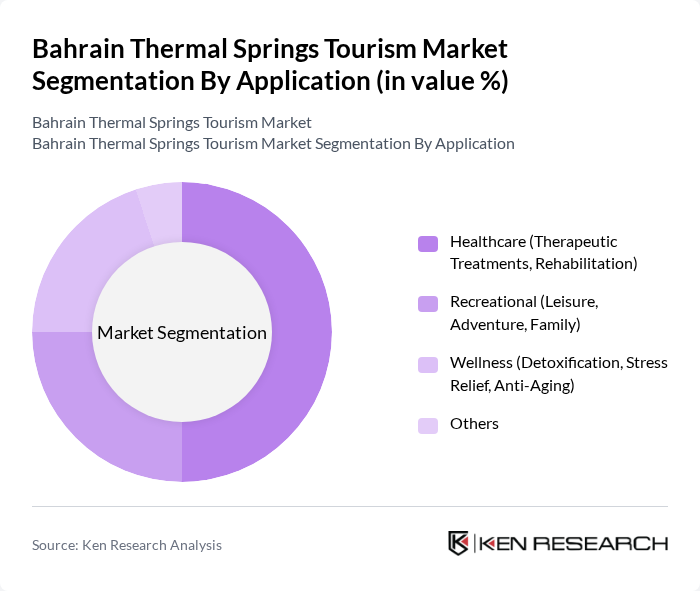
By Application:The applications of thermal springs tourism include Healthcare (Therapeutic Treatments, Rehabilitation), Recreational (Leisure, Adventure, Family), Wellness (Detoxification, Stress Relief, Anti-Aging), and Others. The Healthcare segment is dominant, as visitors increasingly seek therapeutic benefits from mineral-rich thermal springs, supporting rehabilitation and preventive health. The Wellness segment is growing rapidly, with travelers prioritizing detoxification, stress relief, and anti-aging treatments, reflecting a broader shift toward holistic health and relaxation in tourism .
The Bahrain Thermal Springs Tourism Market is characterized by a dynamic mix of regional and international players. Leading participants such as The Ritz-Carlton, Bahrain, Sofitel Bahrain Zallaq Thalassa Sea & Spa, Al Areen Palace & Spa, Gulf Hotel Bahrain Convention & Spa, Four Seasons Hotel Bahrain Bay, The Diplomat Radisson Blu Hotel, Residence & Spa, Crowne Plaza Bahrain, InterContinental Regency Bahrain, Novotel Bahrain Al Dana Resort, Ramada by Wyndham Manama City Centre, Le Méridien City Centre Bahrain, The Westin City Centre Bahrain, The K Hotel, Art Rotana Amwaj Islands, Elite Resort & Spa contribute to innovation, geographic expansion, and service delivery in this space.
The future of Bahrain's thermal springs tourism market appears promising, driven by increasing global interest in wellness and natural therapies. As the government continues to invest in infrastructure and marketing, the region is likely to attract a more diverse tourist demographic. Additionally, the integration of technology in customer experiences, such as virtual tours and online booking systems, will enhance visitor engagement. Sustainable practices will also play a crucial role in shaping the market, ensuring long-term viability and appeal to eco-conscious travelers.
| Segment | Sub-Segments |
|---|---|
| By Type | Natural Thermal Springs Man-Made Thermal Pools Spa and Wellness Centers Luxury Thermal Resorts Others |
| By Application | Healthcare (Therapeutic Treatments, Rehabilitation) Recreational (Leisure, Adventure, Family) Wellness (Detoxification, Stress Relief, Anti-Aging) Others |
| By Traveler Type | Domestic Tourists International Tourists |
| By Booking Channel | Direct Booking Online Travel Agencies Wellness Travel Agencies Others |
| By End-User | Individual Travelers Corporate Clients (MICE, Incentive Trips) Healthcare Providers Others |
| By Visitor Demographics | Age Groups Gender Income Levels Others |
| By Service Type | Therapeutic Treatments Recreational Services Accommodation Services Spa & Wellness Packages Others |
| By Duration of Stay | Day Trips Weekend Getaways Extended Stays Others |
| By Marketing Channel | Online Travel Agencies Direct Bookings Travel Agents Others |
| By Package Type | All-Inclusive Packages Customized Packages Group Packages Others |
| Scope Item/Segment | Sample Size | Target Respondent Profiles |
|---|---|---|
| Local Tour Operators | 60 | Tour Managers, Business Owners |
| Wellness Spa Managers | 50 | Operations Managers, Marketing Directors |
| International Tourists | 120 | Travelers who visited thermal springs |
| Health and Wellness Experts | 40 | Consultants, Researchers in Wellness Tourism |
| Government Tourism Officials | 45 | Policy Makers, Economic Development Officers |
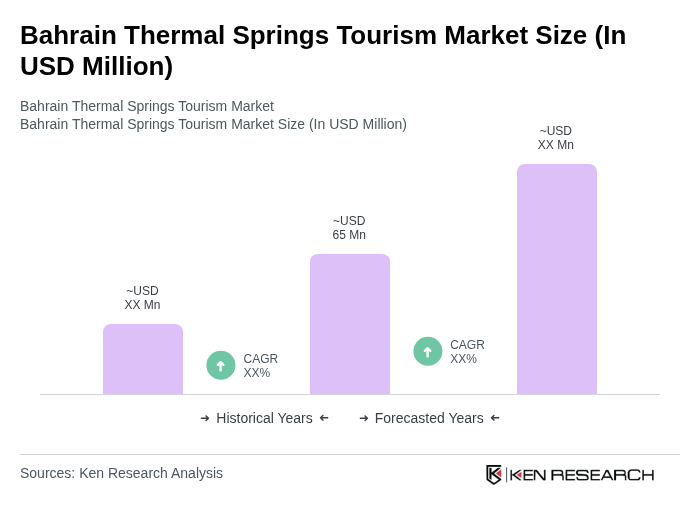
The Bahrain Thermal Springs Tourism Market is valued at approximately USD 65 million, reflecting its growth within the broader Middle East and North Africa (MENA) region, driven by increasing wellness tourism and health awareness among travelers.

What makes us stand out is that our consultants follow Robust, Refine and Result (RRR) methodology. Robust for clear definitions, approaches and sanity checking, Refine for differentiating respondents' facts and opinions, and Result for presenting data with story.

We have set a benchmark in the industry by offering our clients with syndicated and customized market research reports featuring coverage of entire market as well as meticulous research and analyst insights.

While we don't replace traditional research, we flip the method upside down. Our dual approach of Top Bottom & Bottom Top ensures quality deliverable by not just verifying company fundamentals but also looking at the sector and macroeconomic factors.

With one step in the future, our research team constantly tries to show you the bigger picture. We help with some of the tough questions you may encounter along the way: How is the industry positioned? Best marketing channel? KPI's of competitors? By aligning every element, we help maximize success.

Our report gives you instant access to the answers and sources that other companies might choose to hide. We elaborate each steps of research methodology we have used and showcase you the sample size to earn your trust.

If you need any support, we are here! We pride ourselves on universe strength, data quality, and quick, friendly, and professional service.













