CHAPTER 1 - MARKET SUMMARY
Market Overview
The Brazil E-Commerce Logistics Automation Market serves marketplaces, omnichannel retailers, digital-native brands and third-party logistics operators seeking to convert rising order volumes into predictable fulfillment economics. Approximately 94 million Brazilians are expected to purchase online in 2025, while e-commerce revenue is projected near USD 36.3 billion. This scale makes picking productivity, inventory accuracy and order-cycle automation increasingly material to margins.
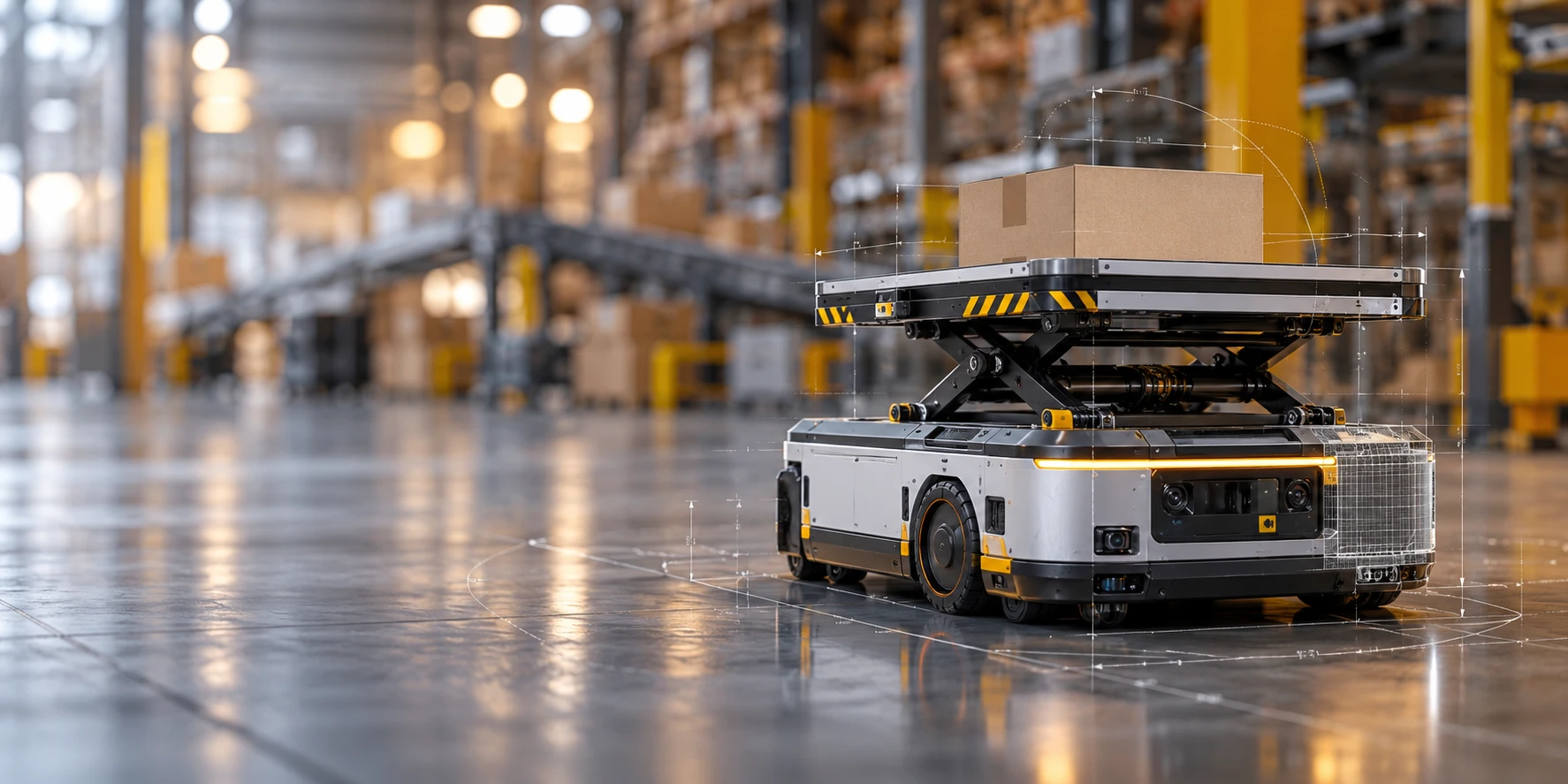
São Paulo and the wider Southeast form the principal automation cluster because the region combines major consumer catchments, distribution infrastructure and marketplace fulfillment investment. Mercado Livre expected to operate approximately 23 Brazilian distribution centers by end-2025, while new autonomous robots were designed to process about 105,000 items daily. Concentrating sophisticated fulfillment capacity around large demand hubs improves the economics of automation deployment and technical support.
Market Value
USD 735 million
2025
Dominant Region
Southeast Brazil
Dominant Segment
Automated Storage & Retrieval Systems
fastest growing: Autonomous Mobile Robots
Total Number of Players
45
Future Outlook
The Brazil E-Commerce Logistics Automation Market is projected to advance from USD 735 million in 2025 to USD 1,645 million in 2031 and USD 1,892 million by 2032. Historical expansion from 2020 to 2025 produced a 15.34% CAGR as pandemic-driven digital adoption transitioned into structural omnichannel investment. The forecast CAGR is modeled at 14.46% for 2025-2032, supported by marketplace network expansion, warehouse robotics, automated sortation, WES and WCS software, micro-fulfillment and greater integration between inventory systems and last-mile routing. Mercado Livre's large Brazil investment program reinforces the scale of logistics and technology spending available to the ecosystem.
Growth should progressively shift from large greenfield installations toward modular robots, brownfield retrofits and software-led orchestration that lower entry barriers for mid-sized operators. Automated picking, mobile robotics and flexible sortation are expected to gain share because these systems can scale alongside parcel peaks without requiring full warehouse reconstruction. Mercado Livre reported robot deployments capable of reducing multi-item order processing time by approximately 25%, illustrating the productivity case. Meanwhile, BNDES programs supporting digitalization, sensorization and Industry 4.0 equipment can improve financing accessibility. Investors should therefore expect recurring software, maintenance and service revenues to expand faster than conventional one-time material-handling equipment sales.
14.46%
Forecast CAGR
$1,892 Mn
2030 Projection
Base Year
2025
Historical Period
2020-2025
Forecast Period
2025-2032
Historical CAGR
15.34%
CHAPTER 2 - SCOPE OF REPORT
Scope of the Market
CHAPTER 3 - Key Stakeholders
Key Target Audience
Key stakeholders who can leverage from this market analysis for investment, strategy, and operational planning.
Investors
CAGR, recurring revenue, automation capex, utilization, project risk
Corporates
throughput, fulfillment cost, accuracy, uptime, automation ROI
Government
productivity, digitalization, compliance, localization, logistics resilience
Operators
picking speed, sortation, uptime, labor productivity, SLA
Financial institutions
project finance, payback, covenants, cash flows, utilization
CHAPTER 4 - Market Size & Growth
Market Size, Growth Forecast and Trends
This section evaluates the historical market size, analyzes year-over-year growth dynamics, and presents forecast projections supported by market performance indicators and demand-side drivers.
Historical & Projected Market Size ($ Million)
Year-over-Year Growth Rate (%)
Market Value vs Volume Growth (%)
Historical Market Performance (2020-2025)
Market expansion peaked in 2022 at 18.82% as operators moved from emergency pandemic capacity additions toward formalized automation programs. Growth subsequently normalized to 14.85% in 2023, 12.93% in 2024 and 12.21% in 2025 as large projects shifted toward phased commissioning. The historical pattern indicates that the market did not revert to pre-digital fulfillment practices after reopening. Instead, capital moved toward scalable AMRs, automated picking, sortation and orchestration software. Vendor opportunities increasingly depended on measurable throughput improvement, retrofit compatibility and the ability to integrate automation with existing warehouse-management environments.
Forecast Market Outlook (2025-2032)
The forecast model points to renewed acceleration, with annual growth moving from 13.61% in 2026 to approximately 15.02% by 2032. Expansion is expected to be supported by new fulfillment nodes, same-day delivery competition, increasing SKU complexity and adoption of modular automation outside the largest marketplaces. Higher software and service content should allow market value to outpace physical deployment volumes. The terminal outlook assumes robotics and execution software become standard investment categories for Tier 1 and Tier 2 fulfillment facilities while smaller operators increasingly access automation through subscription, leasing, systems-integration and robotics-as-a-service structures.
CHAPTER 5 - Market Data
Market Breakdown
Brazil's logistics automation investment cycle is moving from concentration among a small number of mega-fulfillment centers toward broader adoption across omnichannel retailers, regional 3PLs and specialized digital commerce operators. This transition expands the addressable opportunity for modular robotics, software orchestration and brownfield integration.
Year | Market Size (USD Mn) | YoY Growth (%) | E-Commerce Revenue (USD Bn) | Online Buyers (Mn) | Automated Fulfillment Penetration (% of Tier 1/2 Capacity) | Period |
|---|---|---|---|---|---|---|
| 2020 | $360 Mn | +- | 20.8 | 79 | Forecast | |
| 2021 | $425 Mn | +18.06% | 24.9 | 83 | Forecast | |
| 2022 | $505 Mn | +18.82% | 28.6 | 85 | Forecast | |
| 2023 | $580 Mn | +14.85% | 31.0 | 87 | Forecast | |
| 2024 | $655 Mn | +12.93% | 34.5 | 91 | Forecast | |
| 2025 | $735 Mn | +12.21% | 36.3 | 94 | Forecast | |
| 2026 | $835 Mn | +13.61% | 40.5 | 98 | Forecast | |
| 2027 | $955 Mn | +14.37% | 45.0 | 101 | Forecast | |
| 2028 | $1,095 Mn | +14.66% | 49.9 | 104 | Forecast | |
| 2029 | $1,255 Mn | +14.61% | 55.2 | 107 | Forecast | |
| 2030 | $1,435 Mn | +14.34% | 60.8 | 110 | Forecast | |
| 2031 | $1,645 Mn | +14.63% | 66.8 | 113 | Forecast | |
| 2032 | $1,892 Mn | +15.02% | 73.2 | 116 | Forecast |
E-Commerce Revenue
USD 36.3 billion, 2025, Brazil. Digital transaction scale enlarges the fulfillment throughput requiring automated handling. Marketplaces account for a substantial proportion of online transactions, increasing automation concentration among platform-operated and outsourced fulfillment networks.
Online Buyers
94 million buyers, 2025, Brazil. A larger purchasing population increases parcel frequency, geographic dispersion and SKU complexity. Mercado Livre's ecosystem was used by approximately 5.8 million businesses in 2024, illustrating the seller density that automated fulfillment networks must support.
Automated Fulfillment Penetration
47%, 2025, Tier 1/2 capacity estimate. The investment case strengthens as automation moves from experimental installations to throughput-critical infrastructure. Mercado Livre deployed 125 mobile robots capable of handling 105,000 items daily and reducing multi-item processing time by 25%.
CHAPTER 6 - Segmentation
Market Segmentation Framework
Comprehensive analysis across key dimensions providing insights into market structure, consumer preferences, and distribution patterns.
No of Segments
7
Dominant Segment
Solution Type
Fastest Growing Segment
Pricing Model
Solution Type
Deployment Model
Application
End-Use Industry
Enterprise Size
Pricing Model
Geography
Key Segmentation Takeaways
Comprehensive analysis across all extracted segmentation dimensions providing insights into market structure, consumer preferences, and distribution patterns.
Solution Type
Automation expenditure remains concentrated in integrated storage, picking, movement and sortation systems because large e-commerce facilities require high throughput and predictable service levels. Automated Storage & Retrieval Systems remain the largest solution pool, while Autonomous Mobile Robots gain strategic relevance because they can be deployed incrementally, reconfigured as order profiles change and integrated into existing facilities without complete infrastructure replacement.
Pricing Model
Procurement is shifting from exclusively upfront capital projects toward more flexible payment structures. Robotics-as-a-Service is expected to expand fastest as mid-sized retailers and logistics operators seek variable-cost automation without committing to full greenfield installations. Subscription software licensing similarly increases recurring revenue for vendors by linking orchestration, analytics, fleet management and warehouse execution capabilities to ongoing facility throughput rather than one-time equipment commissioning.
CHAPTER 7 - Regional Analysis
Regional Analysis
Brazil ranks as the largest logistics automation opportunity among selected Latin American e-commerce peers in the 2025 model, supported by its large online purchasing population, marketplace scale and expanding fulfillment infrastructure. Mexico remains the closest peer, while Colombia, Argentina and Chile provide smaller but strategically relevant automation markets. Brazil's e-commerce revenue is expected to reach USD 36.3 billion in 2025.
Focus Country Ranking
1st
Focus Country Market Size
USD 735 Mn
Brazil CAGR (2025-2032)
14.46%
Focus Country Ranking
1st
Focus Country Market Size
USD 735 Mn
Brazil CAGR (2025-2032)
14.46%
Regional Analysis (Current Year)
Market Position
Brazil ranks first among the selected peers at USD 735 million, supported by approximately 94 million expected online buyers and investment in increasingly dense fulfillment networks.
Growth Advantage
Brazil's modeled 14.46% CAGR places it near regional growth leaders, below Mexico's 15.20% but above Chile's 11.90%, reflecting greater remaining scope for warehouse and robotics investment. Mexico's online retail is projected to approach USD 72 billion by 2029.
Competitive Strengths
Brazil combines large-scale marketplace demand, domestic automation engineering capacity and an expanding systems-integration ecosystem. Interroll operates manufacturing capacity in Brazil, while KNAPP maintains a South American base focused on the Mercosur region.
CHAPTER 8 - INDUSTRY ANALYSIS
Growth Drivers, Challenges & Opportunities
Comprehensive analysis of key factors shaping the Brazil E-Commerce Logistics Automation Market, including growth catalysts, operational challenges, and emerging opportunities across fulfillment, distribution, warehouse technology and e-commerce logistics operations.
Growth Drivers
Expansion of Digital Order Volumes
- E-commerce revenue is expected to reach USD 36.3 billion (2025, Brazil), creating a larger economic base from which retailers can justify automation capital and software expenditure.
- Brazil adds approximately 3 million online buyers year over year (2025, Brazil), increasing recurring order density and improving utilization economics for automated storage, picking and sortation assets.
- Marketplaces account for a substantial proportion of online transactions, concentrating order volume in facilities where high-throughput automation is economically viable (2025, Brazil) and creating demand for integrators and robotics vendors.
Compression of Fulfillment Cycle Times
- Mercado Livre deployed 125 autonomous robots (2025, Brazil) for order separation, demonstrating that robotics has moved from pilot projects into production-scale fulfillment operations.
- The robotic system was designed to process approximately 105,000 items daily (2025, Brazil), strengthening the ROI case for equipment suppliers, system integrators and orchestration software providers.
- Previous robot deployments allowed goods to move through fulfillment facilities earlier, potentially improving same-day dispatch by 30 to 60 minutes (2024, Brazil), linking automation investment directly to customer service differentiation.
Large-Scale Logistics and Technology Investment
- The investment program increased approximately 47.8% year over year (2025, Brazil), with logistics and technology explicitly included among spending priorities, supporting multi-year systems-integration pipelines.
- Mercado Livre expected its Brazilian workforce to exceed 50,000 employees (2025, Brazil), indicating substantial operational scale where human-machine collaboration and automation productivity become financially material.
- BNDES supports digitalization, sensorization and Industry 4.0 investment, including financing for eligible technology programs, improving capital accessibility for industrial digital transformation projects (2025, Brazil).
Market Challenges
Import and Tax Exposure for Automation Components
- The simplified regime applies to eligible international consignments with customs value up to USD 3,000 (2026, Brazil), making tax classification relevant for imported automation components, replacement electronics and spares.
- State ICMS can range approximately 17% to 20% (2026, Brazil) on relevant imported consignments, increasing working-capital requirements and strengthening the value of locally produced components and domestic technical support.
- Localization therefore becomes a strategic advantage for suppliers with Brazilian manufacturing or service capability, particularly where imported spare-part availability affects mission-critical warehouse uptime (2025-2032, Brazil).
Compliance and Traceability Complexity
- Anatel's May inspection covered eight distribution centers (2025, Brazil), demonstrating that product compliance can affect operations across multiple facilities and requires centralized SKU-level control.
- Approximately 1,700 irregular items at Amazon facilities (2025, Brazil) were affected in the operation, reinforcing demand for automated blocking, inventory audit and exception-management workflows.
- Anatel reported removal of approximately 8.4 million irregular products since 2018 (Brazil), indicating persistent compliance risk for marketplaces handling electronics and connected devices.
Road-Dependent Last-Mile Economics
- Brazil has more than 3.5 million trucks in circulation (2025, Brazil), creating a large but operationally fragmented surface transport ecosystem that warehouse systems must coordinate.
- Road dependence exposes parcel service levels to congestion, fuel costs and route variability, increasing the value of software capable of linking warehouse cut-off decisions with carrier dispatch (2025-2032, Brazil).
- The federal paved road network extends approximately 65,400 km (Brazil), requiring automated fulfillment strategies to account for wide geographic variation in downstream transit economics.
Market Opportunities
Modular Robotics and Robotics-as-a-Service
- Vendors can monetize robotics through subscription, leasing and usage-linked contracts because deployments of 125 AMRs (2025, Brazil) demonstrate commercial-scale applicability rather than experimental adoption.
- Mid-market retailers and 3PLs benefit most because variable-cost automation reduces upfront capital exposure while allowing robotic fleets to expand alongside seasonal peak throughput (2025-2032, Brazil).
- Opportunity realization requires interoperable fleet-management layers capable of coordinating multiple automation technologies, with modern WCS platforms designed for centralized multi-equipment control (2026, global application).
Warehouse Execution and Orchestration Software
- KNAPP's Brazilian omnichannel project for Lojas Renner was designed for throughput up to 100,000 items per hour (Brazil), illustrating the orchestration complexity of high-volume facilities.
- Software suppliers benefit from recurring licensing, support and analytics revenue because WES and WCS platforms operate as the integration layer linking automation with warehouse and order systems (2025-2032, Brazil).
- Adoption depends on API standardization, equipment interoperability and strong data governance, as automated marketplace integration increasingly synchronizes orders, catalogs and inventory (Brazil) between warehouses and digital sales channels.
Regional Fulfillment Network Expansion
- Automation vendors benefit as fulfillment capacity expands beyond São Paulo into regional hubs, supporting standardized equipment and software rollouts across multi-state logistics networks (2025-2032, Brazil).
- Retailers benefit from regional automation by moving inventory closer to demand, increasing the number of orders economically eligible for same-day or next-day delivery across major metropolitan catchments (2025-2032, Brazil).
- Expansion requires localized maintenance and integration capability; Scheffer reports teams across multiple Brazilian regions while Interroll maintains Brazilian manufacturing, strengthening domestic support availability (2026, Brazil).
CHAPTER 9 - Competitive Landscape
Competitive Landscape Overview
Competition combines multinational warehouse-automation specialists with locally established integrators and equipment providers. Differentiation centers on system integration, project delivery, software interoperability, lifecycle service and ability to support geographically distributed Brazilian fulfillment networks.
Market Share Distribution
Top 5 Players
Market Dynamics
8 new entrants in the past 5 years, indicating strong market attractiveness and growth potential.
Company Name | Market Share | Headquarters | Founding Year | Core Market Focus |
|---|---|---|---|---|
Dematic | - | Atlanta, United States | - | Integrated warehouse automation, AS/RS, goods-to-person systems, sortation and software |
SSI SCHAEFER | - | Neunkirchen, Germany | 1937 | Intralogistics systems, automated storage, picking, conveying and warehouse software |
Mecalux | - | Barcelona, Spain | 1966 | Automated warehouses, storage systems, WMS and marketplace-integrated fulfillment |
Körber Supply Chain | - | Hamburg, Germany | 1946 | Warehouse automation, WCS/WES, robotics, sortation and systems integration |
Honeywell Intelligrated | - | Mason, United States | 2001 | Material-handling automation, robotics, sortation and warehouse execution software |
KNAPP | - | Hart bei Graz, Austria | 1952 | Intelligent logistics automation, shuttle systems, robotics and omnichannel fulfillment |
Vanderlande | - | Veghel, Netherlands | 1949 | Warehouse automation, robotic fulfillment, storage, picking and parcel systems |
Interroll | - | Sant'Antonino, Switzerland | 1959 | Conveyors, rollers, sorters and modular material-handling systems |
Águia Sistemas | - | Ponta Grossa, Brazil | - | Brazilian intralogistics equipment, robotic sortation and integrated warehouse systems |
Scheffer Automação e Logística | - | Ponta Grossa, Brazil | 1995 | Automated storage, material movement, systems integration and lifecycle support |
Cross Comparison Parameters
The report provides detailed cross-comparison of key players across 10 performance parameters to identify competitive strengths and weaknesses.
Automated Throughput Capacity
System Uptime and Service Coverage
Brazil Automation Revenue Growth
Recurring Software and Service Revenue Mix
Analysis Covered
Market Share Analysis:
Evaluates vendor positioning across Brazilian e-commerce automation demand pools.
Cross Comparison Matrix:
Benchmarks operational scale, software capability, service coverage and economics.
SWOT Analysis:
Identifies technology strengths, localization gaps, risks and expansion options.
Pricing Strategy Analysis:
Compares capex, turnkey, subscription and service-based automation economics.
Company Profiles:
Reviews portfolio depth, market presence, projects and strategic positioning.
CHAPTER 10 - REPORT TOC
Table of Contents
Market Assessment Phase
Supply-side and competitive intelligence covering market sizing, segmentation, competitive dynamics, regulatory landscape, and future forecasts.
Go-To-Market Strategy Phase
15 chapters
Entry strategy evaluation, execution roadmap, partner recommendations, and profitability outlook.
Survey Phase
8 chapters
Demand-side primary research conducted through structured interviews and online surveys with end users across priority metros and Tier 2/3 cities to capture consumption behavior, unmet needs, and purchase drivers.
Complete Report Coverage
201+ detailed sections covering every aspect of the market
143
Assessment Sections
58
Strategy Sections
CHAPTER 11 - Our Approach
Research Methodology
Desk Research
- Brazil e-commerce demand dataset review
- Fulfillment automation project mapping analysis
- Warehouse technology vendor portfolio review
- Logistics regulation and policy assessment
Primary Research
- Fulfillment operations directors interviewed nationally
- Warehouse automation managers interviewed directly
- Systems integration directors benchmarked independently
- E-commerce logistics heads surveyed nationally
Validation and Triangulation
- 320 respondents across automation ecosystem
- Vendor revenue estimates cross-validated independently
- Project throughput benchmarks reconciled systematically
- Demand and capacity models reconciled
CHAPTER 12 - FAQ
FAQs
Still have questions?
Our research team is here to help you find the right solution
CHAPTER 13 - Related Research
Explore Related Reports
Expand your market intelligence with complementary research across regions and adjacent markets.
Regional/Country ReportsRelated market analysis across key regions
Related market analysis across key regions
- Indonesia E-Commerce Logistics Automation Market Size, Share & Forecast, 2025-2032
- Vietnam E-Commerce Logistics Automation Market Size, Share & Forecast, 2025-2032
- Thailand E-Commerce Logistics Automation Market Size, Share & Forecast, 2025-2032
- Malaysia E-Commerce Logistics Automation Market Size, Share & Forecast, 2025-2032
- Philippines E-Commerce Logistics Automation Market Size, Share & Forecast, 2025-2032
Adjacent ReportsRelated markets and complementary research
Related markets and complementary research
- Malaysia E-Commerce Technology Market
- Qatar Logistics Automation Solutions Market
- South Africa Warehouse Management Systems Market
- Vietnam Autonomous Robotics Market
- UAE Supply Chain Management Software Market
500+
Market Research Reports
50+
Countries Covered
15+
Industry Verticals