Region:Middle East
Author(s):Dev
Product Code:KRAE0233
Pages:81
Published On:December 2025
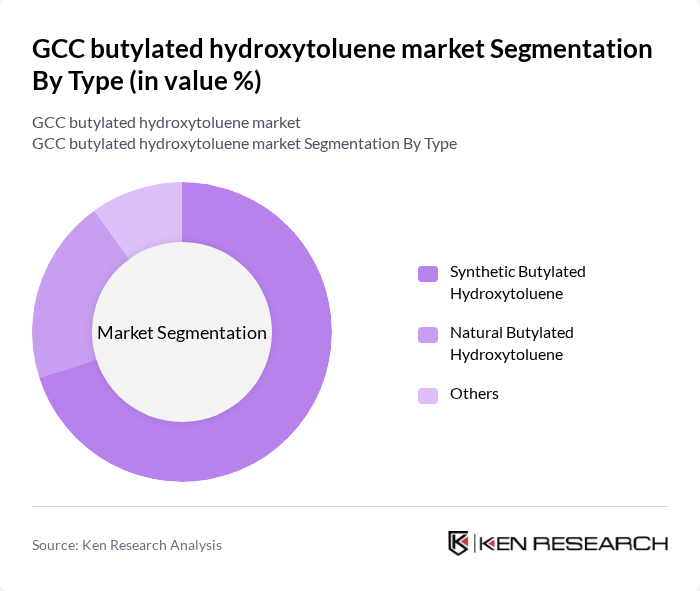
By Type:The butylated hydroxytoluene market is segmented into synthetic, natural, and other types. Synthetic butylated hydroxytoluene dominates the market due to its widespread application in various industries, particularly in food preservation and cosmetics. The reliability and effectiveness of synthetic BHT in extending shelf life and preventing oxidation make it a preferred choice among manufacturers. Natural butylated hydroxytoluene, while gaining traction due to the rising demand for natural ingredients, still lags behind in market share.
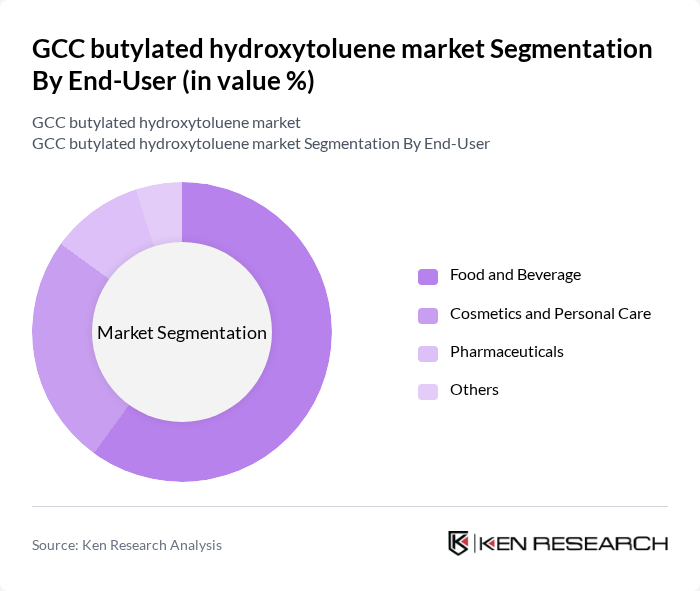
By End-User:The end-user segmentation includes food and beverage, cosmetics and personal care, pharmaceuticals, and others. The food and beverage sector is the leading end-user, driven by the increasing need for food preservation and safety. The cosmetics and personal care industry also significantly contributes to the demand for butylated hydroxytoluene, as it is widely used in formulations to enhance product stability and shelf life. Pharmaceuticals and other sectors follow, but their market share is comparatively smaller.
The GCC butylated hydroxytoluene market is characterized by a dynamic mix of regional and international players. Leading participants such as Eastman Chemical Company, BASF SE, Koppers Inc., Solvay S.A., Addivant USA LLC, SI Group, Inc., Chemtura Corporation, Lanxess AG, Mitsubishi Gas Chemical Company, Inc., Afton Chemical Corporation, Clariant AG, Croda International Plc, Huntsman Corporation, Oxiris Chemicals S.A., Taminco Corporation contribute to innovation, geographic expansion, and service delivery in this space.
The GCC butylated hydroxytoluene market is poised for significant evolution, driven by increasing consumer awareness and regulatory changes. As the demand for food safety and product longevity intensifies, manufacturers are likely to innovate in BHT formulations. Additionally, the trend towards sustainable practices will push companies to explore eco-friendly alternatives while maintaining product efficacy. Strategic partnerships with food and pharmaceutical companies will also be crucial in navigating the competitive landscape and addressing regulatory challenges effectively.
| Segment | Sub-Segments |
|---|---|
| By Type | Synthetic Butylated Hydroxytoluene Natural Butylated Hydroxytoluene Others |
| By End-User | Food and Beverage Cosmetics and Personal Care Pharmaceuticals Others |
| By Application | Food Preservation Industrial Applications Cosmetic Formulations Others |
| By Distribution Channel | Direct Sales Online Retail Distributors and Wholesalers Others |
| By Geography | Saudi Arabia UAE Qatar Others |
| By Packaging Type | Bulk Packaging Retail Packaging Others |
| By Product Form | Liquid Form Powder Form Others |
| Scope Item/Segment | Sample Size | Target Respondent Profiles |
|---|---|---|
| Food Industry Applications | 100 | Food Safety Managers, Quality Assurance Officers |
| Cosmetics and Personal Care | 80 | Product Development Managers, Regulatory Affairs Specialists |
| Pharmaceutical Sector Usage | 70 | Research Scientists, Compliance Managers |
| Industrial Applications | 60 | Procurement Managers, Production Supervisors |
| Environmental Impact Assessments | 50 | Environmental Compliance Officers, Sustainability Managers |
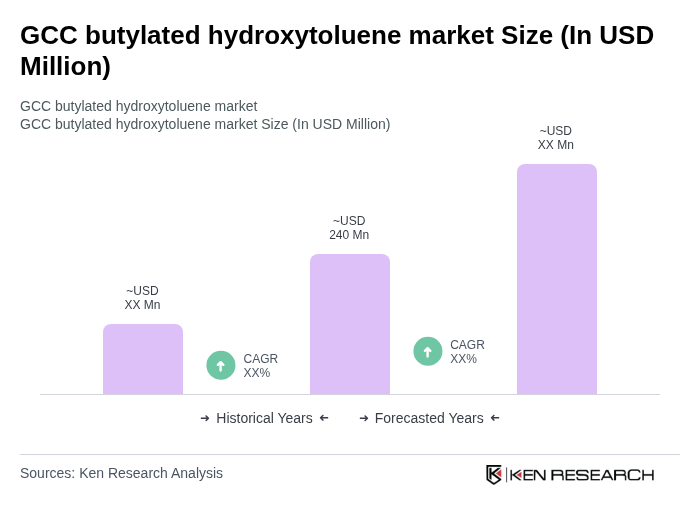
The GCC butylated hydroxytoluene market is valued at approximately USD 240 million, driven by increasing demand for antioxidants in food preservation, plastics, and cosmetics across the Gulf region.

What makes us stand out is that our consultants follow Robust, Refine and Result (RRR) methodology. Robust for clear definitions, approaches and sanity checking, Refine for differentiating respondents' facts and opinions, and Result for presenting data with story.

We have set a benchmark in the industry by offering our clients with syndicated and customized market research reports featuring coverage of entire market as well as meticulous research and analyst insights.

While we don't replace traditional research, we flip the method upside down. Our dual approach of Top Bottom & Bottom Top ensures quality deliverable by not just verifying company fundamentals but also looking at the sector and macroeconomic factors.

With one step in the future, our research team constantly tries to show you the bigger picture. We help with some of the tough questions you may encounter along the way: How is the industry positioned? Best marketing channel? KPI's of competitors? By aligning every element, we help maximize success.

Our report gives you instant access to the answers and sources that other companies might choose to hide. We elaborate each steps of research methodology we have used and showcase you the sample size to earn your trust.

If you need any support, we are here! We pride ourselves on universe strength, data quality, and quick, friendly, and professional service.













