Region:Middle East
Author(s):Shubham
Product Code:KRAD1044
Pages:93
Published On:November 2025
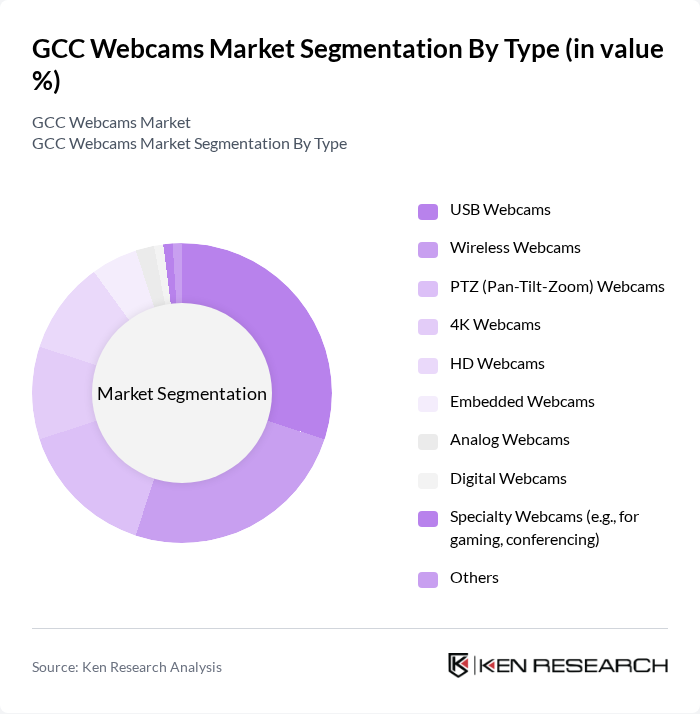
By Type:The market is segmented into various types of webcams, includingUSB Webcams, Wireless Webcams, PTZ (Pan-Tilt-Zoom) Webcams, 4K Webcams, HD Webcams, Embedded Webcams, Analog Webcams, Digital Webcams, Specialty Webcams (e.g., for gaming, conferencing), and Others. Among these,USB Webcams and Wireless Webcamsare particularly popular due to their ease of use, plug-and-play compatibility, and versatility. PTZ and 4K webcams are gaining traction in professional and enterprise environments, while embedded webcams remain standard in laptops and monitors. Analog webcams are primarily used in legacy security systems, and digital webcams dominate new installations due to higher resolution and network integration.
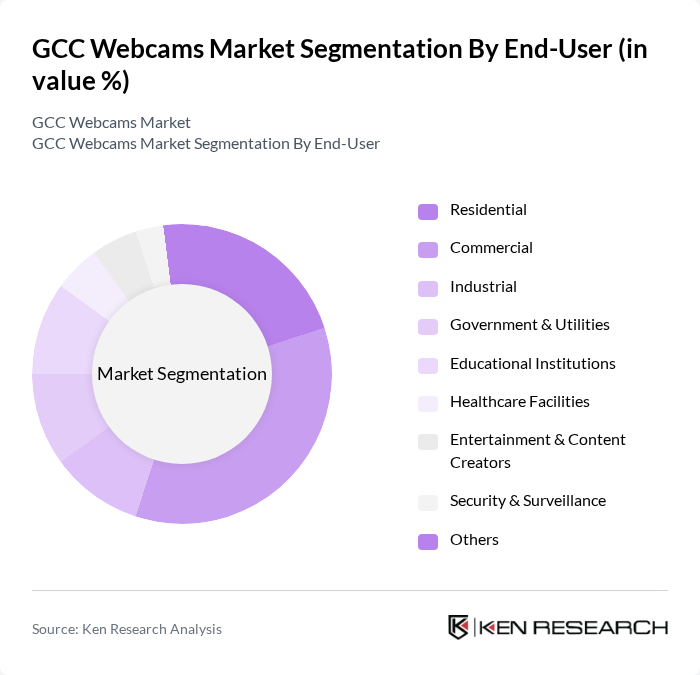
By End-User:The end-user segmentation includesResidential, Commercial, Industrial, Government & Utilities, Educational Institutions, Healthcare Facilities, Entertainment & Content Creators, Security & Surveillance, and Others. Thecommercial sectoris currently the leading segment, driven by the increasing adoption of video conferencing solutions in businesses, expansion of remote and hybrid work policies, and investments in digital collaboration tools. Educational institutions and healthcare facilities are also significant contributors, leveraging webcams for remote learning and telemedicine.
The GCC Webcams Market is characterized by a dynamic mix of regional and international players. Leading participants such as Logitech, Razer, Microsoft, Canon, Sony, Dell, HP, AVerMedia, Elgato, Creative Technology Ltd., Jabra, Cisco, Samsung, ASUS, MSI, Xiaomi, D-Link Systems, and Genius (KYE Systems Corp.) contribute to innovation, geographic expansion, and service delivery in this space.
The GCC webcams market is poised for continued growth, driven by technological advancements and evolving consumer preferences. As remote work and online education become entrenched in daily life, the demand for high-quality webcams will likely increase. Additionally, the integration of artificial intelligence in webcam technology is expected to enhance user experience, making webcams more appealing. Companies that adapt to these trends and prioritize innovation will be well-positioned to capture market share in the coming years.
| Segment | Sub-Segments |
|---|---|
| By Type | USB Webcams Wireless Webcams PTZ (Pan-Tilt-Zoom) Webcams K Webcams HD Webcams Embedded Webcams Analog Webcams Digital Webcams Specialty Webcams (e.g., for gaming, conferencing) Others |
| By End-User | Residential Commercial Industrial Government & Utilities Educational Institutions Healthcare Facilities Entertainment & Content Creators Security & Surveillance Others |
| By Application | Video Conferencing Streaming and Content Creation Security and Surveillance Remote Monitoring E-learning Telehealth Visual Marketing Live Events Others |
| By Distribution Channel | Online Retail Offline Retail Direct Sales Distributors and Wholesalers E-commerce Platforms Brick and Mortar Stores Others |
| By Region | Saudi Arabia UAE Qatar Kuwait Oman Bahrain Others |
| By Brand | Logitech Razer Microsoft Canon Sony Dell HP AVerMedia Elgato Creative Technology Ltd. Jabra Cisco Samsung ASUS MSI Xiaomi D-Link Systems Genius (KYE Systems Corp.) Others |
| By Price Range | Budget Mid-range Premium Luxury Others |
| Scope Item/Segment | Sample Size | Target Respondent Profiles |
|---|---|---|
| Corporate Sector Webcam Usage | 100 | IT Managers, HR Directors |
| Education Sector Adoption | 70 | School Administrators, IT Coordinators |
| Gaming Community Insights | 50 | Professional Gamers, Streamers |
| Healthcare Telemedicine Applications | 40 | Healthcare Providers, IT Support Staff |
| Consumer Market Preferences | 60 | General Consumers, Tech Enthusiasts |
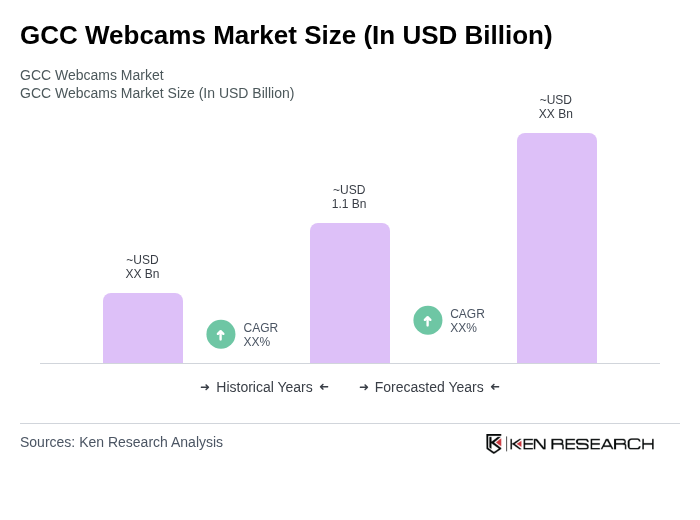
The GCC Webcams Market is valued at approximately USD 1.1 billion, reflecting significant growth driven by increased demand for remote communication tools, particularly due to the COVID-19 pandemic and the rise of hybrid work models.

What makes us stand out is that our consultants follow Robust, Refine and Result (RRR) methodology. Robust for clear definitions, approaches and sanity checking, Refine for differentiating respondents' facts and opinions, and Result for presenting data with story.

We have set a benchmark in the industry by offering our clients with syndicated and customized market research reports featuring coverage of entire market as well as meticulous research and analyst insights.

While we don't replace traditional research, we flip the method upside down. Our dual approach of Top Bottom & Bottom Top ensures quality deliverable by not just verifying company fundamentals but also looking at the sector and macroeconomic factors.

With one step in the future, our research team constantly tries to show you the bigger picture. We help with some of the tough questions you may encounter along the way: How is the industry positioned? Best marketing channel? KPI's of competitors? By aligning every element, we help maximize success.

Our report gives you instant access to the answers and sources that other companies might choose to hide. We elaborate each steps of research methodology we have used and showcase you the sample size to earn your trust.

If you need any support, we are here! We pride ourselves on universe strength, data quality, and quick, friendly, and professional service.













