Region:Global
Author(s):Geetanshi
Product Code:KRAA2835
Pages:86
Published On:August 2025
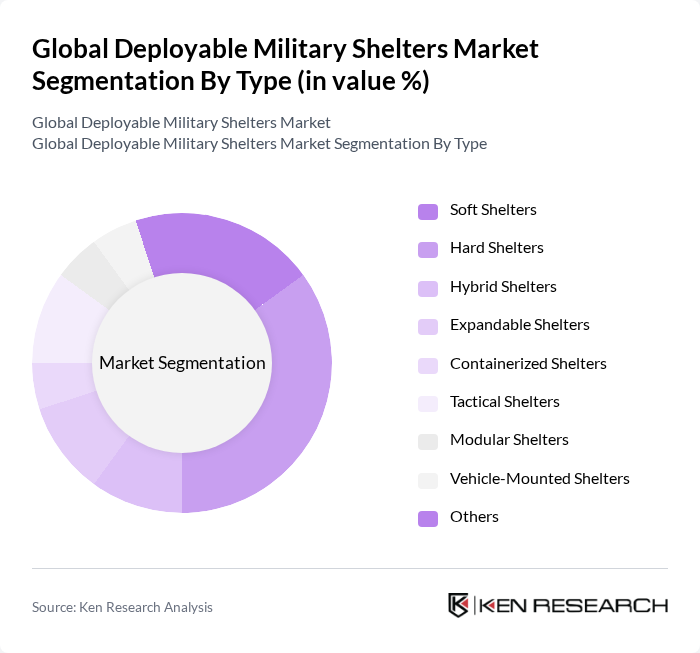
By Type:The market is segmented into Soft Shelters, Hard Shelters, Hybrid Shelters, Expandable Shelters, Containerized Shelters, Tactical Shelters, Modular Shelters, Vehicle-Mounted Shelters, and Others. Hard Shelters currently dominate the market due to their superior robustness and ability to withstand extreme environmental conditions, making them the preferred choice for military operations in remote and contested zones. The trend toward durable and secure facilities, especially in regions with active conflict or disaster response needs, continues to drive demand for Hard Shelters .
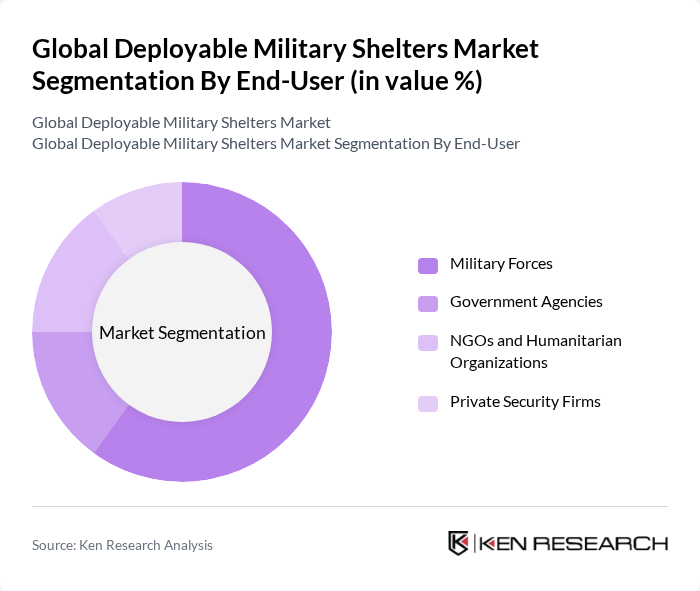
By End-User:The end-user segmentation includes Military Forces, Government Agencies, NGOs and Humanitarian Organizations, and Private Security Firms. Military Forces are the leading end-users, accounting for the majority of market demand. This dominance is driven by the need for rapid deployment, operational flexibility, and secure infrastructure in diverse environments. The increasing frequency of military operations, peacekeeping missions, and disaster relief efforts has resulted in a surge in demand for deployable shelters among military forces globally .
The Global Deployable Military Shelters Market is characterized by a dynamic mix of regional and international players. Leading participants such as General Dynamics Corporation, Northrop Grumman Corporation, AAR Corp., HDT Global, Marshall Aerospace and Defence Group, Alaska Structures, Inc., Röder HTS Höcker GmbH, Weatherhaven Global Resources Ltd., Leonardo DRS (formerly DRS Technologies, Inc.), Losberger De Boer, Zarges GmbH, UTS Systems LLC, Big Top Manufacturing, Rubb Buildings Ltd., CAMSS Shelters contribute to innovation, geographic expansion, and service delivery in this space.
The future of the deployable military shelters market appears promising, driven by ongoing technological advancements and increasing military budgets. As nations prioritize rapid response capabilities, the demand for innovative shelter solutions is expected to rise. Additionally, the integration of smart technologies and sustainable practices will likely shape product development, enhancing operational efficiency and environmental compliance. This evolving landscape presents significant opportunities for manufacturers to innovate and expand their market presence in the coming years.
| Segment | Sub-Segments |
|---|---|
| By Type | Soft Shelters Hard Shelters Hybrid Shelters Expandable Shelters Containerized Shelters Tactical Shelters Modular Shelters Vehicle-Mounted Shelters Others |
| By End-User | Military Forces Government Agencies NGOs and Humanitarian Organizations Private Security Firms |
| By Application | Command and Control Centers Medical Facilities Living Quarters Storage and Logistics Maintenance & Repair Facilities Aircraft & Vehicle Shelters |
| By Deployment Method | Air-Transportable Ground-Transportable Sea-Transportable |
| By Material Type | Fabric-Based Metal-Based Composite Materials Polymer Fabric |
| By Size | Small Medium Large |
| By Region | North America Europe Asia-Pacific Latin America Middle East & Africa |
| Scope Item/Segment | Sample Size | Target Respondent Profiles |
|---|---|---|
| Military Procurement Departments | 100 | Procurement Officers, Logistics Managers |
| Defense Contractors | 80 | Business Development Managers, Product Engineers |
| Field Operations Personnel | 60 | Field Commanders, Operations Coordinators |
| Emergency Response Units | 50 | Emergency Managers, Logistics Coordinators |
| Military Research Institutions | 40 | Research Analysts, Technology Officers |
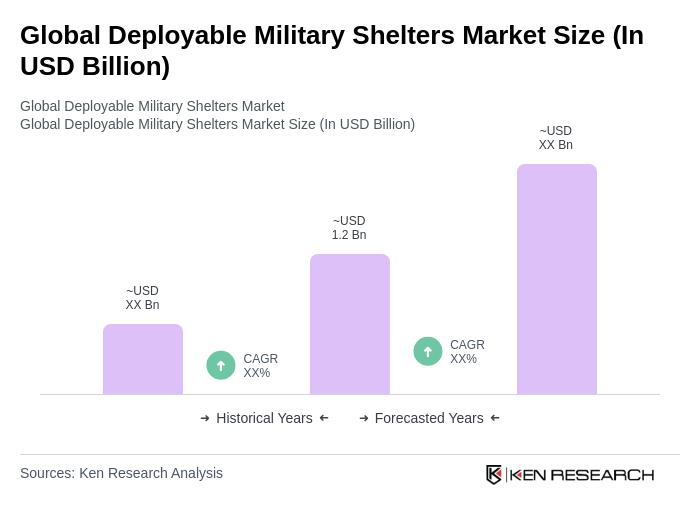
The Global Deployable Military Shelters Market is valued at approximately USD 1.2 billion, reflecting strong demand driven by increased defense budgets and the need for rapid deployment capabilities in conflict zones and disaster relief operations.

What makes us stand out is that our consultants follow Robust, Refine and Result (RRR) methodology. Robust for clear definitions, approaches and sanity checking, Refine for differentiating respondents' facts and opinions, and Result for presenting data with story.

We have set a benchmark in the industry by offering our clients with syndicated and customized market research reports featuring coverage of entire market as well as meticulous research and analyst insights.

While we don't replace traditional research, we flip the method upside down. Our dual approach of Top Bottom & Bottom Top ensures quality deliverable by not just verifying company fundamentals but also looking at the sector and macroeconomic factors.

With one step in the future, our research team constantly tries to show you the bigger picture. We help with some of the tough questions you may encounter along the way: How is the industry positioned? Best marketing channel? KPI's of competitors? By aligning every element, we help maximize success.

Our report gives you instant access to the answers and sources that other companies might choose to hide. We elaborate each steps of research methodology we have used and showcase you the sample size to earn your trust.

If you need any support, we are here! We pride ourselves on universe strength, data quality, and quick, friendly, and professional service.













