Region:Global
Author(s):Rebecca
Product Code:KRAD4987
Pages:93
Published On:December 2025
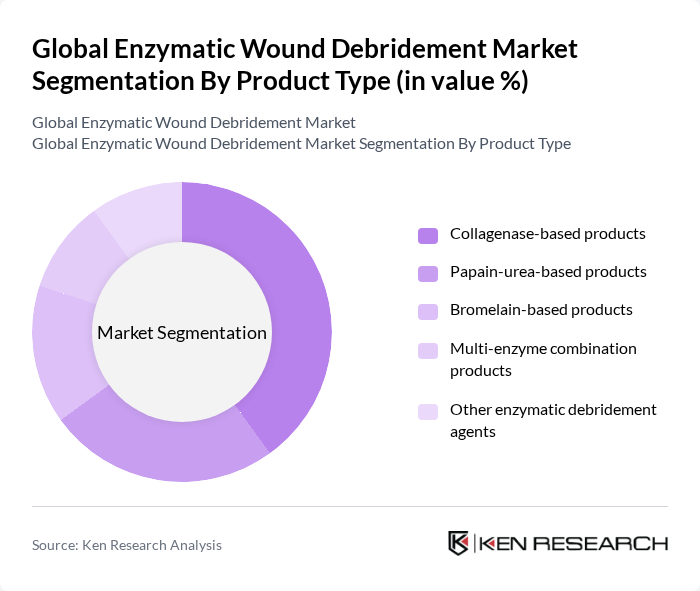
By Product Type:The enzymatic wound debridement market can be segmented into various product types, including collagenase-based products, papain-urea-based products, bromelain-based products, multi-enzyme combination products, and other enzymatic debridement agents. Among these, collagenase-based products are leading the market due to their demonstrated effectiveness in selectively breaking down necrotic collagen in chronic ulcers, pressure sores, and burns while sparing viable tissue, which supports faster granulation and wound healing. The increasing preference for these products in hospital, clinic, and homecare settings is driven by their proven efficacy and safety profile, extensive clinical use history, and availability in user-friendly formulations such as ointments, creams, and gels.
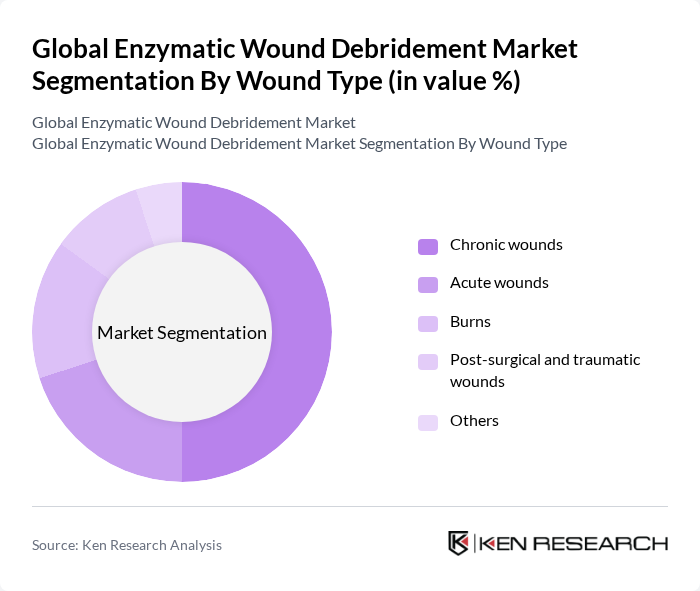
By Wound Type:The market can also be segmented based on wound types, including chronic wounds, acute wounds, burns, post-surgical and traumatic wounds, and others. Chronic wounds, particularly diabetic foot ulcers, venous leg ulcers, and pressure ulcers, dominate this segment due to the rising global incidence of diabetes, obesity, peripheral artery disease, and age-related comorbidities, which collectively drive a high and persistent burden of non-healing wounds. The increasing focus on evidence-based wound management protocols in hospitals, wound care centers, and homecare, along with initiatives to reduce amputation rates and hospital readmissions, further drives the demand for enzymatic products tailored to chronic wound care.
The Global Enzymatic Wound Debridement Market is characterized by a dynamic mix of regional and international players. Leading participants such as Smith & Nephew plc, ConvaTec Group PLC, Mölnlycke Health Care AB, B. Braun Melsungen AG, Integra LifeSciences Corporation, Medline Industries, LP, 3M Company, Coloplast A/S, Organogenesis Inc., Derma Sciences, Inc. (a subsidiary of Integra LifeSciences), Mediwound Ltd., Vericel Corporation, Zimmer Biomet Holdings, Inc., Cardinal Health, Inc., Hollister Incorporated contribute to innovation, geographic expansion, and service delivery in this space.
The future of the enzymatic wound debridement market appears promising, driven by technological advancements and an increasing focus on personalized healthcare solutions. As healthcare systems evolve, there is a growing trend towards home healthcare, allowing patients to manage their wounds more effectively. Additionally, the integration of digital health technologies is expected to enhance patient monitoring and treatment adherence, further propelling market growth in the coming years.
| Segment | Sub-Segments |
|---|---|
| By Product Type | Collagenase-based products Papain-urea-based products Bromelain-based products Multi-enzyme combination products Other enzymatic debridement agents |
| By Wound Type | Chronic wounds Acute wounds Burns Post-surgical and traumatic wounds Others |
| By Application | Diabetic foot ulcers Pressure ulcers Venous leg ulcers Surgical and traumatic wounds Burn wound debridement |
| By End-User | Hospitals Specialized wound care centers & outpatient clinics Long-term care facilities Home healthcare Others |
| By Distribution Channel | Hospital pharmacies Retail pharmacies Online pharmacies Direct sales to institutions Others |
| By Product Formulation | Ointments Gels Creams Impregnated dressings Others |
| By Region | North America Europe Asia-Pacific Latin America Middle East & Africa |
| Scope Item/Segment | Sample Size | Target Respondent Profiles |
|---|---|---|
| Clinical Practitioners in Wound Care | 120 | Surgeons, Wound Care Specialists |
| Manufacturers of Enzymatic Debridement Products | 90 | Product Managers, R&D Directors |
| Healthcare Administrators | 80 | Hospital Administrators, Procurement Officers |
| Patients with Chronic Wounds | 70 | Patients, Caregivers |
| Regulatory Experts in Healthcare | 60 | Regulatory Affairs Managers, Compliance Officers |
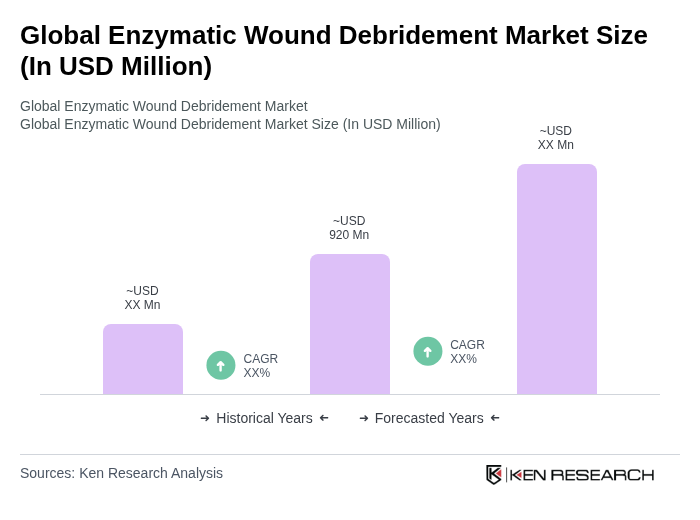
The Global Enzymatic Wound Debridement Market is valued at approximately USD 920 million, driven by the increasing prevalence of chronic wounds, advancements in wound care technologies, and a growing geriatric population.

What makes us stand out is that our consultants follow Robust, Refine and Result (RRR) methodology. Robust for clear definitions, approaches and sanity checking, Refine for differentiating respondents' facts and opinions, and Result for presenting data with story.

We have set a benchmark in the industry by offering our clients with syndicated and customized market research reports featuring coverage of entire market as well as meticulous research and analyst insights.

While we don't replace traditional research, we flip the method upside down. Our dual approach of Top Bottom & Bottom Top ensures quality deliverable by not just verifying company fundamentals but also looking at the sector and macroeconomic factors.

With one step in the future, our research team constantly tries to show you the bigger picture. We help with some of the tough questions you may encounter along the way: How is the industry positioned? Best marketing channel? KPI's of competitors? By aligning every element, we help maximize success.

Our report gives you instant access to the answers and sources that other companies might choose to hide. We elaborate each steps of research methodology we have used and showcase you the sample size to earn your trust.

If you need any support, we are here! We pride ourselves on universe strength, data quality, and quick, friendly, and professional service.













